
What Drives Pipe Jacking Cost? A Breakdown of Shaft Depth, Ground Conditions, and Pipe Size





What Drives Pipe Jacking Cost? A Breakdown of Shaft Depth, Ground Conditions, and Pipe Size
For financial approvers evaluating trenchless projects, understanding pipe jacking cost is essential to controlling budget risk and improving investment decisions.
The headline number rarely comes from the machine alone.
In most cases, three variables shape the real budget.
They are shaft depth, ground conditions, and pipe size.
Each one changes engineering difficulty, production speed, safety planning, and contingency exposure.
That is why pipe jacking cost can move sharply between projects that look similar on paper.
A short urban crossing may still cost more than a longer drive.
The reason is usually underground complexity, not route length.
Why pipe jacking cost needs a full-system view
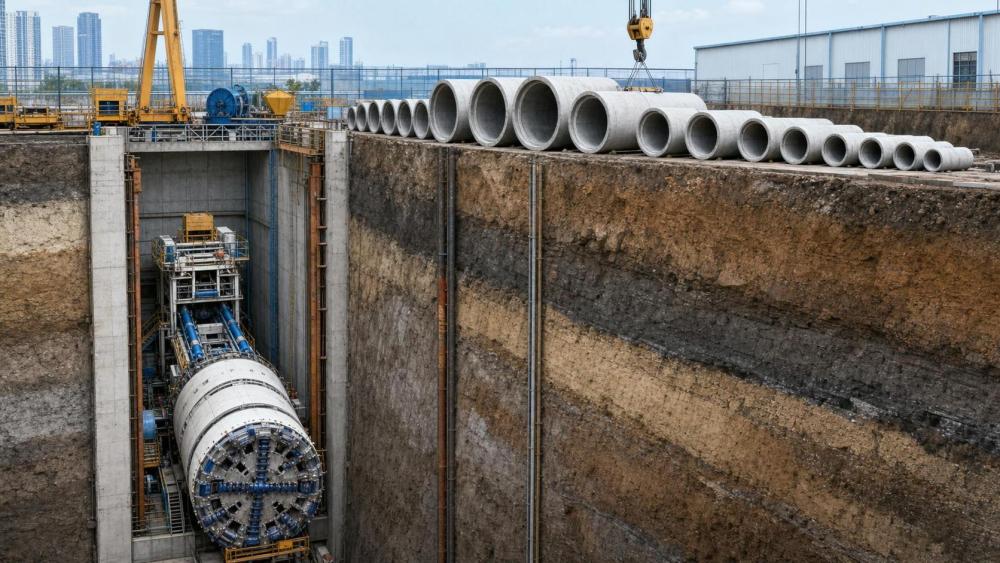
Pipe jacking cost is best understood as a system cost.
It includes shafts, equipment, spoil handling, dewatering, labor, utilities, traffic management, and risk allowances.
More importantly, these elements do not move independently.
A deeper shaft may require stronger support walls.
Poor ground may slow jacking rates and increase slurry management.
Larger pipe size may demand a bigger machine, larger shafts, and heavier lifting capacity.
For budget review, this means unit price alone can be misleading.
A lower initial bid may hide major geotechnical or execution risk.
A stronger bid often looks more expensive early, but protects margin later.
How shaft depth changes pipe jacking cost
Shaft depth is one of the clearest drivers of pipe jacking cost.
As shafts go deeper, structural demands rise quickly.
Excavation support becomes more complex.
Groundwater pressure often becomes more difficult to manage.
Access, lifting, ventilation, and emergency planning also become more demanding.
In practical terms, a deeper launch shaft affects more than excavation volume.
It can reshape the whole construction method.
Main cost impacts of deeper shafts
- Higher retaining wall and bracing requirements.
- More dewatering equipment and longer pumping duration.
- Longer crane cycles for spoil, segments, and pipe handling.
- Additional safety systems for confined underground access.
- Greater schedule sensitivity if groundwater inflow increases.
This is where pipe jacking cost often rises quietly.
The shaft may represent a small part of route length.
Yet it can consume a large share of pre-jacking capital.
From a financial standpoint, deeper shafts also increase delay risk.
If shaft completion slips, the jacking operation cannot start.
That creates a direct knock-on effect on equipment standby and labor utilization.
Why ground conditions often create the biggest pipe jacking cost swings
If one factor causes the widest pipe jacking cost variation, it is ground conditions.
That is because geology affects both productivity and risk.
Stable, predictable ground supports smoother operations.
Mixed face, boulders, running sand, or high groundwater do the opposite.
They slow advance rates and increase intervention risk.
They may also force different cutterhead designs, separation systems, or lubrication strategies.
Ground-related cost pressures to watch
- Hard rock or cobbles increase cutter wear and maintenance downtime.
- Soft unstable soils raise face support and settlement control costs.
- High water tables add sealing, pumping, and treatment expenses.
- Contaminated spoil may increase disposal and compliance fees.
- Unexpected obstructions can trigger redesign, claims, or rescue measures.
This also explains why geotechnical investigation quality matters so much.
Better early data usually improves pipe jacking cost predictability.
Poor data does the opposite.
It pushes bidders to add contingencies or leave gaps that later become change orders.
For cost review, the question is not only what the soil report says.
The question is whether the report is detailed enough to reduce uncertainty.
How pipe size influences equipment, shafts, and total pipe jacking cost
Pipe size has a direct and visible effect on pipe jacking cost.
Larger diameters usually require larger boring equipment and more powerful jacking systems.
They also need bigger shafts for assembly and handling.
Pipe unit cost rises as dimensions and structural class increase.
Transport and lifting costs often rise at the same time.
However, bigger is not always worse in value terms.
A larger pipe may reduce future capacity bottlenecks or avoid parallel drives later.
That is why the right decision should compare lifecycle value, not only procurement cost.
Where larger pipe sizes add cost
- Higher machine capacity and launch setup costs.
- Larger shafts and stronger temporary works.
- Heavier pipes requiring bigger cranes and more handling control.
- Greater lubrication and jacking force management over long drives.
- More demanding logistics in dense urban sites.
There is another practical issue here.
Larger pipe size can reduce supplier flexibility.
That may affect lead times, spare part availability, and schedule resilience.
When schedule risk has a cost, procurement options matter.
A simple table for reviewing pipe jacking cost drivers
This kind of review helps separate manageable cost from hidden risk.
That distinction is critical in any pipe jacking cost evaluation.
How to challenge a budget before approval
A useful review process starts with a few disciplined questions.
These questions often reveal whether pipe jacking cost assumptions are robust or fragile.
- Has the geotechnical scope been deep enough for the alignment length and depth?
- Are shaft construction risks priced separately and transparently?
- Does the pipe size reflect actual capacity need or future-proofing assumptions?
- How much contingency is tied to known risk versus vague allowance?
- What happens to cost if jacking rates fall below plan?
- Are disposal, groundwater, and urban logistics fully covered?
In real projects, overruns often come from interfaces.
One team prices the machine.
Another prices shafts.
A third handles spoil or utilities.
If those interfaces are not integrated, pipe jacking cost is easily understated.
What matters most in a smarter pipe jacking cost decision
The best pipe jacking cost decision is rarely the lowest bid.
It is the option with the clearest link between technical assumptions and commercial exposure.
Shaft depth tells you how heavy the setup burden may become.
Ground conditions tell you where uncertainty will likely concentrate.
Pipe size tells you how strongly equipment scale and long-term value interact.
When these three factors are reviewed together, pipe jacking cost becomes easier to forecast and defend.
That leads to fewer surprises, stronger procurement logic, and better capital discipline.
Before approving the next trenchless budget, test these variables line by line.
That simple step often does more to control pipe jacking cost than negotiating headline price alone.
Related News

How to Evaluate European Drill-and-Blast Tunnelling Contractors for Complex Projects
Drill and blast tunnelling contractors Europe: learn how to assess geology expertise, blast control, equipment reliability, safety, and programme resilience for complex projects.

Which Trenchless Construction Technique Fits Your Utility Crossing Conditions?
Trenchless construction techniques compared for utility crossings: choose HDD, microtunnelling, pipe jacking, or auger boring based on ground, accuracy, access, and risk.

What Is Driving Metro Tunnelling Demand Across Southeast Asia’s Major Cities?
Metro tunnelling Southeast Asia is accelerating as major cities tackle congestion, flooding, and connectivity. Explore the market forces, technical risks, and opportunities shaping demand.

Hard Rock Tunnelling in Australia: Selecting Methods for Variable Ground Conditions
Hard rock tunnelling in Australia: compare TBM, drill-and-blast and hybrid methods to manage variable ground, reduce risk and protect project costs.

Hydropower Tunnel Excavation: Selecting Methods for Variable Rock Conditions
Hydropower tunnel excavation methods for variable rock conditions: compare TBM, drill-and-blast, and hybrid strategies to improve safety, progress, and project control.

How to Select Underground Safety Equipment for Tunnelling by Hazard and Work Zone
Underground Safety Equipment for tunnelling: match protection to hazards, work zones, compliance, and emergency needs with this practical selection guide.

EPB or Slurry Shield? Selecting Soft-Ground Tunnelling Equipment by Soil Conditions
Tunnel Excavation Equipment for soft ground: compare EPB and slurry shields by soil, groundwater, settlement risk, and project logistics to choose confidently.
How to Specify TBM Backup System Parts for Reliable Long-Distance Tunnelling
TBM backup system parts: learn how to specify reliable spares for long-distance tunnelling, reduce downtime, ensure compatibility, and speed underground recovery.
How to Size Open Pit Mining Trucks for Haul Distance, Grade, and Payload?
Open Pit Mining Trucks: learn how to match payload, haul distance, grade, road resistance, and loading capacity for safer, lower-cost mine operations.
Related News
- 00
0000-00
How to Evaluate European Drill-and-Blast Tunnelling Contractors for Complex Projects - 00
0000-00
Which Trenchless Construction Technique Fits Your Utility Crossing Conditions? - 00
0000-00
What Is Driving Metro Tunnelling Demand Across Southeast Asia’s Major Cities? - 00
0000-00
Hard Rock Tunnelling in Australia: Selecting Methods for Variable Ground Conditions - 00
0000-00
Hydropower Tunnel Excavation: Selecting Methods for Variable Rock Conditions
Weekly Insights
Stay ahead with our curated technology reports delivered every Monday.