
How to Select Tunnel Rock Support Systems for Weak Rock and High-Stress Ground





What engineers are really selecting when they choose tunnel rock support systems
In weak rock and high-stress ground, the support system is not just a set of bolts, mesh, ribs, or shotcrete thicknesses. What is being selected is a mechanical response. The question is whether the support can take load, deform with the ground, keep the excavation stable during the vulnerable period after advance, and still remain serviceable as stress redistributes. That is why a support arrangement that performs well in one tunnel can struggle badly in another, even when the rock name sounds similar on paper.
Technical evaluators usually run into the same problem: design documents may list support classes, but the actual decision depends on how the ground behaves after excavation. Weak rock tends to lose confinement quickly. High-stress ground may remain apparently intact at first and then fail through squeezing, slabbing, spalling, or time-dependent deformation. Those are different failure mechanisms, and they do not reward the same support philosophy.
This is the first point worth making clearly: tunnel rock support systems should not be selected by strength rating alone. A stronger support system is not automatically a better one. In some sections, the decisive property is ductility. In others, it is rapid installation, surface confinement, or the ability to preserve the rock’s own load-bearing arch before damage propagates.
Weak rock and high stress are not the same design problem
People often combine weak rock and high-stress ground into one difficult category, but from a support selection perspective they need to be separated early. Weak rock usually points to low material strength, poor bonding, weathered structure, clay-bearing zones, fault gouge, or heavily jointed masses that unravel once exposed. High-stress ground is about the stress field acting on the excavation boundary, whether from depth, tectonic loading, or local concentration around geometry changes and adjacent openings.
The overlap matters. A tunnel can pass through weak rock at modest stress, where the main task is immediate containment and shape retention. It can also cross competent but brittle rock at high stress, where violent strain release and rockburst potential govern the support choice. The most demanding sections are those where weak or altered rock is also carrying high in-situ stress. There, support needs both early confinement and deformation capacity, which often rules out overly rigid systems used in isolation.
For that reason, support selection begins with a ground behavior model, not a shopping list of products. If the expected response is squeezing, a system that can absorb convergence without losing integrity becomes attractive. If wedge instability dominates, the priority shifts toward reinforcement pattern, anchorage length, and face-to-perimeter interaction. If slabbing in high stress is expected, surface support and energy-absorbing reinforcement may deserve more attention than massive steel sets alone.
The support system is a package, not a single element
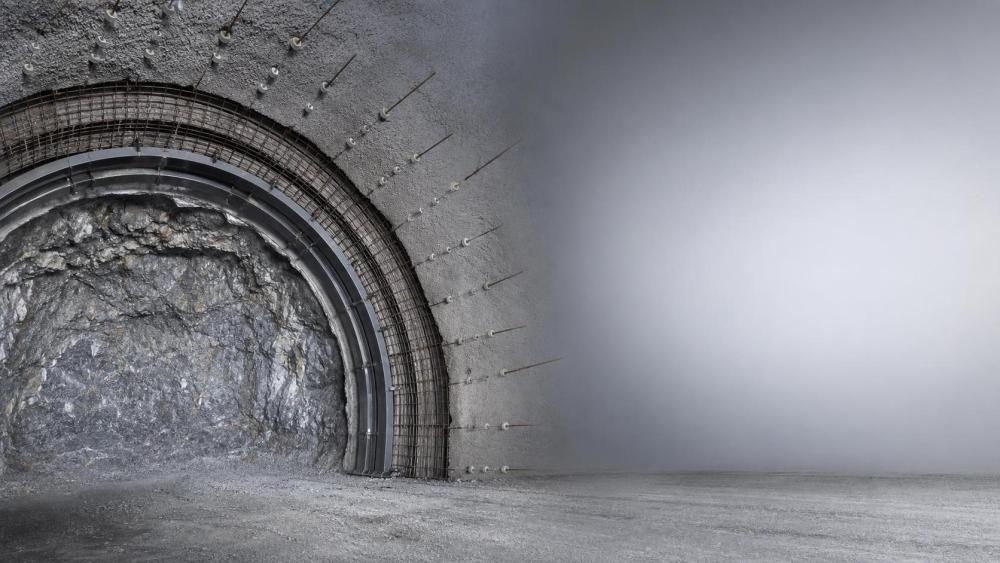
A recurring mistake in evaluations is to compare bolts against shotcrete, or steel ribs against lattice girders, as if they are substitutes on a one-to-one basis. In practice, tunnel rock support systems are layered. Surface support controls ravelling and local fallout. Reinforcement transfers load deeper into the rock mass. Structural sets provide shape control and reserve capacity. In difficult ground, the sequence and interaction between these layers matter as much as the nominal capacity of each item.
For example, fiber-reinforced shotcrete may be chosen not because it can carry all loads independently, but because it closes the excavation ring quickly, limits loosening, and works with bolts to mobilize a confinement shell. Likewise, yielding elements may be introduced not because the system is weak, but because allowing controlled movement can prevent brittle overload. Technical review should therefore ask how the components work together during the first hours, the next few rounds of advance, and the long-term operating condition.
What to compare when evaluating support options
A useful comparison framework is to check support options against five questions.
- How fast can the support be installed after excavation?
- How much deformation can it tolerate before losing function?
- Does it reinforce the rock mass, contain the surface, or mainly resist load as a structural frame?
- How sensitive is it to poor ground contact, water, overbreak, and installation quality?
- Can it be adapted when monitoring shows the ground is behaving differently from the baseline assumption?
Those questions sound simple, but they force the evaluator away from catalog thinking. A support element that performs well in laboratory pull tests may still be difficult to install consistently in fractured wet ground. A stiff lining component may look conservative in calculation, yet trigger stress concentration or crack early if convergence demand was underestimated. A lighter initial support may be the better option when combined with close monitoring and a planned secondary lining sequence.
Bolts, shotcrete, ribs, and yielding support each solve different parts of the problem
Rock bolts and cable bolts are primarily reinforcement tools. They help the rock mass act more coherently, bridge discontinuities, and delay loosening around the opening. Their value depends on anchorage quality, orientation relative to structure, spacing, and whether the load transfer mechanism matches the ground condition. In weak, broken rock, the issue is often not just bolt capacity but whether the surrounding ground can hold the load without local deterioration around the collar or anchor zone.
Shotcrete is often misunderstood as a thin lining that merely “covers” the wall. In difficult ground it is doing more than that. Applied early, it creates surface confinement, reduces weathering and erosion at the exposed boundary, and ties mesh, bolts, and local irregularities into a more continuous ring. Fiber reinforcement can improve residual behavior after cracking, which is relevant where deformation continues after placement. But shotcrete is highly dependent on timing, thickness control, substrate preparation, and adhesion. Poor application can turn a theoretically sound choice into a fragile one.
Steel ribs, lattice girders, and similar sets come into play when geometry retention is difficult or when the support must carry substantial loads during ongoing deformation. They are often selected in squeezing ground, heavily faulted sections, or large openings where unsupported stand-up time is short. The key is not simply whether steel is present, but whether the system is intended to be rigid or yielding. In high convergence zones, a rigid set may attract load too quickly unless there is a deliberate yielding detail in the system.
Yielding support deserves separate attention. In high-stress tunnels, especially at depth, the support system sometimes needs room to deform in a controlled way while retaining integrity. This can involve yielding bolts, deformable liners, compressible layers, or details that allow steel sets to shorten under load. The principle is established in underground construction practice, but the correct configuration is highly project-specific. Evaluators should look for evidence that the selected system matches the expected deformation range, not just peak load assumptions.
Instrumentation should influence selection, not just confirm it afterward
One of the strongest signs of a mature support strategy is that it is tied to monitoring from the start. Convergence pins, extensometers, load cells, pressure cells, and face mapping are not paperwork accessories. They tell the evaluator whether the chosen support class is mobilizing too early, too late, or in the wrong way. In weak rock and high-stress ground, observational control is often the difference between a design that can be optimized and one that simply accumulates contingency cost.
This matters especially in mechanized tunnelling and high-rate development headings. TBM and drill-and-blast operations both depend on keeping the cycle predictable. Support that is technically robust but slow to install, difficult to inspect, or prone to rework can undermine the excavation system around it. For UTMD’s audience, that interaction with production equipment is not secondary. A support decision should be checked against advance rate, access constraints, dust and ventilation conditions, logistics of shotcrete supply or bolt consumables, and the degree of automation available underground.
Common evaluation errors
Several errors appear repeatedly in support reviews.
- Treating rock mass classification as the full answer. Systems such as RMR or Q are useful screening tools, but they do not replace project-specific assessment of stress path, excavation method, water, and deformation behavior.
- Assuming more stiffness means more safety. In some high-stress cases, premature stiffness can increase damage to the support or transfer load inefficiently.
- Comparing unit cost instead of installed performance. Cheap components can become expensive when cycle time, repair frequency, or overbreak consequences are counted.
- Ignoring installation quality. The best bolt pattern on a drawing has little value if drilling deviation, resin mixing, or shotcrete rebound is poorly controlled.
- Separating temporary support from final lining too rigidly. In difficult ground, long-term behavior is often influenced by what happened in the first support stage.
How a technical evaluator should frame the decision
A practical evaluation does not ask, “Which tunnel rock support system is best?” It asks, “Which system is most reliable for this failure mode, this excavation method, this installation window, and this tolerance for deformation?” That shift in wording changes the whole review. It moves attention from generic support categories to decision evidence: mapping records, stress assessment, ground class transitions, expected convergence, sequencing, and the ability to modify support as the heading advances.
Where data are limited, conservatism is reasonable, but it should be targeted. Add reserve where the uncertainty sits. If the main uncertainty is time-dependent squeezing, focus on deformation allowance and monitoring thresholds. If the uncertainty is local faulting, focus on rapid installation and adaptability. If high stress raises concern over brittle damage, examine dynamic capacity and surface retention in addition to static support strength.
The better support selection is usually the one that stays coherent when ground conditions are slightly worse than expected, crews are working under real site constraints, and instrumentation begins to show divergence from the baseline model. That is a more demanding standard than picking the heaviest system on the schedule, but it is the standard that actually separates workable underground designs from expensive assumptions.
Related News

How to Evaluate European Drill-and-Blast Tunnelling Contractors for Complex Projects
Drill and blast tunnelling contractors Europe: learn how to assess geology expertise, blast control, equipment reliability, safety, and programme resilience for complex projects.

Which Trenchless Construction Technique Fits Your Utility Crossing Conditions?
Trenchless construction techniques compared for utility crossings: choose HDD, microtunnelling, pipe jacking, or auger boring based on ground, accuracy, access, and risk.

What Is Driving Metro Tunnelling Demand Across Southeast Asia’s Major Cities?
Metro tunnelling Southeast Asia is accelerating as major cities tackle congestion, flooding, and connectivity. Explore the market forces, technical risks, and opportunities shaping demand.

Hard Rock Tunnelling in Australia: Selecting Methods for Variable Ground Conditions
Hard rock tunnelling in Australia: compare TBM, drill-and-blast and hybrid methods to manage variable ground, reduce risk and protect project costs.

Hydropower Tunnel Excavation: Selecting Methods for Variable Rock Conditions
Hydropower tunnel excavation methods for variable rock conditions: compare TBM, drill-and-blast, and hybrid strategies to improve safety, progress, and project control.

How to Select Underground Safety Equipment for Tunnelling by Hazard and Work Zone
Underground Safety Equipment for tunnelling: match protection to hazards, work zones, compliance, and emergency needs with this practical selection guide.
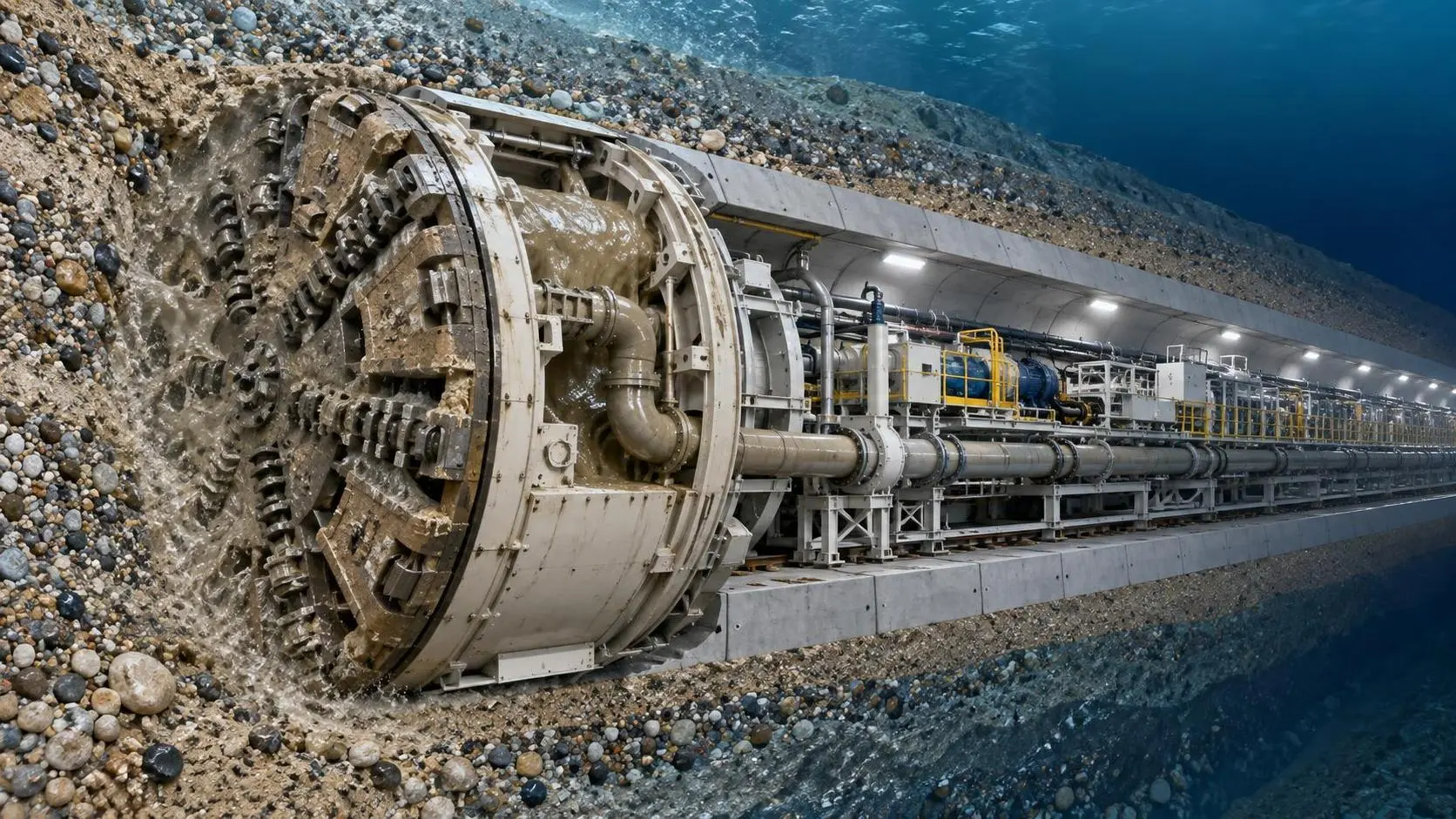
EPB or Slurry Shield? Selecting Soft-Ground Tunnelling Equipment by Soil Conditions
Tunnel Excavation Equipment for soft ground: compare EPB and slurry shields by soil, groundwater, settlement risk, and project logistics to choose confidently.
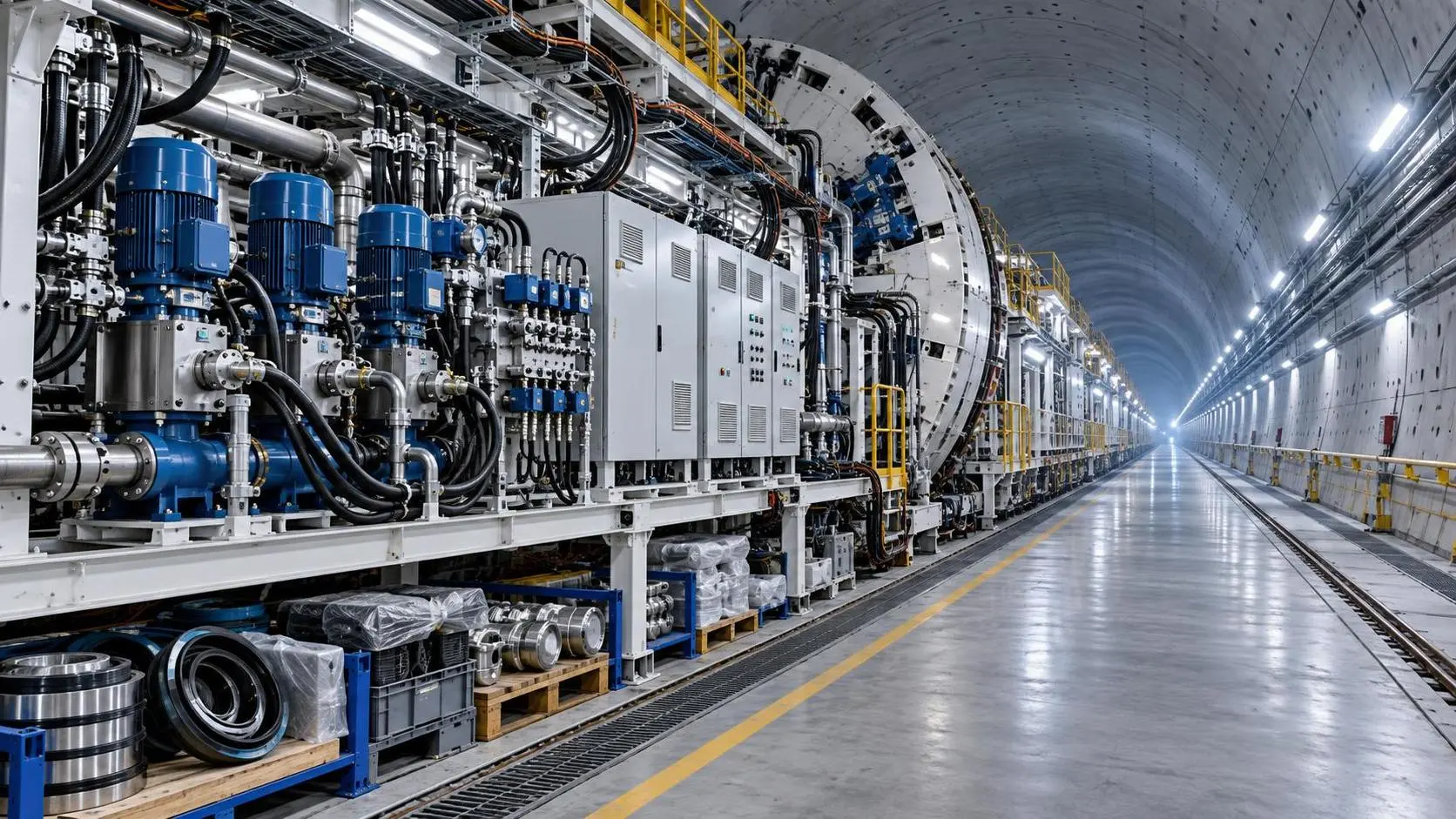
How to Specify TBM Backup System Parts for Reliable Long-Distance Tunnelling
TBM backup system parts: learn how to specify reliable spares for long-distance tunnelling, reduce downtime, ensure compatibility, and speed underground recovery.
How to Size Open Pit Mining Trucks for Haul Distance, Grade, and Payload?
Open Pit Mining Trucks: learn how to match payload, haul distance, grade, road resistance, and loading capacity for safer, lower-cost mine operations.
Related News
- 00
0000-00
How to Evaluate European Drill-and-Blast Tunnelling Contractors for Complex Projects - 00
0000-00
Which Trenchless Construction Technique Fits Your Utility Crossing Conditions? - 00
0000-00
What Is Driving Metro Tunnelling Demand Across Southeast Asia’s Major Cities? - 00
0000-00
Hard Rock Tunnelling in Australia: Selecting Methods for Variable Ground Conditions - 00
0000-00
Hydropower Tunnel Excavation: Selecting Methods for Variable Rock Conditions
Weekly Insights
Stay ahead with our curated technology reports delivered every Monday.