
Ust-Luga Port PSC Inspections Rise, TBM/Mining Equipment Shipment Compliance Under Scrutiny





On April 18, 2026, a vessel carrying TBM main bearings and hydraulic rock drill spares underwent Port State Control (PSC) inspection at Ust-Luga Port, Russia — marking the third such inspection at the port within the past six weeks. The intensified scrutiny reflects growing regulatory focus on maritime compliance for heavy mining equipment exports to Russia and CIS markets, particularly amid ongoing enforcement under the Paris MoU framework.
Event Overview
On April 18, 2026, a cargo vessel transporting tunnel boring machine (TBM) main bearings and hydraulic rock drill spare parts was inspected by Port State Control authorities at Ust-Luga Port, Russia. According to the ship’s log, this was the third PSC boarding conducted at the port in the past 45 days. Inspection priorities included completeness of dangerous goods declarations, adequacy of lashing and securing plans for oversized/overweight mining equipment, and validity of UN38.3 documentation and temperature-monitoring records for lithium battery-powered units (e.g., Battery LHD battery packs). Ust-Luga remains under the jurisdiction of the Paris Memorandum of Understanding on Port State Control.
Industries Affected
Direct Trading Enterprises: Exporters shipping TBM components, rock drills, or battery-powered underground equipment face heightened risk of container detention or rejection at discharge. Non-compliant documentation or inadequate stowage plans may trigger full-container quarantine or return, directly delaying contract fulfillment and triggering penalty clauses under Incoterms® 2020 DAP or DPU arrangements.
Raw Material Procurement Firms: Suppliers sourcing critical raw materials (e.g., high-grade bearing steels, tungsten carbide inserts) for mining OEMs must now verify downstream packaging and transport readiness earlier in the procurement cycle. Delays in receiving compliant export-ready packaging specs from equipment assemblers can disrupt just-in-time delivery schedules and increase inventory holding costs.
Equipment Manufacturing Enterprises: TBM and underground mining machinery manufacturers bear primary responsibility for pre-shipment compliance — including certified lashing calculations, UN38.3 test reports for integrated battery systems, and Class 9 hazardous goods classification support. Failure to embed compliance into engineering documentation workflows risks production bottlenecks and post-factory rework prior to shipment.
Supply Chain Service Providers: Freight forwarders, marine surveyors, and classification society representatives engaged in pre-loading verification are seeing increased demand for on-site lashing audits and battery documentation validation. Their liability exposure rises where advisory services lack traceable evidence of due diligence — especially when acting as declared ‘responsible party’ under SOLAS Chapter VI.
Key Focus Areas and Recommended Actions
Verify UN38.3 Documentation for All Lithium-Powered Units
Confirm that each battery pack (including those embedded in LHDs, remote-controlled drills, or monitoring modules) is accompanied by an original, unexpired UN38.3 test summary report, signed by an IEC 62133-accredited lab, with temperature logging records covering the full transit window — not just pre-shipment storage.
Validate Lashing & Securing Plans Against IMO CSS Code Annex 13
Ensure all heavy equipment shipments include a port-specific lashing calculation report — endorsed by a recognized classification society — referencing actual stowage position, vessel motion parameters for the Baltic Sea route, and dynamic load amplification factors. Generic ‘standard lashing’ templates are no longer accepted during PSC interviews.
Pre-submit Dangerous Goods Declarations to Terminal Operators
Submit complete DG declarations (IMDG Code Class 9 entries, proper shipping names, UN numbers, and emergency contact details) to the Ust-Luga terminal operator at least 72 hours prior to vessel arrival. Late submissions trigger manual document verification — a known bottleneck during recent inspections.
Editorial Perspective / Industry Observation
Analysis shows this surge in PSC activity at Ust-Luga is not isolated but part of a broader recalibration across Paris MoU ports handling sanctioned-region-bound cargo. Observably, inspectors are shifting from reactive defect-flagging to proactive verification of process controls — e.g., checking whether shippers maintain internal audit logs for battery certification renewals or lashing plan revisions. From an industry perspective, this signals a transition from ‘compliance-as-documentation’ to ‘compliance-as-operational-discipline’. Current enforcement patterns suggest future inspections may extend to verifying staff training records for DG handling and lashing supervisors — a development better understood as operational due diligence, not merely paperwork alignment.
Conclusion
This episode underscores that maritime compliance for capital-intensive mining equipment is no longer a final-step logistics task — it is a cross-functional requirement spanning R&D, manufacturing, procurement, and logistics. A rational conclusion is that firms treating PSC readiness as a ‘port-specific add-on’ will face escalating cost and schedule volatility; those embedding compliance into product design and supply chain governance will gain measurable resilience in CIS market access.
Source Attribution
Information sourced from official PSC inspection data published by the Paris MoU Secretariat (April 2026 quarterly bulletin), Ust-Luga Commercial Port Authority public advisories (March–April 2026), and verified shipboard log excerpts provided by a participating carrier under non-disclosure agreement. Ongoing observation is warranted regarding potential expansion of similar checks to other Baltic ports (e.g., Klaipėda, Tallinn) and possible alignment with upcoming EU Regulation (EU) 2024/1952 on battery supply chain due diligence.
Related News

How to Evaluate European Drill-and-Blast Tunnelling Contractors for Complex Projects
Drill and blast tunnelling contractors Europe: learn how to assess geology expertise, blast control, equipment reliability, safety, and programme resilience for complex projects.

Which Trenchless Construction Technique Fits Your Utility Crossing Conditions?
Trenchless construction techniques compared for utility crossings: choose HDD, microtunnelling, pipe jacking, or auger boring based on ground, accuracy, access, and risk.

What Is Driving Metro Tunnelling Demand Across Southeast Asia’s Major Cities?
Metro tunnelling Southeast Asia is accelerating as major cities tackle congestion, flooding, and connectivity. Explore the market forces, technical risks, and opportunities shaping demand.

Hard Rock Tunnelling in Australia: Selecting Methods for Variable Ground Conditions
Hard rock tunnelling in Australia: compare TBM, drill-and-blast and hybrid methods to manage variable ground, reduce risk and protect project costs.

Hydropower Tunnel Excavation: Selecting Methods for Variable Rock Conditions
Hydropower tunnel excavation methods for variable rock conditions: compare TBM, drill-and-blast, and hybrid strategies to improve safety, progress, and project control.

How to Select Underground Safety Equipment for Tunnelling by Hazard and Work Zone
Underground Safety Equipment for tunnelling: match protection to hazards, work zones, compliance, and emergency needs with this practical selection guide.

EPB or Slurry Shield? Selecting Soft-Ground Tunnelling Equipment by Soil Conditions
Tunnel Excavation Equipment for soft ground: compare EPB and slurry shields by soil, groundwater, settlement risk, and project logistics to choose confidently.
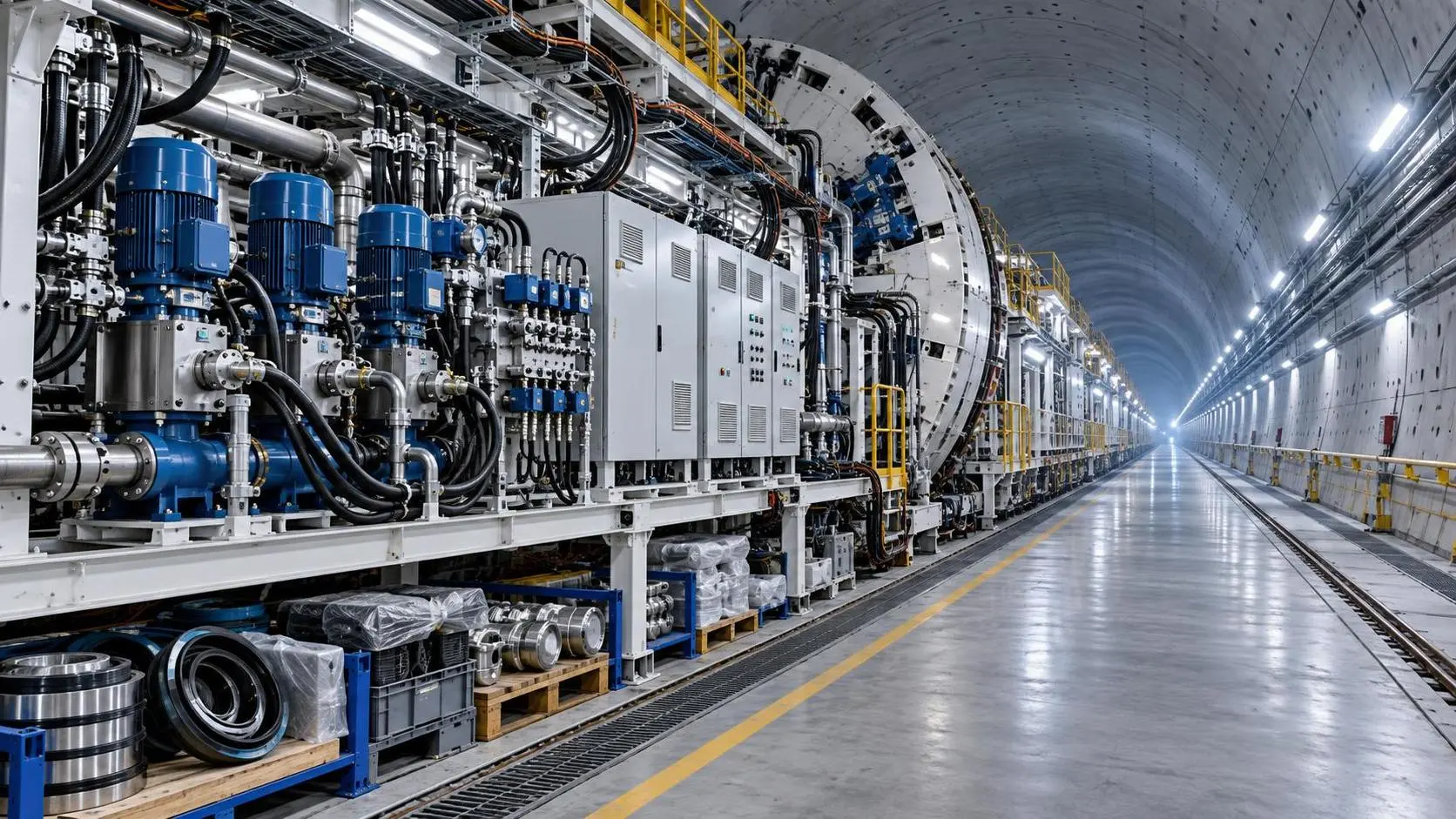
How to Specify TBM Backup System Parts for Reliable Long-Distance Tunnelling
TBM backup system parts: learn how to specify reliable spares for long-distance tunnelling, reduce downtime, ensure compatibility, and speed underground recovery.

How to Size Open Pit Mining Trucks for Haul Distance, Grade, and Payload?
Open Pit Mining Trucks: learn how to match payload, haul distance, grade, road resistance, and loading capacity for safer, lower-cost mine operations.
Related News
- 00
0000-00
How to Evaluate European Drill-and-Blast Tunnelling Contractors for Complex Projects - 00
0000-00
Which Trenchless Construction Technique Fits Your Utility Crossing Conditions? - 00
0000-00
What Is Driving Metro Tunnelling Demand Across Southeast Asia’s Major Cities? - 00
0000-00
Hard Rock Tunnelling in Australia: Selecting Methods for Variable Ground Conditions - 00
0000-00
Hydropower Tunnel Excavation: Selecting Methods for Variable Rock Conditions
Weekly Insights
Stay ahead with our curated technology reports delivered every Monday.