
Rail Tunnel Excavation Systems: Choosing Between TBMs and Drill-and-Blast





Selecting tunnel excavation systems for rail tunnels requires more than comparing advance rates. Geological variability, alignment length, groundwater conditions, construction access, and environmental constraints influence method selection.
For technical evaluators, the decision also involves balancing upfront investment against flexibility, safety, schedule risk, and whole-project cost. The right choice depends on the complete construction system.
As a starting point, TBMs often suit long, reasonably consistent alignments, while drill-and-blast can offer greater flexibility in variable rock and complex underground layouts.
Neither rule is sufficient on its own. Ground behavior, tunnel geometry, access, environmental limits, and credible disruption scenarios can change the preferred method.
Which excavation method fits the project?

A TBM becomes attractive when its high initial investment can be spread over sufficient tunnel length and when the ground supports sustained, predictable excavation.
Drill-and-blast often deserves closer consideration where the route is shorter, the cross-section changes frequently, or several headings can be accessed through portals and shafts.
These are screening judgments, not universal thresholds. A long tunnel through highly faulted ground may challenge a TBM, while a short urban drive may favor mechanization.
For a defensible comparison, define feasible construction sequences first. Then evaluate each sequence against the same ground model, design requirements, access constraints, and commercial assumptions.
Projects can also combine methods. A TBM may excavate the main running tunnels, while drill-and-blast forms caverns, cross-passages, access adits, and irregular transitions where conditions permit.
How does geology change the choice?
Rock strength matters, but it rarely tells the whole story. Abrasivity, joint spacing, stress, fault zones, groundwater pressure, and stand-up time affect excavation and support.
In competent rock, an open or gripper TBM may achieve efficient penetration. Its performance still depends on cutter wear, thrust capacity, support needs, and machine utilization.
In weaker or water-bearing ground, a shielded machine may provide better face and ground control. Its suitability depends on the specific ground response and pressure conditions.
Earth pressure balance and slurry TBMs can manage face pressure in suitable soft or mixed ground, but conditioning, pressure control, and spoil treatment introduce additional requirements.
Drill-and-blast can adapt excavation rounds and support to changing rock. However, poor stand-up time may require short rounds, intensive support, pre-grouting, or excavation in stages.
Mixed-face conditions and unexpected transitions can disrupt either method. Evaluators should examine how each alternative detects changing ground and responds before instability reaches the excavation.
Use boreholes, geophysics, mapping, laboratory testing, and hydrogeological investigation to build a ground model. Identify uncertainties between investigation points rather than presenting inferred conditions as certain.
Compare credible ground scenarios, including difficult zones, with their likely effects on advance, support, water control, and recovery. Record which assumptions most influence the outcome.
How do alignment and rail geometry affect constructability?
Rail tunnels impose constraints on gradient, curvature, clearances, evacuation routes, and future maintenance. Excavation diameter must accommodate the completed railway and its construction tolerances.
For a TBM, check minimum curve radius, machine articulation, steering tolerances, segment geometry, and the length needed for launch and reception arrangements along the proposed alignment.
Drill-and-blast accommodates changes in shape more readily, making it useful for station caverns, turnouts, enlargements, and connections that do not match a circular machine profile.
That flexibility has a cost. Irregular excavation may increase surveying, temporary support, waterproofing, lining complexity, and the volume of material removed outside the theoretical profile.
For twin-bore railways, compare shared logistics and sequential drives with the option of multiple machines or headings. Access constraints may determine whether parallel work is feasible.
Assess cross-passages and emergency facilities early. Their construction interfaces with the running tunnels can affect sequencing, ventilation, fire safety arrangements, and the critical path.
What should evaluators include in the cost comparison?
Compare total installed and construction costs, not excavation rates alone. The baseline should cover mobilization, temporary works, ground treatment, support, lining, spoil handling, and demobilization.
For TBMs, include machine procurement or lease, refurbishment where relevant, transport, assembly, launch facilities, cutters, backup systems, power supply, maintenance, and recovery at the destination.
For drill-and-blast, include drilling jumbos, explosives, charging, ventilation, mucking equipment, scaling, support installation, survey control, vibration monitoring, and any restrictions on blasting hours.
Include costs outside the tunnel face. Shafts, access roads, spoil disposal, water treatment, utility capacity, and construction-site reinstatement can materially change the preferred option.
Use consistent quantities and boundaries. For example, compare each method with the support and permanent lining actually required by its design, rather than assigning identical specifications automatically.
Model ownership and commercial arrangements explicitly. Contractor risk allowances, machine availability, residual value, financing, and ground-risk allocation can change bids even when engineering assumptions are similar.
Test the result against plausible changes in ground conditions, cutter consumption, blast restrictions, support quantities, and production downtime. A narrow base-case saving may disappear quickly.
Which schedule risks matter beyond advance rate?
A TBM’s instantaneous penetration rate is not its project advance rate. Cutter changes, ground treatment, maintenance, surveying, support, and logistics all consume working time.
Drill-and-blast production depends on the complete cycle: drilling, charging, blasting, clearing fumes, inspecting, scaling, installing support, and removing excavated rock before the next round.
Build schedules from achievable cycle times and utilization, then add launch, setup, access, breakthrough, and handover activities. Avoid extrapolating peak daily production across the alignment.
A TBM may lose schedule advantage if manufacturing or launch preparation is lengthy, or if a major intervention occurs at a location with limited access.
Drill-and-blast can benefit from multiple headings, but only when access, staffing, ventilation, mucking capacity, and safe separation allow those headings to work productively.
Assess the consequences of low-probability, high-impact events, including severe water inflow, face instability, machine entrapment, or prolonged ground treatment. Assign recovery durations and responsible parties.
How do groundwater and environmental limits affect feasibility?
Groundwater affects face stability, inflow, ground treatment, discharge permits, and potential impacts on nearby assets. Pressure and permeability matter alongside the expected water volume.
A closed-face TBM may control pressure during excavation when properly specified and operated. Interventions, sealing systems, spoil discharge, and changing ground conditions still require planning.
Drill-and-blast may require probe drilling, pre-grouting, drainage, pumping, and treatment. The project should assess whether drawdown could affect buildings, utilities, waterways, or existing tunnels.
In developed areas, blasting vibration and noise may constrain charge size, timing, and production. Limits depend on permits, asset sensitivity, ground transmission, and local requirements.
TBMs avoid production blasting but do not eliminate construction impacts. Launch sites, ground-borne noise, settlement, trucking, spoil treatment, and round-the-clock operations can still require mitigation.
For both methods, establish baseline monitoring and response thresholds. Link settlement, vibration, groundwater, and structural movement measurements to predefined actions and accountable decision-makers.
What safety and logistics questions should the assessment answer?
Safety comparisons should address exposure by task and location. Mechanization can reduce some direct face exposure, while maintenance and interventions may create demanding confined-space work.
Drill-and-blast requires controls for explosives, misfires, fumes, unstable ground, and equipment movements. Re-entry procedures and support installation are central to managing the excavation cycle.
For a TBM, examine cutter inspection and replacement, working under pressure where applicable, fire protection, rescue access, and procedures for unstable ground ahead of the machine.
Ventilation must support workers and equipment throughout the drive. Diesel exhaust, blasting fumes, dust, heat, and emergency smoke control create different demands for each construction sequence.
Electric equipment can reduce underground exhaust at the point of use, but power availability, charging arrangements, ventilation needs, and upstream electricity emissions still require assessment.
Check spoil removal as a capacity-limited system. Conveyors, rail cars, trucks, skips, and surface handling must match expected production without obstructing materials delivery or emergency access.
Include water supply, drainage, communications, spare parts, workforce transport, and maintenance space. A bottleneck in any one service can reduce the value of faster excavation.
How can technical evaluators make a defensible recommendation?
Start by screening out options that cannot meet geometric, ground-control, access, safety, or permitting requirements. Document the evidence and assumptions behind each exclusion.
For the remaining alternatives, develop comparable construction concepts and calculate cost and schedule ranges. Weight decision criteria according to project priorities, not a generic template.
Evaluate each option against ground uncertainty, environmental limits, operational safety, construction interfaces, and recovery capability. Identify where further investigation could materially change the decision.
For example, a long twin-bore alignment in reasonably consistent rock may favor TBMs if launch facilities and continuous logistics are available. Confirm performance through project-specific analysis.
A shorter alignment with irregular caverns, accessible headings, and variable rock may favor drill-and-blast. Confirm that vibration limits, ventilation, support, and working hours permit the planned cycles.
Where neither method dominates, assess a hybrid construction strategy and its interfaces. The recommendation should state the preferred option, key risks, cost and schedule ranges, and outstanding decisions.
The strongest choice of tunnel excavation systems for rail tunnels is therefore the one that remains constructible and manageable across credible conditions, not merely the fastest forecast.
Related News
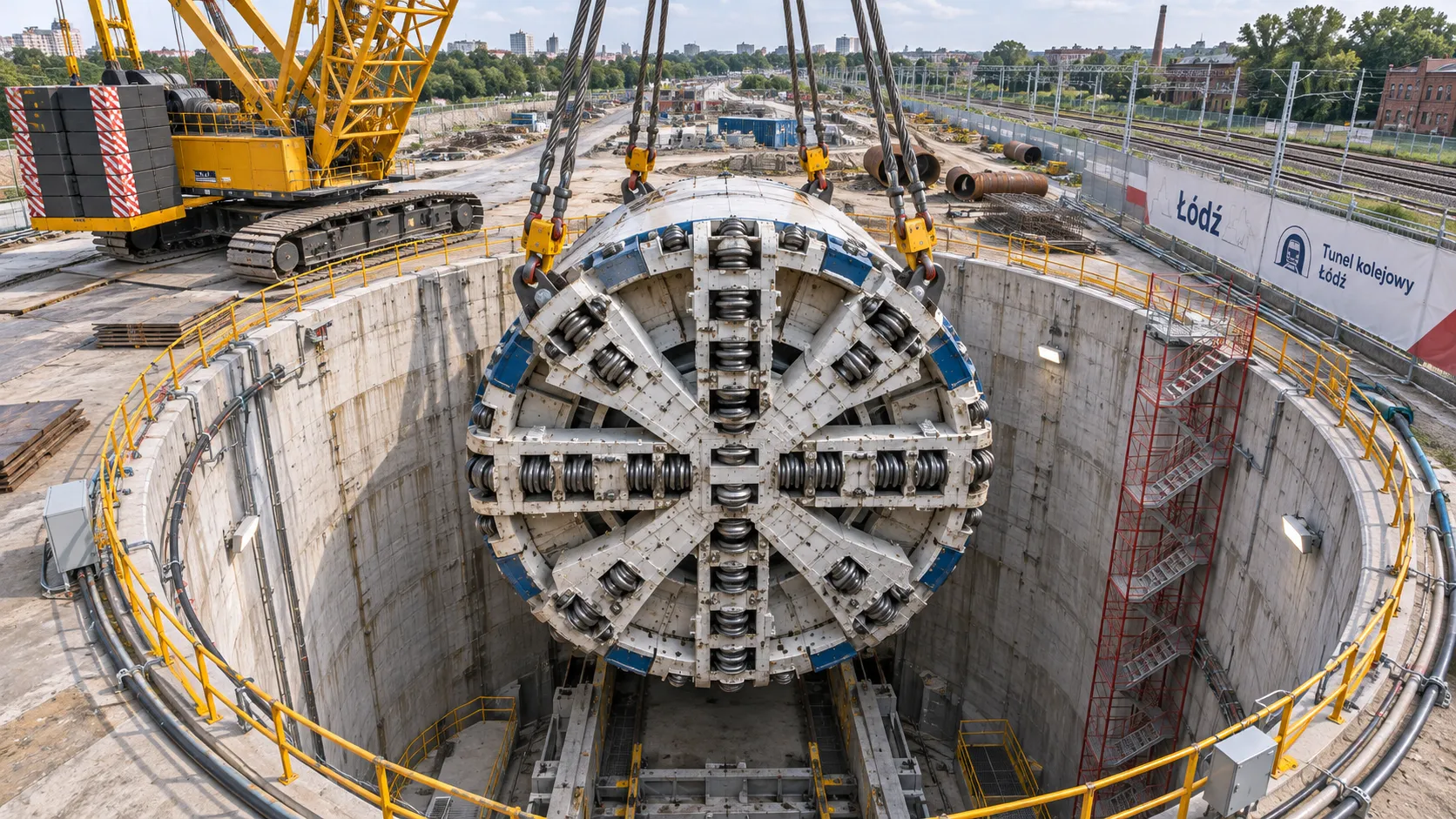
Hampton Roads TBM Cutterhead Lowered into Łódź Rail Tunnel Shaft
Hampton Roads TBM cutterhead is lowered into a Łódź rail tunnel shaft. Explore the machine’s journey from Virginia and its next tunnelling assignment.
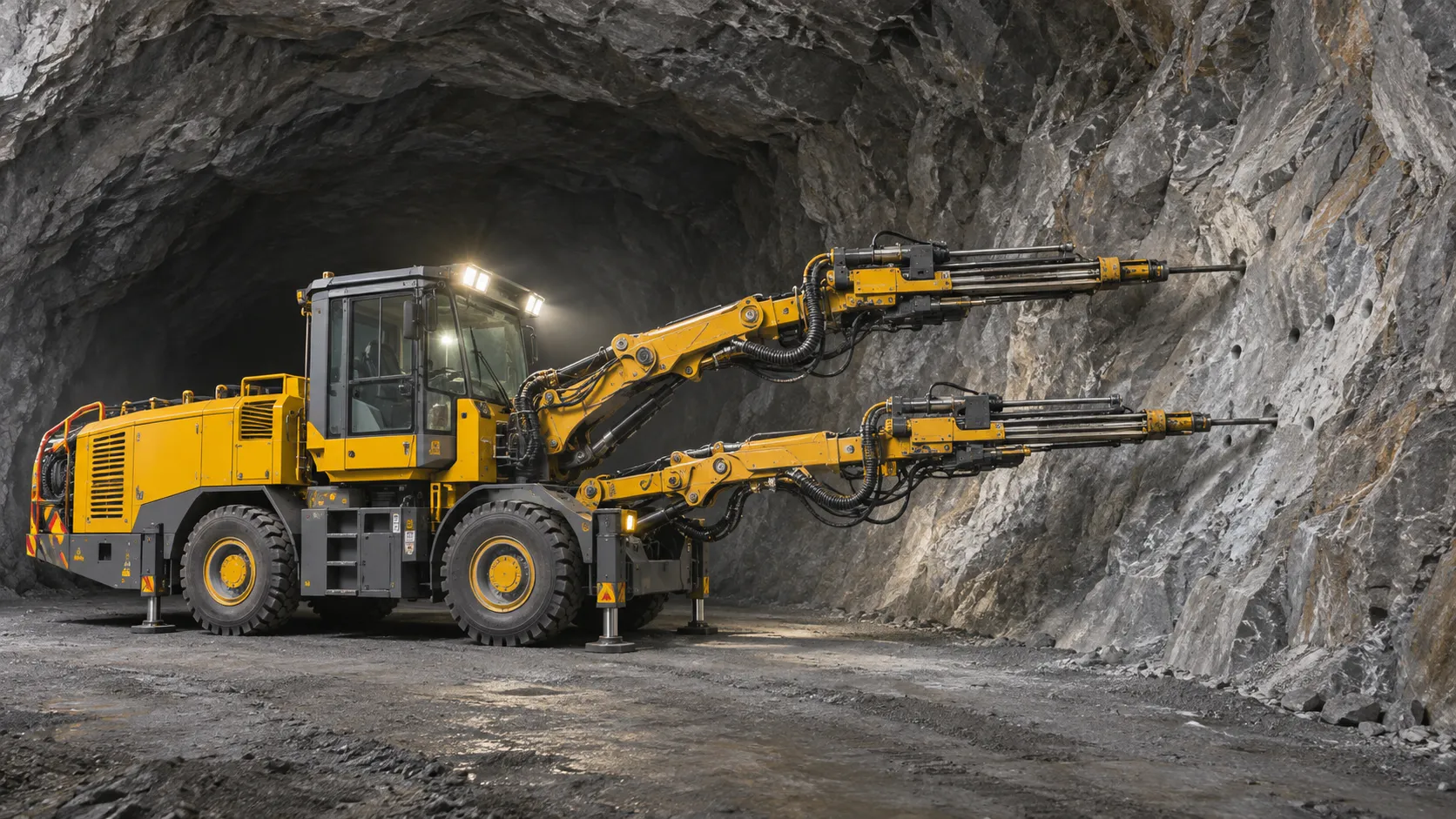
Choosing a Mining Drilling Jumbo: Face Size, Boom Reach and Ground Conditions
Compare Drilling Jumbos for mining operations by face size, boom reach and ground conditions. Discover how to select equipment for efficient, reliable development.
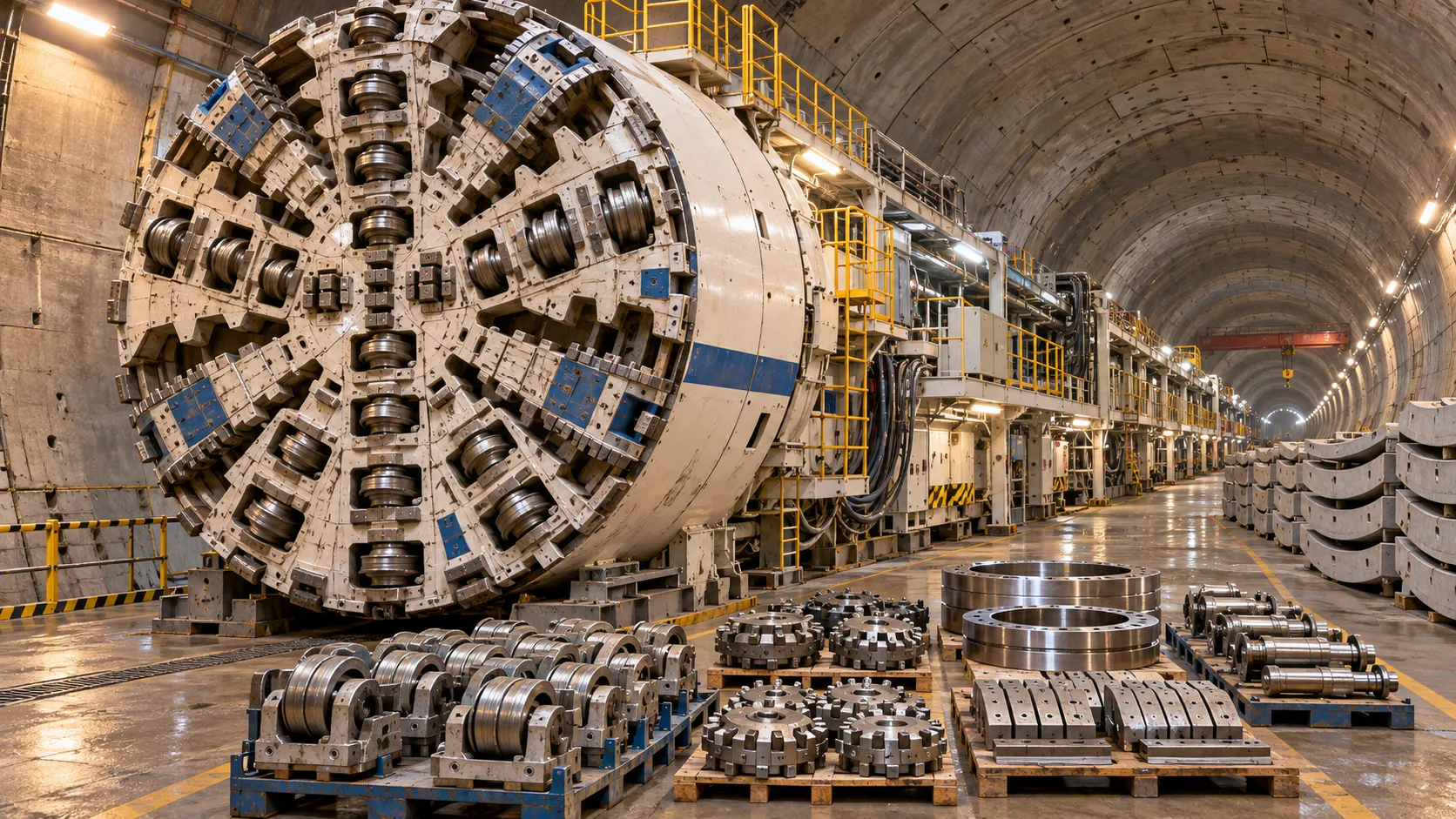
China's TBM Export Controls Prompt Infrastructure Concerns in India
China's TBM export controls could affect infrastructure projects in India. Explore potential supply risks and practical procurement steps.
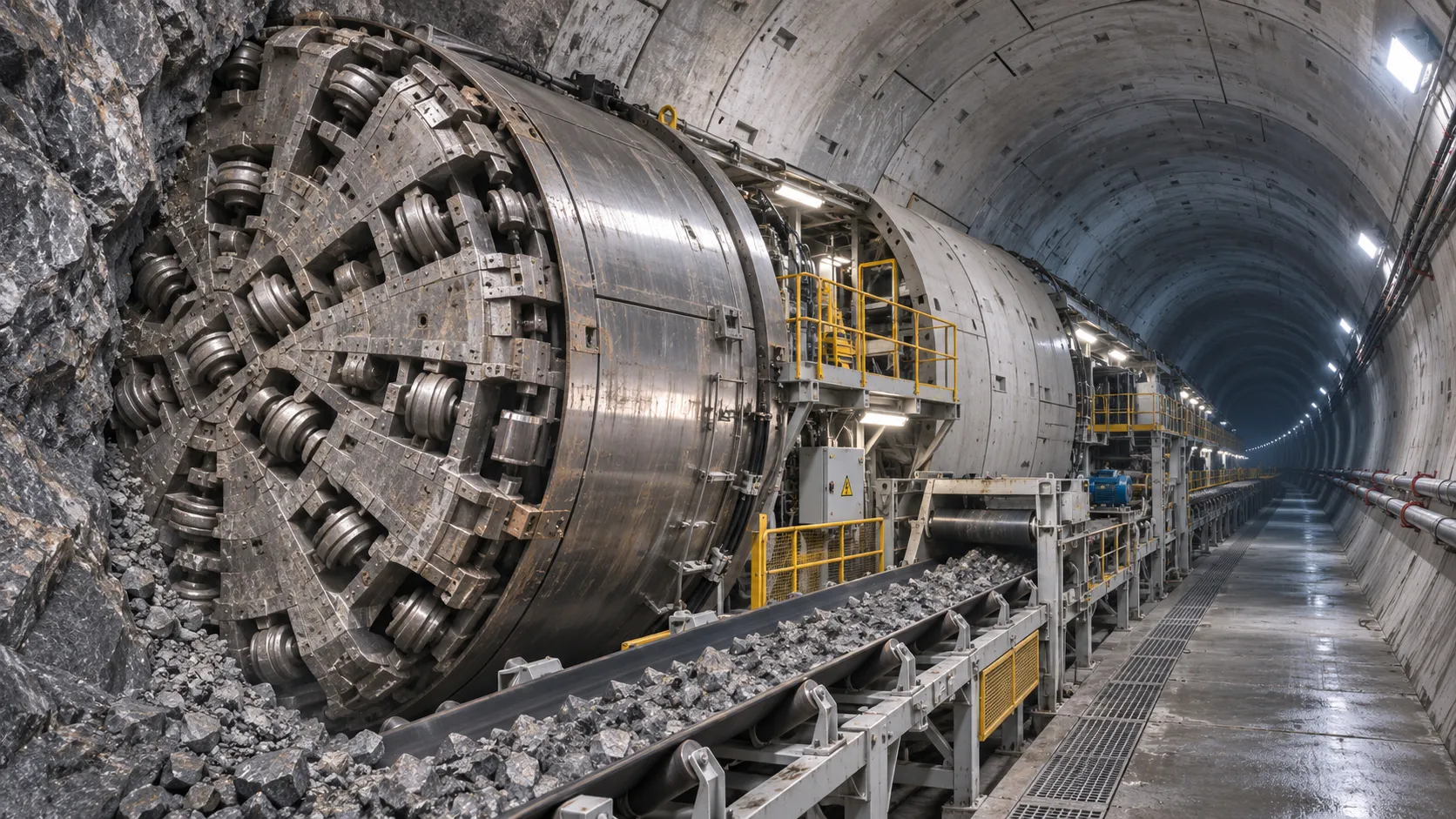
How TBM Excavation Works in Rock and Soft Ground: A Practical Guide
TBM Excavation in rock and soft ground explained: compare machine types, ground support, spoil removal, and the factors that guide smarter project planning.
Choosing a Zero-Emission Underground Equipment Supplier: What to Check
Choosing a zero emission underground equipment supplier? Compare duty-cycle performance, charging, safety, total costs and support before you commit.
Construction Starts on Germany's Pfaffensteig Rail Tunnel, With Two TBMs Planned
Pfaffensteig rail tunnel construction is underway in Germany. Discover how two planned TBMs will support the 11-kilometre project near Stuttgart.
How Real-Time Underground Mapping Systems Work in Tunneling
Discover how real-time underground mapping systems guide tunneling teams, integrate sensor data, and support confident decisions with verified accuracy.
First Mechanized Tunnel Crossing Beneath the Panama Canal Completed
Panama Canal tunnel crossing: Explore the reported Metro Line 3 milestone and what it could mean for future underwater tunneling projects.
Underground Utility Construction Equipment: Choosing by Ground Conditions
Choose underground utility construction equipment with confidence. Compare trenching, HDD, microtunnelling and TBMs by ground conditions, risk and cost.
Related News
- 00
0000-00
Rail Tunnel Excavation Systems: Choosing Between TBMs and Drill-and-Blast - 00
0000-00
Hampton Roads TBM Cutterhead Lowered into Łódź Rail Tunnel Shaft - 00
0000-00
Choosing a Mining Drilling Jumbo: Face Size, Boom Reach and Ground Conditions - 00
0000-00
China's TBM Export Controls Prompt Infrastructure Concerns in India - 00
0000-00
How TBM Excavation Works in Rock and Soft Ground: A Practical Guide
Weekly Insights
Stay ahead with our curated technology reports delivered every Monday.