
Regenerative Braking System for Mining Trucks: Benefits and Limits





As electric and hybrid haulage moves from pilot projects to production fleets, the Regenerative Braking system for mining trucks has become a critical focus for technical evaluators.
On long downhill cycles, it can recover energy, reduce brake wear, and support lower-emission mine operations.
Yet its value depends on grade profile, payload variation, battery acceptance, thermal control, and duty-cycle modeling.
This article examines practical benefits and limits that decide whether regenerative braking improves modern mining truck performance.
What is a Regenerative Braking system for mining trucks?
A Regenerative Braking system for mining trucks converts vehicle kinetic energy into electrical energy during braking or controlled downhill travel.
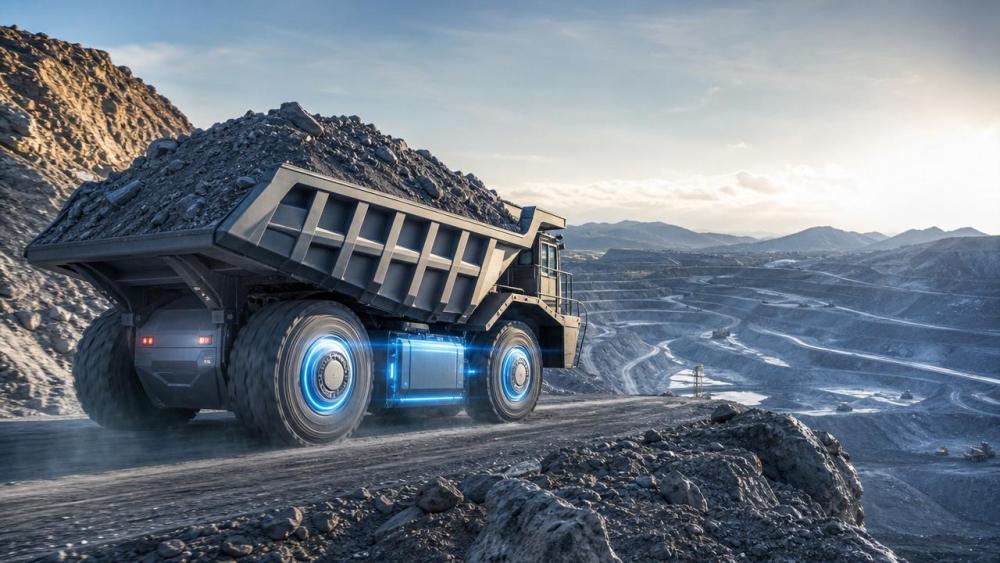
Instead of wasting most braking energy as heat, the traction motors operate as generators.
Recovered electricity is returned to a battery, capacitor, onboard energy system, or sometimes a trolley-assisted power network.
In mining haulage, this function is not simply an efficiency feature.
It is linked to speed control, brake life, thermal protection, battery sizing, and total energy planning.
A haul truck descending with a full payload contains enormous potential energy.
If the route is steep and repeated, energy recovery can become a measurable operating advantage.
However, the Regenerative Braking system for mining trucks must work within safety limits.
Mechanical brakes, retarders, cooling systems, and control software remain essential for redundancy and emergency stopping.
Where does regenerative braking deliver the strongest benefits?
The strongest business case appears on downhill-loaded or mixed-grade haul cycles.
Open-pit mines with ramps, waste dumps, and elevation changes often provide favorable operating conditions.
Underground mines can also benefit when loaded equipment descends ramps or requires frequent controlled deceleration.
The Regenerative Braking system for mining trucks is especially valuable when braking events are frequent, predictable, and energy-rich.
Energy recovery on long downhill hauls
A loaded truck descending a long ramp can recover part of the energy normally lost as heat.
This recovered energy may extend battery range or reduce charging demand during the shift.
Actual recovery depends on vehicle mass, road grade, speed, motor efficiency, and storage capacity.
Reduced wear in friction braking systems
Regenerative braking can reduce reliance on friction brakes during normal deceleration.
That may lower wear on brake components, reduce heat stress, and extend maintenance intervals.
For heavy mining dump trucks, brake thermal management is a major reliability concern.
Better emission control in confined spaces
The Regenerative Braking system for mining trucks supports electrified haulage and lower exhaust exposure.
This matters in underground operations where ventilation capacity directly affects cost, safety, and production flexibility.
Regeneration alone does not create zero-emission haulage, but it improves the energy case for electric fleets.
What limits the performance of a Regenerative Braking system for mining trucks?
Regeneration is powerful, but it is not unlimited.
The first constraint is whether the energy storage system can accept high charging power.
If the battery is full, cold, hot, or power-limited, regenerative braking must be reduced.
At that moment, conventional braking or dynamic retarding must absorb more energy.
Battery acceptance and state of charge
Battery state of charge strongly affects regeneration capacity.
A nearly full pack cannot safely accept large energy pulses.
Operational planning may require trucks to begin downhill segments with available battery headroom.
Thermal limits in motors and power electronics
High continuous regeneration produces heat in motors, inverters, cables, and cooling loops.
If temperatures rise beyond design limits, the control system must reduce braking power.
Thermal modeling is therefore essential before fleet deployment.
Road condition and traction control
Wet, icy, muddy, or uneven haul roads can limit regenerative braking torque.
The system must avoid wheel slip while maintaining stable deceleration.
This requires integrated control between traction, braking, suspension, and vehicle speed management.
How should mines evaluate whether regeneration will pay off?
The Regenerative Braking system for mining trucks should be evaluated through route-specific simulation, not generic energy claims.
A mine should map grade, distance, speed limits, payload direction, queuing time, and stopping frequency.
This creates a realistic duty-cycle model for energy recovery and braking demand.
The model should include loaded and empty trips, seasonal road changes, and expected production rates.
- Measure elevation difference between loading and dumping points.
- Estimate braking energy across each route segment.
- Check battery headroom before downhill sections.
- Review thermal capacity during repeated descents.
- Compare recovered energy with charging infrastructure plans.
A strong evaluation also includes maintenance data.
Reduced brake wear can be valuable, especially when downtime affects production schedules.
However, savings should be balanced against battery degradation, cooling complexity, and control-system maintenance.
How does regenerative braking compare with conventional retarding?
Conventional retarding controls downhill speed by dissipating energy as heat.
Regenerative braking attempts to capture part of that energy and reuse it.
Both approaches can be necessary in heavy mining applications.
The Regenerative Braking system for mining trucks is best viewed as an efficiency layer within a complete braking architecture.
A mine should not remove conventional braking confidence from the safety case.
Instead, it should integrate regeneration, mechanical braking, dynamic retarding, and software supervision.
What are the common mistakes when adopting regenerative braking?
One common mistake is assuming every downhill route produces equal savings.
Short grades, low payloads, or frequent full-battery conditions can reduce recovery significantly.
Another mistake is focusing only on peak recovery numbers.
Average shift performance matters more than a single impressive downhill event.
- Do not ignore battery state before descending.
- Do not underestimate cooling requirements.
- Do not evaluate trucks without real payload data.
- Do not treat regeneration as a full safety substitute.
- Do not overlook operator training and control calibration.
The Regenerative Braking system for mining trucks also changes infrastructure thinking.
Charging schedules, battery swapping, trolley segments, and dispatch software may need coordinated planning.
Without this integration, recovered energy may not translate into better fleet productivity.
What implementation checks are needed before fleet deployment?
Before deployment, technical teams should verify the complete energy chain.
This includes traction motors, inverters, battery chemistry, cooling circuits, braking software, and diagnostic systems.
The Regenerative Braking system for mining trucks should be tested under realistic production loads.
Trials should include full payloads, empty returns, adverse weather, and emergency fallback scenarios.
Data logging is equally important after deployment.
Mines should monitor recovery rate, derating events, brake temperature, battery health, and charging patterns.
These records help refine dispatch rules and improve long-term asset utilization.
FAQ: key answers on benefits and limits
The Regenerative Braking system for mining trucks can lower energy demand, improve brake durability, and support electrified mining strategies.
Its limits are equally clear: storage acceptance, thermal capacity, road traction, and route design govern real performance.
The next practical step is to build a route-based duty-cycle model before selecting truck architecture.
With disciplined modeling and field validation, the Regenerative Braking system for mining trucks becomes a reliable tool for smarter haulage.
Related News

How to Evaluate European Drill-and-Blast Tunnelling Contractors for Complex Projects
Drill and blast tunnelling contractors Europe: learn how to assess geology expertise, blast control, equipment reliability, safety, and programme resilience for complex projects.

Which Trenchless Construction Technique Fits Your Utility Crossing Conditions?
Trenchless construction techniques compared for utility crossings: choose HDD, microtunnelling, pipe jacking, or auger boring based on ground, accuracy, access, and risk.

What Is Driving Metro Tunnelling Demand Across Southeast Asia’s Major Cities?
Metro tunnelling Southeast Asia is accelerating as major cities tackle congestion, flooding, and connectivity. Explore the market forces, technical risks, and opportunities shaping demand.

Hard Rock Tunnelling in Australia: Selecting Methods for Variable Ground Conditions
Hard rock tunnelling in Australia: compare TBM, drill-and-blast and hybrid methods to manage variable ground, reduce risk and protect project costs.

Hydropower Tunnel Excavation: Selecting Methods for Variable Rock Conditions
Hydropower tunnel excavation methods for variable rock conditions: compare TBM, drill-and-blast, and hybrid strategies to improve safety, progress, and project control.

How to Select Underground Safety Equipment for Tunnelling by Hazard and Work Zone
Underground Safety Equipment for tunnelling: match protection to hazards, work zones, compliance, and emergency needs with this practical selection guide.

EPB or Slurry Shield? Selecting Soft-Ground Tunnelling Equipment by Soil Conditions
Tunnel Excavation Equipment for soft ground: compare EPB and slurry shields by soil, groundwater, settlement risk, and project logistics to choose confidently.
How to Specify TBM Backup System Parts for Reliable Long-Distance Tunnelling
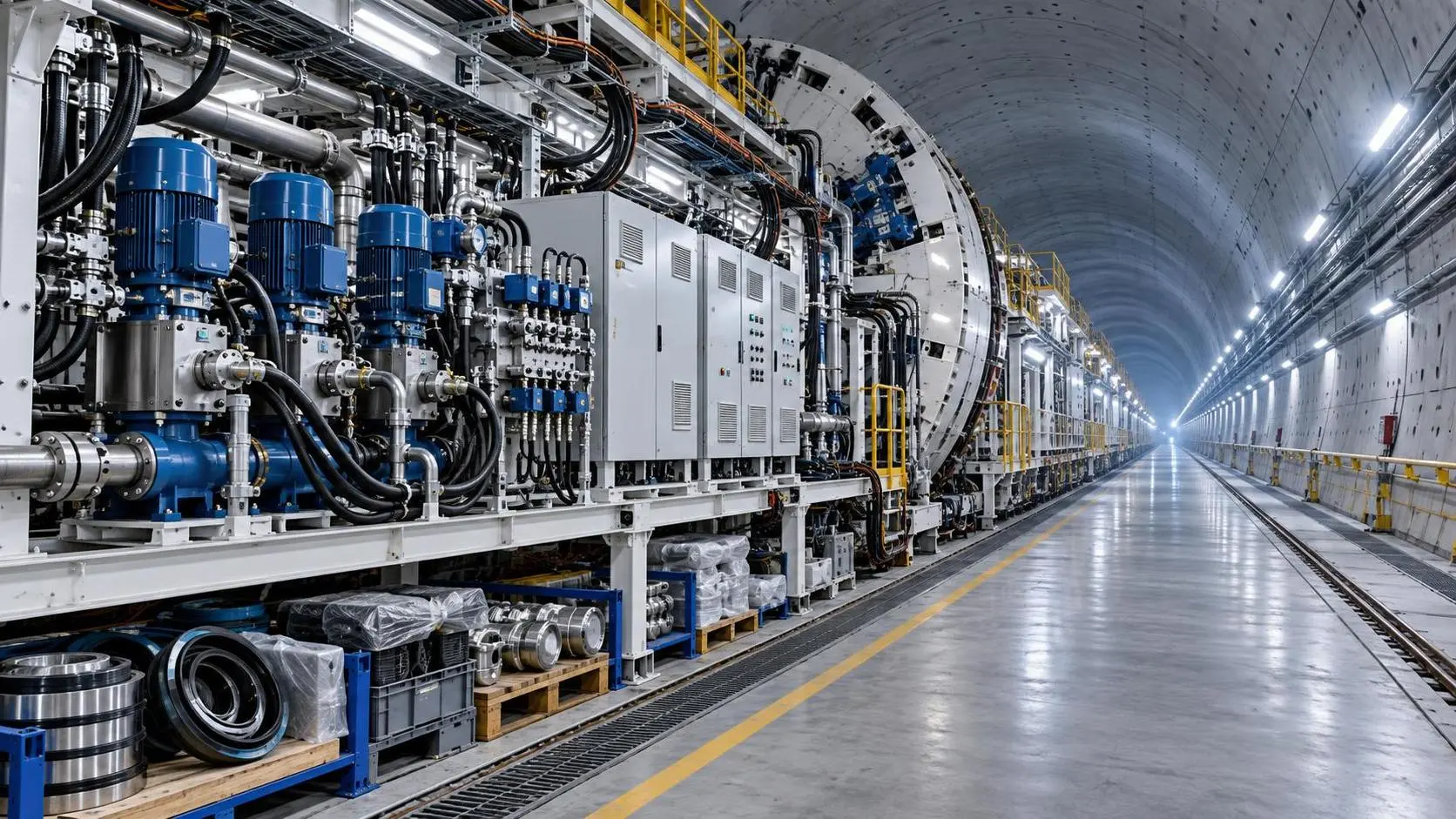
TBM backup system parts: learn how to specify reliable spares for long-distance tunnelling, reduce downtime, ensure compatibility, and speed underground recovery.

How to Size Open Pit Mining Trucks for Haul Distance, Grade, and Payload?
Open Pit Mining Trucks: learn how to match payload, haul distance, grade, road resistance, and loading capacity for safer, lower-cost mine operations.
Related News
- 00
0000-00
How to Evaluate European Drill-and-Blast Tunnelling Contractors for Complex Projects - 00
0000-00
Which Trenchless Construction Technique Fits Your Utility Crossing Conditions? - 00
0000-00
What Is Driving Metro Tunnelling Demand Across Southeast Asia’s Major Cities? - 00
0000-00
Hard Rock Tunnelling in Australia: Selecting Methods for Variable Ground Conditions - 00
0000-00
Hydropower Tunnel Excavation: Selecting Methods for Variable Rock Conditions
Weekly Insights
Stay ahead with our curated technology reports delivered every Monday.