
Bay Area Bridge-Tunnel Expo Debuts TBM Cloud Platform





On June 19, 2026, ahead of the Guangdong-Hong Kong-Macao Greater Bay Area International Bridge and Tunnel Expo scheduled for June 24–26 in Guangzhou, organizers announced a tunnel boring machine cloud platform with multilingual remote operation and maintenance functions. From an industry perspective, the development is worth attention not simply as a product release, but as a practical signal that equipment delivery, after-sales response, technical documentation, and cross-border service arrangements in the bridge and tunnel supply chain may increasingly be expected to work across languages and through remote digital access rather than only through local on-site support.
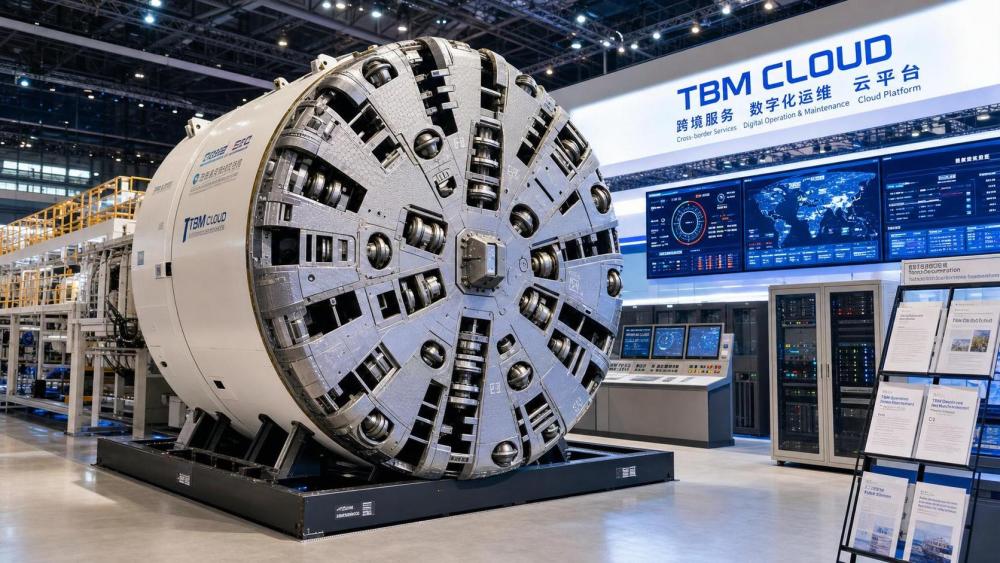
A pre-expo release centered on remote service capability
The announced platform, described as the world’s first TBM remote operation and maintenance platform with interfaces in English, Arabic, Spanish, and French, is named the TBM Intelligent Construction Cloud Center. According to the provided event summary, it will be released on June 19 before the Greater Bay Area International Bridge and Tunnel Expo opens in Guangzhou on June 24–26, 2026.
The platform has already connected equipment data from 27 Chinese manufacturers, including China Railway Equipment and Shanghai Tunnel. Based on the provided information, it can diagnose 13 types of faults in real time, including cutterhead wear, abnormal muck parameters, and unbalanced load in the propulsion system, and it can generate maintenance recommendation reports in multiple languages.
The provided summary also states that overseas customers can activate access immediately after signing a contract, with the stated effect of reducing dependence on localized service support.
Where cross-border operating rules may start to shift in practice
Export equipment suppliers may face new document expectations
Analysis shows that manufacturers and exporters of TBM-related equipment may be affected first because multilingual remote operation and maintenance changes what overseas buyers may expect at the time of delivery. The practical impact may appear in technical handover packages, maintenance instructions, fault reporting formats, and contract language around remote access rights. What deserves closer attention is whether buyers begin to treat multilingual digital support as part of normal delivery conditions rather than an optional after-sales add-on.
Procurement teams may reassess service terms, not only machine specifications
For project owners and procurement departments, the significance is not limited to machine performance. Observably, a platform that can issue multilingual maintenance recommendations and open access immediately after contract signing may influence how tenders, supplier comparisons, and service scoring are structured. The area to watch is whether procurement documents start placing more weight on remote diagnostics, response traceability, and service-language capability alongside equipment specifications.
After-sales providers and local service partners may see role changes
After-sales providers and localized service networks may also be affected because the summary explicitly links the platform to lower reliance on local support. Analysis shows that this does not automatically remove the need for field service, but it may change how responsibilities are divided between remote diagnosis and on-site intervention. Companies in service chains should pay closer attention to contract boundaries, maintenance records, and escalation procedures if remote recommendations become part of routine fault handling.
Supply-chain coordinators may need tighter data and delivery alignment
For supply-chain service providers, the operational issue is whether spare parts planning, maintenance scheduling, and fault response workflows can keep pace with real-time diagnostics from connected equipment. From an industry perspective, the rule change here is less about a formal regulation already announced and more about an execution signal: once data from multiple manufacturers is aggregated in one platform, buyers may increasingly expect more standardized service coordination across brands and delivery stages.
What companies should monitor now
Check how service commitments are described in contracts
Companies involved in export sales, procurement, or project delivery should review whether contract clauses clearly define remote access activation, response scope, report language, and the boundary between digital recommendations and physical repair obligations. The provided information confirms immediate activation after signing, but it does not provide a detailed execution framework, so this remains an area to monitor rather than a settled operating rule.
Prepare technical files for multilingual use
Observably, multilingual interfaces and maintenance reports may raise expectations for consistent terminology across manuals, troubleshooting records, and equipment status descriptions. Businesses should therefore pay attention to whether their technical files, maintenance logs, and bid materials can support multilingual use without inconsistency, especially where service commitments are linked to overseas delivery.
Watch for changes in tender language and acceptance criteria
What deserves closer attention is whether project documents begin to reference remote diagnostics, multilingual reporting, or platform-based service coordination in supplier qualification or technical evaluation. The current information does not confirm that such requirements have already been formalized, so enterprises should treat this as a possible direction signaled by the market rather than an established rule.
Track traceability and service evidence in after-sales workflows
Because the platform can diagnose specific fault categories and issue maintenance recommendations, companies should also consider how service evidence is stored and presented during delivery and after-sales stages. Analysis shows this may matter for dispute handling, quality follow-up, and internal compliance review, even though no specific certification or regulatory procedure is stated in the provided information.
Why this looks more like an execution signal than a settled rule
Analysis shows that the announcement is best understood, at this stage, as an execution signal in the bridge and tunnel equipment market rather than proof that a new formal regulatory regime has already been imposed. The concrete fact is the launch of a multilingual, cross-manufacturer remote operation and maintenance platform; the broader implication is that service capability, digital responsiveness, and multilingual traceability may begin to shape commercial expectations in procurement and export delivery.
At the same time, it remains necessary to distinguish between capability release and rule formalization. Observably, the provided information does not specify official compliance criteria, tender mandates, certification updates, or supervisory requirements tied to the platform. That is why industry participants should continue to watch how buyers, project documents, and service contracts respond after the launch.
How the market should read this development for now
From an industry perspective, this event is more appropriately understood as an early market signal that TBM support services are moving toward multilingual, remote, and data-linked execution. Its immediate importance lies in possible changes to procurement discussions, export service packaging, and after-sales coordination, rather than in any confirmed new regulation already taking full effect. A cautious reading is therefore more suitable: the platform release may influence future business rules in practice, but the exact execution standards still need to be observed in subsequent contracts, tender documents, and industry feedback.
Basis of this report and what still needs verification
This article is generated from the user-provided news title, event date, and event summary. For developments of this type, commonly relevant source categories may include official announcements, releases by regulatory authorities, customs or trade administration information, industry association updates, standard-setting documents, and reporting by authoritative media. No specific official source link was provided in the input, so the exact official reference still requires further verification.
Further observation is still needed on any detailed implementation language, certification interpretations, tender-document changes, industry feedback, and how enterprises actually apply the platform in export delivery, procurement review, and after-sales execution.
Related News

How to Evaluate European Drill-and-Blast Tunnelling Contractors for Complex Projects
Drill and blast tunnelling contractors Europe: learn how to assess geology expertise, blast control, equipment reliability, safety, and programme resilience for complex projects.

Which Trenchless Construction Technique Fits Your Utility Crossing Conditions?
Trenchless construction techniques compared for utility crossings: choose HDD, microtunnelling, pipe jacking, or auger boring based on ground, accuracy, access, and risk.

What Is Driving Metro Tunnelling Demand Across Southeast Asia’s Major Cities?
Metro tunnelling Southeast Asia is accelerating as major cities tackle congestion, flooding, and connectivity. Explore the market forces, technical risks, and opportunities shaping demand.

Hard Rock Tunnelling in Australia: Selecting Methods for Variable Ground Conditions
Hard rock tunnelling in Australia: compare TBM, drill-and-blast and hybrid methods to manage variable ground, reduce risk and protect project costs.

Hydropower Tunnel Excavation: Selecting Methods for Variable Rock Conditions
Hydropower tunnel excavation methods for variable rock conditions: compare TBM, drill-and-blast, and hybrid strategies to improve safety, progress, and project control.

How to Select Underground Safety Equipment for Tunnelling by Hazard and Work Zone
Underground Safety Equipment for tunnelling: match protection to hazards, work zones, compliance, and emergency needs with this practical selection guide.

EPB or Slurry Shield? Selecting Soft-Ground Tunnelling Equipment by Soil Conditions
Tunnel Excavation Equipment for soft ground: compare EPB and slurry shields by soil, groundwater, settlement risk, and project logistics to choose confidently.

How to Specify TBM Backup System Parts for Reliable Long-Distance Tunnelling
TBM backup system parts: learn how to specify reliable spares for long-distance tunnelling, reduce downtime, ensure compatibility, and speed underground recovery.

How to Size Open Pit Mining Trucks for Haul Distance, Grade, and Payload?
Open Pit Mining Trucks: learn how to match payload, haul distance, grade, road resistance, and loading capacity for safer, lower-cost mine operations.
Related News
- 00
0000-00
How to Evaluate European Drill-and-Blast Tunnelling Contractors for Complex Projects - 00
0000-00
Which Trenchless Construction Technique Fits Your Utility Crossing Conditions? - 00
0000-00
What Is Driving Metro Tunnelling Demand Across Southeast Asia’s Major Cities? - 00
0000-00
Hard Rock Tunnelling in Australia: Selecting Methods for Variable Ground Conditions - 00
0000-00
Hydropower Tunnel Excavation: Selecting Methods for Variable Rock Conditions
Weekly Insights
Stay ahead with our curated technology reports delivered every Monday.