
Chile Tightens Local Service Rules for Battery LHDs





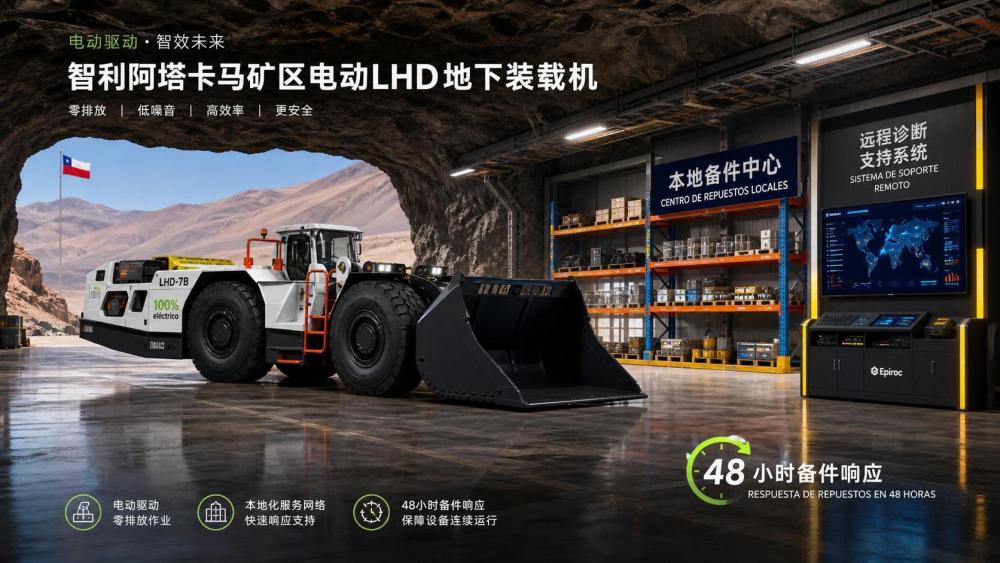
On June 18, 2026, Chile’s National Energy Commission (CNE) announced the launch of phase two of the Atacama green power and energy storage corridor, spanning mining areas from Antofagasta to Copiapó. For the mining equipment market, the more immediate point of attention is the linked policy requirement: from 2027, all newly commissioned battery-powered LHDs must be backed by a localized remote diagnostics center and a 48-hour spare parts response mechanism. This is worth close industry attention because the requirement has been written into mandatory mining tender terms, shifting service capability from a supporting feature to a market access condition.
What the new corridor policy formally establishes
According to the provided information, CNE formally launched phase two of the Atacama green power and energy storage corridor on June 18, 2026, covering mining areas between Antofagasta and Copiapó. The associated policy states that, starting in 2027, all newly deployed battery-driven LHD equipment must include a localized remote diagnostics center and a 48-hour spare parts response mechanism. The same requirement has been incorporated into mandatory clauses in national mining tenders. The provided summary also indicates that this is directly accelerating the establishment of local technical service networks in South America by Chinese battery LHD suppliers.
Where the operational impact is likely to be felt first
Equipment suppliers face a service-access threshold
From an industry perspective, suppliers of battery LHDs are likely to feel the most direct impact because compliance is tied to new equipment entering mining tenders. The effect is not limited to product delivery; it extends to after-sales architecture, diagnostics capability, spare parts planning, and local support readiness. What deserves closer attention is whether service capacity can be presented as a credible and localized operating model rather than a general overseas support promise.
Mining buyers must evaluate service readiness alongside equipment specs
For procurement teams and end users in mining, the policy suggests that equipment selection may increasingly depend on whether suppliers can satisfy the local diagnostics and parts response conditions written into tender documents. Analysis shows the practical focus may move beyond equipment performance alone toward response commitments, documentation, and the supplier’s ability to support continuous operations under the new rule.
Service network and parts support functions gain strategic weight
Observably, the policy also affects the service side of the value chain. Businesses involved in remote support, technical response, spare parts fulfillment, and local service coordination may see stronger demand because the compliance requirement is operational, not purely administrative. The key change to watch is that service responsiveness is becoming part of the commercial qualification process for battery LHD projects in this corridor.
What companies should monitor before 2027 implementation
How the tender language is applied in practice
Companies should closely track how the mandatory clauses are reflected in actual mining tender documents. Analysis shows that the policy signal is already clear, but the operational detail that matters most for suppliers and buyers is how localized remote diagnostics and 48-hour parts response are defined, evidenced, and evaluated during procurement.
Whether local capability is treated as documented infrastructure
What deserves closer attention is the difference between a policy requirement and a verifiable delivery standard. Companies active in battery LHD sales, procurement, or support should prepare for requests related to service structure, response procedures, and proof of local support arrangements, because these may become central to qualification and contract discussions.
Spare parts response planning as a bid and delivery issue
The 48-hour spare parts mechanism points directly to execution risk. From an industry perspective, this is not only a service promise issue but also a supply chain and fulfillment issue. Firms should pay attention to whether their current parts planning, local stocking approach, and response workflow can align with a tender-driven obligation rather than an informal customer expectation.
Communication with customers and partners in South America
The provided information indicates that Chinese battery LHD suppliers are being pushed to accelerate local technical service network deployment in South America. In practical terms, this means companies should pay attention to how they communicate readiness, compliance scope, and support commitments to regional customers and partners, especially where tender participation may depend on confidence in local execution.
Why this looks like more than a one-off project update
Analysis shows this development is not only about the start of another infrastructure phase in northern Chile. It also signals that for battery-powered LHD deployment in the covered mining belt, localized operations and maintenance support is becoming embedded in market entry conditions. At the same time, it is more appropriate to understand this as a policy-backed directional shift rather than a fully settled market outcome, because the practical effects will depend on how procurement, compliance review, and service execution unfold from 2027 onward.
How this update is best understood now
At this stage, the news is best read as a clear near-term operating signal with longer-term strategic implications. The confirmed fact is that localized remote diagnostics and 48-hour spare parts response have moved into mandatory tender language for new battery LHD deployments from 2027. The broader industry meaning, based on observation, is that suppliers, buyers, and service organizations will need to treat local support capability as a core part of project eligibility in northern Chile rather than a secondary post-sale function.
Basis of this report and points for continued verification
This article is based on the user-provided news title, event date, and event summary. For reporting of this type, commonly relevant source categories may include official government announcements, company statements, industry association updates, authoritative media coverage, and standard-setting or tender-related documents. No specific official source link was provided in the input, so the underlying wording and any subsequent implementation details still require ongoing verification. Follow-up attention should remain on future official tender language, implementation guidance, and any further clarification of what qualifies as localized diagnostics and a 48-hour spare parts response mechanism.
Related News
How to Evaluate European Drill-and-Blast Tunnelling Contractors for Complex Projects
Drill and blast tunnelling contractors Europe: learn how to assess geology expertise, blast control, equipment reliability, safety, and programme resilience for complex projects.
Which Trenchless Construction Technique Fits Your Utility Crossing Conditions?
Trenchless construction techniques compared for utility crossings: choose HDD, microtunnelling, pipe jacking, or auger boring based on ground, accuracy, access, and risk.
What Is Driving Metro Tunnelling Demand Across Southeast Asia’s Major Cities?
Metro tunnelling Southeast Asia is accelerating as major cities tackle congestion, flooding, and connectivity. Explore the market forces, technical risks, and opportunities shaping demand.
Hard Rock Tunnelling in Australia: Selecting Methods for Variable Ground Conditions
Hard rock tunnelling in Australia: compare TBM, drill-and-blast and hybrid methods to manage variable ground, reduce risk and protect project costs.
Hydropower Tunnel Excavation: Selecting Methods for Variable Rock Conditions
Hydropower tunnel excavation methods for variable rock conditions: compare TBM, drill-and-blast, and hybrid strategies to improve safety, progress, and project control.
How to Select Underground Safety Equipment for Tunnelling by Hazard and Work Zone
Underground Safety Equipment for tunnelling: match protection to hazards, work zones, compliance, and emergency needs with this practical selection guide.
EPB or Slurry Shield? Selecting Soft-Ground Tunnelling Equipment by Soil Conditions
Tunnel Excavation Equipment for soft ground: compare EPB and slurry shields by soil, groundwater, settlement risk, and project logistics to choose confidently.
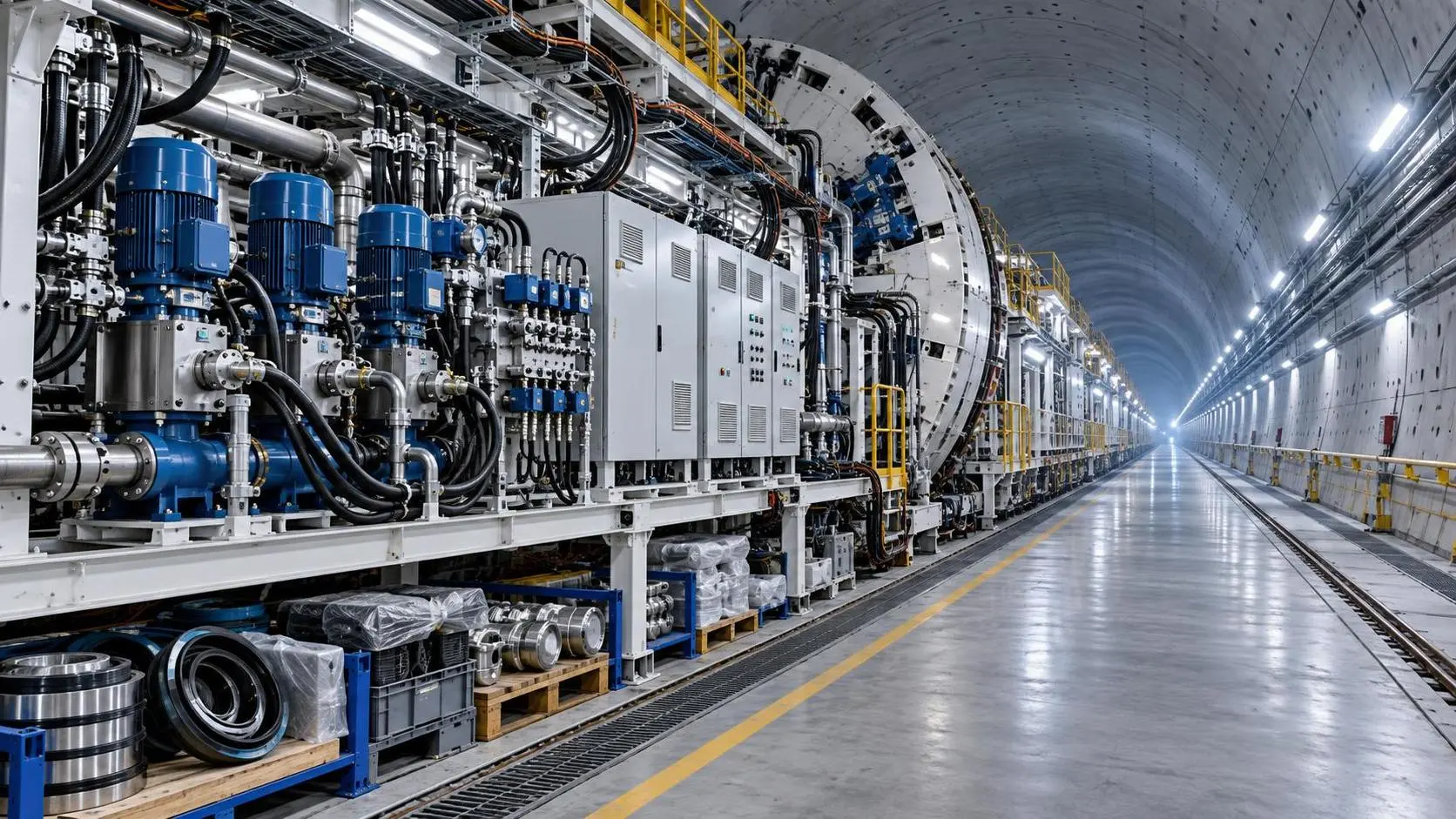
How to Specify TBM Backup System Parts for Reliable Long-Distance Tunnelling
TBM backup system parts: learn how to specify reliable spares for long-distance tunnelling, reduce downtime, ensure compatibility, and speed underground recovery.

How to Size Open Pit Mining Trucks for Haul Distance, Grade, and Payload?
Open Pit Mining Trucks: learn how to match payload, haul distance, grade, road resistance, and loading capacity for safer, lower-cost mine operations.
Related News
- 00
0000-00
How to Evaluate European Drill-and-Blast Tunnelling Contractors for Complex Projects - 00
0000-00
Which Trenchless Construction Technique Fits Your Utility Crossing Conditions? - 00
0000-00
What Is Driving Metro Tunnelling Demand Across Southeast Asia’s Major Cities? - 00
0000-00
Hard Rock Tunnelling in Australia: Selecting Methods for Variable Ground Conditions - 00
0000-00
Hydropower Tunnel Excavation: Selecting Methods for Variable Rock Conditions
Weekly Insights
Stay ahead with our curated technology reports delivered every Monday.