
Indonesia Requires ISO 50001 for Slurry Pipe Jacking Equipment Imports from June 2026





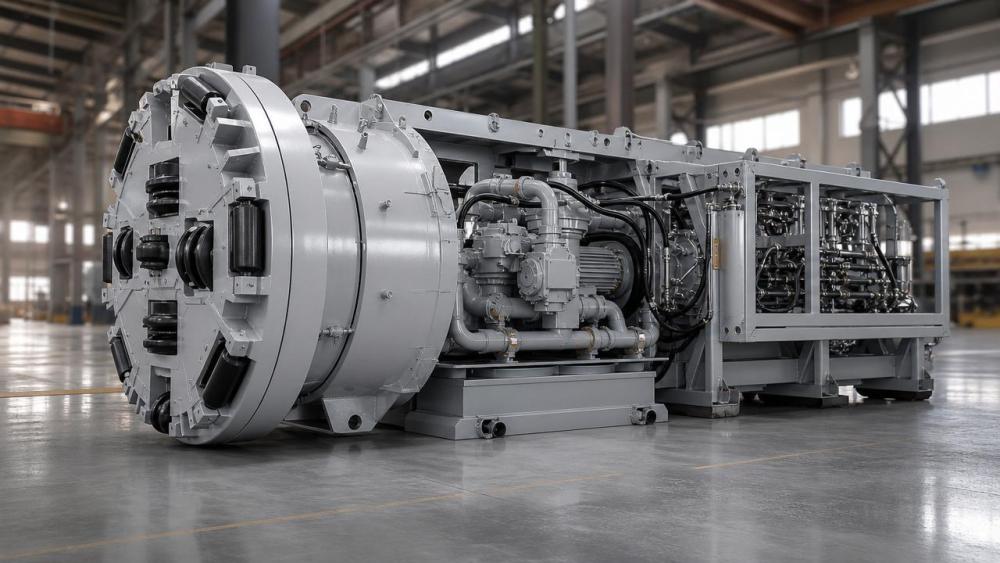
Starting 1 June 2026, Indonesia will require all imported slurry pipe jacking equipment—including pump systems, sealing units, and control modules—to be accompanied by a valid ISO 50001 Energy Management System certificate issued by an accredited certification body in the manufacturer’s country of origin. The certificate must explicitly state the equipment’s unit excavation energy consumption (kWh/m). This measure directly affects Chinese manufacturers exporting such equipment to Indonesia and signals a tightening of technical compliance requirements for infrastructure-related machinery entering the Indonesian market.
Event Overview
On 27 May 2026, Indonesia’s Ministry of Energy and Mineral Resources (ESDM) issued Technical Circular No. 18, effective 1 June 2026. The circular mandates that importers of slurry pipe jacking equipment must present, at customs clearance, an ISO 50001 certificate issued in the exporting country. For Chinese exporters, this means the certificate must originate from a China-based accreditation body recognized under ISO/IEC 17065 or equivalent international recognition frameworks. Absence of this documentation will result in denial of customs release.
Industries Affected
Export-Oriented Machinery Manufacturers (China)
Chinese companies producing slurry pipe jacking systems are directly affected, as they must now hold ISO 50001 certification covering the specific equipment models intended for export. Certification must include documented energy performance indicators—particularly kWh/m—verified through test protocols aligned with the equipment’s operational scope.
International Trade & Logistics Service Providers
Firms handling customs clearance, documentation verification, or pre-shipment compliance checks for heavy construction equipment face new verification responsibilities. They must confirm not only the existence of the ISO 50001 certificate but also its validity, scope alignment (i.e., inclusion of the exact equipment type and energy metric), and issuing body’s accreditation status per Indonesian customs requirements.
Engineering Contractors & EPC Firms Operating in Indonesia
Contractors sourcing slurry pipe jacking equipment from China for underground utility or tunneling projects in Indonesia may encounter procurement delays or cost adjustments. If their preferred supplier lacks ISO 50001 certification, alternative sourcing or extended lead times for certification acquisition become necessary—potentially impacting project timelines and tender compliance.
Key Considerations and Recommended Actions
Monitor Official Implementation Guidance from ESDM and Indonesian Customs
While Technical Circular No. 18 is published, detailed implementation procedures—including acceptable accreditation bodies, certificate translation requirements, and transitional arrangements—are pending. Exporters and logistics partners should track official updates via ESDM’s public notices and the Directorate General of Customs and Excise portal.
Verify Certification Scope and Unit Energy Data Before Shipment
Certificates must specify unit excavation energy consumption (kWh/m) for the exact equipment configuration being imported—not generic or theoretical values. Companies should engage certified third-party testing labs early to ensure measurement methodology meets Indonesian technical expectations, particularly regarding load profile, soil simulation, and real-time power logging during performance validation.
Assess Supply Chain Readiness Across Tier-1 and Tier-2 Suppliers
ISO 50001 certification applies to the equipment manufacturer—not just the exporter. If sub-assemblies (e.g., hydraulic pumps or PLC control units) are sourced externally, the final integrator must ensure energy performance data is traceable and verifiable across the supply chain. Documentation gaps at component level may invalidate the overall certificate.
Prepare for Potential Lead-Time Extension in Certification Acquisition
Obtaining ISO 50001 certification typically requires 3–6 months, including gap analysis, system implementation, internal audit, and external certification audit. Chinese manufacturers without existing energy management systems should initiate the process no later than Q3 2025 to meet the June 2026 deadline.
Editorial Perspective / Industry Observation
Observably, this requirement reflects Indonesia’s broader shift toward embedding energy efficiency criteria into technical import regulations—not merely as voluntary best practice, but as a mandatory gatekeeping condition. Analysis shows it is less about immediate market exclusion and more about institutionalizing measurable sustainability accountability across infrastructure supply chains. From an industry perspective, this is currently best understood as a regulatory signal: it does not yet apply to other trenchless technologies (e.g., microtunneling or auger boring systems), nor does it reference harmonized regional standards such as ASEAN MRA. Its narrow scope suggests pilot-phase intent—making continued monitoring of follow-up circulars critical.
It is not yet a de facto barrier for all Chinese machinery exports, but rather a precedent-setting step targeting high-energy-consumption civil engineering equipment. The emphasis on kWh/m—a performance-based metric rather than a design standard—indicates future regulations may increasingly link market access to verified operational efficiency, not just conformity with static specifications.
Conclusion: This regulation marks a procedural inflection point for Chinese exporters of specialized trenchless construction equipment—not a sweeping trade restriction, but a calibrated compliance threshold. It underscores the growing convergence of energy policy and industrial trade regulation in emerging infrastructure markets. Current understanding should emphasize preparedness over panic: the rule is specific, time-bound, and technically actionable—provided stakeholders treat it as a documented, verifiable, and supply-chain-wide obligation rather than a standalone paperwork requirement.
Source: Indonesia Ministry of Energy and Mineral Resources (ESDM), Technical Circular No. 18, issued 27 May 2026.
Note: Implementation details—including list of accepted accreditation bodies, certificate translation rules, and transitional provisions—remain pending official publication and are subject to ongoing observation.
Related News

How to Evaluate European Drill-and-Blast Tunnelling Contractors for Complex Projects
Drill and blast tunnelling contractors Europe: learn how to assess geology expertise, blast control, equipment reliability, safety, and programme resilience for complex projects.

Which Trenchless Construction Technique Fits Your Utility Crossing Conditions?
Trenchless construction techniques compared for utility crossings: choose HDD, microtunnelling, pipe jacking, or auger boring based on ground, accuracy, access, and risk.

What Is Driving Metro Tunnelling Demand Across Southeast Asia’s Major Cities?
Metro tunnelling Southeast Asia is accelerating as major cities tackle congestion, flooding, and connectivity. Explore the market forces, technical risks, and opportunities shaping demand.

Hard Rock Tunnelling in Australia: Selecting Methods for Variable Ground Conditions
Hard rock tunnelling in Australia: compare TBM, drill-and-blast and hybrid methods to manage variable ground, reduce risk and protect project costs.

Hydropower Tunnel Excavation: Selecting Methods for Variable Rock Conditions
Hydropower tunnel excavation methods for variable rock conditions: compare TBM, drill-and-blast, and hybrid strategies to improve safety, progress, and project control.

How to Select Underground Safety Equipment for Tunnelling by Hazard and Work Zone
Underground Safety Equipment for tunnelling: match protection to hazards, work zones, compliance, and emergency needs with this practical selection guide.

EPB or Slurry Shield? Selecting Soft-Ground Tunnelling Equipment by Soil Conditions
Tunnel Excavation Equipment for soft ground: compare EPB and slurry shields by soil, groundwater, settlement risk, and project logistics to choose confidently.

How to Specify TBM Backup System Parts for Reliable Long-Distance Tunnelling
TBM backup system parts: learn how to specify reliable spares for long-distance tunnelling, reduce downtime, ensure compatibility, and speed underground recovery.
How to Size Open Pit Mining Trucks for Haul Distance, Grade, and Payload?
Open Pit Mining Trucks: learn how to match payload, haul distance, grade, road resistance, and loading capacity for safer, lower-cost mine operations.
Related News
- 00
0000-00
How to Evaluate European Drill-and-Blast Tunnelling Contractors for Complex Projects - 00
0000-00
Which Trenchless Construction Technique Fits Your Utility Crossing Conditions? - 00
0000-00
What Is Driving Metro Tunnelling Demand Across Southeast Asia’s Major Cities? - 00
0000-00
Hard Rock Tunnelling in Australia: Selecting Methods for Variable Ground Conditions - 00
0000-00
Hydropower Tunnel Excavation: Selecting Methods for Variable Rock Conditions
Weekly Insights
Stay ahead with our curated technology reports delivered every Monday.