
Thailand Plans to Block Chemical Exports for Rare Earth Mining in Myanmar





Thailand plans to stop exports of chemicals used in rare earth mining in Myanmar in response to cross-border pollution, according to remarks by Thailand’s deputy prime minister reported by Reuters and Mining.com. The proposed restriction would affect an input used by Myanmar’s rare earth mines, linking an environmental concern directly to the continuity of mining supply chains.
The immediate question for the industry is how the proposed measure would be defined and put into effect. Its impact on mining activity would depend on which chemicals are covered, when any restriction takes effect and whether affected operations can obtain suitable supplies through other channels.
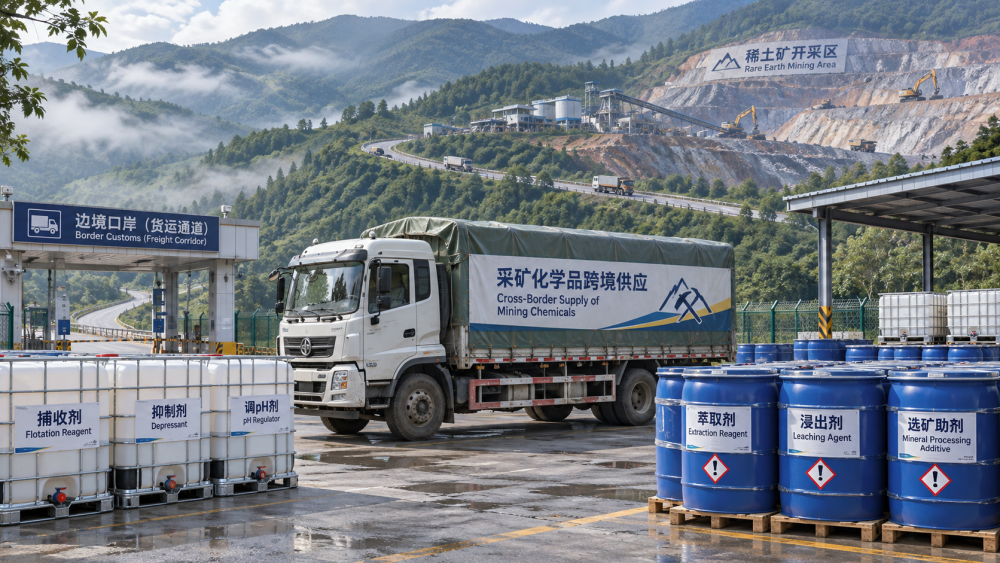
From chemical supplies to mine output
Chemicals used in mining are production inputs. If a mine cannot obtain an input needed for its operations, it may have to adjust production or interrupt work until supplies are restored. The proposed Thai restriction therefore has a direct potential route into mining activity in Myanmar, although the scale and timing of any disruption remain dependent on the eventual rules and the circumstances of individual operations.
The effect would not necessarily be immediate or uniform. Operations with existing inventories may be able to continue for a period, while those relying on frequent deliveries could face pressure sooner. The availability, suitability and cost of alternative supplies would also affect how long any interruption lasts. These are possible differences between operations, rather than established outcomes of the proposed measure.
For companies that purchase material from affected mines, the first concern may be delivery reliability rather than an immediate change in production. A disruption at the chemical supply stage would take time to pass through mining operations and subsequent transactions. Whether it reaches buyers would depend in part on available inventories and the duration of any restriction.
Environmental policy and supply continuity
The stated reason for the plan is cross-border pollution. The proposal shows how a government response to an environmental issue can also affect access to materials used in mineral production. It does not, by itself, establish the extent of pollution or demonstrate how much mining activity would be reduced.
The event also illustrates a wider supply-chain exposure: production can depend on inputs crossing a border, so a trade restriction on those inputs may affect output even when the mineral itself is not the direct subject of the measure. The practical consequences would depend on the measure’s design and on the alternatives available to mines.
Further official announcements will be relevant to the scope and implementation of the plan. Subsequent reporting on chemical availability, mine operations and deliveries could help show whether the proposed restriction translates into a sustained supply disruption.
Share your questions or requirements, and our team will get in touch.
We respect your privacy. Your information is strictly confidential.
Related News
 Chinese-Made 16-Meter Shield Machine Completes Yangtze River CrossingA Chinese-made 16-meter shield machine completes a 7.46-kilometer Yangtze River crossing. Explore the milestone and what comes next for the highway tunnel.
 DRC to Reinstate Four-Month Cobalt Export Ban on November 30DRC cobalt export ban starts November 30, 2026. Explore its potential impact on global supply, battery costs and mining equipment demand.
 Thailand Plans to Block Chemical Exports for Rare Earth Mining in MyanmarThailand plans to block chemical exports for rare earth mining in Myanmar. Explore the pollution concerns and potential supply chain impacts.
 Western TBM Exports Face Scrutiny Over Potential Iranian Military UseWestern TBM exports face scrutiny over potential Iranian military use. Explore the implications for end-user checks, supply chains and export compliance.
 China’s Transport Ministry Issues Highway Tunnel Upgrade StandardChina’s highway tunnel upgrade standard takes effect December 1, 2026. Explore potential implications for contractors, project owners and equipment suppliers.
 Three Export Control Notices Take Effect November 18, Adding Tunnel Boring MachinesChina export controls add tunnel boring machines to the dual-use list. Explore potential licensing implications for equipment, components and project delivery.
 China Extends Rare Earth Export Control Exemptions Until January 2027China extends rare earth export control exemptions until January 2027. Discover what the extension means for global supply chains and manufacturers.
 China's TBM Export Controls Prompt Infrastructure Concerns in IndiaChina's TBM export controls could affect infrastructure projects in India. Explore potential supply risks and practical procurement steps.

Related News
- 00
0000-00
Dinghai Shield Machine Passes 5,000 Metres in Jintang Undersea Tunnel - 00
0000-00
Pipe Jacking Machine Cost: Key Price Factors and What to Budget - 00
0000-00
Bauma China 2026 Closes as Visitor Numbers Rise 21% - 00
0000-00
Chinese-Made 16-Meter Shield Machine Completes Yangtze River Crossing - 00
0000-00
Hydrogen Mining Truck Price: What Drives the Purchase Cost?
Weekly Insights
Stay ahead with our curated technology reports delivered every Monday.