
Pipe Jacking Machine Cost: Key Price Factors and What to Budget





Pipe Jacking Machine cost cannot be reduced to a dependable single price: procurement teams need a quotation matched to the required diameter, geology, drive length and equipment scope. A lower machine price may still lead to a higher project bill if it excludes the separation plant, jacking frame, tooling, freight or commissioning. Start with a complete project specification, then compare suppliers on the same delivered and operational basis.
There is no reliable universal purchase-price range in the information available for this guide. The practical budgeting task is therefore to obtain comparable, project-specific quotations and add the costs and risks that sit outside each offer. The sections below set out what to specify, what to ask suppliers to include and how to judge ownership against rental or subcontracting.
Define the machine requirement before asking for a price
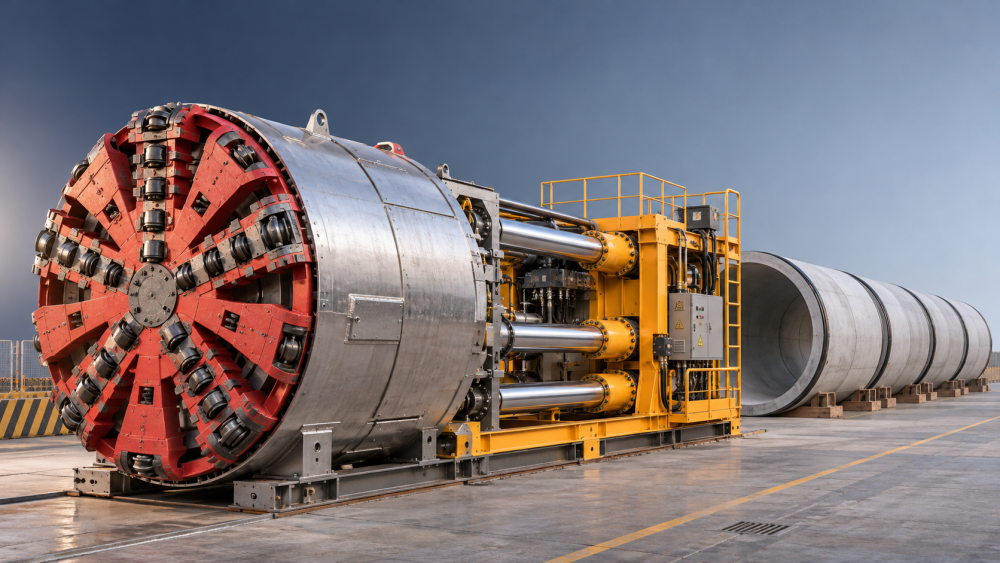
A pipe jacking machine excavates at the face while hydraulic jacks push the pipe string forward from a launch shaft. It must control the excavation and maintain alignment under the ground and groundwater conditions expected along the drive. For procurement purposes, the first distinction is between the machine package and the complete pipe jacking operation: shafts, pipes, ground treatment and site works are not necessarily part of the equipment supplier’s scope.
Issue a common information pack to all bidders. At a minimum, state the pipe outside diameter and internal clearance, required line and grade, individual drive lengths, launch and reception shaft dimensions, available site space, and the anticipated working schedule. Include the ground investigation and groundwater information available, identifying gaps rather than presenting assumptions as confirmed conditions.
Also describe the project’s constraints: road or rail crossings, nearby utilities and structures, permissible settlement, environmental controls, and access for heavy deliveries. Ask bidders to identify where those conditions affect machine selection, production assumptions or the need for additional equipment. If the ground data is incomplete, request a base offer and priced alternatives for the plausible conditions rather than a single unqualified price.
Which factors have the greatest effect on price?
Diameter and drive length set the equipment envelope
Diameter affects the size of the cutting head and shield, the power and thrust system, transport arrangements and the space needed in the launch shaft. A larger diameter is not just a larger cutterhead: it may require a different jacking frame, more substantial handling equipment and a larger support installation. Confirm whether quoted dimensions refer to the machine, excavation or finished pipe; these are not interchangeable.
Drive length influences the jacking-force assessment, lubrication provisions and the potential need for intermediate jacking stations within the pipe string. Suppliers should state the assumptions behind their thrust calculations, including pipe characteristics and ground conditions. A quoted maximum drive length without those assumptions is not a guarantee that the machine can complete the proposed drive.
Ground conditions determine cutting and face-control needs
Soft ground, mixed ground and rock place different demands on the cutting head, tools and spoil-removal system. Abrasive material can increase cutter wear; cobbles, obstructions or changing strata can affect both the selected configuration and the time required for intervention. Groundwater pressure and the risk of ground movement also influence how excavation-face stability must be managed.
For example, two otherwise similar drives may require different budgets if one is in relatively consistent soil and the other crosses mixed ground with a high groundwater level. The second quotation may need a different cutting arrangement, more demanding face-pressure control and a larger allowance for wear or intervention. This is an illustrative comparison, not a prediction of performance at a particular site.
Control systems and tolerances change the offer
Steering and guidance equipment help the operator maintain the specified alignment. Compare what is included: guidance hardware, control software, operator displays, data logging and any remote support may be offered as a package or priced separately. The required line and grade, expected drive length and access for checks all affect the appropriate specification.
A more sophisticated system is not automatically the better purchase. Ask how the supplier’s proposed system supports the project’s tolerances, what calibration and maintenance it requires, and who owns and can access the operating data. Confirm any recurring software, connectivity or support charges over the planned ownership period.
Support equipment can be a major scope difference
Depending on the excavation method, a complete working spread may include a main jacking frame and power pack, control cabin, guidance system, spoil transport equipment, slurry circulation and separation equipment, lubrication system, electrical distribution and pipe-handling arrangements. Not every machine uses the same systems, and suppliers may define a “complete set” differently.
Require an itemized equipment list with capacities, interfaces and exclusions. In particular, check whether pumps, hoses, cables, tanks, separation equipment, spare wear parts and installation materials are included. Where another contractor supplies an item, assign responsibility for sizing it and verifying that it is compatible with the machine.
Build a budget beyond the machine quotation
Separate the equipment acquisition budget from the wider project budget, but track both. This prevents costs from disappearing between the machine supplier, civil contractor and site operator. Use a consistent currency, delivery location and planned delivery date when comparing bids; identify taxes and exchange-rate exposure separately.
Delivery terms deserve particular attention. A price delivered to a port is not equivalent to a price delivered and unloaded at the jobsite. Specify the delivery point and the applicable contractual trade term, then identify who bears insurance, import clearance, unloading and any exceptional transport costs. Obtain logistics estimates for the actual machine dimensions and weights, including separate support units.
Commissioning costs depend on the agreed scope. Clarify whether the supplier’s personnel will merely supervise assembly or also conduct functional tests, assist during initial excavation and train operators and maintenance staff. State the number of personnel and days included, the language of documentation and the rate for additional support.
Allow separately for uncertainty. Tool consumption, production rates, ground treatment and intervention needs may change as investigation or excavation progresses. A contingency should reflect the project’s risk assessment and remaining unknowns; it should not substitute for identifying missing scope or obtaining a defensible quotation.
Compare bids on a like-for-like basis
The lowest quoted price is meaningful only after exclusions, technical differences and commercial terms have been reconciled. Create a comparison sheet using the same line items for every bidder and record whether each item is included, optional, excluded or assumed to be supplied by others. Price missing items with a separate supplier quote where possible; otherwise flag them as unresolved rather than assigning an invented value.
- Check technical compliance. Compare the offered diameter, thrust, torque, power, pressure-control capability and guidance arrangement against the project specification. Ask suppliers to state operating assumptions and limitations, not just catalog ratings.
- Normalize the scope. Add priced options needed to make each offer workable, including support equipment, initial tooling and commissioning. Record any remaining differences that cannot yet be priced.
- Normalize delivery and commercial terms. Compare offers at the same delivery point and currency, including known freight, duties and taxes. Review payment milestones, validity period, lead time and conditions for price adjustment.
- Assess support and risk. Check spare-parts lead times, service coverage, warranty exclusions, training and access to technical documentation. A cheaper offer may expose the buyer to more downtime or require additional local support.
- Document deviations. Require each bidder to list departures from the inquiry and explain their operational consequences. Resolve material deviations before selecting a preferred offer.
Do not compare quoted production rates without checking their basis. Rates may depend on ground conditions, shift length, pipe handling, planned maintenance and stoppages. Ask whether figures are estimates, ratings or results from a defined test, and what activities are excluded. Use project-specific scheduling assumptions when calculating equipment utilization and cost per completed drive.
Decide whether to buy, rent or subcontract
Buying can be attractive when a contractor expects enough suitable work to spread acquisition, maintenance and storage costs across several drives. The case weakens if future diameter or ground requirements are uncertain, the machine will sit idle, or local service and spares are difficult to secure. A machine optimized for one project should not be assumed to fit the next without modification.
Rental may reduce the initial capital commitment and transfer some residual-value risk, but the agreement must specify rental duration, mobilization, maintenance, wear parts, damage and off-hire conditions. A short delay in returning equipment can change the comparison if the rental continues while the site is not productive. Confirm availability for the required configuration and dates before relying on rental in the project budget.
Subcontracting can place the machine and specialist crew under one contractor’s scope. Even then, the buyer must define responsibilities for shafts, pipe supply, spoil disposal, utilities, ground information and unforeseen conditions. Compare the subcontract price against the full cost of self-performance, including supervision and interface risk—not just the machine purchase price.
Use a defined ownership period for total cost
For an ownership decision, select a planning period and estimate the number and type of drives the equipment can realistically serve. Calculate total cost as acquisition and delivery, plus commissioning, operating costs, maintenance, financing where applicable, storage and eventual disposal or resale preparation, less any defensible residual value. Keep project civil works visible but separate if they are common to all procurement options.
Then test the assumptions that matter most: utilization, tool wear, repair time, freight and residual value. An illustrative calculation can compare a base case with lower utilization and higher wear, but neither case is a supplier guarantee. If the decision changes materially under plausible alternatives, seek better ground data, firmer service terms or a different commercial arrangement before committing.
Verify documents and acceptance before signing
Ask for drawings and an itemized bill of supply, performance and interface data, electrical and hydraulic requirements, operating and maintenance manuals, recommended spare parts, and a clear warranty statement. Confirm which safety and conformity documents are required for the destination and intended use; applicable obligations depend on the jurisdiction and equipment configuration. Check the documents against the actual machine being supplied, not only a generic product brochure.
The contract should distinguish factory inspection from site acceptance. Agree which functions will be checked before shipment, which require installation at site, the test conditions, responsible personnel and the procedure for correcting defects. A factory test can verify specified functions under agreed conditions; it does not by itself prove excavation performance in the project’s ground.
Finally, link payment milestones and closeout documents to observable deliverables. Procurement is ready to make a defensible decision when the technical scope is compatible with the drive, material exclusions have an owner and budget, and the comparison captures delivery, support and lifecycle costs over the same period. Any remaining ground or performance uncertainty should be recorded as a project risk rather than treated as a confirmed machine capability.
Share your questions or requirements, and our team will get in touch.
We respect your privacy. Your information is strictly confidential.
Related News
 Pipe Jacking Machine Cost: Key Price Factors and What to BudgetPipe Jacking Machine cost depends on diameter, ground conditions and equipment scope. Explore key price factors and build a reliable project budget.
 Bauma China 2026 Closes as Visitor Numbers Rise 21%Bauma China 2026 reports a 21% rise in visitors. Explore what interest in mining trucks, underground machinery and automation could mean for buyers.
 Underground Communication Systems: Choosing Coverage for Mines and TunnelsCompare Underground Communication Systems for mines and tunnels. Explore coverage options, reliability, and testing to choose the right solution.
 Global Mine Permitting Delays Ease, but the United States Still LagsMine permitting delays are easing globally, but the United States still lags. Explore what this means for project timelines and mining equipment demand.
 Underground Excavation Safety: How to Control Ground and Air HazardsUnderground excavation safety starts with stable ground and breathable air. Discover practical controls, monitoring tips and stop-work triggers.
 Mega Tunnel Contractors: How to Evaluate Experience and Project RisksEvaluate mega tunnel contractors with confidence. Learn how to assess relevant experience, ground risks, construction plans, and bid assumptions before award.
 Smart Underground Mining Analytics: Using Equipment Data to Reduce DowntimeSmart underground mining analytics turns equipment data into actionable insights. Discover how to reduce downtime and improve maintenance decisions.
 Choosing a TBM Components Supplier: Lead Times, Quality and CompatibilityChoose a TBM components supplier with confidence. Compare lead times, quality evidence and compatibility to reduce procurement risk and keep your project moving.
Related News
- 00
0000-00
Dinghai Shield Machine Passes 5,000 Metres in Jintang Undersea Tunnel - 00
0000-00
Pipe Jacking Machine Cost: Key Price Factors and What to Budget - 00
0000-00
Bauma China 2026 Closes as Visitor Numbers Rise 21% - 00
0000-00
Chinese-Made 16-Meter Shield Machine Completes Yangtze River Crossing - 00
0000-00
Hydrogen Mining Truck Price: What Drives the Purchase Cost?
Weekly Insights
Stay ahead with our curated technology reports delivered every Monday.