
Hydrogen Mining Truck Price: What Drives the Purchase Cost?





The hydrogen mining truck price cannot be assessed from payload capacity alone. The quoted vehicle cost reflects the size of the fuel cell, battery and hydrogen storage system, as well as the work required to integrate them into a mining chassis. A complete procurement budget must also account for fueling equipment, site modifications, commissioning, spare parts and the energy needed to move each tonne of material.
Publicly comparable prices are limited, especially for large haul trucks supplied through pilot programs or site-specific contracts. A meaningful comparison starts with a defined duty cycle and a written breakdown of what the quotation includes. Two offers for the same nominal payload can cover very different levels of engineering, infrastructure and support.
What is included in the quoted truck price?
A hydrogen-powered haul truck generally uses a fuel cell to generate electricity, a battery to handle changes in power demand, and electric traction motors to drive the wheels. The fuel cell converts hydrogen into electricity; the battery supplies additional power during demanding periods and can recover energy during braking. Suppliers differ in how they package those systems and in whether they offer a new vehicle, a conversion or a development unit.
The boundary of supply can change the apparent price substantially. A vehicle-only offer excludes costs that another supplier includes in a delivered and commissioned package. Request a line-item schedule that identifies the following:
- Chassis, dump body, traction system, fuel cell modules, battery, hydrogen tanks and onboard controls.
- Site-specific engineering, performance modeling, integration with dispatch systems and operator interfaces.
- Freight, assembly, commissioning, initial training and acceptance testing.
- Initial spare parts, diagnostic software, service tooling and the duration of included support.
- Fueling station equipment, hydrogen supply connections and civil works, if offered as part of the same contract.
Also distinguish a firm commercial offer from an indicative engineering estimate. An estimate based on incomplete haul-route data can omit cooling capacity, structural changes or fueling equipment that becomes necessary after detailed design. Identify assumptions, exclusions and the process for pricing changes before comparing totals.
Vehicle specifications that drive purchase cost
Payload, grade and required cycle time
Higher payload capacity calls for a larger vehicle and greater traction effort, but payload alone does not establish the powertrain size. Route length, rolling resistance, altitude, ambient temperature, loaded uphill gradients and target cycle time determine how much power and energy the truck must deliver. A short, steep climb can set the peak power requirement even when the average energy use appears manageable.
Compare offers at the same net payload and production rate. Hydrogen tanks, batteries and protective structures add mass and occupy space. If that mass reduces the material carried on each trip, matching annual output could require more trips or additional trucks. Ask whether quoted payload is available with full hydrogen tanks, the specified body, operator and required safety equipment.
Braking conditions matter too. A loaded downhill route offers opportunities for regenerative braking, provided the battery can accept the energy at the required rate. A long descent can exceed the battery’s available capacity or charging power, so friction or other braking systems still need to be sized for the duty. A truck designed for an uphill loaded route will not necessarily have the same optimal configuration.
Fuel cell and battery sizing
Fuel cell capacity affects purchase price through the number and rating of modules, power electronics, cooling equipment and integration work. A larger fuel cell can sustain more electrical output, while a smaller unit paired with a larger battery can cover short power peaks. Neither arrangement is inherently cheaper over the vehicle’s life: the result depends on the duration of climbs, opportunities to recover energy and the time available for the battery to recharge during operation.
Battery specifications should include usable energy, peak charge and discharge power, thermal limits and the operating window assumed in the duty-cycle model. A large nominal battery does not guarantee that enough energy is available throughout a shift. Reserve capacity and limits on charge or discharge can reduce the energy available for hauling.
Fuel cell cooling deserves separate attention. Mine dust, high ambient temperature and sustained heavy loading affect the heat that must be rejected. Larger cooling packs, filtration, protective housings and access for cleaning add cost and can alter vehicle layout. If the design reduces power when temperatures rise, the production model should reflect that operating condition.
Hydrogen storage and vehicle integration
Onboard storage capacity is determined by the energy needed between refueling events, the reserve required by the operating plan and the usable amount of hydrogen under specified conditions. Tank capacity alone is not equivalent to shift range: the remaining usable fuel, fueling conditions and actual consumption all affect the distance or number of cycles available.
Storage vessels, pressure regulation, piping, valves, leak detection and protective structures add cost and occupy space. Their location affects maintenance access, visibility, ground clearance and protection from impacts. A conversion can require substantial redesign if the original chassis has no suitable space for the tanks and associated components.
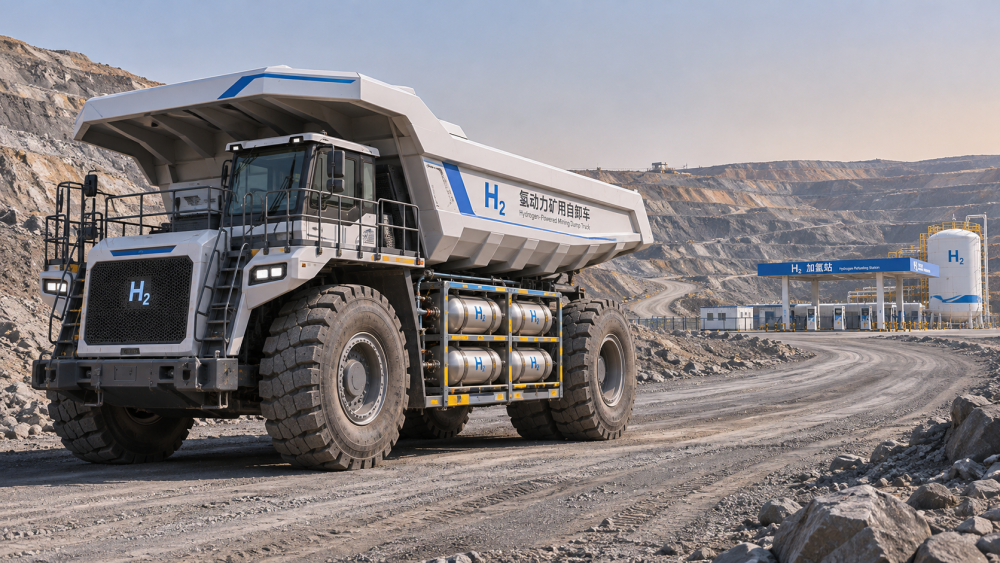
Ask the supplier to show the proposed arrangement and identify components that must be removed to service the powertrain. A compact installation can look attractive on a drawing yet lead to longer maintenance downtime if tanks or body structures obstruct access to frequently serviced items.
New truck or hydrogen conversion?
A new vehicle designed around the hydrogen system can integrate storage, cooling and electrical equipment from the outset. A conversion uses an existing chassis, but the remaining vehicle condition and the division of engineering responsibility have a direct effect on its price and risk.
A conversion quote that excludes chassis inspection or repair is not directly comparable with a new-truck offer. Record the assumed condition of the donor vehicle and agree on how cracks, worn components or unexpected corrosion discovered during disassembly will be priced. Warranty exclusions at the interface between the original truck and new equipment also affect the value of the offer.
Fueling infrastructure and hydrogen supply
The truck can only achieve its planned utilization when hydrogen is available at the required rate. Infrastructure costs depend on the supply route, storage capacity, compression or other conditioning, dispensing equipment, controls and site work. Electrical connections, foundations, access roads, protection from vehicle impacts and emergency response arrangements belong in the project scope even when they appear in separate contracts.
Fueling capacity should be matched to fleet operation rather than daily consumption alone. Several trucks returning at the same shift change create a different peak demand from trucks refueling throughout the day. An undersized system can produce queues and lost hauling time; an oversized system increases initial expenditure before the fleet needs it.
Compare hydrogen supply offers on the same delivery basis. Establish whether the price covers delivery to the mine, conditioning, storage, equipment rental and losses, and identify any minimum purchase or capacity charges. Fuel consumption assumptions must use the same unit and boundary: hydrogen delivered to the site is not necessarily identical to hydrogen dispensed into trucks.
For a staged fleet rollout, allocate infrastructure costs across the period and number of vehicles actually served. Charging the full station cost to a single pilot truck can distort its apparent operating cost, while assuming a full fleet from day one can understate the burden during early operation. Record both the initial cash requirement and the allocation used in the comparison.
Compare lifetime cost on a common production basis
The purchase price is the starting point for a total cost model. Use a common operating period, production target, haul profile and financial assumptions for hydrogen, diesel and battery-electric alternatives. Express the result as cost per tonne moved over the defined route as well as total cash expenditure. A lower fuel cost per unit of energy does not establish a lower hauling cost unless energy use and production are also accounted for.
Fuel cell stack life and battery life should be modeled as contract assumptions, not treated as guaranteed replacement intervals. Loads, temperature, operating hours and control strategy affect degradation. Include replacement labor and downtime as well as the component price, and establish whether a warranty covers parts, labor, transport or lost availability.
Run separate cases for high energy prices, lower utilization and a delayed fleet expansion. These cases expose different risks: expensive hydrogen raises operating cost, low utilization spreads fixed costs across fewer tonnes, and delayed expansion leaves infrastructure underused. Keep the assumptions visible so that a revised quote can be substituted without rebuilding the comparison.
Acceptance terms that protect the quoted value
A performance claim is useful only when the test conditions are defined. Set out the payload, route, gradients, ambient conditions, fuel quality and required production rate for acceptance. Agree on how energy consumption, cycle time and availability will be measured, including whether waiting for fueling counts as operating delay. Where a full production test cannot be completed immediately, define the interim test and the conditions for final acceptance.
Delivery terms should identify the point at which the truck, fueling system and site are ready to operate together. Separate contracts can leave gaps: the vehicle supplier may require a particular fueling interface while the station supplier assumes a different scope. Document interface ownership, commissioning dependencies and the treatment of delays before placing orders.
Finally, price the support needed over the planned service period. Access to diagnostic tools, software updates, trained technicians and replacement fuel cell or battery components affects both expenditure and downtime. A quotation with a clear parts schedule, response arrangement and defined exclusions is easier to compare with an apparently cheaper offer that leaves those costs open.
Share your questions or requirements, and our team will get in touch.
We respect your privacy. Your information is strictly confidential.
Related News
 Hydrogen Mining Truck Price: What Drives the Purchase Cost?Hydrogen mining truck price depends on more than payload. Explore key cost drivers, fueling infrastructure and lifetime expenses to compare quotes with confidence.
 CiDi Unveils Cabless Electric Mining Truck and Agentic AI SolutionCiDi unveils a cabless electric mining truck and Agentic AI solution. Explore what the announcement could mean for autonomous mining and procurement.
 Boonray and Vale Indonesia Deepen Electric Mining Truck CooperationBoonray and Vale Indonesia deepen electric mining truck cooperation. Explore what the project could mean for procurement, delivery and ongoing support.
 Hydrogen Fuel Cells for Mining Trucks: How Do They Handle Heavy Loads?Hydrogen Mining Equipment fuel cell systems combine fuel cells and batteries to haul heavy loads. Explore grade performance, cooling, range, and refueling needs.
 Battery-Electric Underground Mining Trucks: Range and Charging SelectionBattery underground mining transport depends on more than range. Learn how to select truck batteries and charging strategies that support reliable production.
 World's First 176-Tonne Battery-Electric Rigid Mining Truck Rolls Off Production LineDiscover the world's first 176-tonne battery-electric mining truck, featuring a 2,400-kWh battery and a 20-minute charging target.
 BHP and Rio Tinto Complete First Megawatt Charging Test for Cat 793 XEBHP and Rio Tinto complete the first megawatt charging test for Cat 793 XE. Discover what charging above 1 MW could mean for electric mining trucks and future fleet deployment.
 Battery-Electric Mining Trucks: Matching Payload, Range, and Charging to Duty CyclesEvaluate battery mining transport equipment with confidence. Discover how to match payload, range, and charging to haul cycles, reduce downtime, and meet production targets.


Related News
- 00
0000-00
Dinghai Shield Machine Passes 5,000 Metres in Jintang Undersea Tunnel - 00
0000-00
Pipe Jacking Machine Cost: Key Price Factors and What to Budget - 00
0000-00
Bauma China 2026 Closes as Visitor Numbers Rise 21% - 00
0000-00
Chinese-Made 16-Meter Shield Machine Completes Yangtze River Crossing - 00
0000-00
Hydrogen Mining Truck Price: What Drives the Purchase Cost?
Weekly Insights
Stay ahead with our curated technology reports delivered every Monday.