
How to Read Articulated Dump Trucks Dimensions for Haul Road Width and Turning Radius





How to Read Articulated Dump Trucks Dimensions for Haul Road Width and Turning Radius
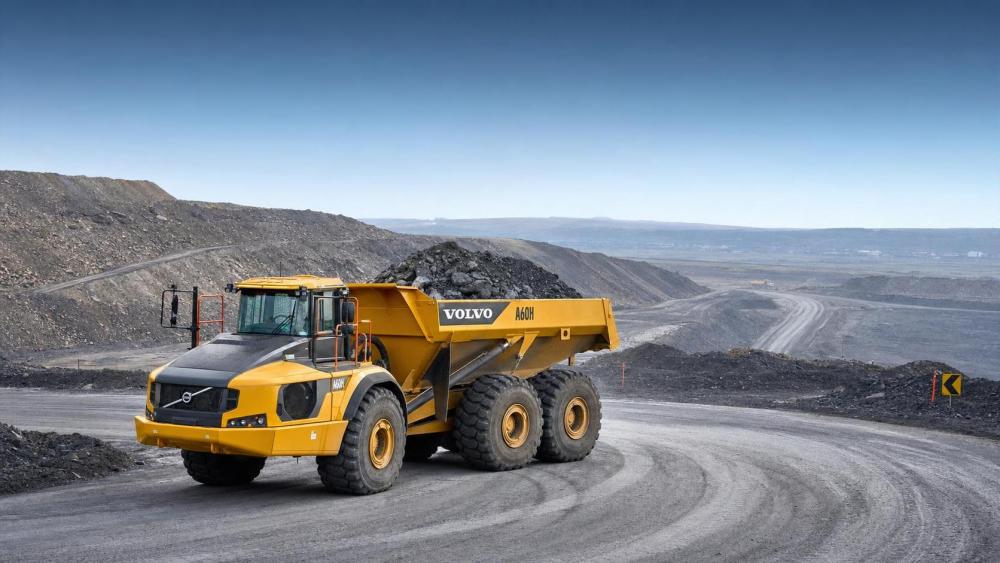
For project planning, truck size is never just a catalog detail.
It directly affects haul road width, intersection layout, turning space, and daily cycle efficiency.
That is why reading Articulated Dump Trucks dimensions correctly matters early, not after congestion appears on site.
In mining, tunnelling support works, and heavy infrastructure earthmoving, a dimensional mistake often becomes a production problem.
It can slow truck flow, increase tyre wear, create reversing events, and raise collision risk at bends.
This guide breaks down Articulated Dump Trucks dimensions in a practical way.
The goal is simple: connect the numbers on a spec sheet to real haul road and turning decisions.
Start with the Dimensions That Actually Drive Layout
Not every measurement on a brochure carries the same planning value.
For haul roads and turning areas, five dimensions deserve the closest attention.
- Overall width: the base reference for lane and shoulder sizing.
- Overall length: useful for queue space, passing bays, and loading approach distance.
- Wheelbase: strongly influences stability and turning behavior.
- Articulation angle: defines how sharply the machine can bend through curves.
- Turning radius: the clearest signal for bend geometry and junction design.
Manufacturers may also list outer turning radius, inner turning radius, and swept path.
Among these, swept path is often the most useful for real operating conditions.
It reflects the space occupied while the front and rear sections track differently through a turn.
That rear off-tracking is exactly where many road designs become too optimistic.
How to Read Articulated Dump Trucks Dimensions Without Misjudging the Site
A common mistake is reading only overall width and assuming the road can be scaled from that number.
In practice, Articulated Dump Trucks dimensions must be read as a working set, not isolated values.
For example, two trucks may share similar width but require very different turning envelopes.
The difference usually comes from wheelbase, articulation geometry, and body overhang.
Another issue is using unloaded dimensions for roads serving loaded, bouncing, real-world trucks.
Road roughness, tyre deformation, operator behavior, and berm proximity all add operational spread.
So the right question is not, “Can the truck physically pass?”
The better question is, “Can it pass safely, consistently, and without slowing the whole haul cycle?”
What to check on the spec sheet
- Tyre size, because it changes width and ground behavior.
- Body option, because some bodies extend the effective envelope.
- Loaded versus empty turning figures, if provided.
- Steering or articulation limits under operating conditions.
- Service access clearance, especially near walls or barriers.
Using Articulated Dump Trucks Dimensions to Size Haul Road Width
Haul road width planning begins with truck width, but it should never end there.
The road must absorb steering variation, tyre wander, berm offset, drainage needs, and passing events.
A useful field rule is to size one-way roads as a multiple of truck width, then adjust for conditions.
Two-way roads need even more discipline because meeting traffic creates lateral pressure and speed changes.
This is where Articulated Dump Trucks dimensions become decision inputs rather than passive data.
A practical sizing logic
- Take the maximum operating width, including tyre configuration.
- Define traffic mode: one-way, two-way, or mixed equipment.
- Add safety allowance for berms, shoulders, and operator variation.
- Add extra width for gradients, poor visibility, or slippery surfaces.
- Review choke points such as culverts, portals, ramps, and intersections.
In actual operations, the narrowest point controls performance more than the average road section.
That means one underdesigned bend or passing area can reduce the value of an otherwise wide route.
From a cost perspective, fixing pinch points during design is far cheaper than rebuilding active haul roads later.
When width needs upward adjustment
- Wet ground increases lateral drift and braking uncertainty.
- Steep ramps amplify alignment error, especially when loaded downhill.
- Night shifts reduce visual margin near berms and edge drops.
- Mixed fleets create wider speed and path variation.
- Temporary roads degrade quickly and rarely hold exact geometry.
How Turning Radius Changes the Whole Road Network
Turning radius affects more than corners.
It influences dump point entries, workshop access, loading face approaches, and emergency rerouting options.
When reviewing Articulated Dump Trucks dimensions, outer turning radius gets early attention.
But inner radius matters too, especially near islands, walls, drains, and protective barriers.
More importantly, planners should focus on swept path through the full turn.
That reveals whether the rear section cuts inside the front track or swings wide at exit.
Both behaviors can damage berms, strike signage, or force repeated steering correction.
Key turning zones to review
- Ramp-to-ramp junctions with limited visibility.
- Loading areas where machines queue under pressure.
- Dump edges where alignment must stay controlled.
- Fuel or charging zones with fixed infrastructure.
- Portal or trench access points with hard boundaries.
If these areas feel tight during desktop review, they usually become critical under production pressure.
A Simple Table for Reading Decision-Critical Dimensions
This table is useful during equipment selection reviews and early civil layout checks.
It also helps teams compare models when payload targets are similar but site geometry is constrained.
Common Selection Mistakes When Comparing Articulated Dump Trucks Dimensions
The first mistake is choosing payload first and checking dimensions second.
That approach often leads to a truck that fits production targets but strains the road network.
The second mistake is assuming all Articulated Dump Trucks dimensions scale proportionally across brands.
They do not.
Small changes in frame design or articulation layout can produce meaningful path differences.
A third mistake is ignoring future road conditions.
Roads generally get rougher, not cleaner, once operations intensify.
That means a design with no margin today may become a safety concern later.
A better decision checklist
- Match truck dimensions to the tightest planned road section.
- Review turning performance at the most complex junction.
- Check loaded operation on ramps and downhill curves.
- Allow margin for berm growth, drainage, and surface deterioration.
- Compare total cycle impact, not just nominal payload.
Why This Matters for Underground and Surface Project Planning
At UTMD, equipment intelligence is most valuable when it closes the gap between specification and field reality.
That is especially true where space is constrained and logistics must stay predictable.
Whether the setting is an open-pit haul route, a tunnel support yard, or a mine expansion corridor, geometry drives output.
Reading Articulated Dump Trucks dimensions well supports safer roads, cleaner traffic flow, and fewer layout revisions.
It also improves coordination between fleet selection, civil design, and operating standards.
More importantly, it prevents the hidden cost of choosing a truck that the site keeps struggling to accommodate.
Final Takeaway
The smartest way to use Articulated Dump Trucks dimensions is to treat them as planning tools, not sales data.
Focus on width, wheelbase, articulation angle, turning radius, and swept path together.
Then test those numbers against the tightest road, the hardest turn, and the busiest operating window.
That approach leads to better equipment selection, stronger road design, and fewer productivity losses once the job is moving.
Before locking in the fleet, review the full dimensional envelope one more time against your actual site constraints.
Related News
How to Evaluate European Drill-and-Blast Tunnelling Contractors for Complex Projects
Drill and blast tunnelling contractors Europe: learn how to assess geology expertise, blast control, equipment reliability, safety, and programme resilience for complex projects.
Which Trenchless Construction Technique Fits Your Utility Crossing Conditions?
Trenchless construction techniques compared for utility crossings: choose HDD, microtunnelling, pipe jacking, or auger boring based on ground, accuracy, access, and risk.
What Is Driving Metro Tunnelling Demand Across Southeast Asia’s Major Cities?
Metro tunnelling Southeast Asia is accelerating as major cities tackle congestion, flooding, and connectivity. Explore the market forces, technical risks, and opportunities shaping demand.
Hard Rock Tunnelling in Australia: Selecting Methods for Variable Ground Conditions
Hard rock tunnelling in Australia: compare TBM, drill-and-blast and hybrid methods to manage variable ground, reduce risk and protect project costs.
Hydropower Tunnel Excavation: Selecting Methods for Variable Rock Conditions
Hydropower tunnel excavation methods for variable rock conditions: compare TBM, drill-and-blast, and hybrid strategies to improve safety, progress, and project control.
How to Select Underground Safety Equipment for Tunnelling by Hazard and Work Zone
Underground Safety Equipment for tunnelling: match protection to hazards, work zones, compliance, and emergency needs with this practical selection guide.
EPB or Slurry Shield? Selecting Soft-Ground Tunnelling Equipment by Soil Conditions
Tunnel Excavation Equipment for soft ground: compare EPB and slurry shields by soil, groundwater, settlement risk, and project logistics to choose confidently.
How to Specify TBM Backup System Parts for Reliable Long-Distance Tunnelling
TBM backup system parts: learn how to specify reliable spares for long-distance tunnelling, reduce downtime, ensure compatibility, and speed underground recovery.
How to Size Open Pit Mining Trucks for Haul Distance, Grade, and Payload?
Open Pit Mining Trucks: learn how to match payload, haul distance, grade, road resistance, and loading capacity for safer, lower-cost mine operations.
Related News
- 00
0000-00
How to Evaluate European Drill-and-Blast Tunnelling Contractors for Complex Projects - 00
0000-00
Which Trenchless Construction Technique Fits Your Utility Crossing Conditions? - 00
0000-00
What Is Driving Metro Tunnelling Demand Across Southeast Asia’s Major Cities? - 00
0000-00
Hard Rock Tunnelling in Australia: Selecting Methods for Variable Ground Conditions - 00
0000-00
Hydropower Tunnel Excavation: Selecting Methods for Variable Rock Conditions
Weekly Insights
Stay ahead with our curated technology reports delivered every Monday.