
US Tariff Cut Lowers EV Mining Truck Battery Module Costs





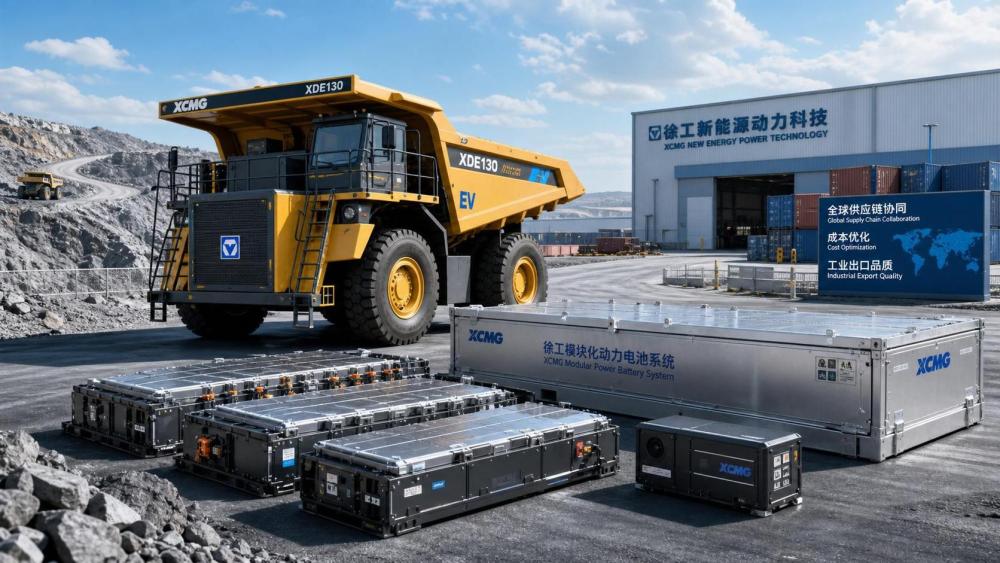
On June 3, 2026, the United States lowered import tariffs on selected products including nickel-cobalt-manganese ternary precursors and automotive-grade BMS control modules, a change directly tied to upstream components used in the core electric drive systems of EV and hydrogen mining trucks. For battery system exporters, mining truck suppliers, procurement teams, and localized integration partners, this is worth watching because it affects customs cost, sourcing economics, delivery coordination, and the relative importance of certification readiness such as UL1973 in export execution.
What the tariff adjustment clearly covers
The confirmed change is that, effective June 3, 2026, the United States reduced import tariffs on certain key goods, including nickel-cobalt-manganese ternary precursors and vehicle-grade BMS control modules. These goods relate to upstream components supporting the core electric drive systems of EV and hydrogen mining trucks. Based on the provided information, the adjustment is expected to reduce customs clearance costs for battery modules used in EV mining trucks, lower the overall total cost of ownership for US-funded mining operators purchasing Chinese-made electric mining trucks, and shorten localized integration delivery cycles. The same information also indicates that battery system exporters with UL1973 certification stand to benefit.
Where the practical effects may appear first
Cost pressure may ease for export-facing battery system suppliers
Analysis shows that suppliers involved in battery systems and related upstream components may feel the effect first in quotation structure, customs cost calculations, and delivery planning. What deserves closer attention is not only the tariff change itself, but also whether product classification, supporting documents, and certification materials are aligned with the goods being shipped.
Mining truck procurement teams may revisit sourcing assumptions
From an industry perspective, procurement teams serving mining operators may need to reassess landed-cost models and localized integration schedules. The reported reduction in overall TCO and shorter integration cycles suggest that procurement decisions may increasingly depend on whether suppliers can present complete technical files, stable delivery capability, and certification evidence that supports project execution.
Integration and supply-chain service providers may see document demands rise
Observably, companies involved in customs handling, local integration, and project delivery may need to pay closer attention to product documentation, technical descriptions, and compliance files linked to battery modules and control systems. Even where tariff direction is favorable, execution can still depend on consistent paperwork, product identification, and the ability to support downstream delivery requirements.
Certification-linked exporters may gain a clearer commercial position
The provided information specifically points to exporters with UL1973-certified battery systems as potential beneficiaries. Analysis shows that this does not automatically guarantee order conversion, but it does strengthen the practical value of certification in trade discussions, qualification reviews, and delivery confidence, especially where buyers are comparing compliance readiness alongside cost.
What companies should keep under review now
Check whether certification files match the traded product scope
It is more appropriate to understand this stage as one requiring careful review of whether UL1973-related materials, technical descriptions, and supporting compliance documents are fully aligned with the battery systems and modules being exported. Where certification is relevant, consistency between the shipped product and the documented scope may become more important in commercial and customs-facing processes.
Monitor how the tariff change is reflected in procurement documents
Analysis shows that companies should watch for updates in purchase specifications, bid documents, and technical qualification requirements. Even if the tariff reduction creates a clearer cost advantage, the real commercial effect may depend on whether buyers and project teams revise procurement assumptions, integration schedules, or supplier screening criteria.
Prepare for closer scrutiny of technical and trade documentation
What deserves closer attention is the completeness of customs, testing, and technical documentation for affected components such as precursors, BMS-related modules, and battery systems. The provided information does not include detailed execution rules, so companies should avoid assuming that lower tariffs alone will simplify every shipment or delivery stage.
Track delivery planning alongside after-sales and traceability needs
Observably, suppliers and exporters should also review how shorter localized integration cycles may affect production scheduling, spare-parts readiness, quality traceability, and service coordination. This is not yet a confirmed outcome across all transactions, but it is a practical area to monitor if project timelines begin tightening in response to lower import costs.
How this signal is best interpreted at this stage
From an industry perspective, this development looks less like a broad policy narrative and more like an execution signal affecting specific product categories tied to EV and hydrogen mining truck electrification. Analysis shows that the most immediate implication is commercial and operational: lower import costs can influence sourcing logic and delivery timing, while certification status may carry greater weight in buyer evaluation. At the same time, it is still necessary to observe how consistently this change is reflected in procurement practice, compliance review, and project-level implementation.
A measured reading of the current change
This update is best understood as a concrete trade-rule adjustment with direct relevance to upstream components used in mining truck electrification. It points to a more favorable customs-cost environment for certain imported inputs and a potentially stronger position for UL1973-certified battery system exporters. However, a cautious reading remains appropriate: the commercial effect will depend on how the rule is applied in documentation, procurement, integration, and delivery workflows rather than on tariff language alone.
Basis of this article and what still needs verification
This article is generated from the user-provided news title, event date, and event summary. Source types commonly relevant to developments of this kind may include official announcements, regulator publications, customs or trade authority information, industry association releases, standards organization documents, and reporting from established media. A specific official source link was not provided in the input, so the exact official reference still requires follow-up verification. Continued attention should also be given to later implementation details, certification interpretation, procurement document changes, industry feedback, and how companies execute against the new tariff conditions.
Related News

How to Evaluate European Drill-and-Blast Tunnelling Contractors for Complex Projects
Drill and blast tunnelling contractors Europe: learn how to assess geology expertise, blast control, equipment reliability, safety, and programme resilience for complex projects.

Which Trenchless Construction Technique Fits Your Utility Crossing Conditions?
Trenchless construction techniques compared for utility crossings: choose HDD, microtunnelling, pipe jacking, or auger boring based on ground, accuracy, access, and risk.

What Is Driving Metro Tunnelling Demand Across Southeast Asia’s Major Cities?
Metro tunnelling Southeast Asia is accelerating as major cities tackle congestion, flooding, and connectivity. Explore the market forces, technical risks, and opportunities shaping demand.

Hard Rock Tunnelling in Australia: Selecting Methods for Variable Ground Conditions
Hard rock tunnelling in Australia: compare TBM, drill-and-blast and hybrid methods to manage variable ground, reduce risk and protect project costs.

Hydropower Tunnel Excavation: Selecting Methods for Variable Rock Conditions
Hydropower tunnel excavation methods for variable rock conditions: compare TBM, drill-and-blast, and hybrid strategies to improve safety, progress, and project control.

How to Select Underground Safety Equipment for Tunnelling by Hazard and Work Zone
Underground Safety Equipment for tunnelling: match protection to hazards, work zones, compliance, and emergency needs with this practical selection guide.

EPB or Slurry Shield? Selecting Soft-Ground Tunnelling Equipment by Soil Conditions
Tunnel Excavation Equipment for soft ground: compare EPB and slurry shields by soil, groundwater, settlement risk, and project logistics to choose confidently.

How to Specify TBM Backup System Parts for Reliable Long-Distance Tunnelling
TBM backup system parts: learn how to specify reliable spares for long-distance tunnelling, reduce downtime, ensure compatibility, and speed underground recovery.

How to Size Open Pit Mining Trucks for Haul Distance, Grade, and Payload?
Open Pit Mining Trucks: learn how to match payload, haul distance, grade, road resistance, and loading capacity for safer, lower-cost mine operations.
Related News
- 00
0000-00
How to Evaluate European Drill-and-Blast Tunnelling Contractors for Complex Projects - 00
0000-00
Which Trenchless Construction Technique Fits Your Utility Crossing Conditions? - 00
0000-00
What Is Driving Metro Tunnelling Demand Across Southeast Asia’s Major Cities? - 00
0000-00
Hard Rock Tunnelling in Australia: Selecting Methods for Variable Ground Conditions - 00
0000-00
Hydropower Tunnel Excavation: Selecting Methods for Variable Rock Conditions
Weekly Insights
Stay ahead with our curated technology reports delivered every Monday.