
Underground Mining Electrification: Power, Ventilation, and Charging Basics Explained





Why is underground mining electrification becoming a basic topic, not a niche one?
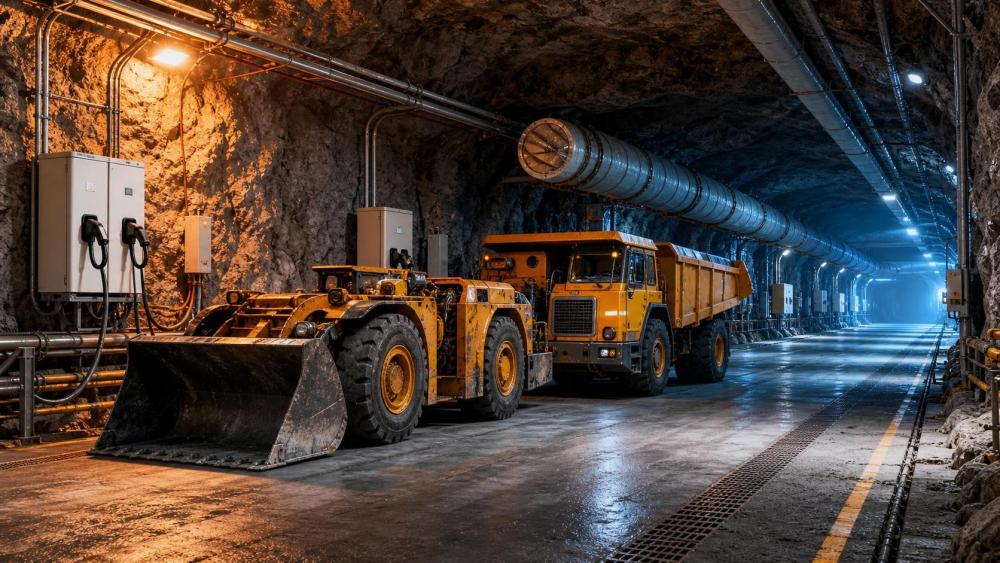
Underground mining electrification is no longer a future concept. It is becoming a practical operating decision in deep, energy-intensive mines.
The reason is straightforward. Underground spaces punish heat, fumes, noise, and maintenance delays more severely than surface operations.
Diesel fleets have served mines for decades. Yet in confined tunnels, diesel also drives ventilation costs, worker exposure concerns, and thermal management pressure.
That is why underground mining electrification often starts with a broader question: how can a mine move more rock with less air demand?
In practice, electrification connects three systems at once. Those systems are power distribution, ventilation redesign, and charging or battery handling.
This matters beyond mining alone. UTMD follows the same transition across TBMs, drilling jumbos, pipe jacking equipment, mining trucks, and underground LHD loaders.
Across these machines, the pattern is similar. Zero-exhaust operation in deep spaces changes infrastructure planning as much as it changes the vehicle itself.
So when people ask about underground mining electrification, they are usually asking about system readiness, not just battery chemistry.
What does underground mining electrification actually include?
A common misunderstanding is that electrification simply means replacing diesel engines with battery-electric machines. That is only one part of the picture.
A complete underground mining electrification program usually includes mobile equipment, fixed electrical infrastructure, digital control, and new maintenance routines.
The mobile side often covers battery-electric loaders, trucks, utility vehicles, and drilling equipment. Some sites also test trolley assist or hybrid support systems.
The fixed side includes substations, cable routing, switchgear, charging bays, power quality control, and emergency isolation planning.
Then comes ventilation. Lower diesel exhaust can reduce airflow demand, but fan strategy, heat load, and airflow balance still need careful engineering.
Automation also becomes more important. UTMD often highlights how smart underground transport depends on reliable data from vehicles, chargers, and dispatch systems.
A battery loader that charges at the wrong time can create queueing. A charger placed in the wrong tunnel can create traffic conflicts.
In other words, underground mining electrification is a mine design issue as much as an equipment choice.
A quick way to frame the system
This table helps separate marketing claims from actual site readiness. That is often where better decisions begin.
If diesel disappears, does ventilation suddenly become easy?
Not exactly. Ventilation usually becomes more manageable, but not automatically simple.
Diesel removal reduces exhaust contaminants and can lower fresh-air volume requirements. That alone can change operating economics in deep mines.
However, battery-electric fleets still produce heat. Chargers, transformers, power electronics, and braking systems all add thermal loads.
More importantly, ventilation planning is tied to mine layout. New charging rooms or battery-swap zones may require revised airflow routes.
A useful rule is this: exhaust reduction helps airflow quantity, while electrification planning still needs airflow quality and heat control.
In actual operations, the best gains often come from combining electric fleets with ventilation-on-demand systems, sensor networks, and traffic scheduling.
That is why UTMD tracks not only vehicle changes, but also the digital intelligence behind underground movement and environmental control.
A mine may save airflow in one zone while increasing localized cooling needs in another. The answer depends on haulage distance, depth, and duty cycle.
What usually changes in ventilation planning?
- Main fans may be optimized for lower contaminant loads rather than traditional diesel assumptions.
- Charging areas need local heat and emergency design reviews.
- Auxiliary ventilation may shift closer to active headings and service bays.
- Monitoring becomes more data-driven, especially where autonomous or remote equipment is used.
How do charging and battery strategies affect daily production?
This is usually the most practical question. A mine rarely succeeds with underground mining electrification if charging interrupts haulage rhythm.
There is no single best model. Some operations prefer fast charging during short pauses. Others rely on battery swapping to keep machines moving.
Fast charging reduces battery inventory, but it can create sharp power peaks. Battery swapping supports uptime, but it adds handling equipment and spare packs.
A drilling jumbo, for example, follows a different duty pattern than an underground LHD loader. The charging logic should reflect that difference.
The same applies to mining trucks on long ramps. Regenerative braking may recover energy, yet the route still determines charging frequency and battery sizing.
More common planning mistakes include placing chargers too far from active faces, underestimating queue time, and ignoring shift-change overlap.
A realistic charging plan should answer four operational questions before procurement begins.
- How long is each duty cycle between loading, hauling, and waiting?
- Where can charging occur without blocking ventilation or traffic?
- What is the peak power draw across a full shift?
- How will performance change as batteries age over time?
When these answers are clear, underground mining electrification becomes easier to stage and easier to scale.
Where do projects struggle most during implementation?
Most difficulties appear at the interfaces. Equipment teams, electrical planners, ventilation engineers, and production managers may optimize different things.
That creates friction. A charger may look ideal on a layout drawing, but still create poor turning flow for loaders underground.
Another issue is timeline mismatch. Mobile fleets can arrive faster than substations, cable upgrades, or digital monitoring systems.
In deeper mines, reliability matters more than headline specifications. A slightly lower-power system with better redundancy may be the safer choice.
This is where intelligence-led evaluation becomes valuable. UTMD’s perspective across tunnelling, trenchless equipment, jumbos, and haulage systems helps reveal cross-sector lessons.
For example, TBM projects often show how power, cooling, and continuous operation must be integrated from day one. Mines can apply similar thinking.
The aim is not to electrify everything at once. The better approach is often phased deployment around high-impact zones.
Common mistakes worth avoiding
- Treating underground mining electrification as a vehicle purchase only.
- Estimating ventilation savings without heat mapping.
- Ignoring cable routing, bay access, and emergency isolation.
- Using surface-duty assumptions for underground shift patterns.
- Expecting early pilots to reflect full-mine economics immediately.
What is a sensible way to judge whether electrification fits a specific mine?
The most useful starting point is not brand comparison. It is operational mapping.
Look first at haul profiles, depth, temperature, shift structure, ventilation cost, and equipment waiting time. These reveal whether underground mining electrification will create real value.
Sites with long diesel exposure concerns, high airflow costs, and repetitive haul cycles often see the clearest case.
Sites with unstable power access or highly variable production headings may need a more selective rollout.
It also helps to judge equipment by mission. A loader, truck, jumbo, and service carrier should not share the same charging assumptions.
One practical method is to evaluate readiness across infrastructure, operations, and risk rather than focusing on purchase price alone.
- Infrastructure: available power, substation upgrade path, cable distance, ventilation flexibility.
- Operations: duty cycle match, traffic flow, charging windows, maintenance skills.
- Risk: emergency response, thermal management, spare battery strategy, phased deployment logic.
That framework keeps decisions grounded. It also aligns well with the wider transition toward smart mines and digitally managed underground assets.
So what should be clarified before the next step?
Underground mining electrification makes the most sense when power, ventilation, and charging are treated as one operating system.
The key questions are rarely abstract. They are about route length, thermal load, charger location, production timing, and resilience underground.
A strong next step is to map one representative circuit in detail. Then compare diesel ventilation demand against electric infrastructure demand.
After that, review where a pilot would generate the cleanest operational evidence. High-utilization loaders or repetitive haul loops are often useful starting points.
It is also worth tracking broader underground engineering signals through sources like UTMD, where electrification is analyzed alongside TBMs, jumbos, trenchless systems, and autonomous haulage.
That wider view helps separate temporary hype from durable engineering direction. In deep underground work, that distinction matters.
If the goal is cleaner production with stable output, the real task is simple to state. Build the electrical, airflow, and charging logic before scaling the fleet.
Related News

How to Evaluate European Drill-and-Blast Tunnelling Contractors for Complex Projects
Drill and blast tunnelling contractors Europe: learn how to assess geology expertise, blast control, equipment reliability, safety, and programme resilience for complex projects.

Which Trenchless Construction Technique Fits Your Utility Crossing Conditions?
Trenchless construction techniques compared for utility crossings: choose HDD, microtunnelling, pipe jacking, or auger boring based on ground, accuracy, access, and risk.

What Is Driving Metro Tunnelling Demand Across Southeast Asia’s Major Cities?
Metro tunnelling Southeast Asia is accelerating as major cities tackle congestion, flooding, and connectivity. Explore the market forces, technical risks, and opportunities shaping demand.

Hard Rock Tunnelling in Australia: Selecting Methods for Variable Ground Conditions
Hard rock tunnelling in Australia: compare TBM, drill-and-blast and hybrid methods to manage variable ground, reduce risk and protect project costs.

Hydropower Tunnel Excavation: Selecting Methods for Variable Rock Conditions
Hydropower tunnel excavation methods for variable rock conditions: compare TBM, drill-and-blast, and hybrid strategies to improve safety, progress, and project control.

How to Select Underground Safety Equipment for Tunnelling by Hazard and Work Zone
Underground Safety Equipment for tunnelling: match protection to hazards, work zones, compliance, and emergency needs with this practical selection guide.

EPB or Slurry Shield? Selecting Soft-Ground Tunnelling Equipment by Soil Conditions
Tunnel Excavation Equipment for soft ground: compare EPB and slurry shields by soil, groundwater, settlement risk, and project logistics to choose confidently.

How to Specify TBM Backup System Parts for Reliable Long-Distance Tunnelling
TBM backup system parts: learn how to specify reliable spares for long-distance tunnelling, reduce downtime, ensure compatibility, and speed underground recovery.

How to Size Open Pit Mining Trucks for Haul Distance, Grade, and Payload?
Open Pit Mining Trucks: learn how to match payload, haul distance, grade, road resistance, and loading capacity for safer, lower-cost mine operations.
Related News
- 00
0000-00
How to Evaluate European Drill-and-Blast Tunnelling Contractors for Complex Projects - 00
0000-00
Which Trenchless Construction Technique Fits Your Utility Crossing Conditions? - 00
0000-00
What Is Driving Metro Tunnelling Demand Across Southeast Asia’s Major Cities? - 00
0000-00
Hard Rock Tunnelling in Australia: Selecting Methods for Variable Ground Conditions - 00
0000-00
Hydropower Tunnel Excavation: Selecting Methods for Variable Rock Conditions
Weekly Insights
Stay ahead with our curated technology reports delivered every Monday.