
Indonesia Tightens Slurry Pipe Jacking Imports





On June 1, 2026, a new Indonesian regulation took effect requiring manufacturers of imported Slurry Pipe Jacking equipment to hold ISO 50001 energy management system certification issued by an institution recognized by China’s Certification and Accreditation Administration. The rule is relevant to equipment importers, manufacturers, project contractors, distributors, and supply chain service providers because it links import licensing to certified energy management across equipment design, manufacturing, and testing.
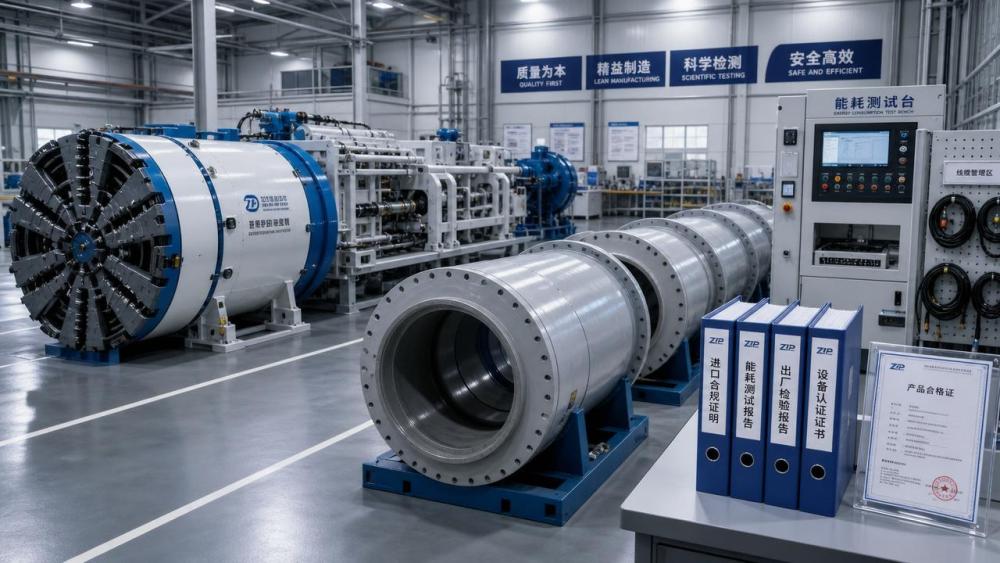
Event Overview
According to the information currently available, Indonesia’s Ministry of Energy and Mineral Resources, known as ESDM, implemented a new requirement on June 1, 2026. Under the rule, manufacturers of all imported Slurry Pipe Jacking equipment must hold an ISO 50001 energy management system certificate issued by an institution recognized by China’s Certification and Accreditation Administration, or CNCA.
The stated requirement applies to the energy management of the full process covering complete-machine design, manufacturing, and testing. It is not limited to energy management at the general factory operation level. Without the required certification, the relevant import license, referred to as API-U, will not be processed.
Which Industry Segments Are Affected
Direct Importers and Trading Companies
Direct importers and trading companies are affected because the import licensing process is now linked to whether the equipment manufacturer holds the specified ISO 50001 certification. The main impact is likely to appear in supplier qualification review, document collection, contract execution timing, and import license preparation.
From an industry perspective, importers may need to place greater emphasis on verifying whether certification covers complete-machine design, manufacturing, and testing, rather than only checking whether a supplier has a general energy management certificate.
Slurry Pipe Jacking Equipment Manufacturers
Manufacturers supplying Slurry Pipe Jacking equipment to the Indonesian market are directly affected because the new requirement is placed on the manufacturer’s certification status. The impact mainly concerns certification scope, documentation consistency, and the ability to support importers during API-U application procedures.
Analysis shows that the key issue is not simply whether a manufacturer has ISO 50001 certification, but whether the certificate is issued by a CNCA-recognized institution and whether the covered scope matches the full process specified in the Indonesian requirement.
Project Contractors and End Users
Project contractors and end users using Slurry Pipe Jacking equipment may be affected through equipment availability and procurement scheduling. If a selected manufacturer cannot provide the required certification documents, procurement or import arrangements may face additional review or delay.
What deserves closer attention now is the connection between equipment selection and import compliance. For projects that depend on imported Slurry Pipe Jacking equipment, certification status may become an earlier-stage procurement checkpoint rather than a document issue handled only before shipment.
Distributors and Channel Operators
Distributors and channel operators may need to recheck the compliance status of the equipment brands and manufacturers they represent. The impact may be reflected in product listing, customer communication, quotation validity, and delivery commitments for the Indonesian market.
Observably, channel operators should avoid treating ISO 50001 as a generic certificate label. Under the available information, the applicable certification must be connected to the full equipment process and issued by a CNCA-recognized institution.
Supply Chain and Compliance Service Providers
Supply chain service providers, customs-related service firms, and compliance consultants may see higher demand for document review and certification verification related to Slurry Pipe Jacking imports into Indonesia. Their role may become more important in checking whether documents meet the new licensing condition before formal API-U procedures are initiated.
From an industry perspective, the practical impact lies in reducing uncertainty before import applications are submitted. A mismatch between certificate scope and regulatory wording may affect the ability to proceed with licensing.
Key Points to Watch and Practical Responses
Verify Certification Scope Before Procurement Decisions
Companies should check whether the ISO 50001 certificate covers complete-machine design, manufacturing, and testing. Based on the available information, a certificate limited to general factory operations may not satisfy the stated requirement. This review should be completed before purchase orders, shipment planning, or import license preparation.
Confirm the Issuing Institution’s Recognition Status
Enterprises should confirm that the certificate is issued by an institution recognized by CNCA. The rule specifically refers to CNCA-recognized certification bodies, so the issuing institution is as important as the certificate name itself.
Separate Policy Signal From Business Execution
It is more appropriate to understand this as a compliance condition already linked to import licensing, while specific business execution should still be checked against the latest official requirements and actual licensing procedures. Companies should avoid assuming that existing supplier documents are sufficient without reviewing the exact scope and issuer.
Prepare Supplier Communication and Backup Plans
Importers, contractors, and distributors should request certification documents from manufacturers at an early stage and keep written confirmation of certificate scope. For projects with firm delivery schedules, companies may also need to prepare alternative procurement or timeline adjustment plans if a selected manufacturer cannot meet the stated requirement.
Editor’s View / Industry Observation
Analysis shows that this regulation may shift part of the import compliance focus from product documentation alone to the manufacturer’s energy management system. For Slurry Pipe Jacking equipment, the requirement connects market access with certified energy management across design, manufacturing, and testing.
From an industry perspective, this is not merely a routine document update. It may influence supplier selection, contract review, import licensing preparation, and communication between manufacturers and Indonesian-market customers. However, any broader impact beyond the stated requirement should be treated as observation rather than confirmed fact.
What deserves closer attention now is whether subsequent official explanations or operating details further clarify certification scope, document format, or implementation procedures. Companies involved in Indonesia-bound Slurry Pipe Jacking equipment should continue tracking the policy’s application in actual import licensing.
Conclusion
The June 1, 2026 Indonesian requirement is significant because it makes CNCA-recognized ISO 50001 certification a condition for processing API-U import licensing for Slurry Pipe Jacking equipment. Its industry relevance lies in the direct connection between equipment market access and certified energy management across the full equipment process.
Observably, the current issue should be understood as a compliance threshold that companies need to verify before procurement, shipment, and licensing arrangements. A neutral and practical response is to review certification scope, confirm the issuing institution, and maintain close attention to any further official clarification.
Information Sources
- Indonesia Ministry of Energy and Mineral Resources, ESDM: regulation effective June 1, 2026, as described in the provided event information.
- China Certification and Accreditation Administration, CNCA: referenced in the requirement as the recognition authority for eligible certification institutions.
- Items requiring continued observation: any further official clarification on implementation procedures, certificate review details, and API-U licensing application practice.
Related News
How to Evaluate European Drill-and-Blast Tunnelling Contractors for Complex Projects
Drill and blast tunnelling contractors Europe: learn how to assess geology expertise, blast control, equipment reliability, safety, and programme resilience for complex projects.
Which Trenchless Construction Technique Fits Your Utility Crossing Conditions?
Trenchless construction techniques compared for utility crossings: choose HDD, microtunnelling, pipe jacking, or auger boring based on ground, accuracy, access, and risk.
What Is Driving Metro Tunnelling Demand Across Southeast Asia’s Major Cities?
Metro tunnelling Southeast Asia is accelerating as major cities tackle congestion, flooding, and connectivity. Explore the market forces, technical risks, and opportunities shaping demand.
Hard Rock Tunnelling in Australia: Selecting Methods for Variable Ground Conditions
Hard rock tunnelling in Australia: compare TBM, drill-and-blast and hybrid methods to manage variable ground, reduce risk and protect project costs.
Hydropower Tunnel Excavation: Selecting Methods for Variable Rock Conditions
Hydropower tunnel excavation methods for variable rock conditions: compare TBM, drill-and-blast, and hybrid strategies to improve safety, progress, and project control.
How to Select Underground Safety Equipment for Tunnelling by Hazard and Work Zone
Underground Safety Equipment for tunnelling: match protection to hazards, work zones, compliance, and emergency needs with this practical selection guide.
EPB or Slurry Shield? Selecting Soft-Ground Tunnelling Equipment by Soil Conditions
Tunnel Excavation Equipment for soft ground: compare EPB and slurry shields by soil, groundwater, settlement risk, and project logistics to choose confidently.

How to Specify TBM Backup System Parts for Reliable Long-Distance Tunnelling
TBM backup system parts: learn how to specify reliable spares for long-distance tunnelling, reduce downtime, ensure compatibility, and speed underground recovery.

How to Size Open Pit Mining Trucks for Haul Distance, Grade, and Payload?
Open Pit Mining Trucks: learn how to match payload, haul distance, grade, road resistance, and loading capacity for safer, lower-cost mine operations.
Related News
- 00
0000-00
How to Evaluate European Drill-and-Blast Tunnelling Contractors for Complex Projects - 00
0000-00
Which Trenchless Construction Technique Fits Your Utility Crossing Conditions? - 00
0000-00
What Is Driving Metro Tunnelling Demand Across Southeast Asia’s Major Cities? - 00
0000-00
Hard Rock Tunnelling in Australia: Selecting Methods for Variable Ground Conditions - 00
0000-00
Hydropower Tunnel Excavation: Selecting Methods for Variable Rock Conditions
Weekly Insights
Stay ahead with our curated technology reports delivered every Monday.