
India Expands TBM Manufacturing to Reduce Reliance on Chinese Equipment





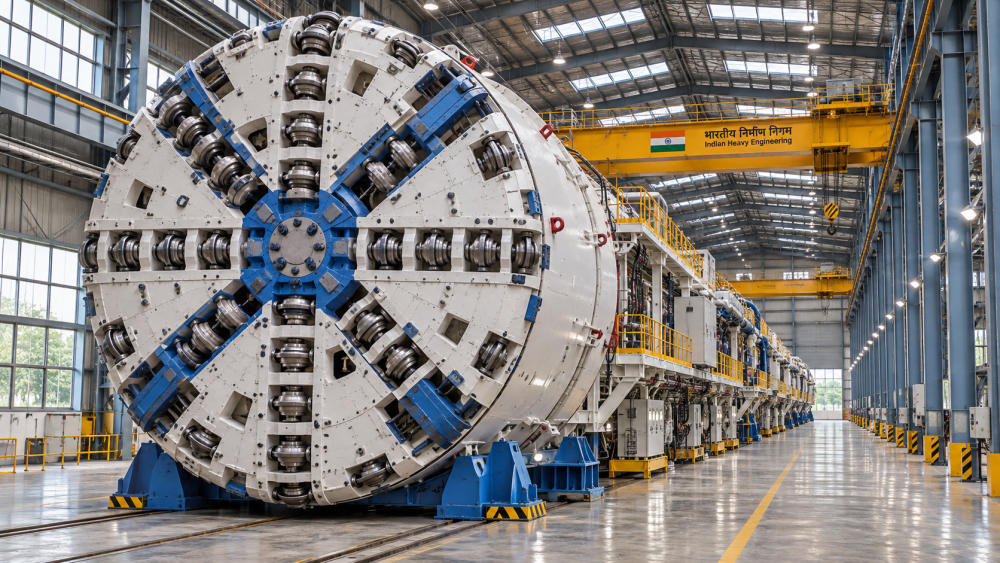
India is expanding its domestic manufacturing capacity for tunnel boring machines (TBMs) as it seeks to reduce reliance on equipment from China amid Chinese export controls. Railway Minister Ashwini Vaishnaw said the country can now manufacture TBMs with diameters of 8 metres and 15 metres, supporting construction of the Rishikesh–Karnaprayag railway.
The 125-kilometre railway through the Himalayas includes 16 tunnels. The development puts the availability of large tunnelling equipment at the centre of a wider supply question: how far can domestic manufacturing reduce a project's exposure to restrictions on imported machinery?
For the railway, the significance lies in having a potential domestic source of TBMs in two sizes. The minister's statement establishes manufacturing capability at those diameters; it does not establish how many machines are available, when they can be delivered or which sections of the railway they will excavate. Those details matter when assessing the practical effect on construction.
What domestic TBM capability could change
A tunnel project's equipment decisions depend on more than the existence of a manufacturer. A machine must match the requirements of the work for which it is intended, and its availability must align with the construction schedule. Manufacturing 8-metre and 15-metre machines therefore creates options, but the relevance of each size depends on the specifications of individual tunnels and the construction methods selected.
The immediate supply-chain question is whether project teams can obtain suitable machines through domestic production when needed. If they can, procurement may become less exposed to restrictions affecting equipment sourced from China. The scale of that benefit will depend on manufacturing capacity, delivery schedules and the extent to which domestic machines meet project requirements.
The distinction between manufacturing capability and project readiness is important. A statement that a machine can be manufactured does not by itself establish that an order has been placed, that a machine has been completed or that it is ready for use on a particular tunnel. Each of those steps would affect when domestic production could influence the railway's equipment supply.
Beyond the machine itself
Reduced dependence on imported TBMs also depends on the supply arrangements behind them. A machine manufactured domestically may still rely on components, materials or technical services sourced elsewhere. The available statement does not describe that supply chain, so the share of the equipment and support that can be provided within India remains an important question.
For contractors, the potential effect extends beyond the initial procurement decision. The availability of replacement parts and maintenance support can matter throughout a machine's use. A domestic manufacturing base could provide another route to such support, although the extent of that capability would depend on the suppliers and service arrangements established for the equipment.
These distinctions also shape how the reported response to Chinese export controls should be interpreted. Expanding domestic manufacturing addresses the risk associated with reliance on a foreign source of finished machines. It does not, on its own, show that every part of the supply chain has shifted or that restrictions will no longer affect procurement.
What to watch as construction progresses
Further project announcements could show whether domestically manufactured TBMs are ordered, delivered and assigned to work on the railway. Information about machine specifications and delivery schedules would help clarify how the stated 8-metre and 15-metre capabilities relate to the requirements of its tunnels.
Over a longer period, the strength of the domestic supply option will depend on whether production and support can be sustained at the scale and pace projects require. The present development shows an effort to create that option in response to equipment dependency; its effect on the railway and on broader TBM supply arrangements will become clearer through actual procurement, delivery and use.
Share your questions or requirements, and our team will get in touch.
We respect your privacy. Your information is strictly confidential.
Related News
 India Expands TBM Manufacturing to Reduce Reliance on Chinese EquipmentIndia expands TBM manufacturing to reduce reliance on Chinese equipment. Explore what it means for railway tunnelling and supply chains.
 Hudson Tunnel Project’s Second TBM Begins Excavating South TunnelHudson Tunnel Project’s second TBM begins south tunnel excavation. Explore what this milestone could mean for contractors and suppliers.
 Hampton Roads TBM Cutterhead Lowered into Łódź Rail Tunnel ShaftHampton Roads TBM cutterhead is lowered into a Łódź rail tunnel shaft. Explore the machine’s journey from Virginia and its next tunnelling assignment.
 Three TBMs Now Tunnelling on Melbourne’s Suburban Rail LoopMelbourne’s Suburban Rail Loop now has three TBMs tunnelling, with 138 metres excavated. Explore this milestone and what simultaneous excavation means for project progress.
 Poland Begins TBM Excavation of Nearly 4 km Railway TunnelPoland railway tunnel construction advances as TBM Kinga begins a 3.9 km evacuation tunnel. Explore what this milestone means for rail contractors, equipment suppliers and procurement teams.
 Can TBM Communication Systems Integrate With Mine Scheduling Software?Can different TBM communication systems integrate with mine scheduling software? Discover practical integration methods, real-time data benefits, maintenance planning, and cybersecurity essentials.
 How Should Buyers Choose Between Open and Closed TBMs for a Project?How to choose between open and closed TBM for a given project? Explore ground risk, groundwater, settlement, and cost factors to select the right tunnelling solution.
 Hard Rock Tunnelling in Australia: Selecting Methods for Variable Ground ConditionsHard rock tunnelling in Australia: compare TBM, drill-and-blast and hybrid methods to manage variable ground, reduce risk and protect project costs.
Related News
- 00
0000-00
Dinghai Shield Machine Passes 5,000 Metres in Jintang Undersea Tunnel - 00
0000-00
Pipe Jacking Machine Cost: Key Price Factors and What to Budget - 00
0000-00
Bauma China 2026 Closes as Visitor Numbers Rise 21% - 00
0000-00
Chinese-Made 16-Meter Shield Machine Completes Yangtze River Crossing - 00
0000-00
Hydrogen Mining Truck Price: What Drives the Purchase Cost?
Weekly Insights
Stay ahead with our curated technology reports delivered every Monday.