
Hard Rock Tunnelling in Australia: Selecting Methods for Variable Ground Conditions





Hard rock tunnelling in Australia succeeds when method selection follows the ground model, not equipment preference, procurement habit, or an optimistic baseline schedule.
For project managers, the practical question is not whether TBM or drill-and-blast is technically possible, but which approach protects programme certainty and cost.
Australian projects frequently encounter competent rock alongside faults, weathered zones, high in-situ stress, groundwater, and abrasive minerals within the same alignment.
These transitions can quickly change advance rates, support requirements, cutter consumption, ventilation needs, and the commercial exposure carried by contractors and owners.
A reliable decision therefore begins with uncertainty management. The preferred excavation method must remain workable when actual conditions differ from predicted geology.
Full-face TBMs can deliver excellent productivity in long, consistent rock drives, while drill-and-blast retains flexibility where geological variability dominates project risk.
Hybrid strategies can also be valuable, particularly where a tunnel includes stable hard-rock reaches but isolated fractured, squeezing, or water-bearing sections.
This guide helps Australian engineering leaders compare methods through ground behaviour, operational constraints, lifecycle economics, procurement strategy, and risk allocation decisions.
The core objective is not maximum instantaneous penetration. It is stable, safe, predictable underground production across the full tunnel length and project duration.
That distinction matters because a high-performing machine can still become a schedule liability when its operational envelope no longer matches the encountered ground.
Before committing capital, teams should align geological confidence, tunnel geometry, logistics, support philosophy, environmental constraints, and contingency capacity into one decision framework.
For hard rock tunnelling in Australia, this integrated approach provides a stronger basis for selecting equipment, shaping contracts, and defending investment decisions.
Start With Ground Behaviour, Not the Equipment Catalogue
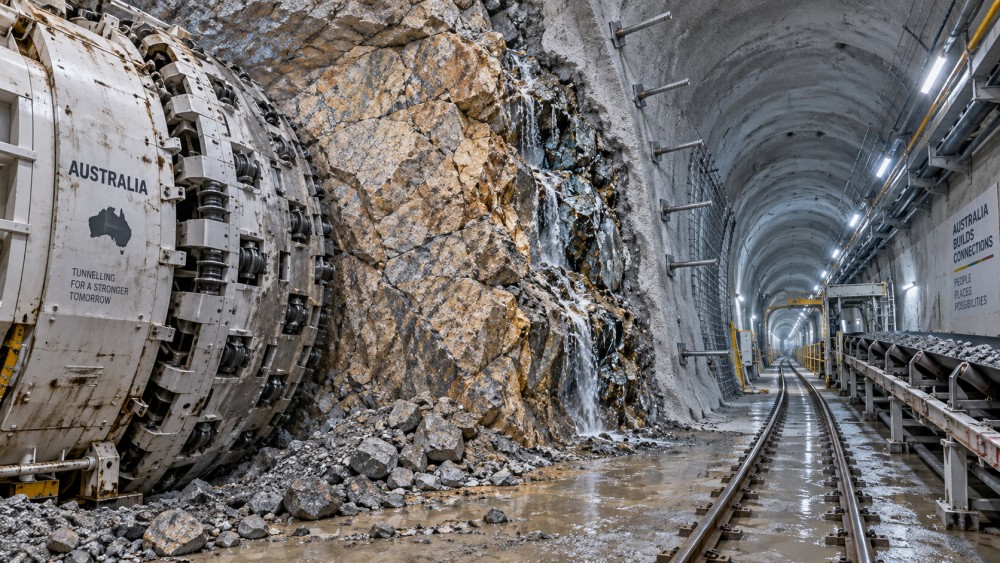
Method selection should begin with anticipated ground behaviour along the alignment, rather than a simple classification of rock as hard, soft, or mixed.
Unconfined compressive strength is important, but it does not independently predict excavability, support demand, cutter life, overbreak, or the likelihood of operational disruption.
Project teams need to understand rock mass quality, discontinuity orientation, fault frequency, stress regime, groundwater pressure, abrasivity, and the potential for swelling.
In Australia, geology can change sharply across relatively short distances, especially near faulted contacts, weathering profiles, volcanic intrusions, and altered mineralised zones.
A competent granitic formation may suit continuous TBM excavation, yet local shears or fractured bands can create face instability and require rapid intervention.
Similarly, strong basalt or quartz-rich rock may appear predictable in boreholes while producing severe cutter wear, vibration, and reduced machine availability underground.
Ground investigation should therefore test the assumptions that affect production risk, including abrasive mineral content, rock mass permeability, and structural fabric.
Managers should request a chainage-based ground behaviour model that identifies expected transitions, confidence levels, trigger conditions, and practical responses for each zone.
When a Hard Rock TBM Creates the Strongest Business Case
A hard rock TBM is most compelling where a project has sufficient tunnel length, relatively continuous competent rock, and access arrangements supporting major assembly logistics.
Its value comes from continuous excavation, controlled tunnel profile, lower overbreak, repeatable support installation, and potentially improved production predictability after ramp-up.
For long water-transfer, rail, road, hydropower, and mine-development tunnels, consistent geology can allow TBM capital costs to be recovered through sustained advance.
TBMs are particularly attractive when tight excavation tolerances, reduced blast vibration, urban environmental restrictions, or limited surface disturbance influence the project approvals pathway.
However, the business case must include more than nominal penetration rate. It must account for mobilisation, assembly, commissioning, backup systems, and removal logistics.
Disc cutter consumption requires close attention in highly abrasive Australian formations, because frequent interventions can reduce utilisation and materially increase operating expenditure.
Machine specification should match expected geology through cutterhead design, installed power, thrust capacity, probe drilling capability, ground support systems, and water-management capacity.
Where variability exists, procurement documents should define the machine’s operating envelope and clarify who carries performance consequences beyond defined geological baseline conditions.
Where Drill-and-Blast Retains a Clear Advantage
Drill-and-blast remains a strong choice when tunnel lengths are modest, cross-sections vary, access is constrained, or the alignment contains frequent geological transitions.
Its central advantage is operational adaptability. Crews can adjust blast design, excavation sequence, support class, probe drilling, and treatment measures as conditions change.
For projects with multiple headings, caverns, intersections, shafts, or variable profiles, drilling jumbos and conventional excavation fleets may offer better deployment flexibility.
In highly fractured rock, drill-and-blast can allow shorter advance rounds, immediate assessment of exposed ground, and rapid installation of bolts, mesh, shotcrete, or steel sets.
The trade-off is greater cycle variability. Drilling, charging, blasting, ventilation clearance, mucking, scaling, and support installation must all be managed as linked activities.
Overbreak can increase excavation volumes, support demand, spoil handling, and concrete quantities, particularly where blast control is weak or geological structures dominate breakage.
Programme planning should use realistic cycle-time distributions rather than ideal round lengths, including allowances for re-entry, gas clearance, equipment relocation, and maintenance.
For Australian projects facing uncertain rock mass conditions, this flexibility can outweigh the apparent productivity advantage of a continuous excavation system.
Use Hybrid Planning for Mixed and Uncertain Conditions
Hybrid planning does not necessarily mean using two excavation methods simultaneously. It means designing practical alternatives before adverse ground forces an unplanned response.
A project may deploy a hard rock TBM for primary drives while retaining drill-and-blast capability for adits, cross-passages, enlargements, recovery works, or difficult zones.
Another option is to select a versatile machine configuration with robust probing, pre-grouting, support capacity, and cutterhead access provisions for changing ground conditions.
The right level of flexibility depends on the probability, length, severity, and consequence of adverse zones rather than on an assumption that every risk needs duplication.
Decision-makers should identify the geological scenarios most likely to stop production, then assess whether the proposed method has credible recovery procedures and resources.
These scenarios often include major water inflows, squeezing ground, blocky fault zones, high-stress spalling, cutterhead damage, and unexpected abrasive rock horizons.
Recovery planning should define trigger thresholds, authority levels, specialist support, treatment options, procurement lead times, and schedule allowances before excavation begins.
Hybrid readiness costs money during planning, but it can prevent far larger losses when a tunnel faces conditions outside its original operating assumptions.
Compare Cost Through Utilisation, Risk, and Whole-Project Outcomes
Capital cost comparisons alone can produce misleading conclusions, particularly when a lower-cost excavation fleet creates greater schedule uncertainty or support-related variation later.
A useful financial model compares cost per completed metre under realistic availability assumptions, including planned maintenance, geological delays, consumables, labour, support, and logistics.
TBM estimates should include cutter changes, main bearing risk, conveyor or rail availability, backup downtime, spare-part inventory, and intervention time at the face.
Drill-and-blast estimates should include drilling consumables, explosives, ventilation energy, re-entry delays, scaling, overbreak, ground support, and mucking fleet utilisation.
For both methods, schedule value deserves explicit treatment. A delayed opening date can affect mining production, rail capacity, water security, financing costs, and stakeholder confidence.
Project managers should test financial outcomes under base, adverse, and severe geological scenarios rather than relying on a single deterministic productivity estimate.
This approach reveals whether a technically efficient method remains economically resilient when advance rates fall, support demand rises, or equipment availability deteriorates.
The preferred option is often the one with the most manageable downside, not the method showing the lowest estimated unit rate in ideal ground.
Build a Ground Investigation Programme That Supports Decisions
Ground investigation should be designed around the decisions the project must make, rather than treated as a compliance exercise completed before detailed design.
Boreholes remain essential, but they should be supported by geological mapping, geophysics, hydrogeological testing, laboratory abrasivity testing, stress assessment, and targeted probing strategies.
Core logging needs sufficient consistency to identify structural frequency, joint condition, weathering, alteration, recovery losses, and features that may affect face stability.
For TBM assessment, cutter wear risk deserves specific investigation because quartz content, cerchar abrasivity, fragmentation behaviour, and discontinuities influence intervention frequency.
For drill-and-blast planning, investigations should inform blastability, likely overbreak, support classes, groundwater treatment, spoil characteristics, and safe handling of unexpected ground.
Geological baseline reports should distinguish observed data from interpretation, clearly communicate uncertainty, and define the reference conditions used for contractual risk allocation.
Teams should also plan verification during construction, using probe drilling, face mapping, monitoring, and updated ground models to improve decisions ahead of the face.
This feedback loop is especially important in hard rock tunnelling in Australia, where limited investigation spacing can leave critical local features unresolved.
Match Contract Strategy to Geological Uncertainty
Contract structure should encourage transparent reporting and timely action when conditions differ from baseline expectations, rather than creating incentives to delay disclosure or dispute responsibility.
Owners should avoid transferring undefined geological risk without recognising the price premium, contingency inflation, or reduced competition this can create during procurement.
Clear baseline conditions help bidders select appropriate equipment, price realistic contingencies, and propose treatment measures that reflect the likely operating environment.
Performance incentives should reward safe, sustainable progress while avoiding simplistic targets that encourage aggressive excavation beyond the available ground support or monitoring controls.
For TBM contracts, define responsibility for cutter wear, machine performance, geological exceptions, intervention duration, and changes to support or ground-treatment requirements.
For drill-and-blast contracts, clarify payment mechanisms for support classes, excavation volumes, water treatment, blast restrictions, overbreak management, and changed ground conditions.
Commercial governance should combine engineering authority with rapid decision pathways, because lengthy approval cycles can turn manageable geological events into programme-critical delays.
Regular joint risk reviews between owner, designer, contractor, and specialist suppliers create a practical forum for updating forecasts before problems escalate.
Control Safety, Water, Ventilation, and Environmental Constraints
Method selection must account for operational safety beyond excavation productivity, especially in deep headings where ventilation, heat, water, and emergency access shape daily performance.
Drill-and-blast requires strict explosive management, blast clearance procedures, post-blast re-entry controls, and ventilation capacity sufficient to restore safe working conditions efficiently.
TBM operations reduce blast-related exposure but introduce different hazards, including confined-space interventions, cutterhead access, high-pressure hydraulics, rotating equipment, and entrapment risks.
Groundwater can affect both methods through face instability, inflow management, treatment requirements, spoil handling, equipment reliability, and potential environmental discharge obligations.
Early water-control planning should assess pre-grouting, drainage, pumping redundancy, treatment capacity, monitoring requirements, and the effects of dewatering on surrounding assets.
Environmental constraints may favour TBM excavation where vibration, noise, settlement risk, or surface disruption are sensitive, especially near communities and critical infrastructure.
Conversely, a remote project may accept drill-and-blast impacts more readily if flexible access, lower mobilisation requirements, and simpler recovery options create greater overall resilience.
The selected method should demonstrate a credible safety case under normal, degraded, and emergency operating conditions, not only during planned production cycles.
Use Digital Data to Protect Advance Rates and Asset Reliability
Digital systems improve tunnelling decisions when they convert operational data into early warnings, rather than simply generating reports after a production loss has occurred.
TBM telemetry can track thrust, torque, penetration, cutterhead vibration, conveyor load, hydraulic pressure, and energy consumption against changing geological observations.
These signals can identify abnormal cutter wear, reduced excavation efficiency, unstable ground interaction, or mechanical degradation before a major stoppage develops.
Drill-and-blast operations benefit from digital drilling plans, jumbo guidance, blast records, face mapping, support documentation, fleet tracking, and cycle-time analysis.
Project leaders should establish a common data environment linking geology, production, support, maintenance, and safety information at chainage level.
This allows teams to compare actual conditions with baseline assumptions and determine whether delays arise from ground behaviour, equipment reliability, logistics, or process discipline.
Predictive maintenance is particularly valuable for high-consequence equipment, where component failures can block a heading and require complex underground intervention or extended supply delays.
Data governance matters as much as sensors. Clear ownership, consistent definitions, timely validation, and actionable escalation rules determine whether information improves delivery outcomes.
Conclusion: Select the Method That Manages the Real Risk
There is no universally superior excavation method for hard rock tunnelling in Australia because project outcomes depend on geology, geometry, logistics, risk tolerance, and delivery objectives.
TBMs offer major advantages in long, consistent hard-rock drives where continuous production, profile control, and reduced environmental disturbance justify substantial mobilisation and capital investment.
Drill-and-blast remains highly effective where geological variability, changing tunnel geometry, multiple headings, or uncertain ground conditions require rapid operational adaptation.
For many projects, the best answer is a structured hybrid strategy that combines primary production efficiency with credible contingency measures for difficult ground.
Project managers should demand a decision process grounded in chainage-based geology, scenario testing, lifecycle economics, safety constraints, and transparent contractual risk allocation.
They should also test whether the selected equipment, workforce, support systems, and supply chain can recover from predictable disruptions without losing control of the programme.
When method selection is treated as a continuing management process, rather than a one-time procurement choice, teams can respond faster as the ground reveals itself.
That is the practical route to safer delivery, stronger asset utilisation, and more reliable commercial outcomes in Australia’s demanding underground engineering environment.
Related News

How to Evaluate European Drill-and-Blast Tunnelling Contractors for Complex Projects
Drill and blast tunnelling contractors Europe: learn how to assess geology expertise, blast control, equipment reliability, safety, and programme resilience for complex projects.

Which Trenchless Construction Technique Fits Your Utility Crossing Conditions?
Trenchless construction techniques compared for utility crossings: choose HDD, microtunnelling, pipe jacking, or auger boring based on ground, accuracy, access, and risk.

What Is Driving Metro Tunnelling Demand Across Southeast Asia’s Major Cities?
Metro tunnelling Southeast Asia is accelerating as major cities tackle congestion, flooding, and connectivity. Explore the market forces, technical risks, and opportunities shaping demand.

Hydropower Tunnel Excavation: Selecting Methods for Variable Rock Conditions
Hydropower tunnel excavation methods for variable rock conditions: compare TBM, drill-and-blast, and hybrid strategies to improve safety, progress, and project control.

How to Select Underground Safety Equipment for Tunnelling by Hazard and Work Zone
Underground Safety Equipment for tunnelling: match protection to hazards, work zones, compliance, and emergency needs with this practical selection guide.

EPB or Slurry Shield? Selecting Soft-Ground Tunnelling Equipment by Soil Conditions
Tunnel Excavation Equipment for soft ground: compare EPB and slurry shields by soil, groundwater, settlement risk, and project logistics to choose confidently.
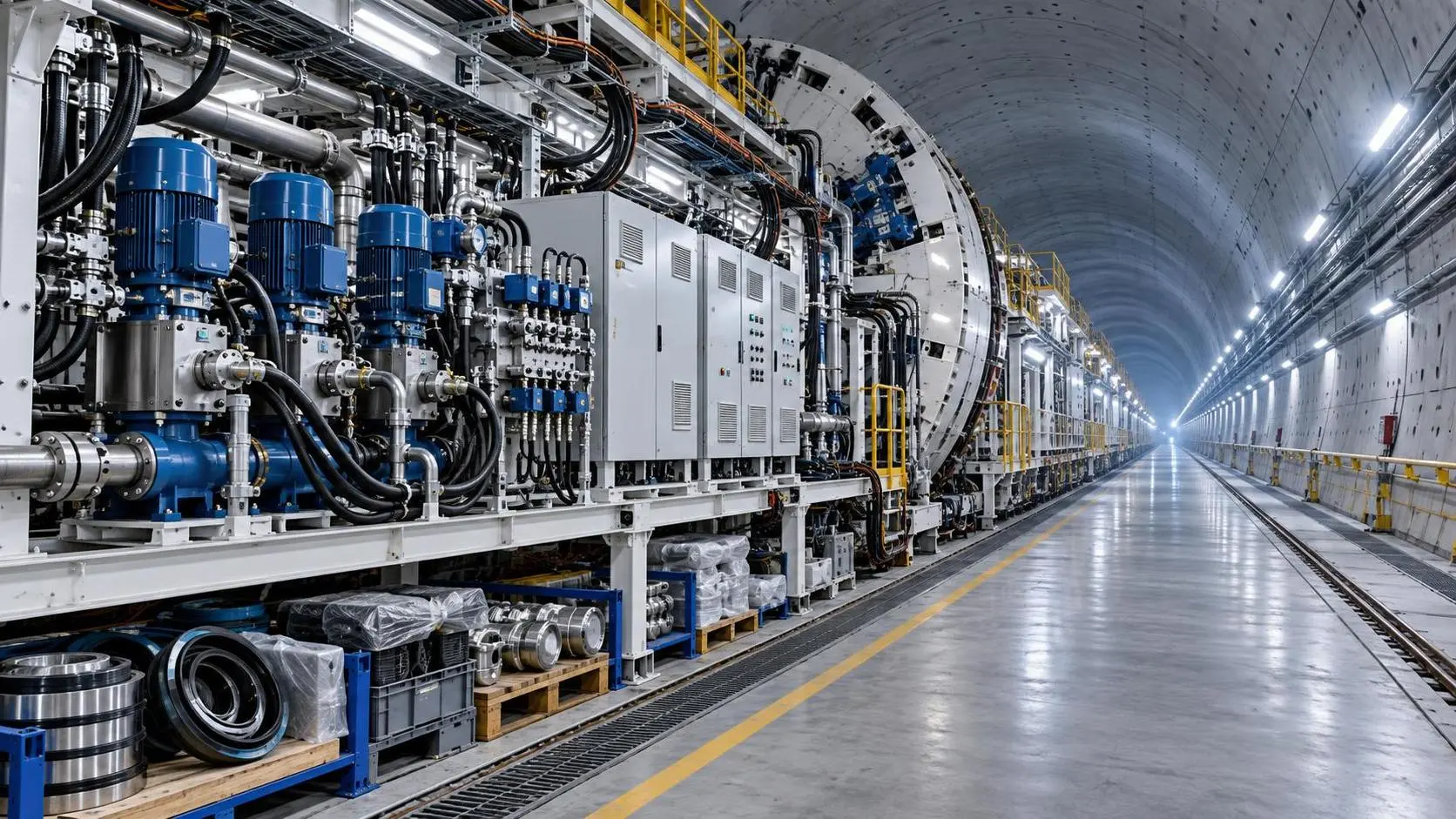
How to Specify TBM Backup System Parts for Reliable Long-Distance Tunnelling
TBM backup system parts: learn how to specify reliable spares for long-distance tunnelling, reduce downtime, ensure compatibility, and speed underground recovery.
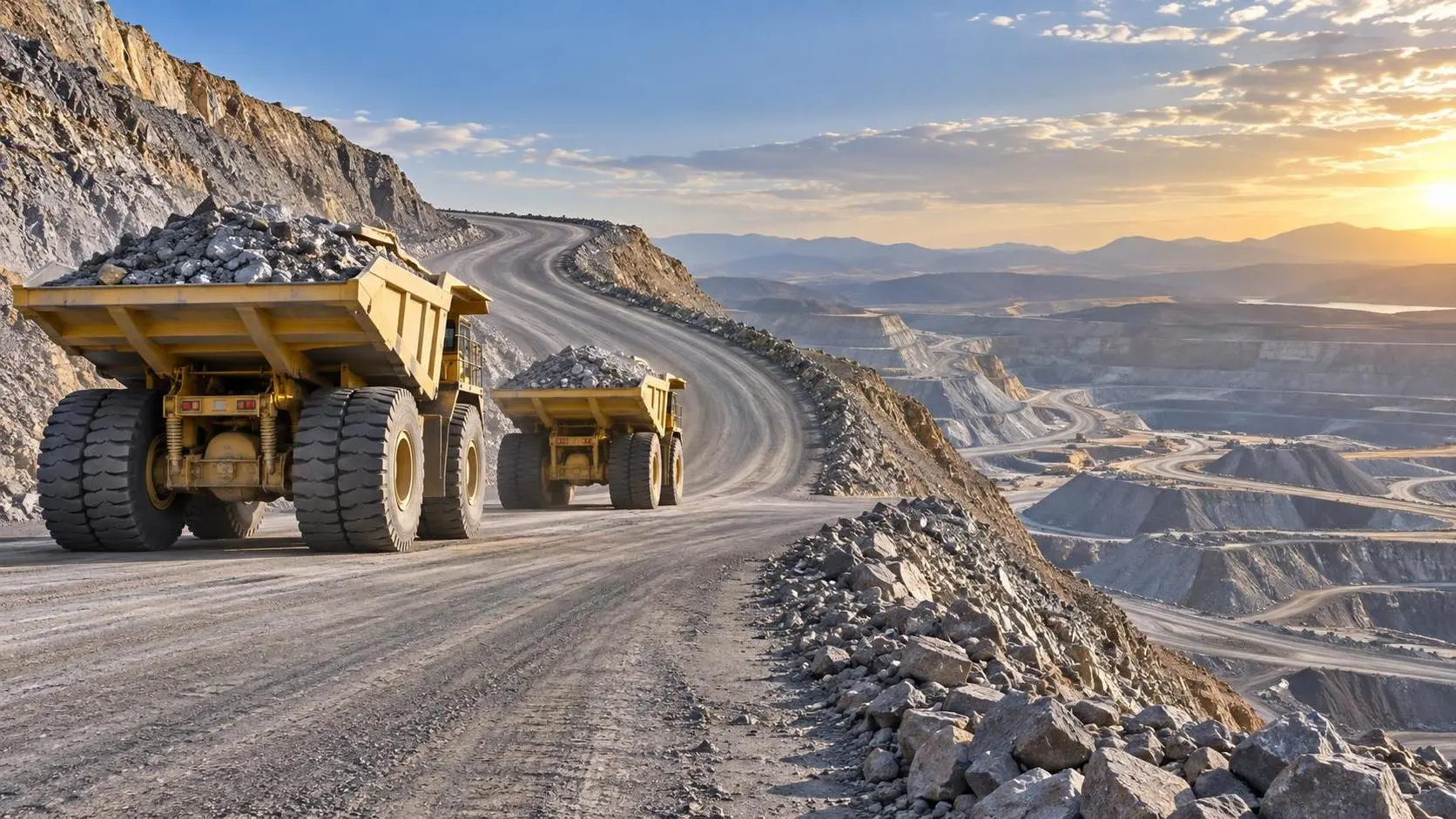
How to Size Open Pit Mining Trucks for Haul Distance, Grade, and Payload?
Open Pit Mining Trucks: learn how to match payload, haul distance, grade, road resistance, and loading capacity for safer, lower-cost mine operations.
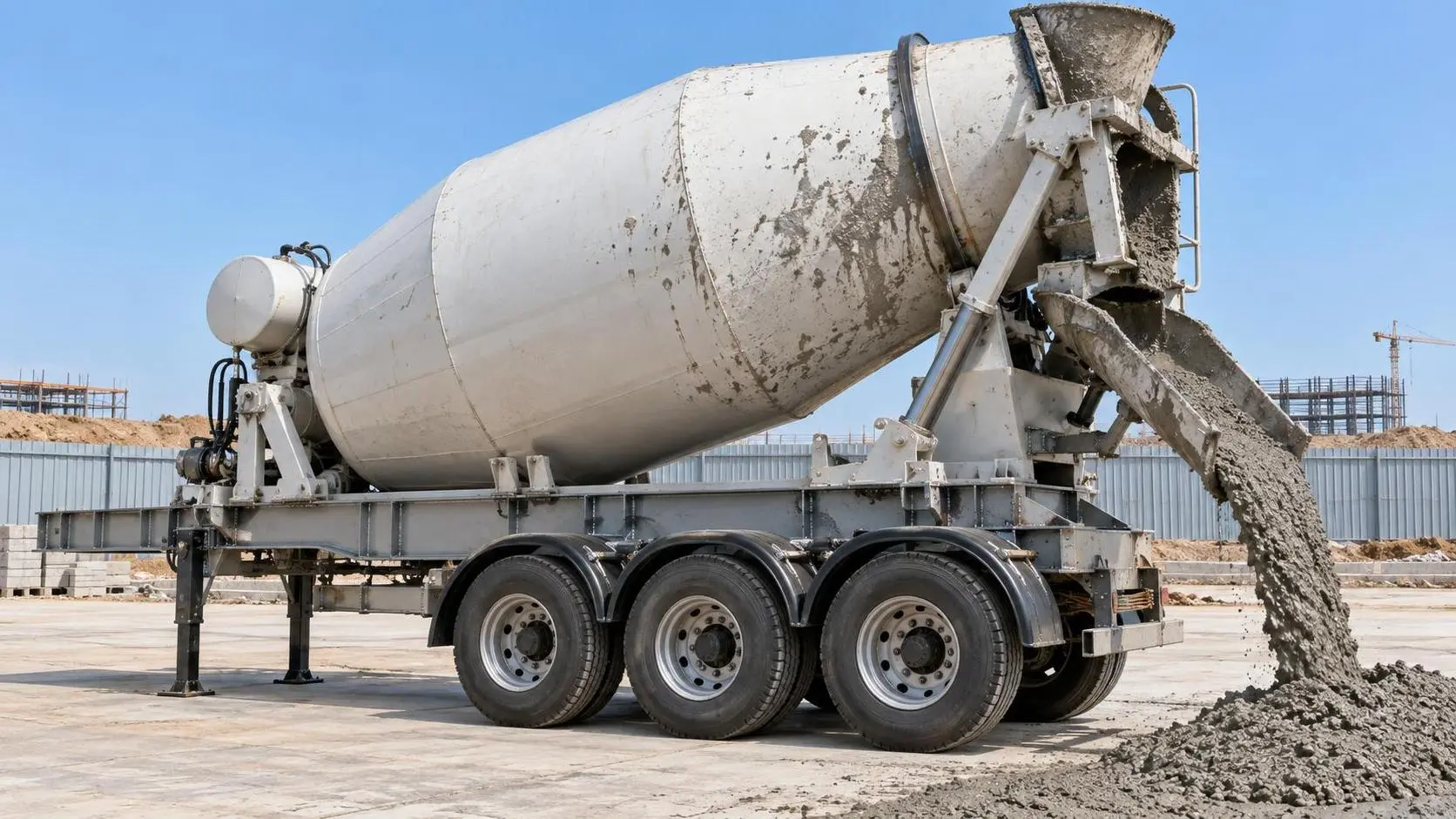
Evaluating Structural Durability and Maintenance Frequency in Heavy-Duty Concrete Mixer Trailers Under Frequent Dump Cycles
Discover how dump special trailers withstand 12–18 daily dump cycles — structural durability, maintenance optimization & real-world fleet insights revealed.
Related News
- 00
0000-00
How to Evaluate European Drill-and-Blast Tunnelling Contractors for Complex Projects - 00
0000-00
Which Trenchless Construction Technique Fits Your Utility Crossing Conditions? - 00
0000-00
What Is Driving Metro Tunnelling Demand Across Southeast Asia’s Major Cities? - 00
0000-00
Hard Rock Tunnelling in Australia: Selecting Methods for Variable Ground Conditions - 00
0000-00
Hydropower Tunnel Excavation: Selecting Methods for Variable Rock Conditions
Weekly Insights
Stay ahead with our curated technology reports delivered every Monday.