
EU PEF Rule Requires LHD Carbon Reports





Image Placement Plan
Use one image near the opening of the article to illustrate autonomous underground loading equipment, export compliance documentation, or lifecycle carbon footprint reporting for EU market access.
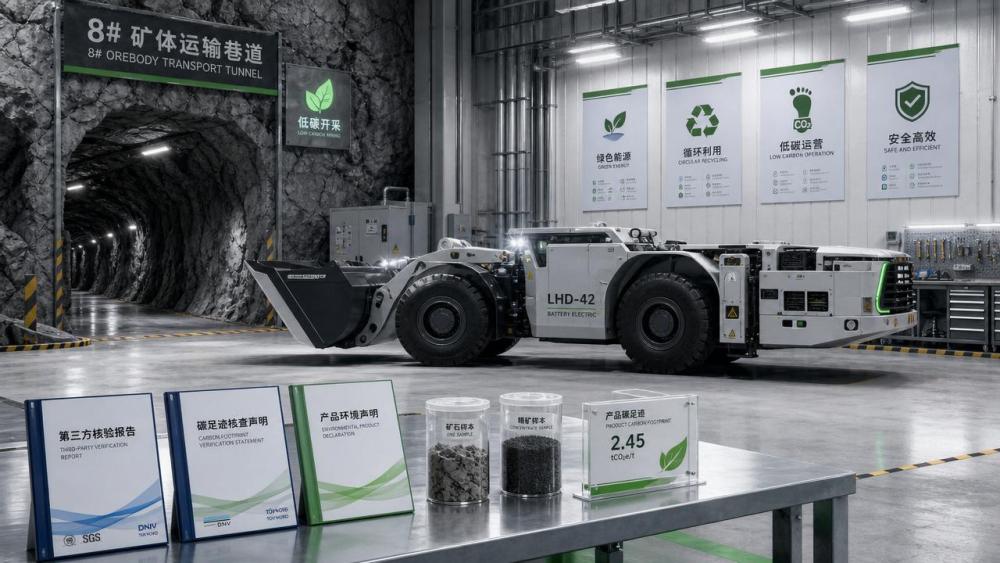
On June 1, 2026, the EU Product Environmental Footprint, or PEF, requirement becomes mandatory for Autonomous LHDs exported to the European Union, requiring manufacturers to submit third-party verified lifecycle carbon footprint reports. The change is expected to affect export compliance, CE certification preparation, technical documentation, and acceptance procedures for suppliers serving underground mining projects.
What Has Been Confirmed About the New Requirement
According to the provided event information, from June 1, 2026, the EU PEF rule applies mandatorily to Autonomous LHDs exported to the European Union.
Manufacturers are required to provide a lifecycle carbon footprint report that has been verified by a third party. The requirement directly affects the export compliance path, type certification timeline, and technical documentation standards of Chinese equipment suppliers.
Products that do not meet the requirement will not be able to enter the CE certification process. They may also be rejected by downstream mining engineering, procurement, and construction management contractors, including EPCM participants.
How the Rule May Reshape Industry Workflows
Export-oriented trading companies
From an industry perspective, direct trading companies handling Autonomous LHD exports may face earlier document screening before shipment or contract execution. The impact is likely to appear in order review, customs-related preparation, customer qualification checks, and CE certification coordination.
These companies may need to pay closer attention to whether suppliers can provide verified lifecycle carbon footprint reports before the products are submitted for CE-related procedures or accepted by downstream project contractors.
Raw material procurement companies
Analysis shows that raw material procurement companies may be indirectly affected because lifecycle carbon footprint reporting generally depends on traceable upstream information. While the provided event does not specify material-level reporting rules, procurement teams may need to prepare for stricter requests from equipment manufacturers seeking data support for carbon footprint documentation.
The business links most likely to require attention include supplier qualification, material traceability records, procurement documentation, and coordination with manufacturers preparing third-party verification materials.
Processing and manufacturing companies
For processing and manufacturing companies, the direct relevance is stronger. The requirement changes the compliance preparation standard for Autonomous LHDs intended for the EU market. Manufacturers may need to align product design files, production records, technical documentation, verification materials, and type certification schedules around the new PEF-related requirement.
What deserves closer attention is the connection between lifecycle carbon footprint reporting and CE certification entry. According to the provided information, non-compliant products cannot enter the CE certification process, making document readiness a prerequisite for market access.
Supply chain service providers
Supply chain service providers, including documentation coordinators, logistics service partners, inspection support providers, and export compliance consultants, may see changes in how files are collected and checked before delivery. Their role may shift from shipment support to earlier-stage compliance coordination.
From an industry perspective, service providers may need to help verify whether carbon footprint reports, third-party verification evidence, technical files, and customer acceptance requirements are aligned before products are delivered to EU-related projects.
Compliance Priorities for Manufacturers and Exporters
Make the carbon footprint report part of CE preparation
The key operational point is that the lifecycle carbon footprint report is not only an environmental document. Based on the provided event summary, it is linked to entry into the CE certification process for Autonomous LHDs exported to the EU.
Companies should therefore review whether the report, third-party verification evidence, and technical documentation are prepared before CE-related procedures begin.
Align technical files with verified lifecycle data
Manufacturers may need to ensure that technical files are consistent with the lifecycle carbon footprint report. This may include product configuration, equipment specifications, component records, production process information, and other documentation used to support verification.
It is more appropriate to understand this as a documentation readiness issue as well as a certification issue, because inconsistent or incomplete files could delay type certification preparation.
Review tender and project acceptance requirements
The provided information notes that downstream mining EPCM contractors may reject non-compliant products. Exporters and manufacturers should therefore review technical bids, procurement specifications, project delivery documents, and customer acceptance clauses related to EU-bound Autonomous LHDs.
Where contracts are still under negotiation, companies may need to clarify whether third-party verified lifecycle carbon footprint reporting is a delivery condition or a prequalification requirement.
Reassess delivery schedules and supplier readiness
The requirement may affect the timing of document preparation, third-party verification, certification submission, and customer acceptance. From an industry perspective, companies should avoid treating the report as a final-stage attachment and instead build it into the project schedule at an earlier stage.
Supplier qualification management may also require closer review, especially where upstream data is needed to support lifecycle carbon footprint documentation.
Industry Observation: Carbon Data Becomes a Market Access Factor
Analysis shows that this rule reflects a broader shift in how industrial equipment exports may be evaluated. For Autonomous LHDs entering the EU market, compliance is no longer limited to safety, performance, and conventional certification files. Environmental footprint documentation is becoming part of the market access pathway.
From an industry perspective, the most important change is the movement of carbon reporting from a sustainability disclosure topic into a certification and acceptance requirement. This may increase preparation pressure for manufacturers that have not yet connected product engineering records, supplier data, and third-party verification processes.
What deserves closer attention is the potential impact on project execution. If carbon footprint documentation is not ready before CE certification or EPCM acceptance review, delivery schedules and contract performance may face additional uncertainty. This is an analytical judgment based on the described compliance pathway, not a confirmed market outcome.
Conclusion: A Documentation Rule With Operational Consequences
The June 1, 2026 PEF requirement for Autonomous LHDs exported to the EU is significant because it links lifecycle carbon footprint reporting with certification access and downstream project acceptance. For manufacturers and exporters, the practical focus should be on verified reporting, technical documentation alignment, CE preparation, and customer requirement matching.
A reasonable industry conclusion is that companies with earlier documentation planning and stronger supplier data coordination may be better positioned to manage the transition. However, the actual effect will depend on detailed implementation, certification review practices, and buyer acceptance standards.
Information Basis and Follow-up Items
This article is based on the user-provided news title, event date, and event summary. Specific official source links were not provided in the input and should be verified continuously.
For ongoing monitoring, companies should follow relevant official regulatory texts, PEF implementation guidance, CE certification execution practices, third-party verification requirements, tender document changes, EPCM acceptance language, and feedback from the Autonomous LHD export supply chain.
Related News

How to Evaluate European Drill-and-Blast Tunnelling Contractors for Complex Projects
Drill and blast tunnelling contractors Europe: learn how to assess geology expertise, blast control, equipment reliability, safety, and programme resilience for complex projects.

Which Trenchless Construction Technique Fits Your Utility Crossing Conditions?
Trenchless construction techniques compared for utility crossings: choose HDD, microtunnelling, pipe jacking, or auger boring based on ground, accuracy, access, and risk.

What Is Driving Metro Tunnelling Demand Across Southeast Asia’s Major Cities?
Metro tunnelling Southeast Asia is accelerating as major cities tackle congestion, flooding, and connectivity. Explore the market forces, technical risks, and opportunities shaping demand.

Hard Rock Tunnelling in Australia: Selecting Methods for Variable Ground Conditions
Hard rock tunnelling in Australia: compare TBM, drill-and-blast and hybrid methods to manage variable ground, reduce risk and protect project costs.

Hydropower Tunnel Excavation: Selecting Methods for Variable Rock Conditions
Hydropower tunnel excavation methods for variable rock conditions: compare TBM, drill-and-blast, and hybrid strategies to improve safety, progress, and project control.

How to Select Underground Safety Equipment for Tunnelling by Hazard and Work Zone
Underground Safety Equipment for tunnelling: match protection to hazards, work zones, compliance, and emergency needs with this practical selection guide.

EPB or Slurry Shield? Selecting Soft-Ground Tunnelling Equipment by Soil Conditions
Tunnel Excavation Equipment for soft ground: compare EPB and slurry shields by soil, groundwater, settlement risk, and project logistics to choose confidently.

How to Specify TBM Backup System Parts for Reliable Long-Distance Tunnelling
TBM backup system parts: learn how to specify reliable spares for long-distance tunnelling, reduce downtime, ensure compatibility, and speed underground recovery.

How to Size Open Pit Mining Trucks for Haul Distance, Grade, and Payload?
Open Pit Mining Trucks: learn how to match payload, haul distance, grade, road resistance, and loading capacity for safer, lower-cost mine operations.
Related News
- 00
0000-00
How to Evaluate European Drill-and-Blast Tunnelling Contractors for Complex Projects - 00
0000-00
Which Trenchless Construction Technique Fits Your Utility Crossing Conditions? - 00
0000-00
What Is Driving Metro Tunnelling Demand Across Southeast Asia’s Major Cities? - 00
0000-00
Hard Rock Tunnelling in Australia: Selecting Methods for Variable Ground Conditions - 00
0000-00
Hydropower Tunnel Excavation: Selecting Methods for Variable Rock Conditions
Weekly Insights
Stay ahead with our curated technology reports delivered every Monday.