
How Do SLAM Algorithms for Underground Mining Reduce Risk?





SLAM Algorithms for underground mining are becoming a critical safety layer in deep, GPS-denied operations where poor visibility, shifting ground conditions, and equipment congestion can quickly escalate risk. For technical evaluators assessing autonomous LHDs, drilling fleets, or smart haulage systems, the value of SLAM lies not only in navigation but in real-time spatial awareness, collision avoidance, and operational continuity. This article examines how robust mapping and localization reduce uncertainty underground and support safer, more reliable mine automation.
In modern underground operations, risk is rarely caused by one failure point. It often emerges from 3 combined factors: limited visibility, dynamic excavation geometry, and mixed traffic involving people, LHD loaders, drilling jumbos, service vehicles, and haulage equipment. SLAM Algorithms for underground mining help convert that unstable environment into measurable spatial data that machines and supervisors can act on.
Why Underground Mines Need SLAM Beyond Basic Navigation
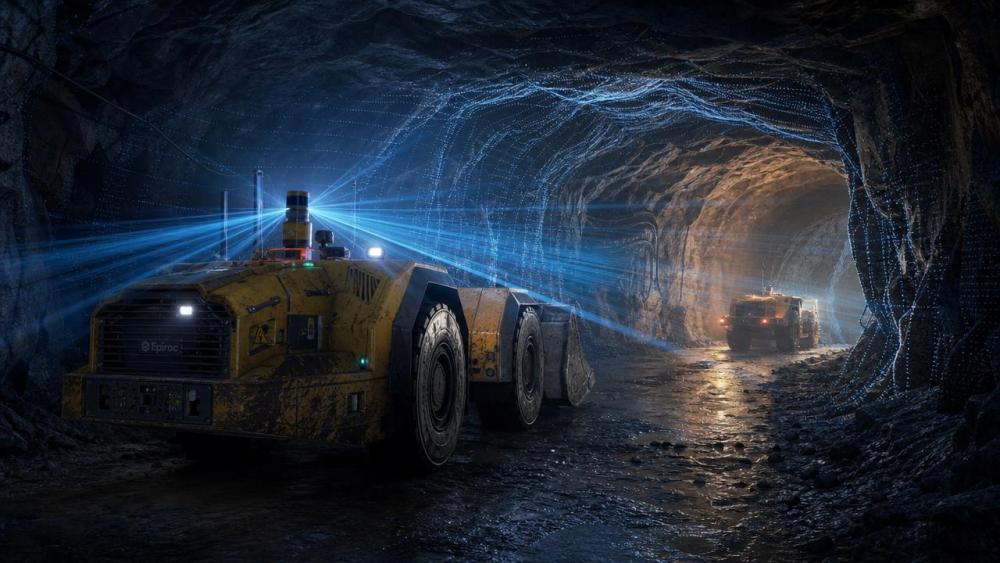
GPS signals usually disappear within the first few meters of a portal or shaft. Conventional beacons, RFID points, and manual survey controls can support localization, but they struggle when mine layouts change every shift. SLAM fills this gap by estimating machine position while continuously building or updating a map.
For technical evaluators, the critical point is not whether a vehicle can move from point A to point B. The question is whether it can maintain localization integrity when dust rises, rock faces change, reflective surfaces appear, or a tunnel narrows to 4–6 meters.
From static maps to live spatial awareness
Traditional mine plans may be accurate at survey time, but they age quickly. A new heading, muck pile, temporary barricade, scaling zone, or parked service vehicle can invalidate assumptions within hours. SLAM Algorithms for underground mining detect these changes through sensor fusion and map updates.
Most underground autonomy stacks combine 2–4 sensing sources, such as LiDAR, radar, inertial measurement units, wheel odometry, and cameras where visibility allows. The algorithm reconciles noisy signals and generates a position estimate that remains usable even when one sensor degrades.
Risk categories directly affected by SLAM
- Collision risk between LHDs, personnel carriers, service vehicles, and fixed infrastructure in narrow drifts.
- Navigation risk caused by map drift, blocked routes, unsupported ground, or incorrect heading selection.
- Production risk from automation stoppages, manual recovery events, and repeated re-surveying requirements.
- Geotechnical exposure when machines enter zones affected by deformation, water ingress, or recent blasting.
A practical evaluation should separate “navigation capability” from “risk reduction capability.” A vehicle may follow a route under controlled test conditions, yet still lack the robustness required for 24-hour production cycles in a deep, humid, and high-vibration mine.
How SLAM Algorithms for Underground Mining Reduce Operational Risk
Risk reduction begins when the machine knows where it is, what surrounds it, and how that environment is changing. In a typical autonomous LHD cycle, this awareness is needed during loading, tramming, dumping, reversing, passing, and stopping.
The strongest SLAM Algorithms for underground mining reduce uncertainty through 4 mechanisms: localization confidence, obstacle recognition, map consistency, and safe fallback behavior. Each mechanism has a direct impact on asset protection and personnel safety.
1. Localization confidence in GPS-denied headings
Localization error can accumulate when a machine travels hundreds of meters through repetitive tunnel geometry. Long straight drifts, similar crosscuts, and low-feature walls can confuse weak algorithms. Robust SLAM uses loop closure, feature matching, and inertial correction to limit drift.
In procurement testing, evaluators often request repeat runs over 500 meters to 2 kilometers, including loaded and unloaded vehicle states. The goal is to observe whether the system maintains a stable pose estimate without frequent manual resets.
2. Collision avoidance in mixed-traffic environments
Underground mines may operate with speed limits from 5 km/h to 25 km/h depending on drift width, gradient, traffic rules, and vehicle type. Even at low speed, a fully loaded LHD or haul truck has significant stopping distance and limited operator visibility.
SLAM supports collision avoidance by giving the autonomy system a live geometric model. When combined with proximity detection and traffic management, it helps vehicles slow, stop, or re-route before entering conflict zones.
3. Better decision-making after blasting or ground movement
After blasting, tunnel walls, muck piles, and access conditions can change substantially. A static map may not show loose material, temporary obstructions, or altered berms. SLAM-based mapping identifies deviations from the expected geometry and supports safer re-entry planning.
For deep mines operating multiple development headings, this is a major benefit. One updated spatial layer can support dispatching, ventilation planning, remote inspection, and autonomous route validation within the same shift.
The table below summarizes how SLAM functions translate into risk control outcomes for common underground equipment and workflows.
The key conclusion is that SLAM should be assessed as part of a safety architecture, not as an isolated mapping feature. Its value increases when linked to braking logic, traffic rules, geofencing, remote supervision, and mine planning systems.
Technical Evaluation Criteria for Safer SLAM Deployment
Technical evaluators need a disciplined method to compare SLAM Algorithms for underground mining across vendors, machines, and mine types. A polished demonstration in a clean test tunnel is useful, but it does not prove production readiness.
A credible assessment should include at least 6 dimensions: localization accuracy, robustness, sensor architecture, compute platform, integration interfaces, and maintainability. Each dimension affects risk differently.
Accuracy is important, but resilience is more important
Some applications may require sub-meter localization, while precision docking, automated dumping, or drilling alignment may demand tighter tolerances. However, a nominal accuracy figure is incomplete without understanding performance during dust, vibration, water spray, and signal loss.
Evaluators should ask how the algorithm behaves when 1 sensor is partially blinded, when a route has repetitive geometry, or when the vehicle passes metallic infrastructure. A safe system should degrade predictably rather than fail silently.
Interoperability with mine automation systems
SLAM does not operate alone. It must communicate with fleet management, traffic control, remote operation stations, maintenance dashboards, and sometimes ventilation-on-demand systems. Integration delays of 2–8 weeks are common when interfaces are poorly defined.
For autonomous LHDs and smart haulage systems, data exchange should support machine state, position, speed, planned route, obstacle alerts, and health diagnostics. Open and documented APIs reduce lock-in risk during future fleet expansion.
Recommended test sequence
- Run baseline mapping in a known drift and compare against survey control.
- Test loaded and unloaded machine movement over at least 3 representative routes.
- Introduce realistic obstacles, including parked vehicles and temporary barricades.
- Evaluate performance after environmental degradation such as dust, water, or lighting changes.
- Validate fallback states, operator alerts, stop logic, and manual recovery procedures.
This 5-step sequence is practical for early-stage vendor comparison. For final acceptance, mines should also include shift-length testing, network interruption scenarios, and route changes after blasting.
The following procurement matrix helps structure a technical review without relying on vague claims such as “high accuracy” or “advanced autonomy.”
A strong supplier should provide engineering evidence, not only marketing diagrams. The most useful submissions include raw test results, failure-mode descriptions, operating envelopes, commissioning steps, and maintenance responsibilities.
Deployment Workflow: From Pilot Drift to Production Fleet
Deploying SLAM Algorithms for underground mining is not a one-day software installation. It is a staged engineering project involving mine survey teams, automation specialists, vehicle OEMs, communications engineers, and operations supervisors.
A typical deployment can be structured in 4 phases over 8–20 weeks, depending on mine complexity, fleet size, network readiness, and the number of headings included in the pilot area.
Phase 1: Operational risk mapping
The project should begin with a risk map of the target area. This includes drift dimensions, grades, blind corners, refuge bays, ventilation doors, loading points, dump points, pedestrian zones, and known communication dead spots.
For example, an LHD route with 8 intersections and 3 loading bays requires different logic from a straight haulage decline. The more complex the traffic pattern, the more valuable real-time mapping becomes.
Phase 2: Sensor and compute architecture selection
Hardware selection should reflect the mine environment. LiDAR can provide dense geometry, radar can improve resilience in dust, IMUs support short-term motion estimation, and wheel odometry helps constrain vehicle movement.
Compute hardware must tolerate vibration, heat, moisture, and voltage fluctuations. In underground mobile equipment, practical serviceability matters as much as processing speed because sensor downtime can interrupt production cycles.
Phase 3: Commissioning and acceptance testing
Commissioning should include acceptance criteria agreed before installation. Common criteria include localization reliability, map update frequency, obstacle response, operator alert timing, recovery procedure clarity, and integration with remote-control stations.
A mine may define 3 acceptance levels: engineering validation, controlled operation, and production release. Each level should have measurable pass conditions rather than subjective approval.
Phase 4: Continuous monitoring and improvement
After release, SLAM performance should be monitored through event logs and trend dashboards. Useful indicators include localization resets per shift, emergency stops, obstacle alert frequency, mapping update intervals, and manual takeover events.
Continuous monitoring helps detect gradual degradation. A sensor covered by mud may not fail immediately, but it can reduce mapping quality over several hours and increase operational uncertainty.
Common Misunderstandings That Increase Risk
Many projects underperform because stakeholders treat SLAM as a plug-in feature rather than a mine-wide safety layer. The algorithm is important, but the surrounding process determines whether it reduces risk consistently.
Technical evaluators should challenge assumptions early, especially when comparing autonomous LHD loaders, drilling jumbos, smart haulage systems, and remote operation packages from different suppliers.
Misunderstanding 1: A better sensor automatically means safer autonomy
High-resolution sensors are valuable, but safety depends on sensor fusion, algorithm behavior, mechanical braking, traffic control, and operator procedures. A 3D point cloud alone does not define a safe stop distance or a restricted zone.
Misunderstanding 2: Once mapped, a mine does not need frequent updates
Underground environments are not static warehouses. Development headings, ground support, muck piles, service installations, and temporary obstructions change regularly. In active areas, map validation may be needed daily or after each blast cycle.
Misunderstanding 3: Connectivity solves localization
5G, Wi-Fi, leaky feeder, and private networks are important for supervision and data transfer, but connectivity is not the same as localization. SLAM Algorithms for underground mining must remain functional during short communication interruptions.
Practical safeguards for evaluators
- Define minimum performance levels for normal, degraded, and emergency modes.
- Require route testing under at least 2 environmental conditions, such as clear and dusty operation.
- Include maintenance teams in sensor placement and cleaning procedure reviews.
- Check whether data logs support incident investigation and continuous improvement.
These safeguards reduce the risk of approving a system that works in a demonstration but fails to support dependable production. They also make supplier comparison more transparent for investment committees.
Strategic Value for Smart Mines and Underground Equipment Decisions
The business case for SLAM extends beyond avoiding individual incidents. When machines understand their environment, mines can improve utilization, reduce unplanned stoppages, and support gradual migration from manual operation to remote and autonomous workflows.
For equipment buyers, SLAM capability should influence specifications for LHD loaders, drilling fleets, underground trucks, and inspection robots. It should also be considered when planning electrification, ventilation control, and digital mine infrastructure.
Where UTMD’s intelligence perspective helps
UTMD tracks the intersection of rock mechanics, zero-emission underground equipment, automation, and smart transport systems. This perspective is useful because SLAM performance depends on more than software code.
Vehicle size, battery placement, hydraulic vibration, sensor mounting, tunnel geometry, and traffic rules all influence performance. A compact LHD in a narrow stope faces different constraints from a long-haul electric truck on a decline.
Decision guidance for technical evaluators
Before approving a SLAM-enabled system, evaluators should verify 5 decision points: operational fit, safety logic, maintainability, integration pathway, and expansion potential. Each point should be documented before commercial negotiation.
A system suitable for a 2-vehicle pilot may not scale to a 20-vehicle fleet without stronger traffic control, network planning, sensor maintenance, and data governance. Early architecture choices determine later flexibility.
Key questions before procurement approval
- Does the SLAM system support the mine’s drift width, gradient, traffic density, and development rate?
- Are degraded-mode behaviors documented for dust, vibration, water spray, and network interruptions?
- Can maintenance teams service sensors without excessive production interruption?
- Does the system integrate with fleet management, traffic control, and remote operations platforms?
- Can the vendor support phased expansion across additional headings, levels, or vehicle types?
SLAM Algorithms for underground mining reduce risk by turning unknown underground space into actionable machine intelligence. They improve localization, strengthen collision avoidance, detect environmental changes, and support safer automation in GPS-denied conditions.
For technical evaluators, the right approach is evidence-based selection: test the algorithm in realistic headings, examine degraded-mode behavior, confirm integration requirements, and define measurable acceptance criteria before fleet deployment.
UTMD helps underground engineering and mining teams interpret these technology choices within the broader shift toward electrified, autonomous, and digitally supervised operations. To compare SLAM-enabled equipment strategies or assess deployment risks, contact us to get a tailored solution and explore more underground automation insights.
Related News
How to Evaluate European Drill-and-Blast Tunnelling Contractors for Complex Projects
Drill and blast tunnelling contractors Europe: learn how to assess geology expertise, blast control, equipment reliability, safety, and programme resilience for complex projects.
Which Trenchless Construction Technique Fits Your Utility Crossing Conditions?
Trenchless construction techniques compared for utility crossings: choose HDD, microtunnelling, pipe jacking, or auger boring based on ground, accuracy, access, and risk.
What Is Driving Metro Tunnelling Demand Across Southeast Asia’s Major Cities?
Metro tunnelling Southeast Asia is accelerating as major cities tackle congestion, flooding, and connectivity. Explore the market forces, technical risks, and opportunities shaping demand.
Hard Rock Tunnelling in Australia: Selecting Methods for Variable Ground Conditions
Hard rock tunnelling in Australia: compare TBM, drill-and-blast and hybrid methods to manage variable ground, reduce risk and protect project costs.
Hydropower Tunnel Excavation: Selecting Methods for Variable Rock Conditions
Hydropower tunnel excavation methods for variable rock conditions: compare TBM, drill-and-blast, and hybrid strategies to improve safety, progress, and project control.
How to Select Underground Safety Equipment for Tunnelling by Hazard and Work Zone
Underground Safety Equipment for tunnelling: match protection to hazards, work zones, compliance, and emergency needs with this practical selection guide.
EPB or Slurry Shield? Selecting Soft-Ground Tunnelling Equipment by Soil Conditions
Tunnel Excavation Equipment for soft ground: compare EPB and slurry shields by soil, groundwater, settlement risk, and project logistics to choose confidently.
How to Specify TBM Backup System Parts for Reliable Long-Distance Tunnelling
TBM backup system parts: learn how to specify reliable spares for long-distance tunnelling, reduce downtime, ensure compatibility, and speed underground recovery.

How to Size Open Pit Mining Trucks for Haul Distance, Grade, and Payload?
Open Pit Mining Trucks: learn how to match payload, haul distance, grade, road resistance, and loading capacity for safer, lower-cost mine operations.
Related News
- 00
0000-00
How to Evaluate European Drill-and-Blast Tunnelling Contractors for Complex Projects - 00
0000-00
Which Trenchless Construction Technique Fits Your Utility Crossing Conditions? - 00
0000-00
What Is Driving Metro Tunnelling Demand Across Southeast Asia’s Major Cities? - 00
0000-00
Hard Rock Tunnelling in Australia: Selecting Methods for Variable Ground Conditions - 00
0000-00
Hydropower Tunnel Excavation: Selecting Methods for Variable Rock Conditions
Weekly Insights
Stay ahead with our curated technology reports delivered every Monday.