
SLAM Algorithms for LHD Loaders: Key Accuracy Limits in GPS-Denied Underground Mines





SLAM Algorithms for LHD Loaders: Key Accuracy Limits in GPS-Denied Underground Mines
In GPS-denied underground mines, SLAM Algorithms for LHD loaders now sit at the center of autonomous navigation.
They affect cycle time, collision risk, operator confidence, and fleet utilization more than many buyers first expect.
The promise sounds simple: map the tunnel, localize the machine, and keep the loader moving without GPS.
In reality, underground conditions push every sensor and every fusion model toward its practical limit.
That gap between lab accuracy and production accuracy is where most technical evaluations succeed or fail.
For UTMD, this matters because underground autonomy is no longer a future concept.
It is becoming a measurable requirement across electrified mines, deeper drifts, and tighter safety targets.
Why SLAM Accuracy Becomes the Make-or-Break Metric
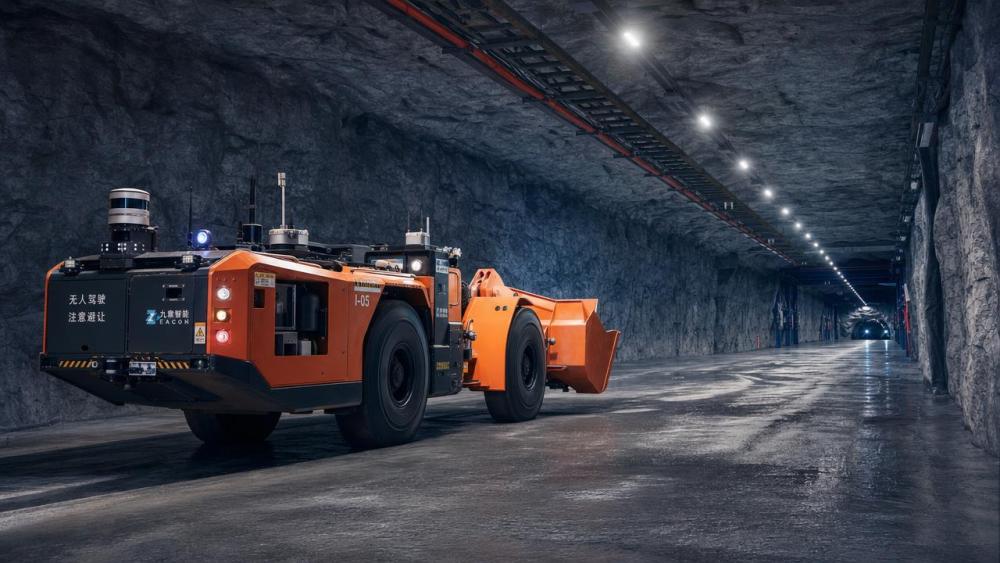
An LHD loader does not just drive from point A to point B.
It approaches drawpoints, enters muck piles, reverses in narrow headings, and dumps under strict clearance limits.
That means small localization errors can quickly turn into wall strikes, bucket misalignment, or lost production minutes.
SLAM Algorithms for LHD loaders must therefore do more than produce a clean map.
They must remain stable while the machine vibrates, slips, stops, turns sharply, and loses visual texture.
From a technical evaluation view, three questions matter most.
- How fast does localization drift during a full haul cycle?
- How well does the system recover after temporary sensor degradation?
- How much infrastructure support is needed to keep SLAM performance within tolerance?
These questions separate a demo-ready platform from a production-ready autonomy stack.
The Core Accuracy Limits Underground
The first limit is repetitive tunnel geometry.
Underground drives often look nearly identical over long distances.
For LiDAR SLAM or visual SLAM, similar walls and flat profiles can confuse place recognition.
Loop closure then becomes less reliable, especially in fresh development headings.
The second limit is dust and suspended particles.
Dust creates false returns for LiDAR and reduces contrast for cameras.
After blasting or during heavy mucking, the point cloud can become noisy enough to break scan matching.
The third limit is wheel slip.
LHD loaders frequently operate on wet, uneven, or loose ground.
Odometry derived from wheel rotation can diverge quickly from actual motion.
If the fusion engine trusts wheel data too strongly, localization drift accelerates.
The fourth limit is sensor occlusion.
Buckets, rock piles, water spray, and machine articulation can partially block sensing fields.
A system may look robust in transit yet degrade near the face, where precision matters most.
The fifth limit is low and unstable lighting.
This mainly affects camera-heavy stacks, especially when glare, shadows, and water reflections appear together.
In short, SLAM Algorithms for LHD loaders fail less from one dramatic issue.
They fail more often from several moderate disturbances arriving at the same time.
Which Sensor Strategies Actually Hold Up
No single sensor solves underground localization on its own.
That is why most serious platforms rely on sensor fusion rather than pure visual SLAM or pure LiDAR SLAM.
A common baseline stack includes LiDAR, IMU, wheel odometry, and onboard compute for real-time filtering.
Cameras can add semantic detail, but they should not be the only positioning layer underground.
The most resilient SLAM Algorithms for LHD loaders usually share several traits.
- They down-weight wheel odometry when slip indicators rise.
- They reject transient dust points before scan registration.
- They estimate confidence, not only position.
- They switch modes between cruising, loading, and dumping.
- They use map priors or beacons when environmental ambiguity grows.
This last point is especially important.
Many suppliers describe their system as infrastructure-light, but not infrastructure-free.
Reflectors, tags, or known reference points may still be needed in difficult zones.
That is not necessarily a weakness.
It is often a practical design decision for production reliability.
How to Evaluate Performance Beyond Vendor Accuracy Claims
Reported accuracy numbers can be misleading without context.
A claim of centimeter-level accuracy may refer to a short, clean, straight section.
It may not represent a full shift in active headings with dust, traffic, and changing surfaces.
A stronger evaluation framework tests SLAM Algorithms for LHD loaders under operational stress.
Focus on measurable scenarios like these.
- Long haul drift after repeated turns and reversals.
- Recovery time after dust clouds or temporary LiDAR blockage.
- Localization stability near muck piles and tunnel intersections.
- Performance variance between dry, wet, and broken ground.
- Map consistency before and after blasting changes the tunnel face.
Also ask whether the supplier reports absolute error, relative error, or only successful mission rate.
Each metric tells a different story.
A system can finish many missions while still accumulating positional drift that raises safety margins and slows movement.
More importantly, ask how the autonomy stack behaves when confidence drops.
Does it slow down, request tele-remote support, or continue with degraded assumptions?
That behavior often matters more than peak accuracy on a slide deck.
A Practical Comparison Table for Technical Screening
This type of screening brings discussions back to operating reality.
It also helps compare different SLAM Algorithms for LHD loaders on equal ground.
What the Next Phase of Underground SLAM Will Likely Look Like
From recent deployment trends, the direction is becoming clearer.
The market is moving toward hybrid autonomy rather than pure algorithmic independence.
That means tighter fusion, stronger confidence modeling, and more intelligent fallback control.
It also means SLAM will be evaluated as part of a complete production system.
Battery-electric LHD fleets, remote operations, and digital mine orchestration all raise the value of reliable localization.
But they also raise expectations.
In other words, SLAM Algorithms for LHD loaders will not be judged by elegant maps alone.
They will be judged by whether loaders keep moving safely, predictably, and efficiently in the harshest headings.
A practical next step is to request scenario-based validation data, not only headline accuracy figures.
Then compare fallback behavior, infrastructure needs, and maintenance effort alongside pure localization results.
That approach leads to better risk control and a far more realistic view of deployment readiness.
For organizations tracking smart underground transport, that is where informed decisions start to create real operational advantage.
Related News

How to Evaluate European Drill-and-Blast Tunnelling Contractors for Complex Projects
Drill and blast tunnelling contractors Europe: learn how to assess geology expertise, blast control, equipment reliability, safety, and programme resilience for complex projects.

Which Trenchless Construction Technique Fits Your Utility Crossing Conditions?
Trenchless construction techniques compared for utility crossings: choose HDD, microtunnelling, pipe jacking, or auger boring based on ground, accuracy, access, and risk.

What Is Driving Metro Tunnelling Demand Across Southeast Asia’s Major Cities?
Metro tunnelling Southeast Asia is accelerating as major cities tackle congestion, flooding, and connectivity. Explore the market forces, technical risks, and opportunities shaping demand.

Hard Rock Tunnelling in Australia: Selecting Methods for Variable Ground Conditions
Hard rock tunnelling in Australia: compare TBM, drill-and-blast and hybrid methods to manage variable ground, reduce risk and protect project costs.

Hydropower Tunnel Excavation: Selecting Methods for Variable Rock Conditions
Hydropower tunnel excavation methods for variable rock conditions: compare TBM, drill-and-blast, and hybrid strategies to improve safety, progress, and project control.

How to Select Underground Safety Equipment for Tunnelling by Hazard and Work Zone
Underground Safety Equipment for tunnelling: match protection to hazards, work zones, compliance, and emergency needs with this practical selection guide.

EPB or Slurry Shield? Selecting Soft-Ground Tunnelling Equipment by Soil Conditions
Tunnel Excavation Equipment for soft ground: compare EPB and slurry shields by soil, groundwater, settlement risk, and project logistics to choose confidently.
How to Specify TBM Backup System Parts for Reliable Long-Distance Tunnelling
TBM backup system parts: learn how to specify reliable spares for long-distance tunnelling, reduce downtime, ensure compatibility, and speed underground recovery.

How to Size Open Pit Mining Trucks for Haul Distance, Grade, and Payload?
Open Pit Mining Trucks: learn how to match payload, haul distance, grade, road resistance, and loading capacity for safer, lower-cost mine operations.
Related News
- 00
0000-00
How to Evaluate European Drill-and-Blast Tunnelling Contractors for Complex Projects - 00
0000-00
Which Trenchless Construction Technique Fits Your Utility Crossing Conditions? - 00
0000-00
What Is Driving Metro Tunnelling Demand Across Southeast Asia’s Major Cities? - 00
0000-00
Hard Rock Tunnelling in Australia: Selecting Methods for Variable Ground Conditions - 00
0000-00
Hydropower Tunnel Excavation: Selecting Methods for Variable Rock Conditions
Weekly Insights
Stay ahead with our curated technology reports delivered every Monday.