
Mixed Ground Tunnelling: How to Choose the Right Excavation Method and TBM Setup?





Mixed Ground Tunnelling: How to Choose the Right Excavation Method and TBM Setup?
Mixed ground is where many tunnel strategies that look sound on paper begin to fail. The term does not simply mean “variable geology.” In project practice, it usually refers to a tunnel face, crown, or invert encountering materials with sharply different mechanical and hydraulic behavior at the same time: hard rock on one side, soft ground on the other; weathered rock over fresh rock; boulders in a granular matrix; or fractured strata carrying groundwater next to more competent blocks. That difference matters because the machine is not excavating one average ground condition. It is reacting to conflicting conditions within the same excavation cycle.
For a project manager, the real question is not whether the alignment contains mixed ground. Many urban, mountain, river crossing, and portal sections do. The question is whether the selected excavation method and TBM configuration can tolerate rapid transitions without turning every geological change into a claims event, a safety issue, or a production collapse. Mixed Ground Tunnelling is therefore less a geological label than a decision problem: how much uncertainty the machine, support system, and construction sequence can absorb before risk becomes operationally unacceptable.
One common mistake is to frame the choice as a machine comparison only: EPB versus slurry, shielded versus open, single shield versus double shield, TBM versus NATM or drill-and-blast. In reality, method selection sits on three linked layers. The first is ground behavior at the face and around the shield. The second is how the chosen excavation system controls pressure, water, settlement, overbreak, wear, and muck removal. The third is how the project can actually maintain that control under site logistics, segment design, shaft arrangement, spoil treatment, power supply, and schedule pressure. A technically elegant setup that cannot be supported by the project’s operational envelope is not the right setup.
What mixed ground changes in method selection
In uniform formations, performance prediction is already difficult. In mixed ground, the usual assumptions behind penetration rate, cutter consumption, face stability, and advance regularity become less reliable because the load is uneven and transient. If only part of the cutterhead is in hard rock, torque spikes can develop while the softer side deforms or flows. If groundwater is concentrated in fractured zones, pressure control becomes a local rather than purely face-wide issue. If cobbles or boulders are embedded in soft soils, the excavation chamber may alternate between flowing material and impact loading. That is why mixed ground tends to expose the boundary conditions of a machine rather than its nominal design capability.
This is also where procurement language can become misleading. A TBM may be marketed as “suitable for a wide range of geology,” but range is not the same as tolerance to abrupt interface conditions. A machine can excavate both rock and soft ground in separate sections and still struggle badly where the interface passes across the face. For decision-makers, the useful question is narrower: what specific transitions are expected, how often, at what overburden, under what water regime, and with what consequence if control is lost?
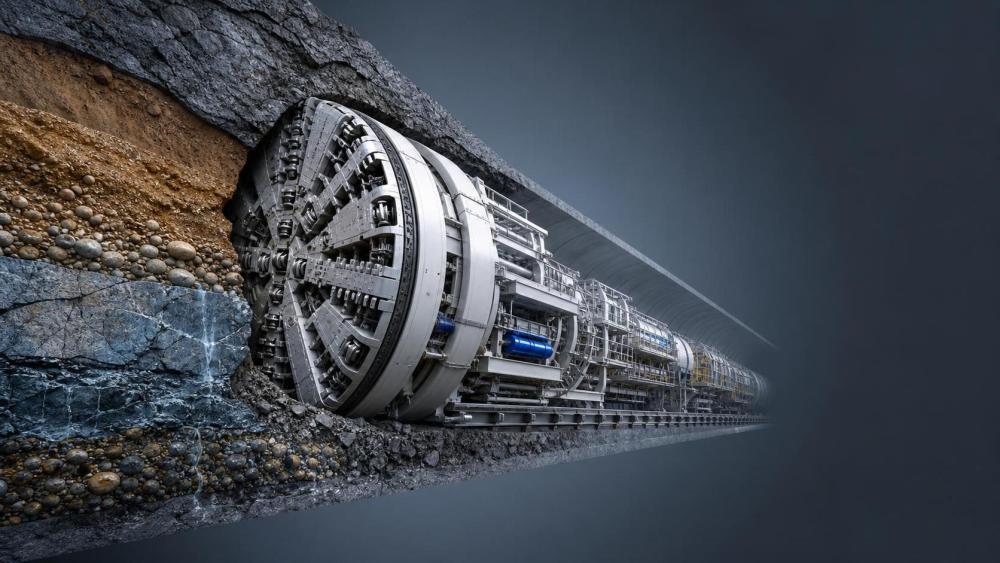
The excavation method should follow the controlling risk, not the dominant geology
Teams often begin with the dominant ground type along the alignment. That is understandable for cost planning, but it can produce the wrong decision in mixed sections. A tunnel that is mostly competent rock may still require a shielded or pressurized approach if the critical sections involve shallow cover, urban sensitivity, faulted zones, or water-bearing transitions near portals. Conversely, an alignment through mostly soft ground does not automatically justify a pressurized shield everywhere if isolated rock blocks or abrasive horizons are limited and manageable through cutterhead design and intervention planning.
A better selection logic is to identify the controlling risk zone: the segment of the tunnel where failure of face support, uncontrolled inflow, surface movement, or severe machine entrapment would have the highest consequence. That zone should heavily influence the method. This does not mean the whole project must be designed around the worst 50 meters, but it does mean those 50 meters often determine whether a standard setup is robust enough or whether a convertible, hybrid, or specially equipped TBM is justified.
For example, EPB machines are often favored where conditioning can transform excavated material into a workable plastic paste that supports the face and allows controlled extraction. They can be effective in mixed conditions, but only when the expected material spectrum, permeability, block content, and conditioning response are realistically understood. Slurry shields may offer stronger hydraulic control in highly permeable and water-bearing ground, yet they introduce their own system dependencies: slurry treatment plant capacity, separation efficiency, circuit stability, and interface management when coarse or highly variable material enters the loop. Open or shielded hard-rock TBMs can perform very well through competent formations, but fractured interfaces with inflow and squeezing behavior can quickly turn a penetration-driven setup into a recovery exercise.
What to examine before choosing a TBM setup
The most useful preselection work is usually not another generic machine matrix. It is a disciplined review of the parameters that change machine behavior in mixed ground:
- Face heterogeneity: whether the interface is longitudinal, transverse, or diagonal to the tunnel axis, and whether different materials will occupy the face simultaneously.
- Groundwater regime: not just water presence, but expected inflow pathways, permeability contrasts, and pressure conditions at transition zones.
- Abrasivity and cutter wear exposure: especially where fresh rock bands, quartz-rich horizons, or hard inclusions interrupt softer material.
- Blockiness and instability: fractured rock, mixed debris, or boulder-bearing soils that create unpredictable excavation loads.
- Settlement sensitivity: urban utilities, rail corridors, or structures that narrow the tolerance for temporary loss of pressure control.
- Intervention strategy: whether cutter inspection, tool change, and obstruction removal can be done safely and within acceptable downtime.
Those points sound obvious, but they are often blurred in front-end studies by averaging geotechnical data over long chainages. Mixed ground punishes averaging. The project needs to know where interfaces occur spatially and how they interact with tunnel depth, alignment curvature, station boxes, cross passages, and launch or breakthrough constraints. In other words, geological interpretation must be organized around excavation behavior, not just stratigraphic description.
TBM configuration is usually more decisive than the machine label
Two TBMs described by the same broad type can behave very differently in mixed ground. The label alone tells little about readiness for transition zones. Project teams should examine the configuration level: cutterhead opening ratio, spoke or closed-face concept, wear protection, crusher arrangement, screw conveyor suitability, articulation, sealing philosophy, probe drilling capability, grouting system, conditioning ports, and the machine’s tolerance for inspection and intervention under difficult conditions.
This is where hybrid or convertible concepts sometimes earn their cost. Not because convertibility is inherently superior, but because some alignments demand flexibility between excavation modes or support philosophies as the geology changes. That said, “convertible” should not be treated as a free insurance policy. Conversion procedures, time impact, required site space, and the operational competence needed to switch modes all need hard scrutiny. A theoretically flexible machine can still become a compromise that performs no mode particularly well if the concept is stretched too far.
For mixed ground in particular, the cutterhead deserves close attention. Teams tend to focus on thrust and torque figures, yet face control, clogging resistance, tool access, and the ability to handle both fine material and hard inclusions often matter more day to day. The wrong opening ratio or muck flow path can turn manageable geology into chronic instability or chamber imbalance.
A practical selection lens
That last point is often underweighted. Selection should consider not only peak performance in expected ground, but resilience when the ground model is wrong. In many mixed ground projects, the difference between a successful and troubled drive is less about average advance rate than about how the system handles the few bad zones that nobody can characterize perfectly in advance.
Common misunderstandings that distort decisions
One misunderstanding is that more machine complexity automatically reduces ground risk. Sometimes it does. Sometimes it only transfers risk into maintenance, intervention, and logistics. Another is that mixed ground is mainly a tooling problem. Cutter wear is important, but projects more often lose control through groundwater, spoil variability, or unstable interfaces than through wear alone.
There is also a persistent tendency to assume that a successful reference project validates a setup. Reference drives are useful only when the ground interface geometry, hydrogeology, tunnel diameter, cover, and surface sensitivity are genuinely comparable. “Similar geology” is too loose a phrase for a procurement decision. Mixed ground behavior is highly path-dependent.
For project leaders, another trap is reducing the choice to CAPEX. A lower purchase price or simpler backup can look attractive until the program absorbs prolonged interventions, special treatment works, or settlement mitigation. Mixed ground often shifts value from nominal machine economy to operational robustness.
Where experienced teams usually land
Experienced teams rarely ask for the “best” TBM for mixed ground in general terms. They ask what setup gives them acceptable control across the project’s most difficult transitions without crippling the rest of the drive. That leads to more grounded decisions: targeted site investigation around interfaces, stronger geotechnical baseline definition, clearer assumptions on conditioning and intervention, and procurement specifications that focus on behavior under transition rather than headline machine size or installed power.
For organizations tracking underground equipment strategy, this is also where intelligence matters. Mixed Ground Tunnelling sits at the intersection of rock-cutting mechanics, water control, automation, and operational reliability. The right choice is rarely a pure geology answer or a pure OEM answer. It comes from reading the ground, the machine, and the delivery model together.
If the alignment includes abrupt interfaces, uncertain inflows, or high consequence surface conditions, the safer decision is usually the one that preserves controllability when the geology stops behaving like the average ground profile. That is the standard worth using in mixed ground: not what performs best in the easy stretches, but what remains predictable when the tunnel enters the difficult ones.
Related News
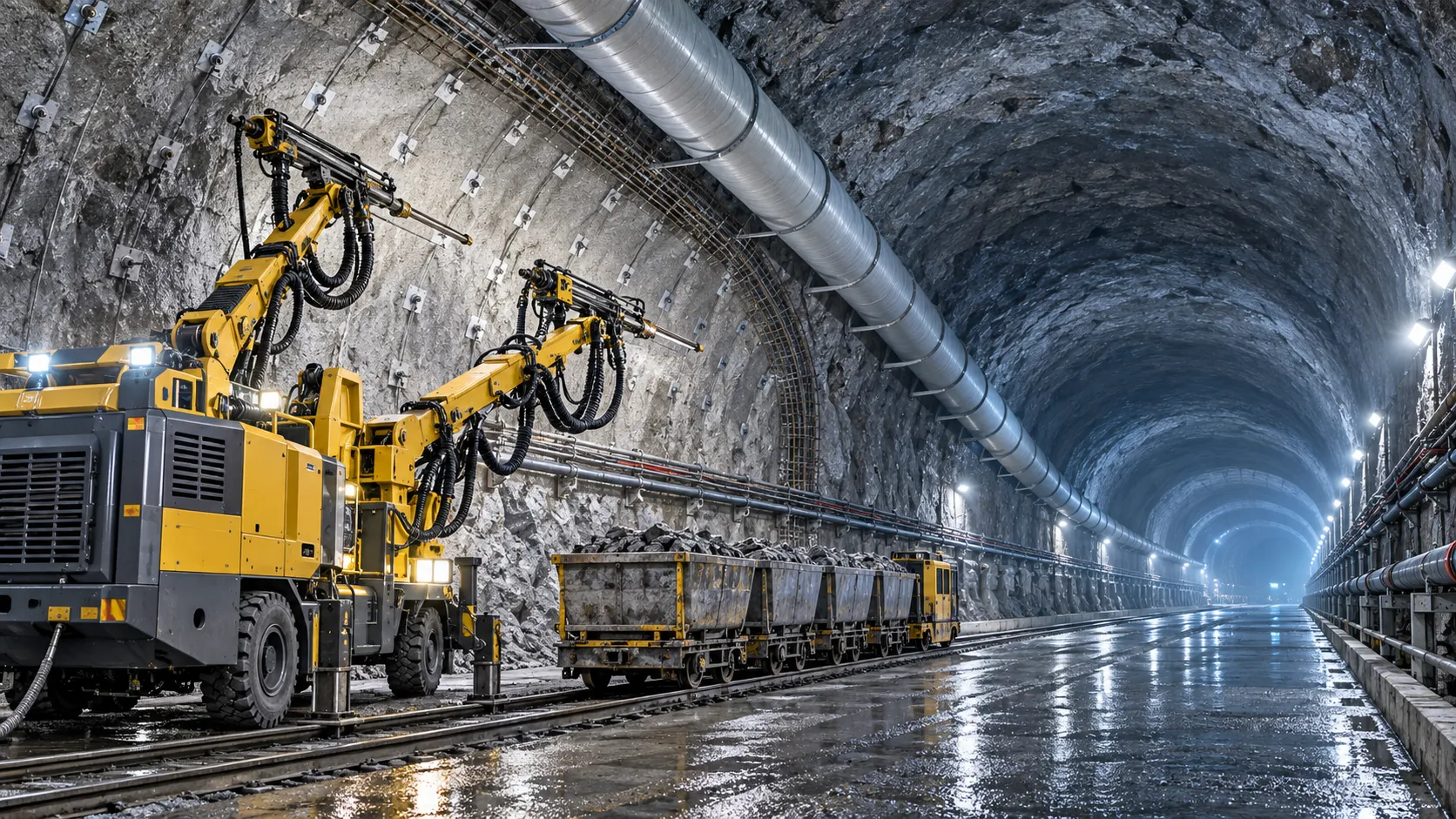
How to Evaluate European Drill-and-Blast Tunnelling Contractors for Complex Projects
Drill and blast tunnelling contractors Europe: learn how to assess geology expertise, blast control, equipment reliability, safety, and programme resilience for complex projects.
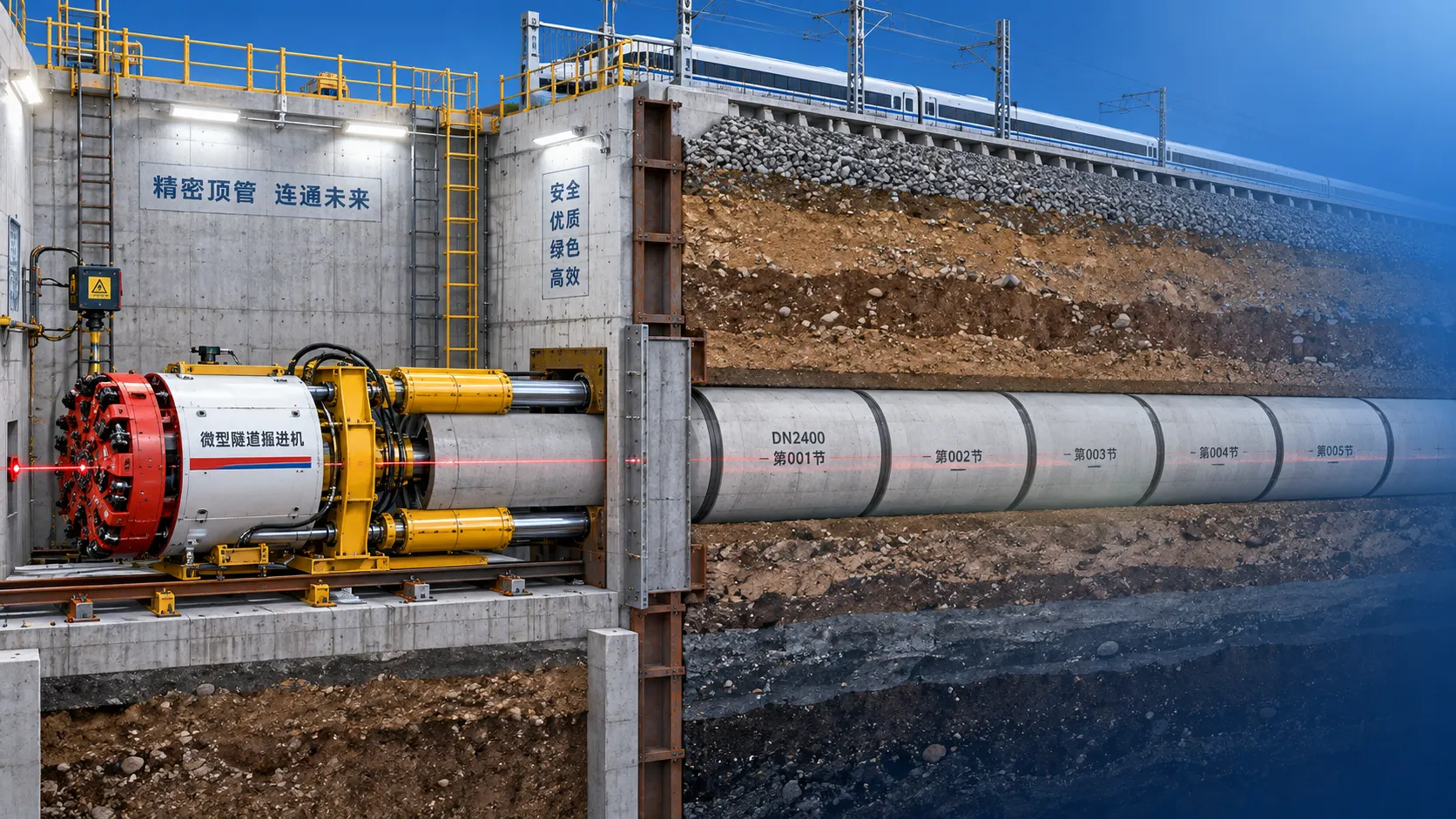
Which Trenchless Construction Technique Fits Your Utility Crossing Conditions?
Trenchless construction techniques compared for utility crossings: choose HDD, microtunnelling, pipe jacking, or auger boring based on ground, accuracy, access, and risk.
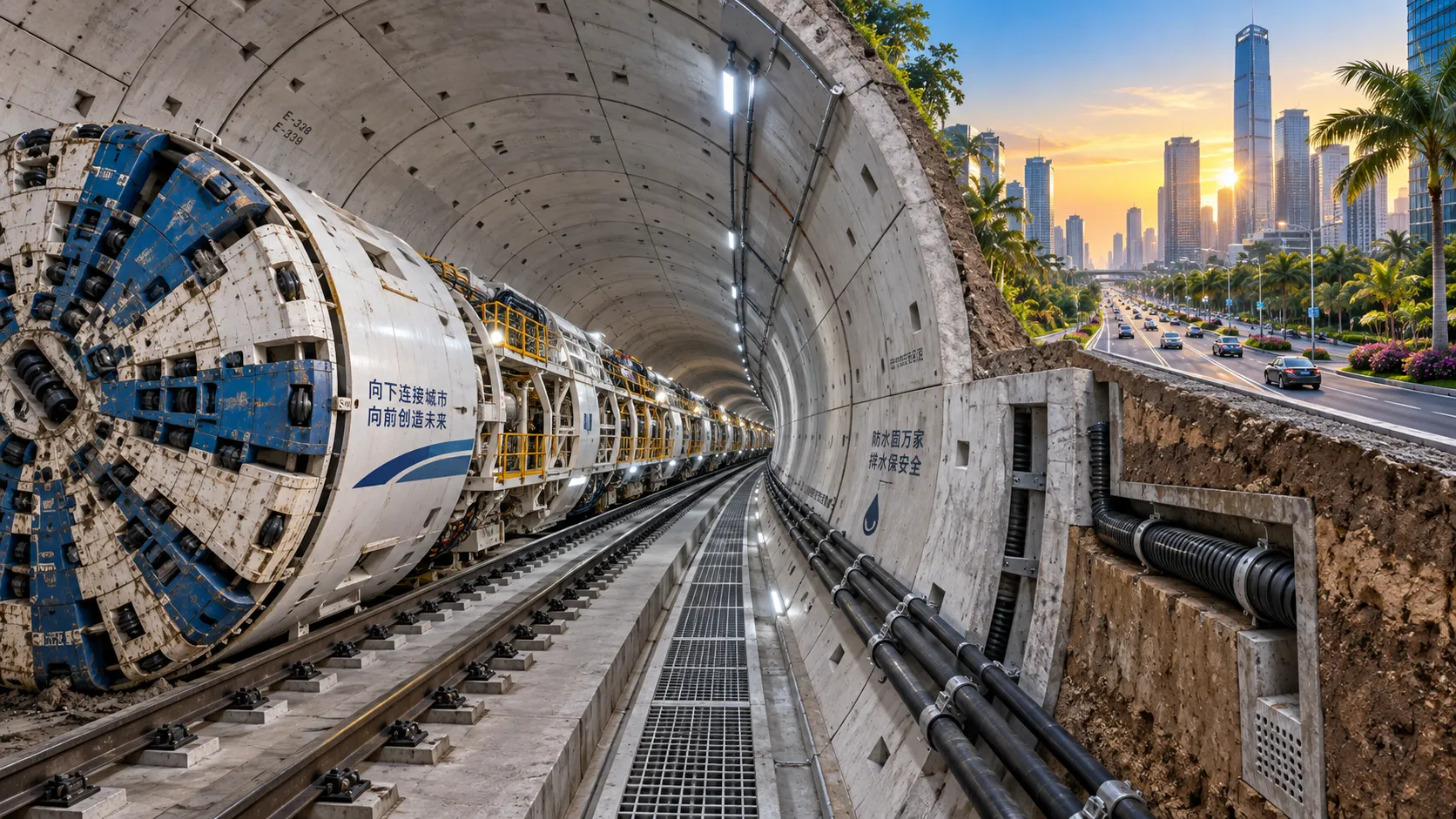
What Is Driving Metro Tunnelling Demand Across Southeast Asia’s Major Cities?
Metro tunnelling Southeast Asia is accelerating as major cities tackle congestion, flooding, and connectivity. Explore the market forces, technical risks, and opportunities shaping demand.
Hard Rock Tunnelling in Australia: Selecting Methods for Variable Ground Conditions
Hard rock tunnelling in Australia: compare TBM, drill-and-blast and hybrid methods to manage variable ground, reduce risk and protect project costs.
Hydropower Tunnel Excavation: Selecting Methods for Variable Rock Conditions
Hydropower tunnel excavation methods for variable rock conditions: compare TBM, drill-and-blast, and hybrid strategies to improve safety, progress, and project control.
How to Select Underground Safety Equipment for Tunnelling by Hazard and Work Zone
Underground Safety Equipment for tunnelling: match protection to hazards, work zones, compliance, and emergency needs with this practical selection guide.
EPB or Slurry Shield? Selecting Soft-Ground Tunnelling Equipment by Soil Conditions
Tunnel Excavation Equipment for soft ground: compare EPB and slurry shields by soil, groundwater, settlement risk, and project logistics to choose confidently.
How to Specify TBM Backup System Parts for Reliable Long-Distance Tunnelling
TBM backup system parts: learn how to specify reliable spares for long-distance tunnelling, reduce downtime, ensure compatibility, and speed underground recovery.
How to Size Open Pit Mining Trucks for Haul Distance, Grade, and Payload?
Open Pit Mining Trucks: learn how to match payload, haul distance, grade, road resistance, and loading capacity for safer, lower-cost mine operations.
Related News
- 00
0000-00
How to Evaluate European Drill-and-Blast Tunnelling Contractors for Complex Projects - 00
0000-00
Which Trenchless Construction Technique Fits Your Utility Crossing Conditions? - 00
0000-00
What Is Driving Metro Tunnelling Demand Across Southeast Asia’s Major Cities? - 00
0000-00
Hard Rock Tunnelling in Australia: Selecting Methods for Variable Ground Conditions - 00
0000-00
Hydropower Tunnel Excavation: Selecting Methods for Variable Rock Conditions
Weekly Insights
Stay ahead with our curated technology reports delivered every Monday.