
Blast Hole Drilling in Iron Ore: Key Factors That Affect Fragmentation and Productivity





Where Iron Ore Blast Hole Drilling Usually Starts to Go Wrong
Blast hole drilling in iron ore is often discussed as if drilling and blasting were separate controls. In the field, they are tightly coupled. Fragmentation at the crusher is already being decided when the first row is collared. The problem is that many production losses do not begin with explosive energy alone. They begin with hole deviation, uneven burden, variable ore hardness across a bench, wet zones that were not mapped early enough, or rigs that are technically available but not consistently delivering the same penetration quality from hole to hole.
That matters more in iron ore than many people admit. Ore bodies often show abrupt transitions: friable material next to competent banded formations, weathered caps above hard fresh rock, and local structures that change breakage behavior within a single blast block. A pattern that worked well last month can become expensive very quickly when geology shifts but drilling assumptions stay fixed. The visible symptom may be oversize boulders, toe problems, backbreak, or poor dig rates. The actual cause is usually a chain of small mismatches rather than one dramatic failure.
For mine managers trying to stabilize output, the useful question is not simply whether the holes were drilled to design depth. It is whether the holes were drilled with enough positional and directional control to let the burden, explosive column, stemming length, and bench face geometry work as intended.
Rock Mass Variability Changes the Rules Faster Than the Drill Plan
In iron ore operations, fragmentation performance often diverges bench by bench because the rock mass is not behaving as a uniform target. A dense hematite zone, for example, may demand a different drilling and charging response than adjacent altered or weathered material, even within the same pushback. If engineers keep burden and spacing unchanged across those transitions, the blast may be underpowered in one section and too aggressive in another.
This is one reason disciplined geological mapping and drill cuttings observation still matter, even where mines have strong digital planning tools. The drill operator often sees the first practical evidence of changing ground conditions through penetration rate shifts, vibration behavior, dust character, and water return. Those signals are not perfect, but they are operationally useful. When they are ignored, the blast design may continue to treat heterogeneous ground as if it were a single hardness class.
In competent iron ore, insufficient energy distribution usually shows up as coarse fragmentation and stubborn toes. In heavily fractured or weathered ground, the same drill pattern can produce excess fines, crest damage, or dilution. Neither outcome is solved by focusing only on powder factor. The better response is to align drilling accuracy and pattern geometry with the actual rock domain being mined.
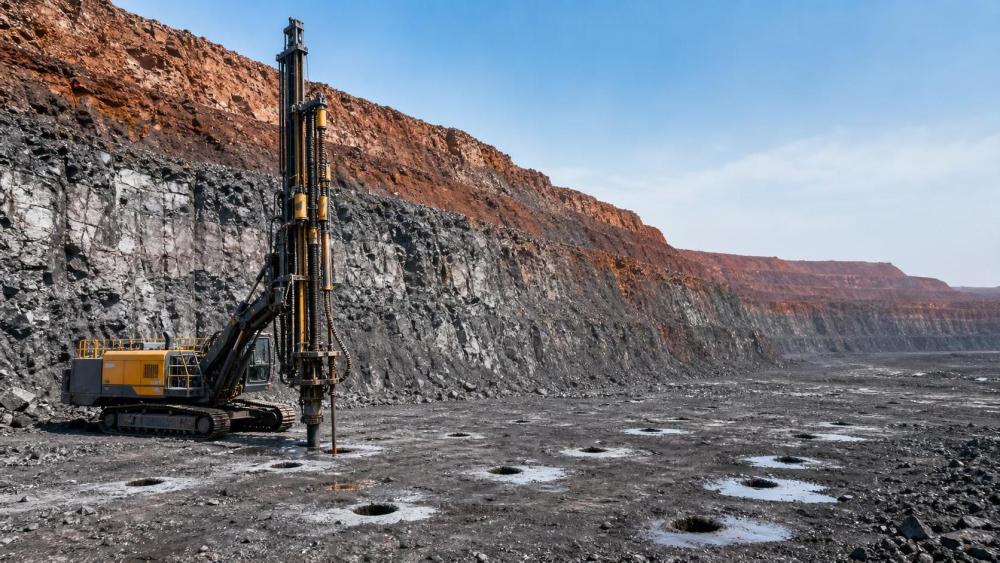
Hole Accuracy Is Not a Technical Luxury
In open-pit iron ore, hole accuracy is often where productivity gains are either protected or lost. Collar location error, inclination drift, and inconsistent final depth all distort the burden distribution across the blast. Once that happens, explosive loading may still look compliant on paper, but the rock is no longer seeing the design energy in the intended way.
The practical effect is easy to recognize on site. Tight burden sections generate flyrock risk, excessive airblast, or overbreak. Wide burden sections leave toes and large fragments that slow excavators and force secondary breakage. If the mine is feeding a primary crusher with strict top-size expectations, these errors travel downstream immediately. The cost does not stay in drilling. It appears in loader cycle time, crusher interruptions, and haulage imbalance when dig units spend too long cleaning a blast floor.
This is why modern navigation, auto-alignment support, and deviation control are more than convenience features on rotary or DTH fleets. They are part of fragmentation control. But technology alone does not solve the issue. Poor bench preparation, unstable collars, inadequate subdrilling discipline, or worn consumables can still compromise results. In many operations, accuracy problems are not caused by the rig specification itself; they come from inconsistent drilling conditions that were accepted as normal.
Burden, Spacing, and Bench Geometry Need to Be Read Together
Engineers sometimes evaluate pattern performance as if burden and spacing were fixed design values independent of bench face condition. In reality, crest condition, face relief, bench height, and floor undulation all change how a pattern performs. A nominal burden can be effectively smaller or larger depending on actual face shape. That is one reason two blasts designed with the same plan may fragment very differently.
Iron ore benches with irregular free faces are particularly sensitive. Where the face has sloughed, the front row may vent too early. Where the face is tighter than mapped, confinement increases and breakage shifts deeper into the rock mass. If collaring is also inconsistent, the first row becomes a source of variability for the entire shot. From there, timing and charge distribution are trying to compensate for a geometry problem they cannot fully correct.
Good field teams therefore review pattern design alongside actual bench condition, not after the blast when the muckpile already reveals the mistake. This does not require constant redesign of every block, but it does require enough flexibility to adjust for obvious changes in face condition, competent zones, and water influence.
Water, Wet Holes, and the False Assumption of Uniform Charging Conditions
Wet holes are one of the most common reasons a well-planned blast underperforms in iron ore. Mines dealing with perched water, seasonal inflow, or fractured aquifers know that water does more than complicate loading. It changes explosive selection, column integrity, and sometimes the achievable timing sequence if rework is needed.
The mistake is treating water as a last-minute loading problem instead of a drilling and planning variable. If a block has recurring wet zones, the drill data should already be feeding that expectation forward. Wet conditions can affect cuttings removal, hole cleaning quality, and hole stability before charging even starts. In some cases, wall erosion or partial collapse changes the effective hole diameter and therefore the explosive distribution. When that is not accounted for, the blast can behave very differently from the design assumptions.
There is no single universal response because site conditions differ. Some operations manage it with product selection and tighter loading discipline. Others need drainage attention, revised sequencing, or pattern adjustments in the wet area. What should be avoided is the assumption that water only affects a few isolated holes and therefore has limited impact on fragmentation. In hard ore, a small number of poorly performing holes can dominate the visible result.
Drill Performance Has a Direct Link to Mine Throughput
When operations discuss drill productivity, the conversation often stops at meters per shift or machine availability. Those are necessary measures, but they are incomplete. A fast drilling campaign that produces inconsistent depth, poor hole cleanliness, and avoidable deviation may increase drilled meters while reducing total mine productivity.
This is especially relevant in iron ore because the downstream system is usually sensitive to fragmentation consistency. Loading tools, crushers, and conveying circuits respond better to predictable muckpile behavior than to occasional peak performance followed by disruptive oversize. From a cost perspective, the drill fleet is not only creating holes; it is conditioning the blast outcome that the rest of the mine has to live with.
A few operational checks tend to separate stable fleets from unstable ones:
- Whether bit wear and drill string condition are tracked against deviation and penetration behavior, not only against replacement intervals.
- Whether rig utilization is being protected by good bench access, fueling, shift change discipline, and timely consumables support.
- Whether operators are expected to drill through changing geology with fixed parameters, or are supported with practical rules for adjusting to ground response.
- Whether drill data is actually reviewed by blasting and production teams, rather than stored and ignored.
These are not minor housekeeping issues. They influence fragmentation as much as many headline blast design variables do.
What Site Teams Usually Misread
One common misread is to blame poor fragmentation entirely on explosive energy when the drilling pattern has already been compromised. Another is to judge blast success only by muckpile appearance from a distance. A blast can look well broken at the surface while still carrying toe problems, hidden oversize, or dig resistance that will slow production over the next two shifts.
There is also a tendency to use average penetration rate as a proxy for rock hardness without enough caution. Penetration changes can reflect geology, but also machine condition, feed pressure, bit wear, flushing efficiency, and operator technique. Useful decisions come from reading those indicators together, not in isolation.
Where mines are improving steadily, the feedback loop is usually tighter. Drill logs, bench observations, blast outcomes, crusher performance, and digger feedback are connected. That allows teams to distinguish between a design issue, a drilling execution issue, and a local geology issue. Without that loop, operations often keep adjusting powder factor because it is easier to change than drilling discipline.
A Practical Way to Judge the Right Drilling Approach
If a site is trying to improve blast hole drilling in iron ore, the decision should start with three field questions. How variable is the ore and waste contact within the blast block? How reliable is current hole accuracy under actual bench conditions, not test conditions? And which downstream constraint is hurting most: oversize, toe, fines, dig time, or crusher interruptions?
Those answers shape the right response more effectively than generic claims about any one drilling method or machine class. Some blocks need tighter navigation and deviation control because burden inconsistency is the main issue. Others need better adaptation to wet ground or sharper consumables management because hole condition is degrading before loading. In harder, more competent ore, the operational value of accurate subdrilling and stable charge placement is often underestimated until toe cleanup starts consuming production hours.
The best-performing sites usually treat drilling, blasting, and loading as one production chain. Not because that sounds integrated, but because the rock responds that way. If fragmentation is unstable, the first place to look is rarely one parameter by itself. It is the interaction between geology, drilling execution, pattern geometry, and charging conditions. That is where most of the lost productivity is hiding, and where the most practical gains are usually found.
Related News
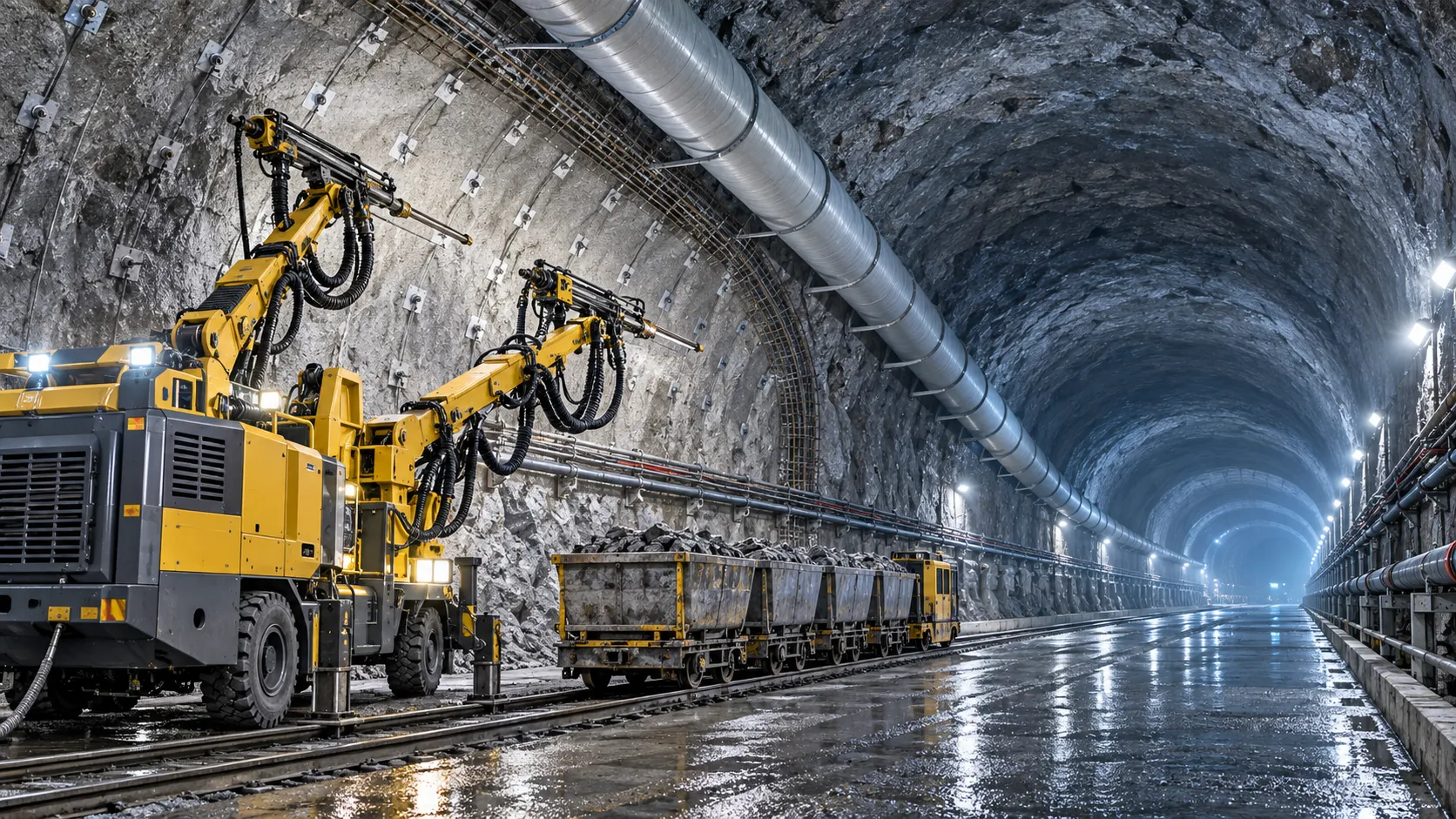
How to Evaluate European Drill-and-Blast Tunnelling Contractors for Complex Projects
Drill and blast tunnelling contractors Europe: learn how to assess geology expertise, blast control, equipment reliability, safety, and programme resilience for complex projects.
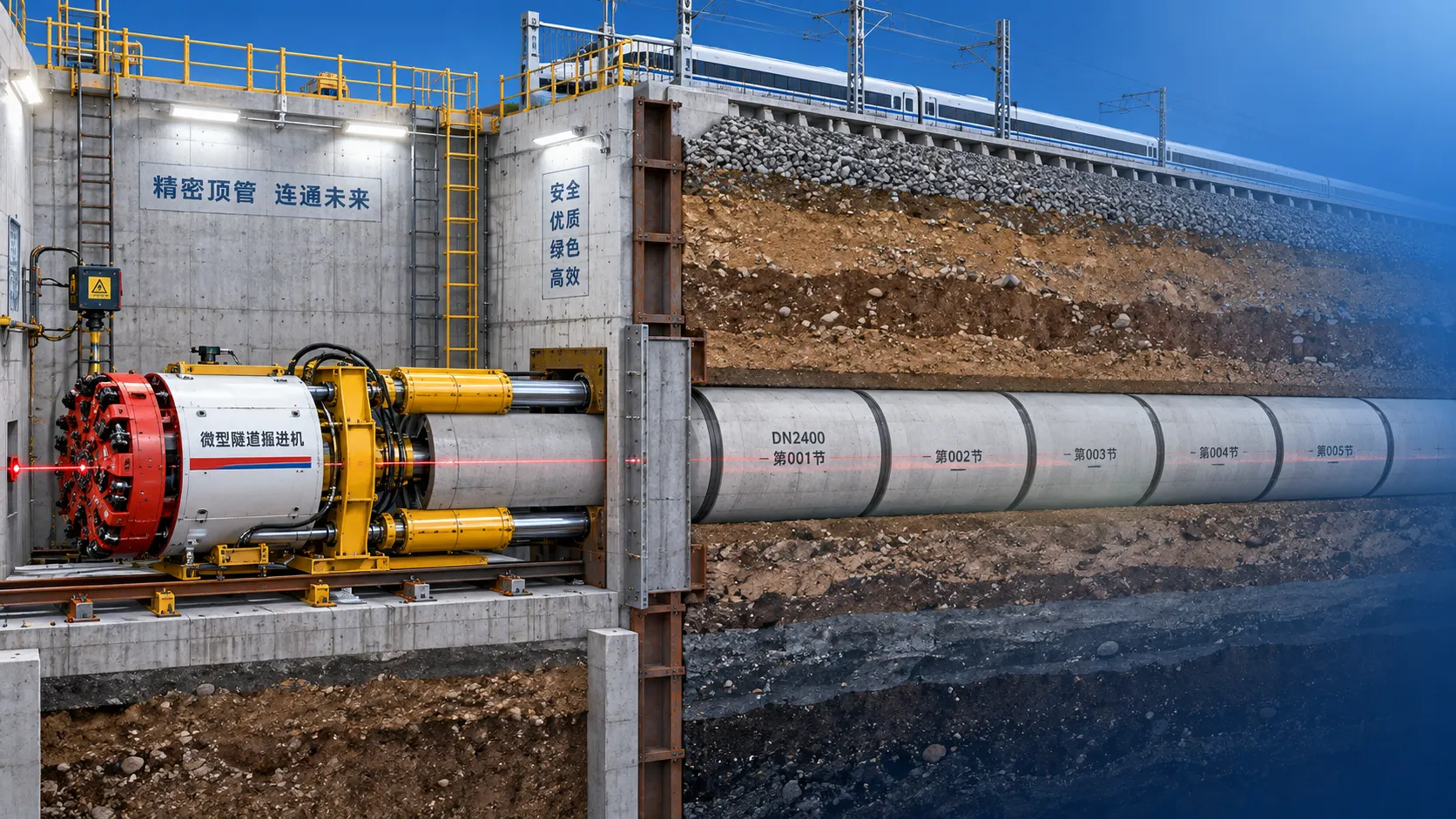
Which Trenchless Construction Technique Fits Your Utility Crossing Conditions?
Trenchless construction techniques compared for utility crossings: choose HDD, microtunnelling, pipe jacking, or auger boring based on ground, accuracy, access, and risk.
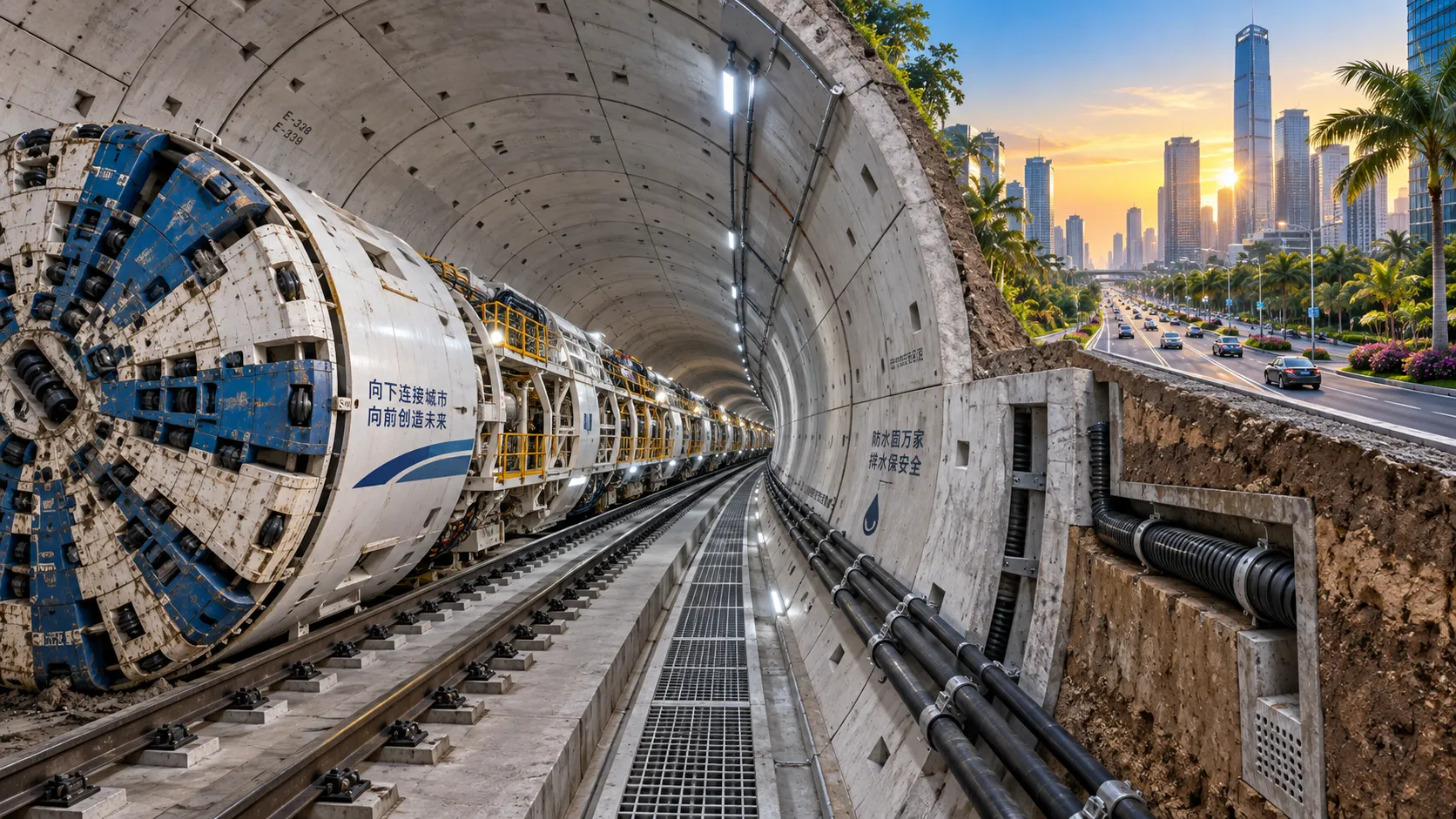
What Is Driving Metro Tunnelling Demand Across Southeast Asia’s Major Cities?
Metro tunnelling Southeast Asia is accelerating as major cities tackle congestion, flooding, and connectivity. Explore the market forces, technical risks, and opportunities shaping demand.
Hard Rock Tunnelling in Australia: Selecting Methods for Variable Ground Conditions
Hard rock tunnelling in Australia: compare TBM, drill-and-blast and hybrid methods to manage variable ground, reduce risk and protect project costs.
Hydropower Tunnel Excavation: Selecting Methods for Variable Rock Conditions
Hydropower tunnel excavation methods for variable rock conditions: compare TBM, drill-and-blast, and hybrid strategies to improve safety, progress, and project control.
How to Select Underground Safety Equipment for Tunnelling by Hazard and Work Zone
Underground Safety Equipment for tunnelling: match protection to hazards, work zones, compliance, and emergency needs with this practical selection guide.
EPB or Slurry Shield? Selecting Soft-Ground Tunnelling Equipment by Soil Conditions
Tunnel Excavation Equipment for soft ground: compare EPB and slurry shields by soil, groundwater, settlement risk, and project logistics to choose confidently.
How to Specify TBM Backup System Parts for Reliable Long-Distance Tunnelling
TBM backup system parts: learn how to specify reliable spares for long-distance tunnelling, reduce downtime, ensure compatibility, and speed underground recovery.
How to Size Open Pit Mining Trucks for Haul Distance, Grade, and Payload?
Open Pit Mining Trucks: learn how to match payload, haul distance, grade, road resistance, and loading capacity for safer, lower-cost mine operations.
Related News
- 00
0000-00
How to Evaluate European Drill-and-Blast Tunnelling Contractors for Complex Projects - 00
0000-00
Which Trenchless Construction Technique Fits Your Utility Crossing Conditions? - 00
0000-00
What Is Driving Metro Tunnelling Demand Across Southeast Asia’s Major Cities? - 00
0000-00
Hard Rock Tunnelling in Australia: Selecting Methods for Variable Ground Conditions - 00
0000-00
Hydropower Tunnel Excavation: Selecting Methods for Variable Rock Conditions
Weekly Insights
Stay ahead with our curated technology reports delivered every Monday.