
Codelco Tender Sets ISO 19453-3:2025 Entry Rule





On June 7, 2026, Codelco issued a global tender for 2026 Battery LHDs and turned fire-performance compliance into a direct bidding requirement rather than a later-stage technical preference. For equipment makers, certification providers, testing bodies, and supply-chain teams serving mining procurement, the practical issue is not only who can submit a bid, but whether product documentation, material test evidence, and delivery preparation can align with the stated entry requirements in time for a first delivery window in Q1 2027.
What the tender expressly requires
According to the provided event summary, Codelco released the 2026 Battery LHD tender notice on June 7, 2026, under reference CODELCO-TENDER-2026-LHD-003.
The tender states that all bid products must already have third-party certification to ISO 19453-3:2025 for fire-performance testing of mining battery-powered loaders. It also requires submission of a material test report showing EN 13501-1:2023 Class A2-s1,d0.
The procurement covers the Chuquicamata and Salvador mining areas in northern Chile, and the first delivery window is set for Q1 2027.
Why this matters across the bidding and supply chain process
For equipment manufacturers, eligibility now begins with documented compliance
Analysis shows the most immediate impact falls on Battery LHD manufacturers that plan to participate in large mining tenders. When a tender names ISO 19453-3:2025 third-party certification and an EN 13501-1:2023 Class A2-s1,d0 material report as explicit requirements, market access at the bid stage can depend on whether those documents already exist and can be presented in an acceptable form.
From an operational perspective, this affects technical bid preparation, product configuration review, and internal compliance screening. Suppliers will need to pay close attention to whether their current product files, certification scope, and material evidence are aligned with the exact tender wording, rather than assuming later clarification will solve gaps.
For testing and certification service providers, timing becomes part of competitiveness
Observably, the tender language also raises the relevance of third-party certification and material testing support services. Where bidding qualification depends on completed certification rather than future commitment, laboratories, certification bodies, and compliance advisers may face pressure on document readiness, report format, and review timelines.
The effect is not limited to testing alone. It can extend to document issuance schedules, traceability of tested materials, and consistency between certification records and tender submission packages. For service providers, the practical change is that their work may influence whether a bidder is seen as tender-ready.
For procurement and delivery teams, compliance now links directly to schedule risk
From an industry perspective, procurement teams and supply-chain coordinators should read this requirement as a schedule issue as well as a technical one. The first delivery window is Q1 2027, which means certification status, test reports, and bid acceptance can all affect downstream manufacturing and delivery planning.
What deserves closer attention is the connection between pre-bid compliance and post-award execution. If a supplier enters the process without complete and usable documentation, the risk may not end at qualification; it can also affect procurement sequencing, supplier confirmation, and readiness for delivery commitments.
What companies should review now
Check whether certification is already in place
Companies targeting this tender should first verify whether the relevant Battery LHD product has already obtained third-party certification to ISO 19453-3:2025. The wording provided in the event summary points to a completed certification requirement, so firms should avoid treating this as a document that can necessarily be supplied later unless the tender materials explicitly allow that.
Review the material test file against the stated class
Another practical checkpoint is the EN 13501-1:2023 Class A2-s1,d0 material report. Firms should examine whether the test report they hold matches the required class and whether the documentation can be clearly tied to the product and materials being offered in the bid.
Align tender files, technical statements, and supplier records
Analysis shows that documentary consistency may become as important as the underlying test result. Companies should pay attention to the coherence of certification statements, technical specifications, material declarations, and submission files, especially where multiple suppliers or component sources are involved.
Watch for any later clarification in tender execution
The provided information does not include detailed execution guidance, review procedures, or clarification notices. For that reason, companies should continue monitoring whether later tender communications refine the acceptable certification format, document validity expectations, or other compliance interpretations during the bidding process.
How this signal should be read at this stage
Observably, this development is best understood as an execution-level procurement signal rather than a broad policy statement. A named buyer has linked tender access to specific certification and material-test requirements, which gives the market a concrete reference point for what compliance may look like in practice for Battery LHD procurement.
At the same time, it is more appropriate to understand this as a rule application signal that still warrants follow-up observation. The current input confirms the tender requirements, delivery window, and covered mining areas, but it does not establish how review will be conducted in every case, whether further clarification will be issued, or how widely similar requirements may be replicated elsewhere.
A practical reading of the current change
For the industry, the key takeaway is that certification and fire-performance documentation are presented here as front-end market entry conditions for this Battery LHD tender. That makes the development relevant not only to manufacturers, but also to testing, certification, procurement, and delivery functions.
From a neutral industry reading, this is less a general market conclusion than a clear tender-side compliance signal. Companies should treat it as an implemented requirement within the announced procurement context, while continuing to watch how documentation standards, review practice, and bidder responses develop in subsequent execution.
Basis of this article and points still to verify
This article is generated from the user-provided title, event date, and event summary. The analysis is based on the stated tender reference, the specified ISO 19453-3:2025 third-party certification requirement, the EN 13501-1:2023 Class A2-s1,d0 material report requirement, the named mining areas, and the Q1 2027 first delivery window.
For events of this kind, commonly relevant source types may include official tender notices, procurement announcements, regulatory releases, trade or customs authority information, industry association updates, standard-setting organization documents, and reporting by established industry media. However, a specific official source link was not provided in the input, so the underlying tender text and any later clarifications still need ongoing verification.
What remains worth watching includes any further tender amendments, changes in compliance interpretation, document review practice, bidder feedback, and how participating companies execute certification, submission, and delivery preparation.
Related News

How to Evaluate European Drill-and-Blast Tunnelling Contractors for Complex Projects
Drill and blast tunnelling contractors Europe: learn how to assess geology expertise, blast control, equipment reliability, safety, and programme resilience for complex projects.

Which Trenchless Construction Technique Fits Your Utility Crossing Conditions?
Trenchless construction techniques compared for utility crossings: choose HDD, microtunnelling, pipe jacking, or auger boring based on ground, accuracy, access, and risk.

What Is Driving Metro Tunnelling Demand Across Southeast Asia’s Major Cities?
Metro tunnelling Southeast Asia is accelerating as major cities tackle congestion, flooding, and connectivity. Explore the market forces, technical risks, and opportunities shaping demand.

Hard Rock Tunnelling in Australia: Selecting Methods for Variable Ground Conditions
Hard rock tunnelling in Australia: compare TBM, drill-and-blast and hybrid methods to manage variable ground, reduce risk and protect project costs.

Hydropower Tunnel Excavation: Selecting Methods for Variable Rock Conditions
Hydropower tunnel excavation methods for variable rock conditions: compare TBM, drill-and-blast, and hybrid strategies to improve safety, progress, and project control.

How to Select Underground Safety Equipment for Tunnelling by Hazard and Work Zone
Underground Safety Equipment for tunnelling: match protection to hazards, work zones, compliance, and emergency needs with this practical selection guide.

EPB or Slurry Shield? Selecting Soft-Ground Tunnelling Equipment by Soil Conditions
Tunnel Excavation Equipment for soft ground: compare EPB and slurry shields by soil, groundwater, settlement risk, and project logistics to choose confidently.

How to Specify TBM Backup System Parts for Reliable Long-Distance Tunnelling
TBM backup system parts: learn how to specify reliable spares for long-distance tunnelling, reduce downtime, ensure compatibility, and speed underground recovery.
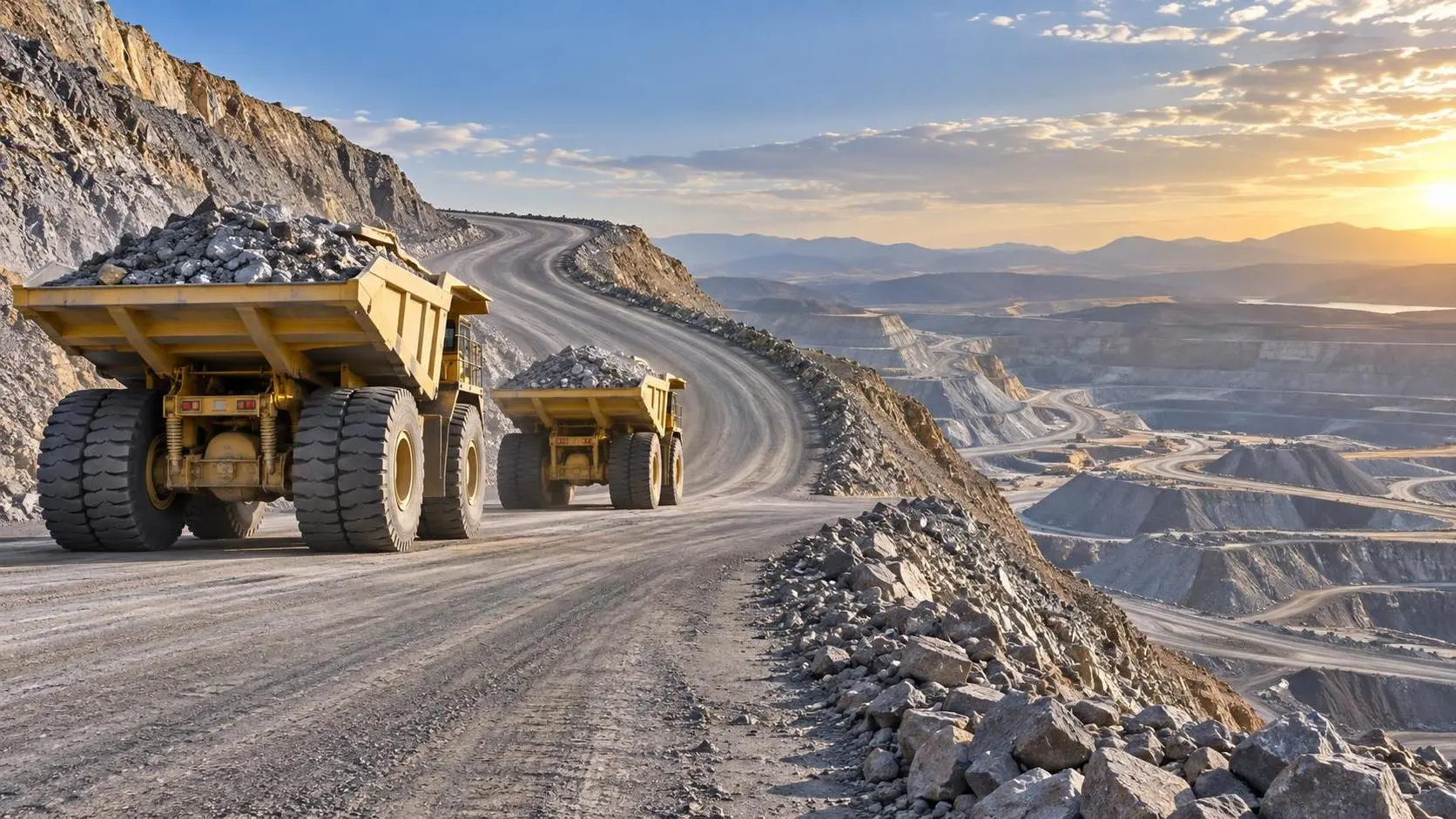
How to Size Open Pit Mining Trucks for Haul Distance, Grade, and Payload?
Open Pit Mining Trucks: learn how to match payload, haul distance, grade, road resistance, and loading capacity for safer, lower-cost mine operations.
Related News
- 00
0000-00
How to Evaluate European Drill-and-Blast Tunnelling Contractors for Complex Projects - 00
0000-00
Which Trenchless Construction Technique Fits Your Utility Crossing Conditions? - 00
0000-00
What Is Driving Metro Tunnelling Demand Across Southeast Asia’s Major Cities? - 00
0000-00
Hard Rock Tunnelling in Australia: Selecting Methods for Variable Ground Conditions - 00
0000-00
Hydropower Tunnel Excavation: Selecting Methods for Variable Rock Conditions
Weekly Insights
Stay ahead with our curated technology reports delivered every Monday.