
China’s Rectangular Pipe Jacking Tech Debuts in ASEAN via Phu Quoc Tram Project





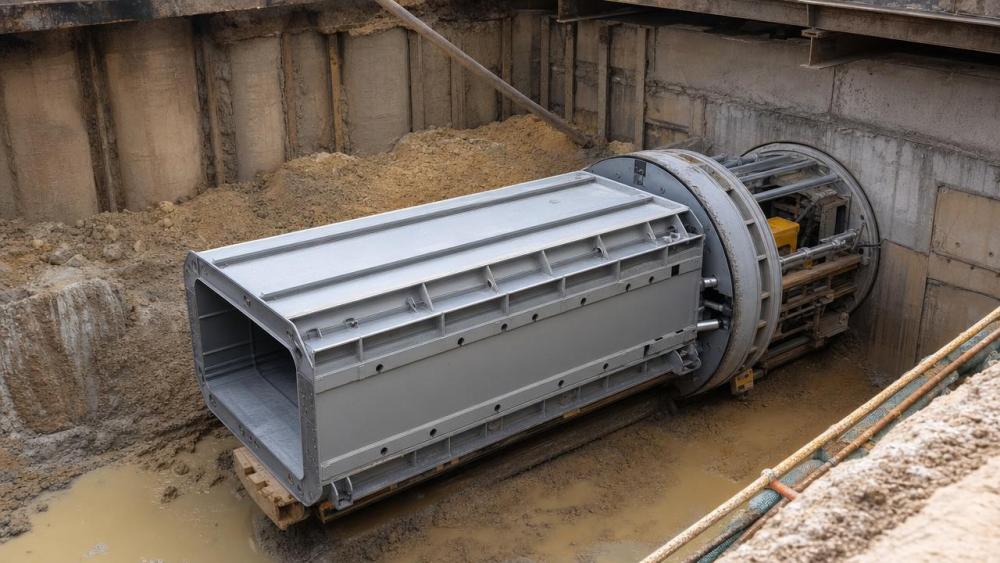
On April 10, 2026, China Railway 16th Bureau Group—acting as part of a joint venture—was awarded the Track Engineering Package I for the Phu Quoc Island tram system in Vietnam. This marks the first deployment of a domestically developed Rectangular Pipe Jacking (RPJ) system in the ASEAN region. The RPJ technology, engineered by China Railway Construction Equipment Group (CRCEG), is designed for challenging coastal soft soils and high-water-table conditions. Its precision control (±2 mm settlement) and 30% reduction in underground space usage compared to conventional circular jacking make it particularly relevant for urban transit infrastructure in geotechnically constrained environments. Stakeholders in rail engineering, tunneling equipment supply, civil construction contracting, and cross-border infrastructure service sectors should monitor this development closely—as it signals both technical transfer readiness and evolving regional acceptance criteria for non-traditional trenchless methods.
Event Overview
On April 10, 2026, the China Railway 16th Bureau Group-led consortium secured the contract for Track Engineering Package I of the Phu Quoc Island tram project in Vietnam. The project will implement China’s domestically developed Rectangular Pipe Jacking (RPJ) system—the first such application in ASEAN. The RPJ system was developed by China Railway Construction Equipment Group (CRCEG), features ±2 mm ground settlement control accuracy, reduces required underground excavation volume by 30% versus circular pipe jacking, and has received formal technical certification from Vietnam’s Ministry of Transport.
Impact on Specific Industry Segments
Rail Infrastructure Contractors
Rail contractors operating in Southeast Asia may face revised technical evaluation criteria for future bids involving shallow-depth urban transit alignments. The successful certification and tender award indicate that Vietnamese authorities now accept RPJ as a validated alternative to cut-and-cover or microtunneling—potentially shifting competitive advantage toward firms with prior RPJ execution experience or certified local partnerships.
Tunneling Equipment Suppliers & Integrators
Suppliers of trenchless machinery—including those offering jacking frames, segmental lining systems, or real-time guidance packages—may see increased demand for RPJ-compatible components in ASEAN markets. Since RPJ requires specialized jacking reaction systems, rectangular segment molds, and high-precision laser guidance, existing product portfolios may require adaptation to meet local regulatory validation pathways.
Civil Engineering Design Firms
Design firms engaged in ASEAN transit projects must now account for RPJ-specific geotechnical parameters and interface requirements—particularly regarding lateral soil resistance assumptions, groundwater cutoff integration, and station–tunnel transition detailing. The Vietnamese MoT’s approval implies that design standards may evolve to include RPJ-specific clauses in upcoming tender documents.
International Infrastructure Service Providers
Firms providing third-party inspection, independent verification, or technical advisory services for ASEAN infrastructure projects should anticipate new scope requirements: RPJ-specific QA/QC protocols, settlement monitoring frameworks, and alignment tolerance benchmarks are likely to appear in upcoming project specifications—especially where heritage structures or sensitive coastal ecosystems are adjacent to alignment corridors.
What Relevant Enterprises or Practitioners Should Monitor and Do Now
Track official technical annexes issued by Vietnam’s Ministry of Transport
The MoT’s RPJ certification appears to be project-specific but may form the basis for broader technical guidelines. Contractors and equipment suppliers should request access to the certified test reports and validation methodology used—these documents could inform future submissions across ASEAN jurisdictions.
Monitor bid documentation for upcoming Vietnamese and ASEAN light rail/metro projects
Look for explicit mention of ‘rectangular jacking’, ‘non-circular pipe jacking’, or references to ‘space-constrained urban alignment solutions’ in technical specifications. Early identification of such language may signal procurement teams’ openness to RPJ-based proposals—and allow time for pre-qualification preparation.
Distinguish between policy-level endorsement and operational readiness
While the MoT’s certification is a positive signal, actual field performance data from the Phu Quoc project—including installation rate, spoil management efficiency, and interface coordination with track slab placement—remains pending. Until such data becomes publicly available, treat current approvals as conditional endorsements—not de facto standards.
Prepare for localized technical compliance workflows
RPJ deployment involved adapting Chinese design codes to Vietnamese geotechnical and seismic requirements. Firms planning similar exports should initiate early engagement with local testing labs and certification bodies—not only for structural validation, but also for materials traceability and weld procedure qualification aligned with Vietnamese national standards.
Editorial Perspective / Industry Observation
Observably, this milestone reflects more than a single project win: it represents an inflection point in how ASEAN infrastructure agencies assess non-Western trenchless technologies. Analysis shows that the RPJ adoption hinges not on cost alone, but on verifiable performance metrics—specifically its ability to meet stringent settlement thresholds in high-risk hydrogeological settings. From an industry perspective, this is best understood not as a broad market opening, but as a precedent-setting case study. Its long-term significance depends less on immediate replication and more on whether subsequent projects adopt comparable technical validation pathways—or revert to established Western-certified systems when facing complex interfaces or higher risk profiles. Current evidence suggests cautious institutional learning—not wholesale standard replacement.
Conclusion
This event signifies the first institutionalized acceptance of China-developed rectangular pipe jacking in ASEAN infrastructure practice. It does not imply widespread technical displacement, nor does it guarantee rapid regional adoption. Rather, it confirms that performance-based validation—grounded in measurable outcomes like settlement control and spatial efficiency—can serve as a viable pathway for emerging trenchless technologies entering regulated infrastructure markets. For stakeholders, the most rational interpretation is that RPJ has cleared an initial technical gate; sustained relevance will depend on transparent operational reporting and consistent delivery across diverse site conditions.
Source Attribution
Main source: Official announcement from China Railway 16th Bureau Group (April 2026); technical specifications confirmed via Vietnam Ministry of Transport public certification notice (QD-2026/MT-047). Note: Field performance data, long-term maintenance protocols, and potential expansion to other ASEAN countries remain under observation and are not yet publicly documented.
Related News

How to Evaluate European Drill-and-Blast Tunnelling Contractors for Complex Projects
Drill and blast tunnelling contractors Europe: learn how to assess geology expertise, blast control, equipment reliability, safety, and programme resilience for complex projects.

Which Trenchless Construction Technique Fits Your Utility Crossing Conditions?
Trenchless construction techniques compared for utility crossings: choose HDD, microtunnelling, pipe jacking, or auger boring based on ground, accuracy, access, and risk.

What Is Driving Metro Tunnelling Demand Across Southeast Asia’s Major Cities?
Metro tunnelling Southeast Asia is accelerating as major cities tackle congestion, flooding, and connectivity. Explore the market forces, technical risks, and opportunities shaping demand.

Hard Rock Tunnelling in Australia: Selecting Methods for Variable Ground Conditions
Hard rock tunnelling in Australia: compare TBM, drill-and-blast and hybrid methods to manage variable ground, reduce risk and protect project costs.

Hydropower Tunnel Excavation: Selecting Methods for Variable Rock Conditions
Hydropower tunnel excavation methods for variable rock conditions: compare TBM, drill-and-blast, and hybrid strategies to improve safety, progress, and project control.

How to Select Underground Safety Equipment for Tunnelling by Hazard and Work Zone
Underground Safety Equipment for tunnelling: match protection to hazards, work zones, compliance, and emergency needs with this practical selection guide.

EPB or Slurry Shield? Selecting Soft-Ground Tunnelling Equipment by Soil Conditions
Tunnel Excavation Equipment for soft ground: compare EPB and slurry shields by soil, groundwater, settlement risk, and project logistics to choose confidently.
How to Specify TBM Backup System Parts for Reliable Long-Distance Tunnelling
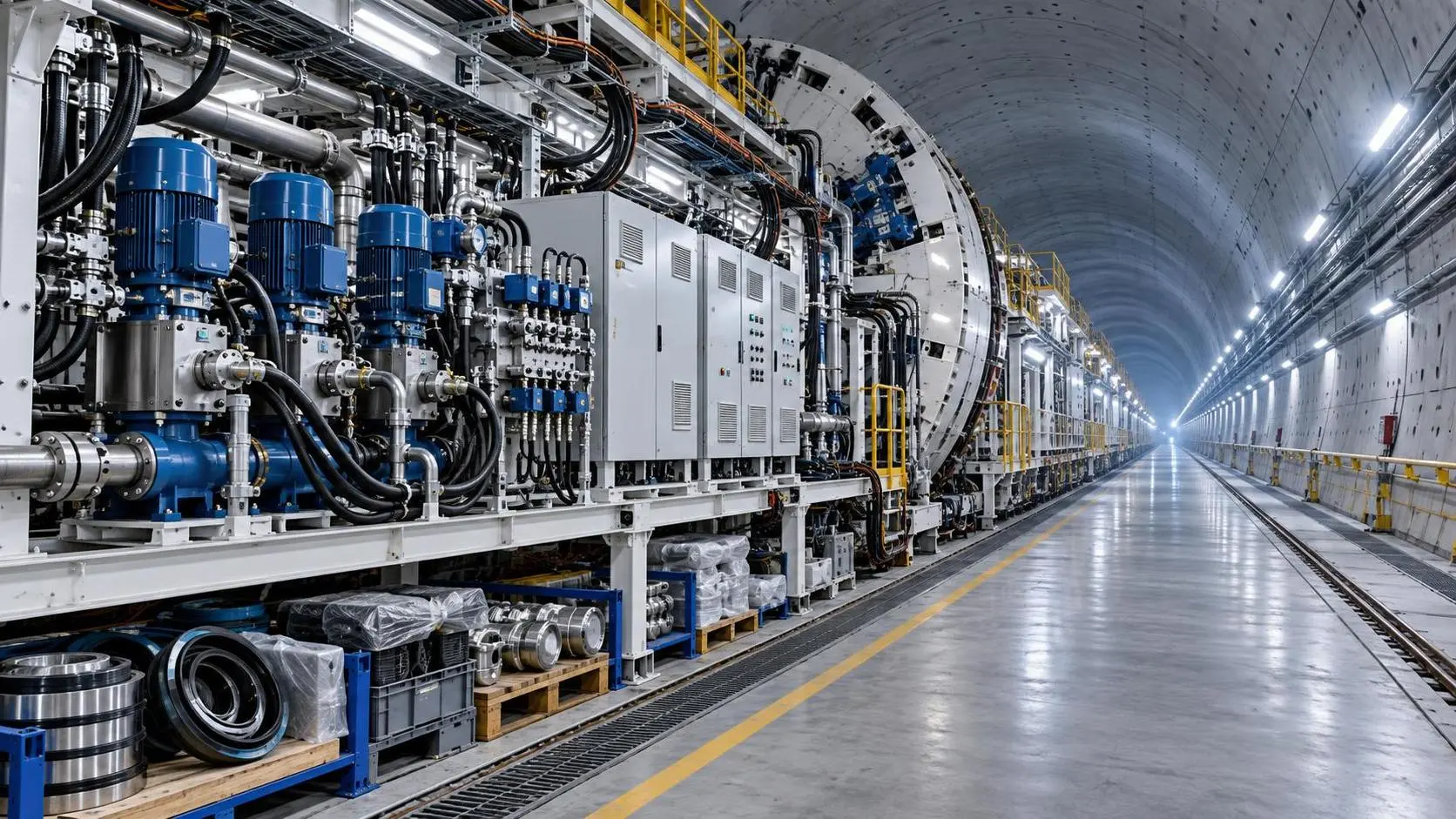
TBM backup system parts: learn how to specify reliable spares for long-distance tunnelling, reduce downtime, ensure compatibility, and speed underground recovery.

How to Size Open Pit Mining Trucks for Haul Distance, Grade, and Payload?
Open Pit Mining Trucks: learn how to match payload, haul distance, grade, road resistance, and loading capacity for safer, lower-cost mine operations.
Related News
- 00
0000-00
How to Evaluate European Drill-and-Blast Tunnelling Contractors for Complex Projects - 00
0000-00
Which Trenchless Construction Technique Fits Your Utility Crossing Conditions? - 00
0000-00
What Is Driving Metro Tunnelling Demand Across Southeast Asia’s Major Cities? - 00
0000-00
Hard Rock Tunnelling in Australia: Selecting Methods for Variable Ground Conditions - 00
0000-00
Hydropower Tunnel Excavation: Selecting Methods for Variable Rock Conditions
Weekly Insights
Stay ahead with our curated technology reports delivered every Monday.