
Siemens Energy Gas Turbine Orders Surge, Boosting Export of Autonomous LHD Power Systems





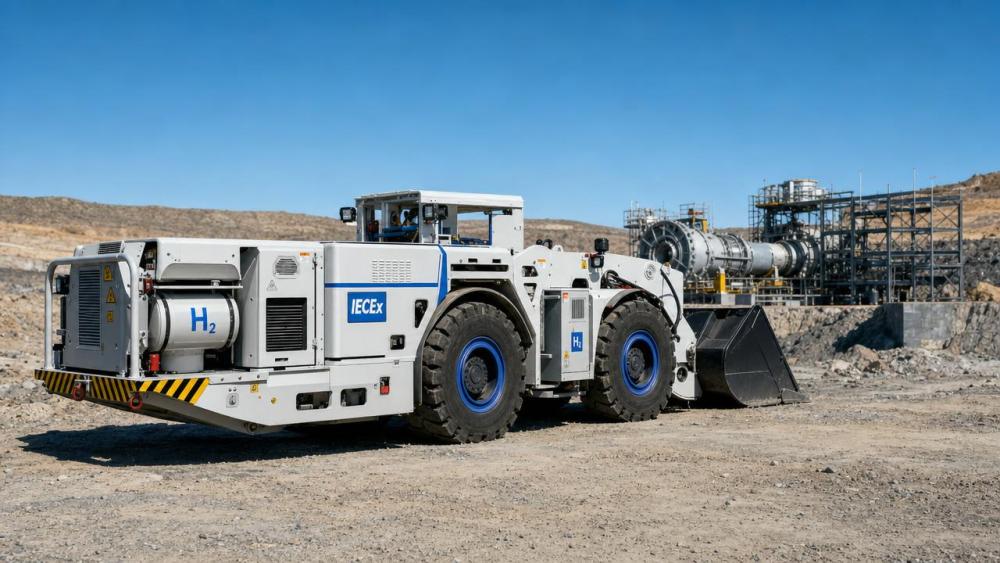
On May 24, 2026, Siemens Energy reported a sharp rise in gas turbine service orders—€8.9 billion in Q2 2026, up 32% year-on-year—with a backlog covering 5.2 years of production capacity. Concurrently, Shanghai Electric announced an exclusive sales agreement with Ansaldo for gas turbines in South America and Southeast Asia, signaling growing overseas deployment of Chinese-made combustion-based power solutions. This trend is now accelerating exports of high-value ancillary systems for Autonomous Load-Haul-Dump (LHD) vehicles—including hydrogen-based energy storage modules and explosion-proof variable-frequency drive systems—raising implications for multiple industrial segments.
Event Overview
On May 24, 2026, Siemens Energy disclosed that its Q2 2026 gas turbine service order intake reached €8.9 billion, representing a 32% increase compared to the same period in 2025. Its confirmed order backlog covers 5.2 years of manufacturing capacity. Separately, Shanghai Electric confirmed it had signed an exclusive sales agreement with Ansaldo for gas turbine projects in South America and Southeast Asia. The companies jointly projected over 100 GW of gas turbine tender opportunities across those regions within the next 15 years. These developments are driving increased export demand for domestically produced power system components designed for Autonomous LHDs, specifically hydrogen energy storage modules and explosion-proof variable-frequency drive systems.
Impact on Specific Industry Segments
Direct Exporters of Power System Components
Manufacturers exporting hydrogen storage modules or explosion-proof VFD systems for Autonomous LHDs face rising demand tied to overseas gas turbine infrastructure rollout. Because these components are integrated into mining equipment deployed alongside new power generation assets, order volume correlates with turbine project timelines—not just equipment delivery but also commissioning and site readiness phases.
Domestic Gas Turbine Component Suppliers
Suppliers providing mechanical, control, or thermal subsystems for domestic gas turbine OEMs (e.g., Shanghai Electric’s local partners) may see indirect demand uplift. As Chinese turbine exporters expand into South America and Southeast Asia, localized supply chain development—including certification-aligned subassemblies—may accelerate. However, this effect remains contingent on final project localization requirements, not yet publicly specified.
Engineering & Integration Service Providers
Firms offering system integration, grid interconnection, or safety compliance services for mobile mining power systems may encounter new bidding opportunities—particularly where hydrogen storage interfaces with turbine-based microgrids. Current tender documents from the referenced markets have not yet mandated such integration, but procurement frameworks are evolving toward hybrid energy resilience standards.
Logistics & Certification Support Providers
Export-oriented logistics firms and certification agencies supporting ATEX/IECEx-compliant equipment shipments may experience higher inquiry volume for explosion-proof-rated power electronics. Since Autonomous LHD power modules must meet regional hazardous-area certifications—and those vary across South American and ASEAN jurisdictions—documentation preparation lead times and testing coordination are becoming more consequential.
What Enterprises and Practitioners Should Monitor and Prepare For
Track official tender specifications—not just award announcements
Current statements reference ‘over 100 GW of upcoming tenders’ but do not specify technical scope, fuel flexibility requirements, or embedded energy storage mandates. Enterprises should monitor national utility and mining authority procurement portals in target countries rather than rely solely on OEM press releases.
Validate regional certification pathways before committing to production ramp-up
Explosion-proof ratings (e.g., ATEX vs. INMETRO vs. Singapore SIRIM) and hydrogen system safety standards (e.g., ISO 8573-8, CGA H-5) differ significantly across South America and Southeast Asia. Pre-certification engagement with notified bodies in Brazil, Chile, Indonesia, and Vietnam is advisable before initiating export-focused design iterations.
Distinguish between commercial agreements and binding project commitments
The Shanghai Electric–Ansaldo agreement establishes market access, not guaranteed orders. Similarly, Siemens Energy’s order backlog reflects contracted service—not new turbine deployments in emerging markets. Stakeholders should treat both as enabling conditions, not immediate revenue triggers.
Assess supply chain exposure to dual-use components
Hydrogen storage modules and VFD systems used in Autonomous LHDs often share core technologies (e.g., SiC inverters, PEM electrolyzer interfaces) with broader industrial applications. Firms should review export control classifications (e.g., EAR99, Wassenaar Arrangement Annex items) applicable to their specific configurations before initiating cross-border shipments.
Editorial Perspective / Industry Observation
Observably, this development functions less as an immediate market shift and more as a structural signal: gas turbine deployment cycles are beginning to synchronize with adjacent electrified mining infrastructure investments. Analysis shows that turbine orders alone do not guarantee downstream component demand; however, when paired with explicit OEM partnerships targeting specific geographies—and when those geographies exhibit parallel policy emphasis on mine decarbonization—the linkage strengthens. From an industry standpoint, the convergence suggests growing interdependence between stationary power generation and mobile off-grid power systems—a dynamic previously treated as separate verticals. Current more appropriate interpretation is that this marks the early phase of coordinated infrastructure rollout, not yet a self-sustaining export wave.
This news underscores how upstream energy infrastructure decisions increasingly cascade into specialized mobile equipment supply chains. It highlights a widening interface between traditional power generation and autonomous industrial vehicle ecosystems—particularly where safety-critical, high-reliability power conditioning is required. Rather than indicating broad-based sectoral growth, it points to selective, certification-sensitive, and geographically concentrated opportunity windows. Stakeholders are advised to treat it as a directional indicator requiring granular, jurisdiction-specific validation—not as a generalized export catalyst.
Information Sources: Public disclosures by Siemens Energy (Q2 2026 financial update, May 24, 2026); Shanghai Electric corporate announcement (May 24, 2026); Ansaldo press release (May 24, 2026). Note: Tender volumes, certification requirements, and hydrogen module integration mandates remain subject to future official documentation and are currently under observation.
Related News

How to Evaluate European Drill-and-Blast Tunnelling Contractors for Complex Projects
Drill and blast tunnelling contractors Europe: learn how to assess geology expertise, blast control, equipment reliability, safety, and programme resilience for complex projects.

Which Trenchless Construction Technique Fits Your Utility Crossing Conditions?
Trenchless construction techniques compared for utility crossings: choose HDD, microtunnelling, pipe jacking, or auger boring based on ground, accuracy, access, and risk.

What Is Driving Metro Tunnelling Demand Across Southeast Asia’s Major Cities?
Metro tunnelling Southeast Asia is accelerating as major cities tackle congestion, flooding, and connectivity. Explore the market forces, technical risks, and opportunities shaping demand.

Hard Rock Tunnelling in Australia: Selecting Methods for Variable Ground Conditions
Hard rock tunnelling in Australia: compare TBM, drill-and-blast and hybrid methods to manage variable ground, reduce risk and protect project costs.

Hydropower Tunnel Excavation: Selecting Methods for Variable Rock Conditions
Hydropower tunnel excavation methods for variable rock conditions: compare TBM, drill-and-blast, and hybrid strategies to improve safety, progress, and project control.

How to Select Underground Safety Equipment for Tunnelling by Hazard and Work Zone
Underground Safety Equipment for tunnelling: match protection to hazards, work zones, compliance, and emergency needs with this practical selection guide.

EPB or Slurry Shield? Selecting Soft-Ground Tunnelling Equipment by Soil Conditions
Tunnel Excavation Equipment for soft ground: compare EPB and slurry shields by soil, groundwater, settlement risk, and project logistics to choose confidently.

How to Specify TBM Backup System Parts for Reliable Long-Distance Tunnelling
TBM backup system parts: learn how to specify reliable spares for long-distance tunnelling, reduce downtime, ensure compatibility, and speed underground recovery.

How to Size Open Pit Mining Trucks for Haul Distance, Grade, and Payload?
Open Pit Mining Trucks: learn how to match payload, haul distance, grade, road resistance, and loading capacity for safer, lower-cost mine operations.
Related News
- 00
0000-00
How to Evaluate European Drill-and-Blast Tunnelling Contractors for Complex Projects - 00
0000-00
Which Trenchless Construction Technique Fits Your Utility Crossing Conditions? - 00
0000-00
What Is Driving Metro Tunnelling Demand Across Southeast Asia’s Major Cities? - 00
0000-00
Hard Rock Tunnelling in Australia: Selecting Methods for Variable Ground Conditions - 00
0000-00
Hydropower Tunnel Excavation: Selecting Methods for Variable Rock Conditions
Weekly Insights
Stay ahead with our curated technology reports delivered every Monday.