
How Drilling Jumbos Automation Improves Advance Rates and Operator Safety





Why Drilling Jumbos Automation Matters More in Real Underground Work
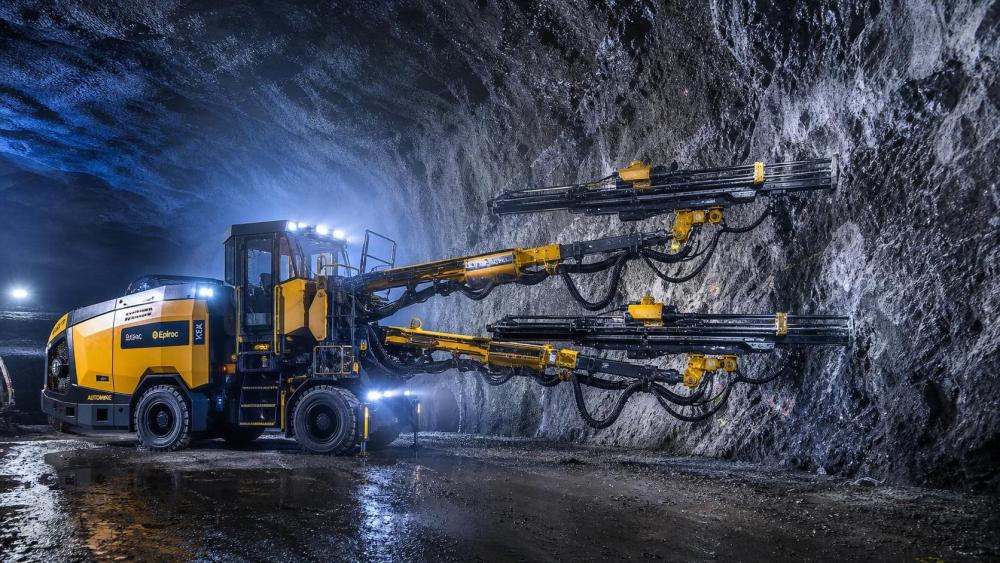
Drilling Jumbos automation is no longer a niche upgrade for advanced mines or flagship tunnel packages.
It is becoming a practical response to harder schedules, deeper headings, and stricter exposure limits underground.
In daily operations, the value of automation shows up in two places first.
One is faster, more repeatable advance. The other is less time spent with people close to unsupported ground.
That sounds simple, yet the real judgment is rarely simple.
A narrow mine drift, a long transport tunnel, and a rehabilitation heading may all use jumbos, but they do not need the same automation depth.
UTMD tracks this shift across underground equipment because drilling performance no longer stands alone.
It now interacts with ventilation limits, digital fleet control, ESG pressure, and the broader automation chain linking loaders, trucks, and tunnel systems.
When viewed that way, Drilling Jumbos automation is less about adding software and more about stabilizing the whole underground cycle.
The Same Jumbo Faces Very Different Demands Underground
The first mistake is assuming every heading rewards automation in the same way.
In practice, geology, profile geometry, blast design discipline, and crew turnover change the business case quickly.
A mine ramp under production pressure often values predictable turnaround and fewer re-drills.
A civil tunnel may care more about contour control, overbreak reduction, and cleaner handover to support crews.
That is why Drilling Jumbos automation should be judged by the cycle bottleneck, not by the feature sheet.
More common questions are practical.
- Is drilling accuracy already the weak point, or is the delay actually in charging, mucking, or ventilation re-entry?
- Does the heading repeat often enough for automated patterns to deliver consistent gains?
- Can the site support positioning, data transfer, and maintenance discipline?
- Will reduced exposure create measurable safety value in unstable or heat-stressed zones?
Without these answers, automation can be installed correctly and still disappoint operationally.
Hard Rock Development Headings Usually Need Repeatability First
In hard rock mine development, repeatability often matters more than headline drilling speed.
If collaring is inconsistent or hole deviation grows, the blast loses shape and the next cycle pays for it.
Here, Drilling Jumbos automation improves advance rates by keeping patterns closer to design.
That means straighter cut holes, tighter perimeter control, and fewer hidden penalties after blasting.
The gain is not only meters drilled per hour.
It is also less overbreak, smoother mucking, and more stable conditions for scaling and bolting.
This is where UTMD’s wider underground perspective becomes useful.
A more precise drilling stage can improve downstream performance for LHD haulage, ventilation timing, and support installation.
In headings with variable rock strength, the most effective setup is usually semi-automated rather than fully hands-off.
Operators still need room to adapt feed pressure, hole sequence, and boom behavior when the face changes unexpectedly.
Drill-and-Blast Tunnels Often Focus on Profile Control and Safer Exposure
Tunnel contractors tend to judge Drilling Jumbos automation through a different lens.
The issue is not only how fast the face advances, but how cleanly each round supports the final profile.
Poor perimeter drilling creates expensive consequences.
Extra shotcrete, more rock support, and more difficulty meeting lining tolerances can erase apparent drilling savings.
Automated hole placement helps most where tunnel geometry repeats and survey control is reliable.
It also helps when faces involve fractured crowns, water inflow, or areas requiring strict exclusion zones.
In those conditions, operator safety improves because people spend less time near unsupported ground during setup and drilling.
Remote functions and automated alignment are especially valuable when visibility is poor or face conditions change after each blast.
Still, full automation is not always the right answer in short urban drives or heavily interrupted worksites.
Frequent utility conflicts, shifting access, and constrained logistics can reduce the payoff from advanced functions.
Where Demand Differences Become Clear
A side-by-side view usually makes the differences easier to judge before investment decisions are made.
The pattern is clear.
The best automation strategy follows the repeatability of the environment and the cost of drilling errors.
Some Sites Need Partial Automation More Than Full Automation
One overlooked point is that not every operation benefits from the same automation package depth.
In many underground projects, the strongest return comes from selected functions.
Automated boom positioning, digital drill plans, anti-jamming logic, and remote tramming may create more value than a fully automated cycle.
This is common where labor skill variation is high, but face conditions are still too dynamic for rigid full-cycle routines.
It also suits sites upgrading gradually toward battery loaders, connected fleets, and data-driven maintenance.
UTMD often highlights these transition stages across the underground equipment chain.
Automation maturity tends to spread step by step, not machine by machine in isolation.
- Use semi-automation when ground changes quickly between rounds.
- Use deeper automation when headings repeat and survey references remain stable.
- Prioritize remote capability where heat, rockfall risk, or poor air quality raise exposure concerns.
- Prioritize data integration where drill quality must be traced across multiple shifts or contractors.
Common Misjudgments Before Deployment
The most common misjudgment is focusing on penetration rate alone.
Advance rates improve when the entire round becomes more stable, not when one drilling metric spikes briefly.
Another mistake is treating similar headings as identical.
A deep copper mine drift and a transport adit can share rock hardness while demanding very different safety and coordination logic.
There is also a cost mistake.
Some evaluations count capital cost carefully but ignore training time, sensor calibration, spare parts readiness, and software support underground.
The fourth blind spot is compatibility.
If drilling data cannot connect with survey systems, blast planning, or fleet reporting, automation remains underused.
That matters even more in projects moving toward electrified and autonomous underground equipment under ESG pressure.
A Practical Way to Judge Fit Before the Next Upgrade
A useful starting point is to map one full drill-and-blast cycle before comparing machine options.
If delays come mainly from poor hole quality, Drilling Jumbos automation deserves priority.
If delays come later in the cycle, the better answer may be selective automation tied to broader workflow changes.
Then confirm four conditions on site.
- Face geometry and ground conditions across several recent rounds
- Survey reliability and drill plan update discipline
- Maintenance capability for sensors, controls, and hydraulic systems
- Safety zones where remote or automated drilling reduces exposure directly
From there, the best next step is usually a scenario-based comparison, not a generic specification review.
Compare repeat headings, variable headings, and high-risk headings separately.
That approach shows where Drilling Jumbos automation will truly improve advance rates, where it will strengthen operator safety, and where a lighter configuration may be the smarter fit.
For underground operations navigating automation, electrification, and tighter performance control together, that level of scenario judgment is becoming essential rather than optional.
Related News

How to Evaluate European Drill-and-Blast Tunnelling Contractors for Complex Projects
Drill and blast tunnelling contractors Europe: learn how to assess geology expertise, blast control, equipment reliability, safety, and programme resilience for complex projects.

Which Trenchless Construction Technique Fits Your Utility Crossing Conditions?
Trenchless construction techniques compared for utility crossings: choose HDD, microtunnelling, pipe jacking, or auger boring based on ground, accuracy, access, and risk.

What Is Driving Metro Tunnelling Demand Across Southeast Asia’s Major Cities?
Metro tunnelling Southeast Asia is accelerating as major cities tackle congestion, flooding, and connectivity. Explore the market forces, technical risks, and opportunities shaping demand.

Hard Rock Tunnelling in Australia: Selecting Methods for Variable Ground Conditions
Hard rock tunnelling in Australia: compare TBM, drill-and-blast and hybrid methods to manage variable ground, reduce risk and protect project costs.

Hydropower Tunnel Excavation: Selecting Methods for Variable Rock Conditions
Hydropower tunnel excavation methods for variable rock conditions: compare TBM, drill-and-blast, and hybrid strategies to improve safety, progress, and project control.

How to Select Underground Safety Equipment for Tunnelling by Hazard and Work Zone
Underground Safety Equipment for tunnelling: match protection to hazards, work zones, compliance, and emergency needs with this practical selection guide.

EPB or Slurry Shield? Selecting Soft-Ground Tunnelling Equipment by Soil Conditions
Tunnel Excavation Equipment for soft ground: compare EPB and slurry shields by soil, groundwater, settlement risk, and project logistics to choose confidently.
How to Specify TBM Backup System Parts for Reliable Long-Distance Tunnelling
TBM backup system parts: learn how to specify reliable spares for long-distance tunnelling, reduce downtime, ensure compatibility, and speed underground recovery.
How to Size Open Pit Mining Trucks for Haul Distance, Grade, and Payload?
Open Pit Mining Trucks: learn how to match payload, haul distance, grade, road resistance, and loading capacity for safer, lower-cost mine operations.
Related News
- 00
0000-00
How to Evaluate European Drill-and-Blast Tunnelling Contractors for Complex Projects - 00
0000-00
Which Trenchless Construction Technique Fits Your Utility Crossing Conditions? - 00
0000-00
What Is Driving Metro Tunnelling Demand Across Southeast Asia’s Major Cities? - 00
0000-00
Hard Rock Tunnelling in Australia: Selecting Methods for Variable Ground Conditions - 00
0000-00
Hydropower Tunnel Excavation: Selecting Methods for Variable Rock Conditions
Weekly Insights
Stay ahead with our curated technology reports delivered every Monday.