
Hydraulic Rock Drill Percussion Frequency Explained: How It Affects Penetration and Tool Wear





Hydraulic Rock Drill Percussion Frequency Explained: How It Affects Penetration and Tool Wear
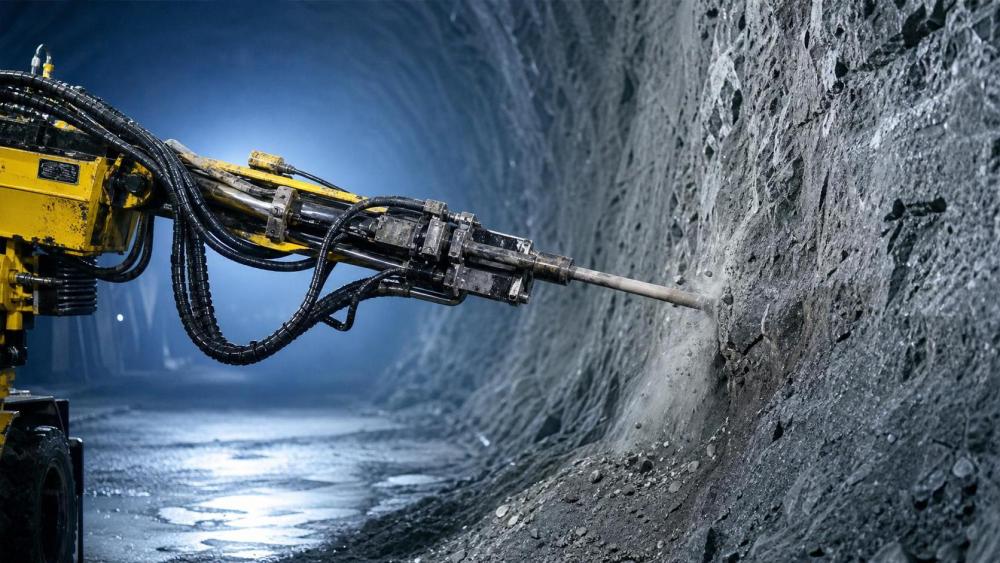
For technical evaluators, hydraulic rock drill percussion frequency is not a minor specification. It is one of the core variables behind drilling speed, hole consistency, and life-cycle cost.
It defines how many impact blows the drifter delivers in a given time. That simple number affects rock breakage, steel stress, vibration behavior, and bit temperature.
In underground tunnelling and mining, the wrong frequency setting can erase gains from a powerful carrier, premium tooling, or advanced control system.
This is why hydraulic rock drill percussion frequency should be assessed together with impact energy, rotation speed, feed force, flushing, and rock conditions.
A higher number often looks better on paper. In practice, it can improve penetration in some formations, yet increase wear or reduce hole quality in others.
That trade-off matters in operations tracked by UTMD, where drilling jumbos must perform reliably in hard rock headings, tight schedules, and cost-sensitive underground cycles.
The practical question is not just “what is the frequency,” but “what frequency range delivers the best drilling outcome for this rock, this tool, and this duty cycle?”
What hydraulic rock drill percussion frequency really means
Hydraulic rock drill percussion frequency refers to the number of piston impacts delivered per minute. It is usually expressed in blows per minute or hertz.
However, frequency alone never tells the full performance story. Two drills may show similar frequency, while producing very different penetration and wear outcomes.
The reason is simple. Rock breakage depends on the energy delivered per blow, the transfer efficiency through the drill string, and the contact condition at the bit face.
In other words, hydraulic rock drill percussion frequency is a timing parameter inside a larger impact system. It controls how often stress waves enter the steel.
If impact energy is too low, high frequency may create many small blows that polish the rock rather than fracture it efficiently.
If frequency is too low for the application, the drill may underutilize hydraulic power, reducing penetration and increasing cycle time per round.
The three linked performance variables
- Impact frequency determines how often the bit strikes the rock.
- Impact energy determines how much force each blow carries.
- Rotation and feed determine whether each blow lands in a productive cutting position.
How percussion frequency affects penetration rate
Penetration rate improves when impact events match the rock’s fracture response. That is the key point behind evaluating hydraulic rock drill percussion frequency.
In medium-hard and fractured formations, higher frequency often increases penetration because cracks initiate more easily and cuttings clear faster.
In very hard, massive rock, results become more nuanced. If blow energy drops while frequency rises, net penetration may flatten or even decline.
This happens because hard rock often needs sufficient peak energy to exceed fracture thresholds. Many weak blows cannot replace fewer effective ones.
Feed force also changes the picture. Too little feed reduces contact stability. Too much feed can choke the bit, worsen vibration, and waste impact energy.
Rotation speed matters as well. If rotation is too fast for the chosen hydraulic rock drill percussion frequency, the button bit may skip productive contact zones.
That is why penetration should be judged as a balanced system response, not as a direct result of frequency alone.
Typical penetration behavior by rock condition
Why higher hydraulic rock drill percussion frequency can increase tool wear
Tool wear is where many evaluations become more realistic. Faster drilling is valuable only when the cost per drilled meter remains under control.
Higher hydraulic rock drill percussion frequency increases the number of stress cycles seen by the shank adapter, drill steel, couplings, and bit body.
If alignment, lubrication, and damping are not ideal, repeated stress waves accelerate fatigue damage and surface cracking.
The bit face also sees more repeated contact events. In abrasive rock, that can increase button flattening, gauge loss, and heat-related edge degradation.
Poor flushing makes the issue worse. Cuttings remain in the hole bottom, causing regrinding instead of fresh fracture. Wear then rises without a matching penetration gain.
This is why hydraulic rock drill percussion frequency should be reviewed alongside flushing pressure, hole depth, hole diameter, and steel configuration.
A drill that looks aggressive in specification sheets may become expensive underground if it shortens consumable intervals or raises maintenance frequency.
Common wear signals to monitor
- Rapid button rounding or gauge loss
- Shank adapter microcracks or spline damage
- Coupling looseness and thread distress
- Unusual vibration, noise, or hole wandering
- Higher steel consumption per drilled meter
The hidden interaction with feed, rotation, bit design, and control logic
In modern jumbos, hydraulic rock drill percussion frequency rarely works as an isolated manual setting. It is part of a controlled drilling package.
Feed pressure must keep the bit seated against the face. Rotation must index the buttons properly between blows. Flushing must evacuate fines continuously.
Bit design changes the acceptable operating window. A larger bit may require different energy transfer behavior than a smaller face button arrangement.
Drill string length also matters. Longer steels alter wave propagation, reflection, and energy losses. That changes the real effect of hydraulic rock drill percussion frequency.
More advanced rigs use anti-jamming logic, adaptive feed control, and drilling automation. These systems can protect tools while maintaining productive frequency zones.
For evaluation work, this means the drifter should be assessed as part of the complete rig and control architecture, not as a standalone component.
Questions worth asking suppliers
- What is the recommended hydraulic rock drill percussion frequency range by rock class?
- How does the control system adjust feed and rotation as frequency changes?
- What wear data is available for bits, shanks, and couplings?
- How does performance change with different hole diameters and steel lengths?
- What field evidence supports energy efficiency and meter-cost claims?
A practical evaluation framework for technical comparison
When comparing drilling systems, start with the target application. Tunnel face bolting, production drilling, and development rounds do not reward the same setup.
Next, define the operating envelope clearly. Include UCS range, abrasivity, fracture density, hole length, hole diameter, and ventilation or emission constraints.
Then compare performance using more than penetration rate. A useful decision view should combine speed, hole quality, energy draw, and consumable consumption.
This method is especially relevant in the UTMD landscape, where underground equipment is increasingly judged by reliability, automation compatibility, and total operating efficiency.
A practical scorecard for hydraulic rock drill percussion frequency should include both immediate output and downstream maintenance effects.
- Penetration rate by rock type and hole size
- Meter cost including bits, steels, and shanks
- Hole straightness and collaring stability
- Hydraulic efficiency and fuel or power impact
- Maintenance interval and parts fatigue behavior
- Compatibility with automated drilling controls
Final takeaways for better drilling decisions
Hydraulic rock drill percussion frequency is a high-impact evaluation parameter, but it should never be treated as a headline number alone.
The best setting is the one that balances fracture efficiency, stable hole formation, manageable vibration, and acceptable consumable life under real rock conditions.
In many cases, the optimal drilling result comes from matching frequency with blow energy, feed force, bit geometry, and automation logic rather than simply pushing higher.
That also means field validation matters. Bench specifications should be checked against real penetration, wear patterns, and meter-cost data from comparable underground applications.
For teams assessing new jumbos or drifters, the smarter move is to request application-specific drilling curves, wear records, and control logic details before final selection.
That approach turns hydraulic rock drill percussion frequency from a catalog metric into a decision tool that supports better penetration, lower wear, and more reliable underground performance.
Related News
How to Evaluate European Drill-and-Blast Tunnelling Contractors for Complex Projects
Drill and blast tunnelling contractors Europe: learn how to assess geology expertise, blast control, equipment reliability, safety, and programme resilience for complex projects.
Which Trenchless Construction Technique Fits Your Utility Crossing Conditions?
Trenchless construction techniques compared for utility crossings: choose HDD, microtunnelling, pipe jacking, or auger boring based on ground, accuracy, access, and risk.
What Is Driving Metro Tunnelling Demand Across Southeast Asia’s Major Cities?
Metro tunnelling Southeast Asia is accelerating as major cities tackle congestion, flooding, and connectivity. Explore the market forces, technical risks, and opportunities shaping demand.
Hard Rock Tunnelling in Australia: Selecting Methods for Variable Ground Conditions
Hard rock tunnelling in Australia: compare TBM, drill-and-blast and hybrid methods to manage variable ground, reduce risk and protect project costs.
Hydropower Tunnel Excavation: Selecting Methods for Variable Rock Conditions
Hydropower tunnel excavation methods for variable rock conditions: compare TBM, drill-and-blast, and hybrid strategies to improve safety, progress, and project control.
How to Select Underground Safety Equipment for Tunnelling by Hazard and Work Zone
Underground Safety Equipment for tunnelling: match protection to hazards, work zones, compliance, and emergency needs with this practical selection guide.
EPB or Slurry Shield? Selecting Soft-Ground Tunnelling Equipment by Soil Conditions
Tunnel Excavation Equipment for soft ground: compare EPB and slurry shields by soil, groundwater, settlement risk, and project logistics to choose confidently.
How to Specify TBM Backup System Parts for Reliable Long-Distance Tunnelling
TBM backup system parts: learn how to specify reliable spares for long-distance tunnelling, reduce downtime, ensure compatibility, and speed underground recovery.
How to Size Open Pit Mining Trucks for Haul Distance, Grade, and Payload?
Open Pit Mining Trucks: learn how to match payload, haul distance, grade, road resistance, and loading capacity for safer, lower-cost mine operations.
Related News
- 00
0000-00
How to Evaluate European Drill-and-Blast Tunnelling Contractors for Complex Projects - 00
0000-00
Which Trenchless Construction Technique Fits Your Utility Crossing Conditions? - 00
0000-00
What Is Driving Metro Tunnelling Demand Across Southeast Asia’s Major Cities? - 00
0000-00
Hard Rock Tunnelling in Australia: Selecting Methods for Variable Ground Conditions - 00
0000-00
Hydropower Tunnel Excavation: Selecting Methods for Variable Rock Conditions
Weekly Insights
Stay ahead with our curated technology reports delivered every Monday.