
EU Forced Labour Regulation Countdown: Autonomous LHDs Face Full-Supply-Chain Due Diligence





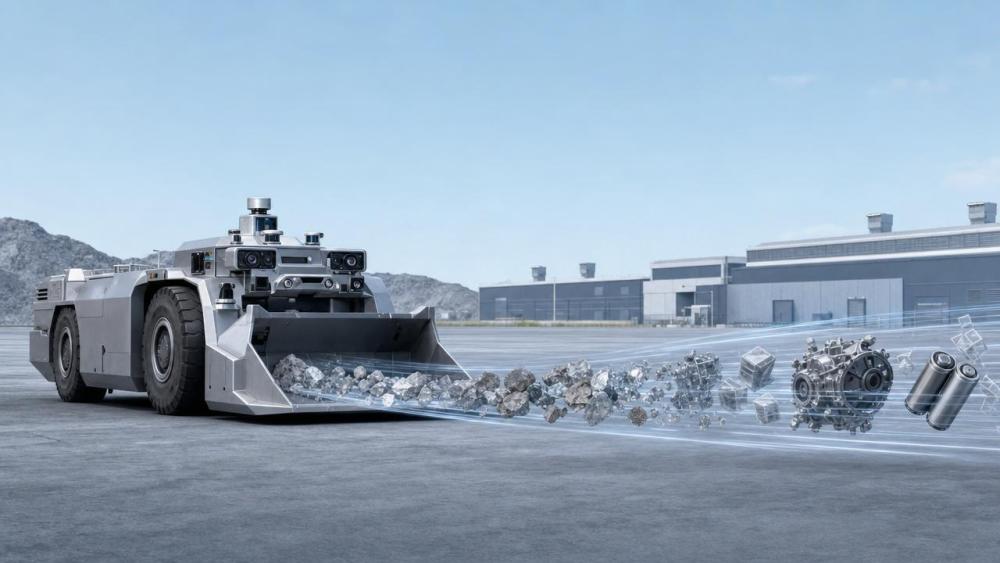
With the EU Forced Labour Regulation set to enter into force on 26 May 2026, industrial equipment exporters — particularly those shipping autonomous load-haul-dump vehicles (Autonomous LHDs) — are entering a critical two-year preparation window. The rule mandates mandatory, verifiable due diligence reporting across upstream mining, battery material refining, and final assembly. This development directly affects manufacturers, suppliers, and traders engaged in EU-bound heavy equipment supply chains.
Event Overview
According to an industry compliance report dated 26 May 2026, the EU Forced Labour Regulation is now in its final implementation phase, with full legal effect scheduled for 26 May 2026. All industrial equipment placed on the EU market — including Autonomous LHDs — must submit a due diligence report covering the entire value chain: from raw mineral extraction and battery material processing to final machine manufacturing. Non-compliant products risk import prohibition or significant financial penalties. Chinese exporters are required to establish auditable digital traceability systems by the 2026 deadline.
Which Subsectors Are Affected
Direct Exporters & OEMs
Manufacturers exporting Autonomous LHDs to the EU face direct regulatory responsibility. Under the Regulation, they must produce and submit verified due diligence documentation — not just for their own facilities but also for upstream tiers they source from. Failure to do so may result in customs rejection at EU borders.
Raw Material Procurement Firms
Companies sourcing lithium, cobalt, nickel, or other critical minerals used in LHD batteries or components are affected because the Regulation explicitly includes upstream mining activities. Their contractual relationships with mines — especially in jurisdictions with known labour governance gaps — now carry compliance liability for downstream exporters.
Component & Battery Suppliers
Suppliers of battery cells, powertrain modules, or control systems embedded in Autonomous LHDs must provide auditable evidence of responsible sourcing and processing. The requirement extends to smelting and refining stages — meaning even non-EU-based refineries supplying EU-bound LHDs fall within scope.
Supply Chain Verification & Certification Providers
Third-party auditors, blockchain traceability platform operators, and certification bodies may see increased demand for services supporting due diligence validation. However, only systems recognised under EU criteria (e.g., alignment with OECD Due Diligence Guidance) will be accepted.
What Relevant Companies or Practitioners Should Focus On — And How to Respond Now
Monitor official EU guidance and delegated acts
The European Commission is expected to publish implementing acts specifying technical standards for traceability systems, acceptable audit methodologies, and reporting formats. Companies should subscribe to official EU notifications and track updates from the Directorate-General for Justice and Consumers.
Prioritise high-risk materials and supplier tiers
Based on current enforcement signals, cobalt, mica, and certain rare earths linked to high-risk geographies are likely focal points. Exporters should map their Tier 2 and Tier 3 suppliers — especially mining and refining partners — and initiate data collection well before 2026.
Distinguish between policy intent and operational readiness
While the Regulation enters force in 2026, enforcement timelines, transitional provisions, and sector-specific derogations remain subject to further clarification. Companies should treat initial guidance as directional — not definitive — until formal delegated acts are adopted.
Begin internal system integration now
Digital traceability systems require integration across ERP, procurement, and logistics platforms. Piloting interoperable data exchange protocols (e.g., based on ISO 20400 or upcoming EU Digital Product Passport standards) can reduce implementation risk ahead of the deadline.
Editorial Perspective / Industry Observation
Observably, this Regulation functions less as an immediate operational mandate and more as a structural signal: it confirms that forced labour due diligence is becoming a non-negotiable condition of market access — not just for consumer goods, but for capital equipment. Analysis shows that the inclusion of Autonomous LHDs reflects the EU’s deliberate expansion of supply chain accountability into industrial automation and mining technology sectors. From an industry perspective, the 2026 deadline is not merely a compliance checkpoint; it marks the beginning of a new baseline for cross-border equipment trade governance. Continuous monitoring is essential, as interpretation and enforcement mechanisms remain under development.
Conclusion
The EU Forced Labour Regulation does not introduce novel ethical principles, but it does institutionalise rigorous, enforceable due diligence as a prerequisite for EU market access. For Autonomous LHD exporters and their supply chain partners, the current phase is best understood as a preparatory period — one requiring coordinated action across procurement, manufacturing, and digital infrastructure. It is neither a sudden disruption nor a distant abstraction, but a calibrated shift toward verifiable responsibility in global industrial trade.
Source Attribution
Main source: Industry Compliance Report dated 26 May 2026.
Areas requiring ongoing observation: Final text of EU delegated acts, official recognition criteria for digital traceability systems, and potential sector-specific implementation guidance for heavy machinery.
Related News

How to Evaluate European Drill-and-Blast Tunnelling Contractors for Complex Projects
Drill and blast tunnelling contractors Europe: learn how to assess geology expertise, blast control, equipment reliability, safety, and programme resilience for complex projects.

Which Trenchless Construction Technique Fits Your Utility Crossing Conditions?
Trenchless construction techniques compared for utility crossings: choose HDD, microtunnelling, pipe jacking, or auger boring based on ground, accuracy, access, and risk.

What Is Driving Metro Tunnelling Demand Across Southeast Asia’s Major Cities?
Metro tunnelling Southeast Asia is accelerating as major cities tackle congestion, flooding, and connectivity. Explore the market forces, technical risks, and opportunities shaping demand.

Hard Rock Tunnelling in Australia: Selecting Methods for Variable Ground Conditions
Hard rock tunnelling in Australia: compare TBM, drill-and-blast and hybrid methods to manage variable ground, reduce risk and protect project costs.

Hydropower Tunnel Excavation: Selecting Methods for Variable Rock Conditions
Hydropower tunnel excavation methods for variable rock conditions: compare TBM, drill-and-blast, and hybrid strategies to improve safety, progress, and project control.

How to Select Underground Safety Equipment for Tunnelling by Hazard and Work Zone
Underground Safety Equipment for tunnelling: match protection to hazards, work zones, compliance, and emergency needs with this practical selection guide.

EPB or Slurry Shield? Selecting Soft-Ground Tunnelling Equipment by Soil Conditions
Tunnel Excavation Equipment for soft ground: compare EPB and slurry shields by soil, groundwater, settlement risk, and project logistics to choose confidently.

How to Specify TBM Backup System Parts for Reliable Long-Distance Tunnelling
TBM backup system parts: learn how to specify reliable spares for long-distance tunnelling, reduce downtime, ensure compatibility, and speed underground recovery.
How to Size Open Pit Mining Trucks for Haul Distance, Grade, and Payload?
Open Pit Mining Trucks: learn how to match payload, haul distance, grade, road resistance, and loading capacity for safer, lower-cost mine operations.
Related News
- 00
0000-00
How to Evaluate European Drill-and-Blast Tunnelling Contractors for Complex Projects - 00
0000-00
Which Trenchless Construction Technique Fits Your Utility Crossing Conditions? - 00
0000-00
What Is Driving Metro Tunnelling Demand Across Southeast Asia’s Major Cities? - 00
0000-00
Hard Rock Tunnelling in Australia: Selecting Methods for Variable Ground Conditions - 00
0000-00
Hydropower Tunnel Excavation: Selecting Methods for Variable Rock Conditions
Weekly Insights
Stay ahead with our curated technology reports delivered every Monday.