
Yangtze River Delta Posts $87.2B Trade in First Four Months; Micro-tunnelling Exports Up 27%





The Yangtze River Delta region recorded a total import and export value of RMB 6.14 trillion (approx. USD 87.2 billion) in the first four months of 2026, with micro-tunnelling equipment exports to Southeast Asia and the Middle East rising 27% year-on-year — a development particularly relevant to infrastructure engineering firms, tunneling equipment manufacturers, international trade service providers, and EMC compliance specialists.
Event Overview
According to customs data released on May 21, 2026, the Yangtze River Delta’s total import and export value for January–April 2026 reached RMB 6.14 trillion. Exports of micro-tunnelling complete systems to Southeast Asia and the Middle East increased by 27% year-on-year. This growth is attributed to a 13.77% rise in RCEP origin certificate issuances and accelerated urban renewal-driven infrastructure projects in those regions. However, several destination countries have newly introduced mandatory electromagnetic compatibility (EMC) certification requirements for underground construction equipment.
Industries Affected
Micro-tunnelling Equipment Manufacturers
These firms face direct regulatory impact: new EMC certification mandates in key markets require technical documentation updates, pre-market testing, and potential design modifications. The 27% export growth reflects strong demand but also signals heightened compliance exposure — especially where certification timelines lag behind delivery schedules.
Export-Oriented Trading Companies
Trading companies handling micro-tunnelling systems must now verify product conformity with evolving national EMC standards before shipment. Delays in certificate acquisition or test failures may trigger contractual penalties or port holds — making origin certificate coordination (e.g., RCEP forms) only one part of a broader compliance workflow.
International Logistics & Certification Service Providers
Service providers offering EMC testing, certification agency liaison, or customs advisory support are seeing increased inquiry volume. Their role shifts from facilitation to risk mitigation — particularly for clients entering markets with newly enforced EMC regimes where local accreditation bodies lack standardized recognition pathways.
Urban Infrastructure Project Contractors (Overseas)
Contractors procuring micro-tunnelling equipment for city-upgrade projects in Southeast Asia or the Middle East must now confirm vendor compliance status earlier in procurement cycles. Equipment delivered without valid EMC certification may be rejected at point of entry — affecting project timelines and budget contingencies.
What Enterprises and Practitioners Should Monitor and Act On
Track official EMC regulation rollouts in target markets
Monitor national metrology or communications authority announcements — not just customs bulletins — for implementation dates, scope definitions (e.g., whether retrofitting is permitted), and recognized testing laboratories. Some jurisdictions issue transitional periods; others enforce immediately upon gazettal.
Verify RCEP certificate eligibility against actual shipment conditions
RCEP origin certification supports tariff reduction but does not substitute for product-specific regulatory approvals like EMC. Exporters should cross-check whether their declared HS codes and manufacturing processes meet both preferential trade and technical regulation criteria — as misalignment may invalidate either benefit.
Distinguish between policy signal and operational readiness
A 27% export increase reflects current market activity, not guaranteed continuity. Analysis shows this growth coincides with short-term infrastructure stimulus cycles — meaning demand may decelerate if municipal budgets tighten or tender pipelines narrow post-2026. Firms should avoid overextending production capacity solely on recent momentum.
Initiate EMC pre-assessment for high-priority export SKUs
Select top three micro-tunnelling system models by export revenue and commission preliminary EMC gap analysis — including emissions limits, immunity thresholds, and labeling requirements. Early identification of required shielding, filtering, or firmware adjustments reduces time-to-certification and avoids last-minute redesigns.
Editorial Perspective / Industry Observation
Observably, this data point functions more as an early-phase regulatory inflection signal than a settled market outcome. The 27% export growth highlights traction in infrastructure-led demand, yet the concurrent introduction of mandatory EMC rules indicates tightening technical governance — suggesting that market access is increasingly conditional on localized compliance capability, not just price or performance. From an industry perspective, the RCEP certificate surge (13.77%) reflects improved procedural adoption, but it does not offset the rising complexity of non-tariff barriers. Current developments are better understood as a bifurcation: easier market entry via trade agreements, paired with harder technical entry via product regulation.
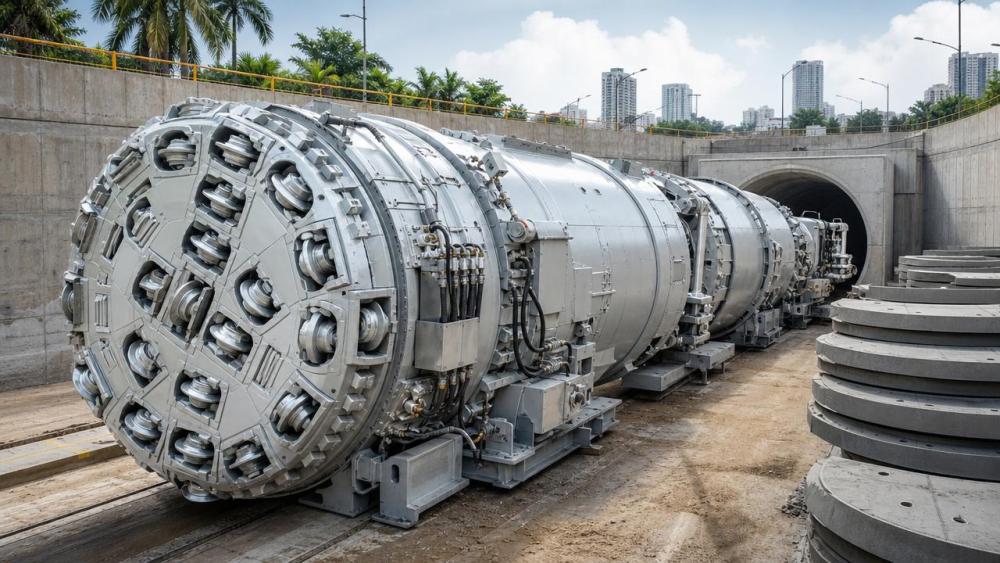
Concluding, this update underscores a structural shift — where export competitiveness in micro-tunnelling equipment now hinges equally on trade facilitation tools and regulatory engineering capacity. It is not merely about selling more units, but about embedding compliance into product development, supply chain planning, and cross-border service partnerships. For stakeholders, the priority is not reaction to headline growth, but proactive alignment across technical, commercial, and regulatory domains.
Source: Customs data released on May 21, 2026.
Note: Ongoing monitoring is advised for EMC implementation timelines and enforcement practices in specific Southeast Asian and Middle Eastern countries, as details remain subject to national-level clarification.
Related News

How to Evaluate European Drill-and-Blast Tunnelling Contractors for Complex Projects
Drill and blast tunnelling contractors Europe: learn how to assess geology expertise, blast control, equipment reliability, safety, and programme resilience for complex projects.

Which Trenchless Construction Technique Fits Your Utility Crossing Conditions?
Trenchless construction techniques compared for utility crossings: choose HDD, microtunnelling, pipe jacking, or auger boring based on ground, accuracy, access, and risk.

What Is Driving Metro Tunnelling Demand Across Southeast Asia’s Major Cities?
Metro tunnelling Southeast Asia is accelerating as major cities tackle congestion, flooding, and connectivity. Explore the market forces, technical risks, and opportunities shaping demand.

Hard Rock Tunnelling in Australia: Selecting Methods for Variable Ground Conditions
Hard rock tunnelling in Australia: compare TBM, drill-and-blast and hybrid methods to manage variable ground, reduce risk and protect project costs.

Hydropower Tunnel Excavation: Selecting Methods for Variable Rock Conditions
Hydropower tunnel excavation methods for variable rock conditions: compare TBM, drill-and-blast, and hybrid strategies to improve safety, progress, and project control.

How to Select Underground Safety Equipment for Tunnelling by Hazard and Work Zone
Underground Safety Equipment for tunnelling: match protection to hazards, work zones, compliance, and emergency needs with this practical selection guide.

EPB or Slurry Shield? Selecting Soft-Ground Tunnelling Equipment by Soil Conditions
Tunnel Excavation Equipment for soft ground: compare EPB and slurry shields by soil, groundwater, settlement risk, and project logistics to choose confidently.

How to Specify TBM Backup System Parts for Reliable Long-Distance Tunnelling
TBM backup system parts: learn how to specify reliable spares for long-distance tunnelling, reduce downtime, ensure compatibility, and speed underground recovery.

How to Size Open Pit Mining Trucks for Haul Distance, Grade, and Payload?
Open Pit Mining Trucks: learn how to match payload, haul distance, grade, road resistance, and loading capacity for safer, lower-cost mine operations.
Related News
- 00
0000-00
How to Evaluate European Drill-and-Blast Tunnelling Contractors for Complex Projects - 00
0000-00
Which Trenchless Construction Technique Fits Your Utility Crossing Conditions? - 00
0000-00
What Is Driving Metro Tunnelling Demand Across Southeast Asia’s Major Cities? - 00
0000-00
Hard Rock Tunnelling in Australia: Selecting Methods for Variable Ground Conditions - 00
0000-00
Hydropower Tunnel Excavation: Selecting Methods for Variable Rock Conditions
Weekly Insights
Stay ahead with our curated technology reports delivered every Monday.