
Underground Logistics Solutions for Confined Sites: How to Improve Material Flow





Underground Logistics Solutions matter most when space starts limiting every decision
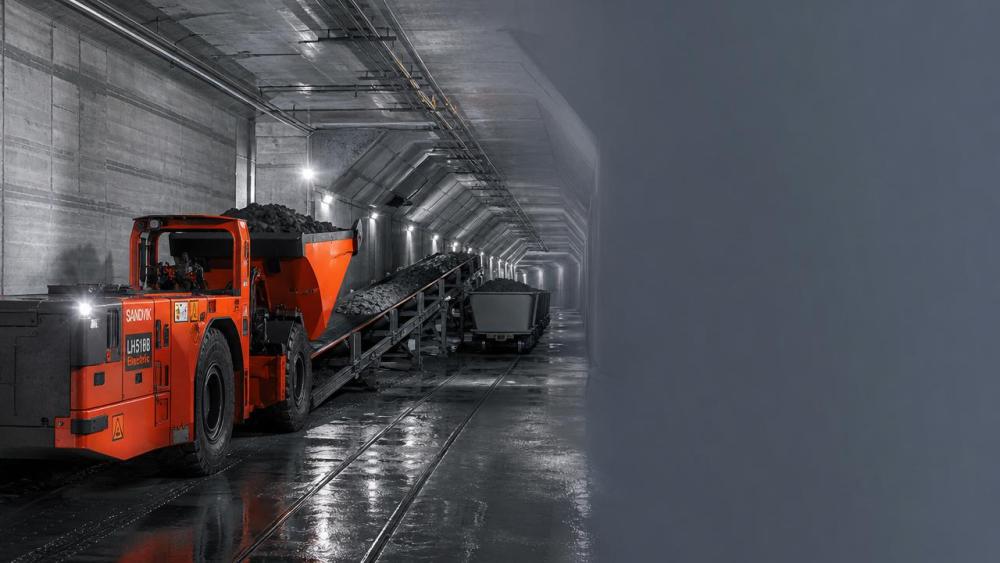
Underground Logistics Solutions shape project performance long before output targets are missed.
In confined sites, material flow is never only a transport issue.
It influences ventilation demand, cycle time, equipment wear, crew exposure, and emergency access.
That is why underground tunnels, trenchless drives, and deep mining headings rarely need the same logistics logic.
The practical question is not whether Underground Logistics Solutions are necessary.
The real issue is which transport pattern fits the site geometry, production rhythm, and emissions threshold.
UTMD follows this intersection closely.
Its coverage of TBM systems, pipe jacking equipment, drilling jumbos, mining dump trucks, and underground LHD loaders shows one consistent lesson.
When excavation advances into deeper, narrower, and more regulated spaces, logistics decisions become operational strategy.
Why similar confined sites still demand different Underground Logistics Solutions
Two headings may look equally tight on a drawing, yet behave very differently in operation.
One may run on predictable continuous muck removal.
Another may depend on blast cycles, shift changes, and intermittent support installation.
That difference changes the best Underground Logistics Solutions more than nominal tunnel width.
In practice, four variables usually drive the decision.
- Flow pattern: continuous conveyor-style movement or batch-based haulage.
- Turning space: whether vehicles can pass, reverse, or wait safely.
- Air and heat load: diesel fumes, battery charging heat, dust, and ventilation capacity.
- Control maturity: manual dispatching versus sensor-guided or autonomous coordination.
This is where many planning errors begin.
A site may choose equipment with strong standalone specifications, yet still create bottlenecks between loading, haulage, and dumping.
Strong Underground Logistics Solutions connect these interfaces instead of optimizing one machine in isolation.
TBM and pipe jacking drives usually reward steady, low-interruption material flow
In TBM tunnelling, the transport chain works best when spoil removal matches the cutting head without pause.
Even short interruptions can affect advance stability, segment handling, and downstream utility supply.
Here, Underground Logistics Solutions often depend on synchronized conveyors, muck cars, slurry circuits, and segmented storage planning.
The judgment point is not only capacity per hour.
It is how reliably the system absorbs peaks caused by mixed geology, cutter interventions, or ring building delays.
Pipe jacking projects add another layer.
Urban access restrictions, shaft footprints, and spoil handling windows can be tighter than the underground alignment itself.
In that environment, quieter and cleaner Underground Logistics Solutions gain value because surface disturbance is part of the logistics equation.
A common mistake is copying a high-output tunnel setup into a municipal trenchless project.
The production logic may be similar, but shaft logistics, spoil extraction timing, and local restrictions rarely are.
Drill-and-blast headings need flexibility more than perfect linear flow
Drill-and-blast tunnels and hard-rock mine development headings follow a different rhythm.
Drilling jumbos, charging, blasting, ventilation clearing, scaling, bolting, and mucking rarely happen as a smooth sequence.
Because the face is repeatedly handed over between tasks, Underground Logistics Solutions must tolerate interruptions without causing long queue losses.
This usually shifts attention toward maneuverability, turnaround time, and fast re-entry after blasting clearance.
In actual operations, a slightly smaller hauler can outperform a larger unit if passing bays are limited.
The reason is simple.
A larger machine may carry more each trip, but lose more time at choke points, support zones, or wet floor sections.
For these headings, the stronger Underground Logistics Solutions usually combine loading agility with simple traffic rules and clear face-priority windows.
Where deep mines change the calculation
Deep underground mining introduces longer haul distances, sharper gradients, and rising ventilation costs.
That is why battery LHD loaders, trolley assistance, and remote operation are gaining attention.
UTMD tracks this shift through equipment intelligence, SLAM-based navigation, and zero-exhaust transport strategies.
The logistics benefit is not only environmental compliance.
Cleaner Underground Logistics Solutions can also free ventilation capacity for production growth or deeper development.
Different site conditions change what good performance actually means
A useful comparison is to judge Underground Logistics Solutions by site behavior, not by brochure claims.
This kind of comparison helps avoid a common oversimplification.
Not every confined site needs the highest transport speed.
Some sites need fewer stops, cleaner air, or more predictable face access.
What often gets misjudged before Underground Logistics Solutions go live
The first misjudgment is treating tunnel profile as the only design input.
Gradient, water management, support installation zones, and escape requirements can reshape usable transport space.
The second is focusing on purchase cost while ignoring service intervals, battery swap time, tire wear, and spare-part access.
A third blind spot appears during electrification decisions.
Low-emission Underground Logistics Solutions are valuable, but only when charging strategy, substation support, and heat control are understood early.
Another frequent error is assuming similar headings have identical dispatch behavior.
One heading may tolerate manual radio coordination.
Another may require digital positioning and automated traffic separation to remain productive.
A practical way to match Underground Logistics Solutions to confined sites
A better deployment path starts with the flow map rather than the machine list.
Track where material is generated, where it pauses, and where transport conflicts appear.
Then match equipment and control logic to those pressure points.
- Measure real cycle variability, not only target throughput.
- Test turning, passing, and dumping behavior in restricted geometry.
- Model ventilation and energy demand with transport density.
- Check how maintenance access affects uptime underground.
- Define upgrade paths for automation before congestion becomes chronic.
This is also where UTMD’s intelligence perspective becomes useful.
Across TBM systems, trenchless operations, and smart mine transport, the strongest Underground Logistics Solutions usually come from stitched decision-making.
Mechanical capability, digital visibility, and zero-exhaust priorities need to be evaluated together, not in separate procurement tracks.
Improving material flow starts with sharper site judgment
Confined underground sites rarely fail because material cannot move at all.
They struggle because movement is mismatched to geology, cycle rhythm, ventilation limits, or operational transitions.
That is why effective Underground Logistics Solutions depend on reading the site correctly before scaling equipment.
The next useful step is to map current bottlenecks, compare conditions across headings or ramps, and define which restrictions are fixed and which can be redesigned.
Once those conditions are clear, it becomes easier to judge whether the best improvement comes from cleaner fleets, tighter dispatching, better buffer design, or a different haulage architecture entirely.
Related News

How to Evaluate European Drill-and-Blast Tunnelling Contractors for Complex Projects
Drill and blast tunnelling contractors Europe: learn how to assess geology expertise, blast control, equipment reliability, safety, and programme resilience for complex projects.

Which Trenchless Construction Technique Fits Your Utility Crossing Conditions?
Trenchless construction techniques compared for utility crossings: choose HDD, microtunnelling, pipe jacking, or auger boring based on ground, accuracy, access, and risk.

What Is Driving Metro Tunnelling Demand Across Southeast Asia’s Major Cities?
Metro tunnelling Southeast Asia is accelerating as major cities tackle congestion, flooding, and connectivity. Explore the market forces, technical risks, and opportunities shaping demand.

Hard Rock Tunnelling in Australia: Selecting Methods for Variable Ground Conditions
Hard rock tunnelling in Australia: compare TBM, drill-and-blast and hybrid methods to manage variable ground, reduce risk and protect project costs.

Hydropower Tunnel Excavation: Selecting Methods for Variable Rock Conditions
Hydropower tunnel excavation methods for variable rock conditions: compare TBM, drill-and-blast, and hybrid strategies to improve safety, progress, and project control.

How to Select Underground Safety Equipment for Tunnelling by Hazard and Work Zone
Underground Safety Equipment for tunnelling: match protection to hazards, work zones, compliance, and emergency needs with this practical selection guide.

EPB or Slurry Shield? Selecting Soft-Ground Tunnelling Equipment by Soil Conditions
Tunnel Excavation Equipment for soft ground: compare EPB and slurry shields by soil, groundwater, settlement risk, and project logistics to choose confidently.

How to Specify TBM Backup System Parts for Reliable Long-Distance Tunnelling
TBM backup system parts: learn how to specify reliable spares for long-distance tunnelling, reduce downtime, ensure compatibility, and speed underground recovery.

How to Size Open Pit Mining Trucks for Haul Distance, Grade, and Payload?
Open Pit Mining Trucks: learn how to match payload, haul distance, grade, road resistance, and loading capacity for safer, lower-cost mine operations.
Related News
- 00
0000-00
How to Evaluate European Drill-and-Blast Tunnelling Contractors for Complex Projects - 00
0000-00
Which Trenchless Construction Technique Fits Your Utility Crossing Conditions? - 00
0000-00
What Is Driving Metro Tunnelling Demand Across Southeast Asia’s Major Cities? - 00
0000-00
Hard Rock Tunnelling in Australia: Selecting Methods for Variable Ground Conditions - 00
0000-00
Hydropower Tunnel Excavation: Selecting Methods for Variable Rock Conditions
Weekly Insights
Stay ahead with our curated technology reports delivered every Monday.