
Underground Utility Construction Safety: Key Hazards, OSHA Rules, and Site Control Measures





Underground utility construction safety sits at the center of modern civil works because the most serious risks are often hidden before excavation starts. A trench can look routine from the surface, yet unstable soil, unmarked services, groundwater, traffic, and confined access can quickly turn a planned operation into a high-consequence event.
That pressure is growing as cities expand buried networks and as underground engineering becomes more mechanized, data-driven, and schedule-sensitive. In that environment, safety is not separate from production quality. It shapes uptime, rework exposure, regulatory standing, and the long-term reliability of the asset being installed or protected.
Why the issue has moved higher on the industry agenda
Across utility corridors, transport projects, and trenchless operations, the underground jobsite is getting more crowded. Legacy gas lines, fiber routes, water mains, drainage systems, and temporary bypass arrangements often overlap within narrow working footprints.
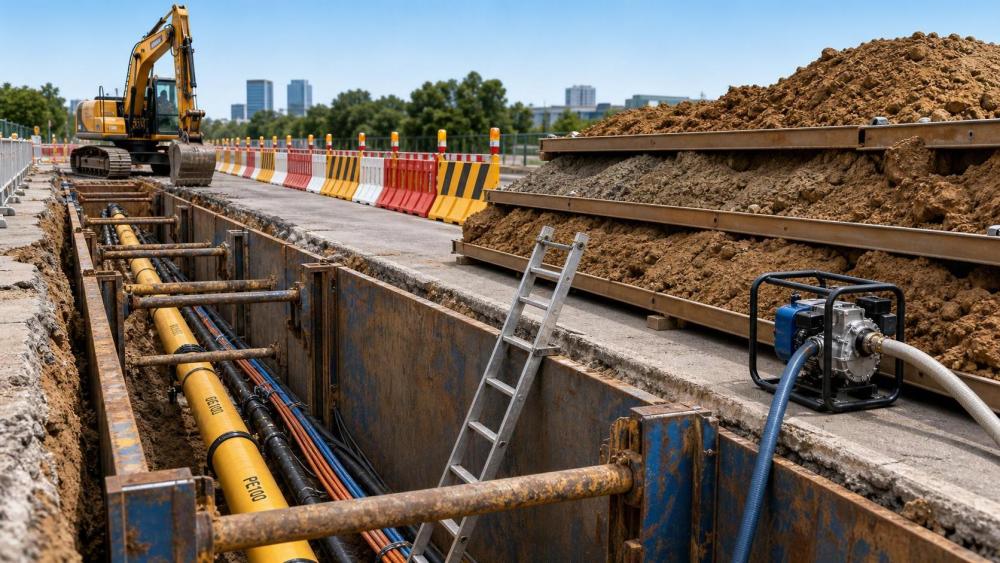
The shift matters beyond open-cut trenching. The same risk logic applies to pipe jacking drives, shaft construction, launch pits, reception pits, and support zones around tunnel boring or mining logistics interfaces. UTMD tracks this wider underground transition closely because mechanization, electrification, and automation only perform well when site control is equally mature.
A damaged live utility can stop work immediately. A weak excavation support plan can collapse a schedule along with the trench wall. Even where incidents do not become fatal, they often trigger claims, redesign, environmental cleanup, and loss of stakeholder confidence.
What underground utility construction safety really covers
In practical terms, underground utility construction safety is the discipline of identifying subsurface hazards, controlling excavation exposure, coordinating equipment movement, and protecting people, adjacent assets, and service continuity throughout the work cycle.
It starts before excavation and continues through backfill and reinstatement. The scope includes planning, locating, potholing, access control, trench protection, atmospheric checks, dewatering, lifting, traffic separation, and emergency response readiness.
This is why quality and safety often converge underground. A site that controls line and grade, spoil handling, shoring loads, and utility clearance with precision usually performs better on defect prevention as well.
The hazards that create the greatest exposure
Cave-ins remain one of the most severe excavation hazards. Soil can fail without much warning, especially after rain, vibration, surcharge loading, or repeated disturbance near the trench edge.
Utility strikes are the next major concern. Contact with electric cables, gas mains, steam lines, or pressurized water systems can escalate from property damage to fire, flooding, explosion, or secondary collapse.
Confined and poorly ventilated spaces create another layer of risk. Shafts, pits, vaults, and deep excavations may accumulate hazardous atmospheres, especially where engines, groundwater contamination, or decaying organic matter are present.
Heavy equipment interaction is often underestimated. Excavators, loaders, compactors, cranes, and haul units create blind spots, pinch points, and edge-loading effects that can destabilize both personnel routes and support systems.
- Spoil piles and stored materials placed too close to the edge
- Water ingress that softens trench walls and hides voids
- Inaccurate as-built records or incomplete utility locating
- Night work, poor visibility, and weak pedestrian segregation
- Uncontrolled access by subcontractors or passing traffic
OSHA requirements that shape field decisions
For most US-based excavation work, OSHA 29 CFR 1926 Subpart P provides the core framework. It covers excavations, trenching, protective systems, inspections, and duties linked to changing ground conditions.
One of the most important concepts is the competent person. That individual must be able to identify existing and predictable hazards and must have authority to act when conditions are unsafe.
Protective systems are required unless the excavation is made entirely in stable rock or is shallow enough to meet exemption criteria. In practice, this means sloping, benching, shoring, or shielding must match the soil and the work method.
OSHA also expects daily inspections and additional checks after rain, vibration events, or other hazard-increasing changes. Safe access and egress, atmospheric testing where needed, and separation of excavated material from trench edges are basic expectations rather than optional enhancements.
Site control measures that work in real operations
Effective underground utility construction safety depends on disciplined site control rather than single-point fixes. The strongest sites treat controls as a sequence, beginning with design assumptions and ending with daily verification.
Start with subsurface certainty
Records review alone is not enough. Utility maps should be cross-checked with field locating, test holes, recent modifications, and local service owner input. In dense corridors, vacuum excavation or hand exposure is often the safer confirmation method.
Control the trench edge
Most unstable excavations show warning signs at the perimeter first. Set back spoil, barriers, equipment, and delivery vehicles. Treat edge loading as a design issue, not a housekeeping issue.
Manage water early
Groundwater, leakage, and rainfall can change soil behavior fast. Dewatering plans, diversion channels, pump redundancy, and discharge control should be established before crews enter the excavation.
Separate people from machine swing zones
Clear exclusion areas, spotter rules, camera systems, and one-way equipment flow reduce struck-by exposure. This becomes more important when utility work interfaces with larger tunnelling or mining support fleets.
Verify the atmosphere when the geometry changes
Deep pits, shafts, vaults, and lined structures can behave like confined spaces even when they were not originally classified that way. Atmospheric checks should follow the actual risk profile, not just the permit label.
How safety thinking changes with excavation method
Open-cut utility work and trenchless construction share core hazards, but the control priorities shift. Understanding that difference improves both planning and incident prevention.
In open trenches, collapse protection, access, and public interface usually dominate. In pipe jacking or shaft-based work, face pressure, launch pit integrity, lifting plans, slurry handling, and confined-space conditions may become more significant.
That broader view aligns with UTMD coverage of TBMs, pipe jacking machines, drilling systems, and underground transport. As equipment becomes smarter and less emission-intensive, site teams still need rigorous human controls around geotechnical uncertainty, maintenance isolation, and emergency response.
What to watch during inspections and quality checks
The best inspections are not generic walk-throughs. They focus on indicators that show whether the original assumptions are still valid under current site conditions.
- Has soil condition changed since the morning briefing?
- Are shoring components installed as designed and still seated correctly?
- Do exposed utilities have adequate support and clear identification?
- Has rain, seepage, or vibration altered trench stability?
- Are ladders, walkways, and escape routes still accessible?
- Has any equipment moved closer to the edge than planned?
- Do permits, dig clearances, and lockout controls still match the task?
These checks help turn underground utility construction safety into a measurable operating discipline. They also provide traceable evidence when project teams need to defend decisions after a near miss or service interruption.
A practical next step for stronger control
Improving underground utility construction safety rarely starts with a new slogan. It starts with a tighter review of excavation assumptions, utility exposure methods, trench protection choices, and inspection triggers tied to changing ground conditions.
A useful next move is to compare recent incidents, permit gaps, and field deviations against OSHA requirements and actual work sequencing. That exercise often shows where controls look adequate on paper but fail under production pressure.
For organizations operating across trenching, trenchless, or deeper underground systems, the priority is consistency: one risk language, one escalation path, and one evidence-based view of what keeps people, utilities, and schedules intact.
Related News
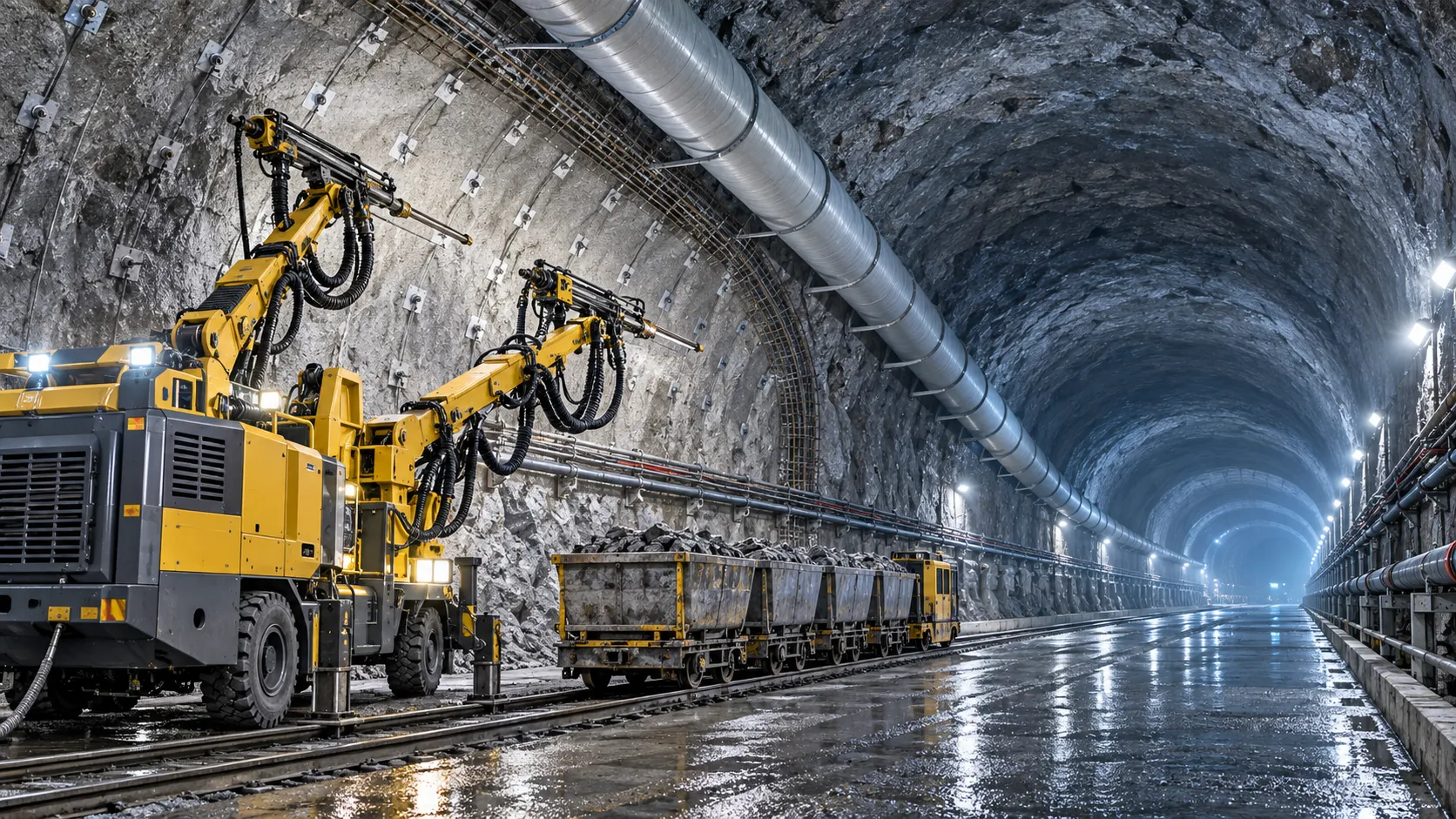
How to Evaluate European Drill-and-Blast Tunnelling Contractors for Complex Projects
Drill and blast tunnelling contractors Europe: learn how to assess geology expertise, blast control, equipment reliability, safety, and programme resilience for complex projects.
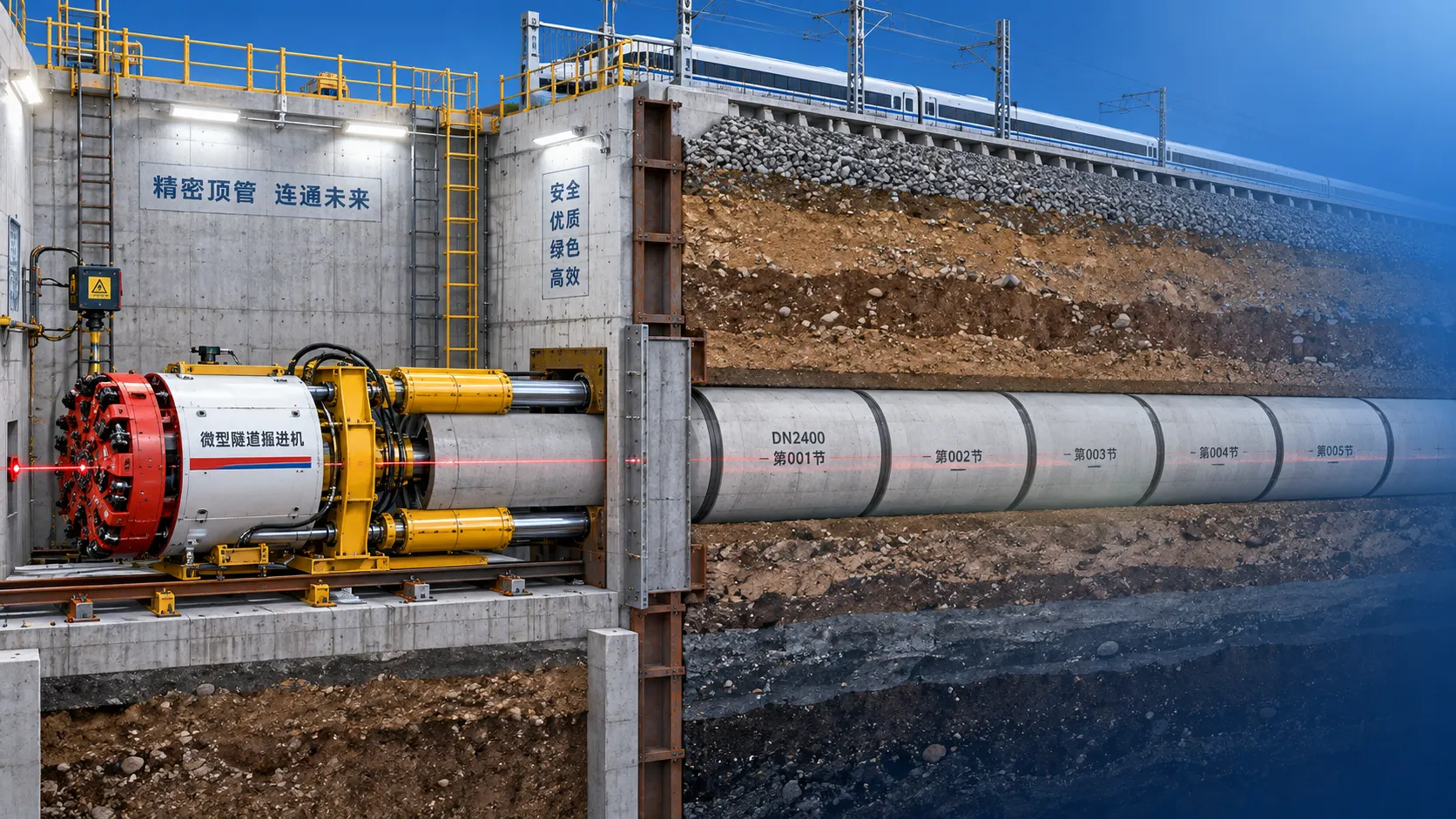
Which Trenchless Construction Technique Fits Your Utility Crossing Conditions?
Trenchless construction techniques compared for utility crossings: choose HDD, microtunnelling, pipe jacking, or auger boring based on ground, accuracy, access, and risk.
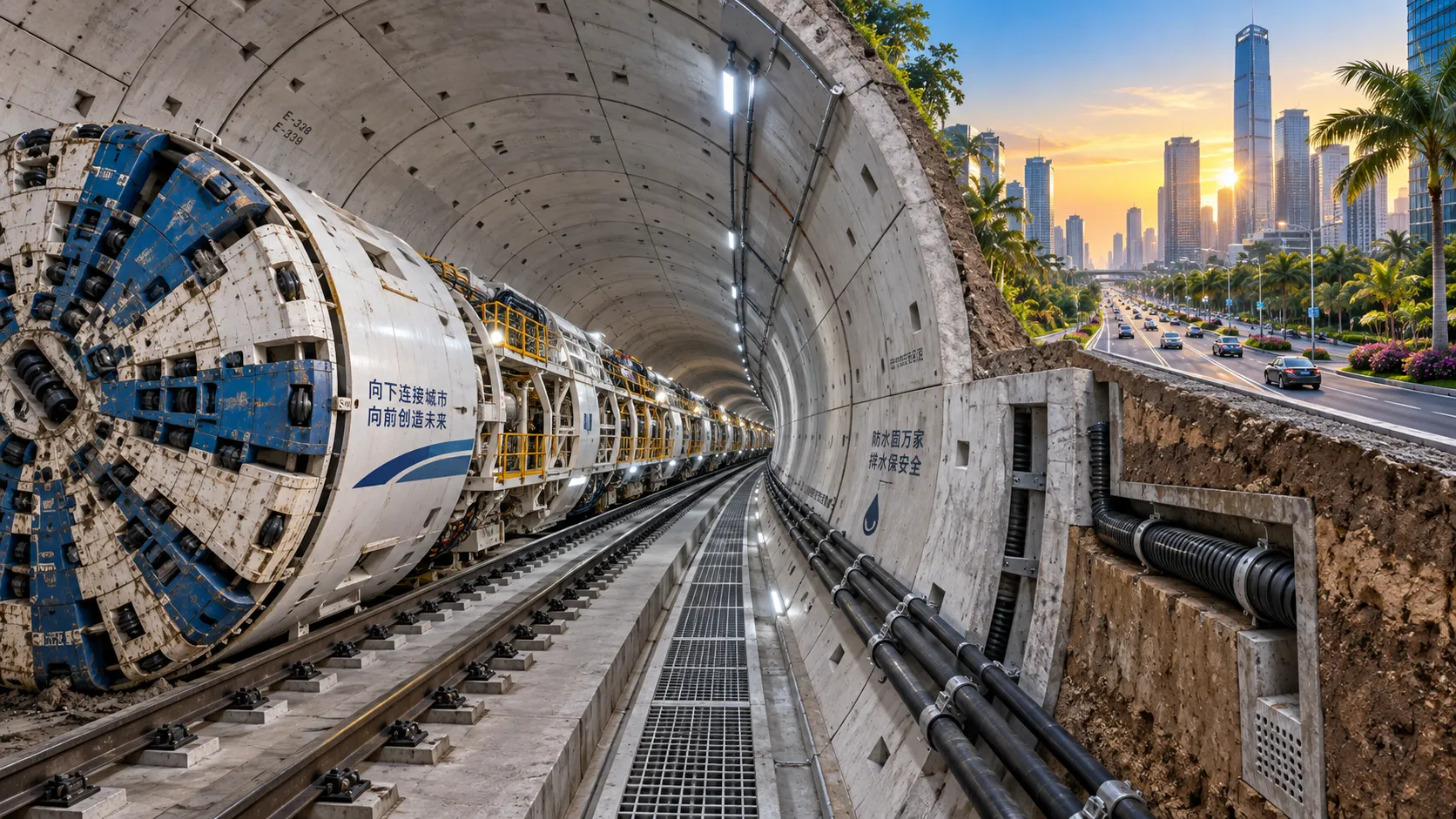
What Is Driving Metro Tunnelling Demand Across Southeast Asia’s Major Cities?
Metro tunnelling Southeast Asia is accelerating as major cities tackle congestion, flooding, and connectivity. Explore the market forces, technical risks, and opportunities shaping demand.
Hard Rock Tunnelling in Australia: Selecting Methods for Variable Ground Conditions
Hard rock tunnelling in Australia: compare TBM, drill-and-blast and hybrid methods to manage variable ground, reduce risk and protect project costs.
Hydropower Tunnel Excavation: Selecting Methods for Variable Rock Conditions
Hydropower tunnel excavation methods for variable rock conditions: compare TBM, drill-and-blast, and hybrid strategies to improve safety, progress, and project control.
How to Select Underground Safety Equipment for Tunnelling by Hazard and Work Zone
Underground Safety Equipment for tunnelling: match protection to hazards, work zones, compliance, and emergency needs with this practical selection guide.
EPB or Slurry Shield? Selecting Soft-Ground Tunnelling Equipment by Soil Conditions
Tunnel Excavation Equipment for soft ground: compare EPB and slurry shields by soil, groundwater, settlement risk, and project logistics to choose confidently.
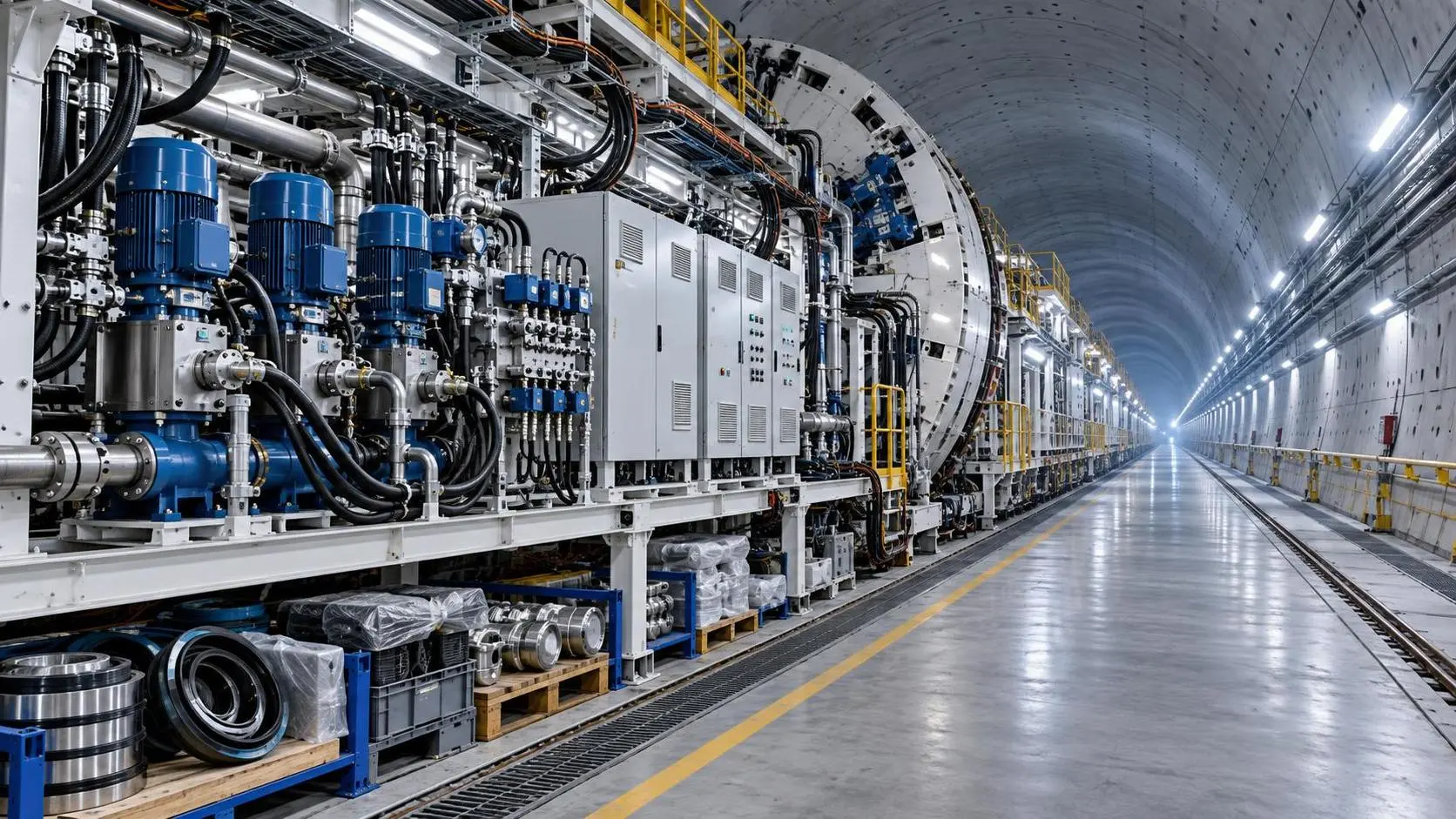
How to Specify TBM Backup System Parts for Reliable Long-Distance Tunnelling
TBM backup system parts: learn how to specify reliable spares for long-distance tunnelling, reduce downtime, ensure compatibility, and speed underground recovery.
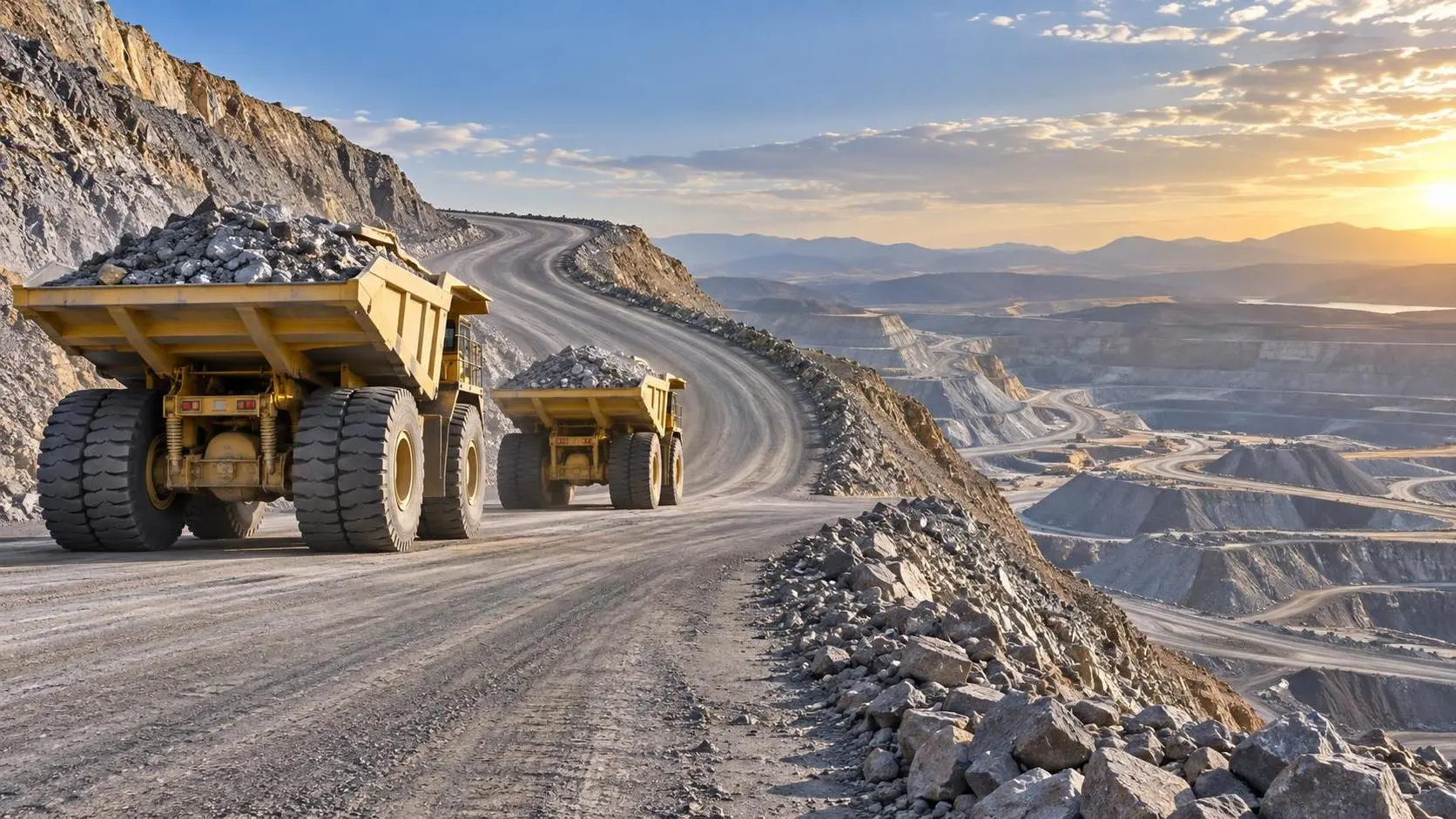
How to Size Open Pit Mining Trucks for Haul Distance, Grade, and Payload?
Open Pit Mining Trucks: learn how to match payload, haul distance, grade, road resistance, and loading capacity for safer, lower-cost mine operations.
Related News
- 00
0000-00
How to Evaluate European Drill-and-Blast Tunnelling Contractors for Complex Projects - 00
0000-00
Which Trenchless Construction Technique Fits Your Utility Crossing Conditions? - 00
0000-00
What Is Driving Metro Tunnelling Demand Across Southeast Asia’s Major Cities? - 00
0000-00
Hard Rock Tunnelling in Australia: Selecting Methods for Variable Ground Conditions - 00
0000-00
Hydropower Tunnel Excavation: Selecting Methods for Variable Rock Conditions
Weekly Insights
Stay ahead with our curated technology reports delivered every Monday.