
What smart mines technology solutions pay off first?





For enterprise decision-makers, the key question is not whether to invest in Smart Mines technology solutions, but which ones deliver measurable returns first. From fleet electrification and autonomous haulage to underground connectivity and predictive maintenance, early payback depends on matching technology with operational bottlenecks, safety goals, and asset utilization targets. This article examines where the fastest value typically appears and how mining leaders can prioritize with confidence.
Which Smart Mines technology solutions usually pay off first?
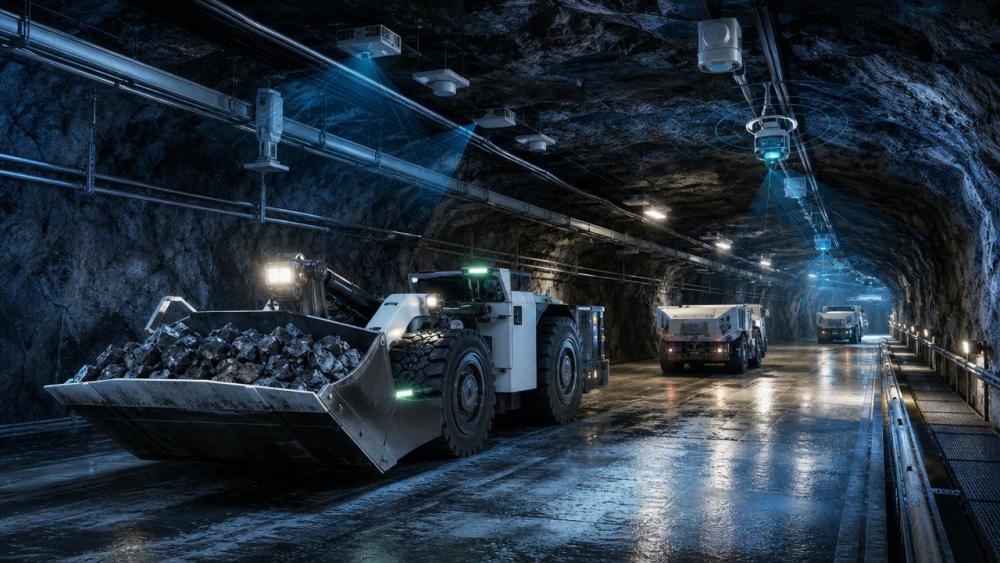
In mining and underground engineering, the first returns rarely come from the most futuristic system. They usually come from Smart Mines technology solutions that remove expensive daily friction: unplanned downtime, ventilation cost, idle equipment, unsafe manual exposure, and poor haulage coordination.
For most operators, the quickest payback appears in focused deployments rather than full digital transformation. That is especially true in underground mines, where confined spaces, diesel emissions, poor visibility, and variable rock conditions turn small efficiency gains into large operating savings.
UTMD tracks this pattern across heavy underground equipment and transport systems. Whether the asset is a drilling jumbo, underground LHD, mining dump truck, TBM support fleet, or trenchless logistics system, return on investment depends on how directly a solution improves machine utilization and production continuity.
- Predictive maintenance often pays back early because it cuts failure events on high-value mobile and cutting equipment.
- Fleet tracking and dispatch deliver quick value where cycle times vary and operators lack visibility across headings, stopes, ramps, or haul roads.
- Battery-electric or zero-emission upgrades can pay back faster underground than on surface when ventilation energy and heat load are major cost drivers.
- Remote operation and partial autonomy create early gains in high-risk zones where re-entry delays or blast clearance reduce productive hours.
Where does early ROI come from in underground and mining operations?
Decision-makers often overestimate software dashboards and underestimate operational physics. In practice, the best Smart Mines technology solutions align with the mine’s most expensive constraint. That could be air, time, labor access, gradient, tire wear, power, or geotechnical uncertainty.
The table below helps compare common solutions by their usual first-value pathway, implementation complexity, and operating context.
This comparison shows why there is no universal first choice. A mine with chronic maintenance failures should not begin with autonomy marketing. A ventilation-constrained underground operation may see faster returns from battery-electric LHDs than from analytics alone.
The fastest-value rule: solve the cost center, not the trend
When UTMD evaluates underground transport and heavy equipment transitions, the most reliable investment logic starts with bottleneck ranking. Ask which problem currently destroys production value every shift. Start there. Smart Mines technology solutions pay off first when they attack a measurable loss line.
- If downtime is the largest hidden cost, prioritize condition monitoring and failure prediction.
- If ventilation and heat are critical, prioritize electrified underground fleets.
- If production is delayed by access restrictions, prioritize tele-remote operation.
- If haulage is inconsistent, prioritize dispatch visibility and traffic coordination.
How should decision-makers rank Smart Mines technology solutions by scenario?
Different asset classes create different return patterns. Underground LHD loaders, drilling jumbos, and mining trucks do not fail, wait, or consume energy in the same way. Selection should follow operating scenario, not vendor packaging.
Underground LHD loaders
For underground LHD fleets, early-return Smart Mines technology solutions often include tele-remote operation, battery swapping optimization, traffic control, and machine health analytics. Because LHDs work in narrow headings with repeated cycles, small improvements in turnaround time quickly compound.
Drilling jumbos
For drilling jumbos, return often starts with drilling accuracy, consumables tracking, and maintenance intelligence. A reduced rate of misdrilled holes, fewer boom failures, and better bit life can improve blast outcomes while lowering rework and support delays.
Mining dump trucks and haulage systems
For haul trucks, the first payoff often comes from route optimization, payload monitoring, idle control, and, in suitable operations, electrification or autonomous driving support. Long downhill hauls also create strong value cases for regenerative braking in electric fleets.
TBM and trenchless support environments
In TBM or pipe jacking support logistics, the best early gains often come from predictive maintenance on cutters and support systems, materials flow coordination, and integrated monitoring of electrical, hydraulic, and sensing subsystems. The lesson is consistent: target continuity first.
What should you compare before buying Smart Mines technology solutions?
Procurement teams need a disciplined comparison framework. Price matters, but decision quality depends more on integration fit, site readiness, measurable KPIs, and how quickly the solution can survive real underground conditions.
The following selection table is useful when comparing Smart Mines technology solutions across underground mining transport, drilling, and support equipment programs.
For enterprise decision-makers, this table turns technology enthusiasm into investment discipline. Smart Mines technology solutions should not be approved because they are modern. They should be approved because they improve a defined production or compliance metric within a realistic implementation window.
A practical procurement checklist
- Define the baseline loss: downtime hours, ventilation cost, empty travel, re-entry delay, or maintenance backlog.
- Select one primary KPI and two secondary KPIs for the first deployment phase.
- Check whether the mine has the communications, charging, or sensing backbone to support the target system.
- Run a phased rollout plan on the most constrained area before scaling across the fleet.
What costs and risks do companies often underestimate?
The biggest mistake is treating Smart Mines technology solutions as a software purchase. In reality, value often depends on workforce adaptation, maintenance practices, power design, underground network resilience, and the physical duty cycle of each asset.
Common hidden costs include sensor retrofits, battery room modifications, training for tele-remote operation, data cleaning, and redundant communications in deep underground headings. These are not reasons to delay investment. They are reasons to plan deployment honestly.
Common misconceptions
- “Full autonomy always pays back first.” In many mines, dispatch visibility or predictive maintenance creates faster value with less operational disruption.
- “Electrification is only about ESG.” Underground, zero-emission fleets also influence ventilation sizing, heat management, and operator conditions.
- “One platform can optimize every asset immediately.” Mixed fleets and legacy systems usually require phased integration.
- “Connectivity is a secondary issue.” In remote and underground contexts, communications quality directly determines the usability of digital mining tools.
How do standards, compliance, and ESG pressures influence the investment order?
Standards and compliance requirements increasingly shape which Smart Mines technology solutions move first. In underground environments, ventilation, emissions reduction, machine safety, functional control reliability, and traceable maintenance records all influence procurement approval.
Mining companies do not need to chase every new rule at once. However, they should prioritize technologies that support safer underground access, lower local emissions, clearer maintenance records, and more defensible ESG reporting. This is one reason electrified transport systems, condition monitoring, and operator-assist functions often move ahead of more ambitious autonomous programs.
Why this matters strategically
UTMD’s coverage of mining trucks, LHDs, drilling systems, TBM mechanics, and underground automation highlights a common market shift: capital replacement is being accelerated not only by productivity needs, but also by expectations around zero-emission operation, digital traceability, and safer asset use in harsh environments.
FAQ: how should enterprises evaluate Smart Mines technology solutions?
Which Smart Mines technology solutions are best for limited budgets?
If budget is tight, start with solutions that require moderate integration but improve a visible KPI fast. Predictive maintenance, fleet tracking, payload monitoring, and telematics-led dispatch usually offer a clearer first step than full autonomy. The right choice depends on whether your loss profile is driven by downtime, idle time, or energy use.
Are battery-electric underground vehicles always the first priority?
Not always. They are often high-priority where ventilation costs are significant, diesel restrictions are tightening, or heat load reduces working efficiency. But if your biggest production loss comes from mechanical failures or chaotic dispatch, maintenance analytics or fleet orchestration may deliver faster payback first.
How long does implementation usually take?
It varies with infrastructure readiness and solution complexity. A telematics or maintenance intelligence project can move faster than a battery-electric fleet conversion or remote-operation network deployment. The most effective programs usually start with a scoped pilot area, baseline KPI measurement, and a staged scale-up plan.
What data should leadership request before approving investment?
Leadership should ask for current utilization, delay categories, unplanned downtime history, ventilation or fuel cost exposure, maintenance intervals, and cycle-time variability. Without that baseline, Smart Mines technology solutions become hard to rank and even harder to defend at board level.
Why choose us for smarter mining and underground equipment intelligence?
UTMD is built for decision-makers who need more than general mining commentary. Our focus spans TBMs, trenchless systems, drilling jumbos, mining dump trucks, underground LHD loaders, and the strategic intelligence linking electrification, automation, rock mechanics, and heavy equipment utilization.
That perspective matters when evaluating Smart Mines technology solutions. A fleet decision in underground mining is rarely only about the vehicle. It also affects ventilation design, maintenance practice, traffic logic, battery strategy, operator workflow, and capital timing.
Contact us if you need support with specific decision points such as parameter confirmation for underground transport systems, product selection logic for battery-electric or remote-operated fleets, delivery-cycle planning, phased deployment roadmaps, compliance and certification expectations, or commercial comparison for replacement versus retrofit paths.
If your team is comparing Smart Mines technology solutions across multiple sites or equipment categories, UTMD can help frame the shortlist around operating constraints, asset classes, and measurable return pathways rather than marketing noise. That makes investment decisions faster, clearer, and more defensible.
Related News
How to Evaluate European Drill-and-Blast Tunnelling Contractors for Complex Projects
Drill and blast tunnelling contractors Europe: learn how to assess geology expertise, blast control, equipment reliability, safety, and programme resilience for complex projects.
Which Trenchless Construction Technique Fits Your Utility Crossing Conditions?
Trenchless construction techniques compared for utility crossings: choose HDD, microtunnelling, pipe jacking, or auger boring based on ground, accuracy, access, and risk.
What Is Driving Metro Tunnelling Demand Across Southeast Asia’s Major Cities?
Metro tunnelling Southeast Asia is accelerating as major cities tackle congestion, flooding, and connectivity. Explore the market forces, technical risks, and opportunities shaping demand.
Hard Rock Tunnelling in Australia: Selecting Methods for Variable Ground Conditions
Hard rock tunnelling in Australia: compare TBM, drill-and-blast and hybrid methods to manage variable ground, reduce risk and protect project costs.
Hydropower Tunnel Excavation: Selecting Methods for Variable Rock Conditions
Hydropower tunnel excavation methods for variable rock conditions: compare TBM, drill-and-blast, and hybrid strategies to improve safety, progress, and project control.
How to Select Underground Safety Equipment for Tunnelling by Hazard and Work Zone
Underground Safety Equipment for tunnelling: match protection to hazards, work zones, compliance, and emergency needs with this practical selection guide.
EPB or Slurry Shield? Selecting Soft-Ground Tunnelling Equipment by Soil Conditions
Tunnel Excavation Equipment for soft ground: compare EPB and slurry shields by soil, groundwater, settlement risk, and project logistics to choose confidently.
How to Specify TBM Backup System Parts for Reliable Long-Distance Tunnelling
TBM backup system parts: learn how to specify reliable spares for long-distance tunnelling, reduce downtime, ensure compatibility, and speed underground recovery.
How to Size Open Pit Mining Trucks for Haul Distance, Grade, and Payload?
Open Pit Mining Trucks: learn how to match payload, haul distance, grade, road resistance, and loading capacity for safer, lower-cost mine operations.
Related News
- 00
0000-00
How to Evaluate European Drill-and-Blast Tunnelling Contractors for Complex Projects - 00
0000-00
Which Trenchless Construction Technique Fits Your Utility Crossing Conditions? - 00
0000-00
What Is Driving Metro Tunnelling Demand Across Southeast Asia’s Major Cities? - 00
0000-00
Hard Rock Tunnelling in Australia: Selecting Methods for Variable Ground Conditions - 00
0000-00
Hydropower Tunnel Excavation: Selecting Methods for Variable Rock Conditions
Weekly Insights
Stay ahead with our curated technology reports delivered every Monday.