
What still causes gaps in underground construction safety?





Underground Construction Safety still has gaps because technology has improved faster than risk control systems, field execution, and cross-team coordination. For quality control and safety managers, the issue is no longer simply whether modern equipment is advanced enough. It is whether people, procedures, geology, maintenance, and data use are aligned strongly enough to prevent small deviations from becoming serious incidents.
In tunnel, trenchless, and mining environments, safety failures rarely come from one dramatic mistake alone. They usually emerge from layered weaknesses: incomplete ground understanding, schedule pressure, inconsistent inspections, weak change control, poor communication between shifts, and overconfidence in automation. That is why even well-equipped projects can still experience unsafe exposure, equipment damage, instability events, and preventable downtime.
The practical answer is that underground construction safety gaps persist in the space between design assumptions and field reality. Safety managers and quality personnel need to focus less on slogans and more on measurable controls: hazard identification quality, geotechnical verification, equipment condition, operator competency, ventilation readiness, emergency response, and whether deviations are escalated early enough.
Why do safety gaps remain even when equipment and monitoring systems are more advanced?
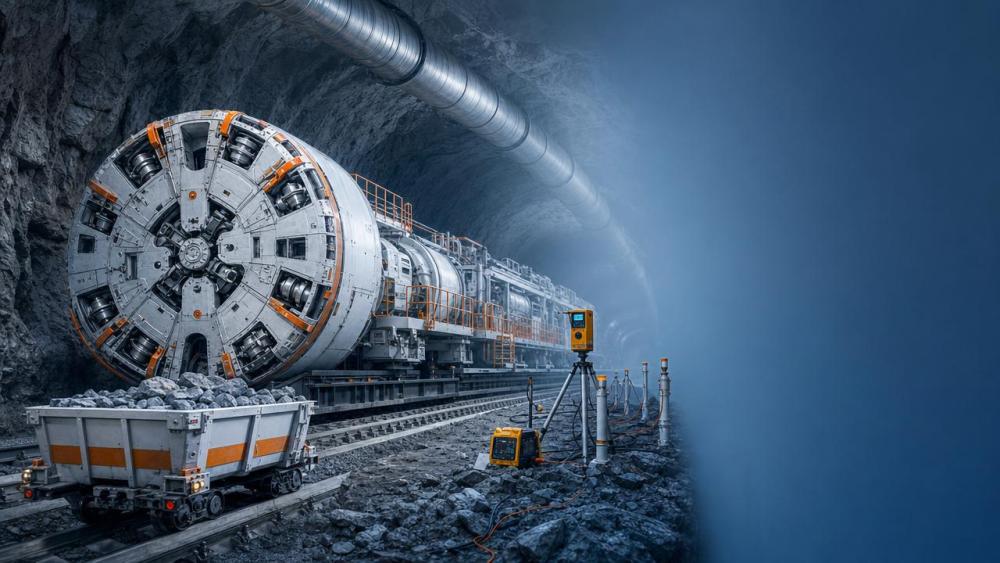
Many underground projects now use smarter TBMs, pipe jacking systems, drilling jumbos, underground LHDs, telematics, gas monitoring, and semi-autonomous functions. These tools can reduce exposure and improve visibility. However, they do not remove uncertainty. They only help if project teams convert data into disciplined operational decisions.
One common gap is the belief that automation automatically means safety maturity. In reality, advanced machines can reduce some manual hazards while introducing new failure modes. Sensor blind spots, software logic limits, remote-control lag, misinterpreted alarms, and weak maintenance routines can create risks that are less visible than traditional ones but no less serious.
Another issue is fragmented responsibility. Quality teams may track compliance. Safety teams may monitor incidents. Equipment teams may manage uptime. Geotechnical teams may review ground conditions. But if these functions do not share one risk picture, warning signs remain isolated. Underground construction safety weakens when information moves slower than the work face.
There is also a persistent execution problem. Procedures may exist on paper, yet actual adherence varies by shift, contractor, supervisor, and local culture. In underground environments, small differences in lockout discipline, scaling checks, face inspection, segment handling, or ventilation verification can have outsized consequences. A strong system is not the same as a consistently applied one.
Which risks matter most to quality control and safety managers underground?
Quality control and safety managers usually care most about the risks that can escalate quickly and affect both people and asset integrity. Ground instability remains one of the top concerns. Whether in hard-rock tunnelling, soft-ground pipe jacking, or underground mining drifts, geological uncertainty can invalidate assumptions faster than paperwork can catch up.
Water ingress is another high-priority risk because it combines safety exposure, equipment vulnerability, and production disruption. Unexpected water inflow can destabilize the working face, interfere with electrical systems, degrade visibility, increase slip hazards, and overwhelm drainage plans. The problem often begins long before the event, through incomplete site investigation or weak trigger thresholds.
Ventilation and atmospheric control remain central in confined underground spaces. This is especially true where diesel fleets, blasting activity, dust generation, or gas presence create changing air quality conditions. Even as electrification expands, underground construction safety still depends on robust airflow design, gas detection integrity, dust suppression, and strict response protocols when readings move outside safe limits.
Mobile equipment interaction is another major concern. Underground LHDs, dump trucks, utility vehicles, drilling rigs, and service machines operate in narrow spaces with limited visibility. Automation and remote control can reduce direct human exposure, but they do not eliminate collision, entrapment, or unexpected movement risks. Traffic rules, exclusion zones, and machine health must still be enforced tightly.
Finally, managers are highly concerned about procedural drift. Many incidents happen not because standards are absent, but because teams normalize deviation over time. A skipped inspection, a delayed cutterhead check, a temporary ventilation workaround, or an undocumented repair can become accepted under schedule pressure. This is often where underground construction safety starts to erode quietly.
How do geology, design assumptions, and field reality create hidden safety exposure?
Underground work is shaped by geology more than surface construction is. Rock mass quality, faulting, groundwater, abrasive zones, mixed faces, squeezing ground, and gas-bearing strata can all affect excavation behavior suddenly. The challenge for safety managers is that project decisions are often built on investigations that are necessarily incomplete, especially over long alignments.
That means design assumptions must be treated as living hypotheses rather than fixed truth. If a TBM was expected to encounter stable rock but instead meets fractured, water-bearing ground, the original support logic, advance rate targets, and cutter intervention plans may all become less safe. The same applies to pipe jacking in variable urban ground or jumbos working in unexpected stress zones.
Hidden exposure often appears when early warning signs are not tied to clear action thresholds. Increased cutter wear, rising torque, abnormal slurry behavior, unexpected settlement, changing vibration profiles, roof scaling frequency, or repeated minor water seepage are not just operational issues. They are safety indicators that should trigger review before a critical event occurs.
Quality control plays a direct role here. If inspection records, geological mapping, grouting logs, segment quality checks, and machine performance trends are not connected, managers lose the ability to distinguish random variation from emerging instability. Underground construction safety improves when technical and quality data are treated as part of one decision system, not separate reports.
Where do human factors still undermine underground construction safety?
Human factors remain one of the largest causes of safety gaps because underground operations depend on judgment under pressure. Workers and supervisors often make decisions in noisy, dark, wet, time-sensitive environments. Even skilled teams can misread conditions, underestimate change, or rely too heavily on routine when faced with schedule demands.
Fatigue is a serious issue, especially on long shifts, remote sites, and high-output projects. Reduced alertness affects hazard recognition, machine interaction, pre-start inspections, and emergency response quality. In underground settings, where conditions are constrained and consequences escalate fast, a small drop in concentration can have a disproportionate effect.
Communication failures are equally dangerous. Shift handovers may omit changes in ground conditions, temporary repairs, blocked routes, gas trends, or equipment defects. Contractors may not receive the same risk context as principal operators. Remote operators may lack the informal cues that on-face personnel notice immediately. Safety systems fail when critical context does not move with the work.
Competency is more than certification. A worker may be qualified on paper but still lack deep understanding of machine limits, geological warning signs, or response priorities during abnormal conditions. As equipment becomes more digital and semi-autonomous, training must also evolve. Teams need to understand not only how to operate machines, but when not to trust them fully.
There is also the issue of behavioral normalization. If crews repeatedly work around small defects or incomplete controls without immediate consequence, they may begin to see those conditions as acceptable. Quality and safety managers need to identify these patterns early, because normalization often masks the path to more severe incidents.
Why does equipment reliability still have such a strong safety impact?
In underground construction, equipment reliability is a safety issue, not just a maintenance KPI. A TBM with unstable cutterhead performance, a drilling jumbo with inconsistent boom control, an LHD with brake or steering degradation, or a ventilation fan with reduced output can create immediate exposure. Reliability determines whether planned controls actually function under real conditions.
Predictive maintenance helps, but only if the organization responds effectively to the signals. Telematics can identify overheating, vibration anomalies, hydraulic pressure changes, and battery system concerns. Yet if maintenance backlogs grow or production targets override intervention windows, the information loses protective value. Data only improves underground construction safety when it leads to action.
Electrification is changing the risk profile as well. Battery-electric underground loaders and mining trucks can reduce diesel emissions and improve underground air quality significantly. That is a major safety gain. However, battery systems, charging infrastructure, thermal management, high-voltage isolation, and emergency response procedures introduce new control requirements that teams must master thoroughly.
Remote and autonomous functions also need realistic governance. They can reduce operator exposure in hazardous zones, but they cannot compensate for poor route design, weak geofencing, sensor contamination, or unclear handoff between manual and autonomous modes. Safety managers should evaluate not just whether technology exists, but whether the operating envelope is clearly defined and respected.
What operational weaknesses most often turn manageable hazards into incidents?
The biggest operational weakness is poor change management. Underground conditions change constantly, yet many sites still struggle to reassess risk fast enough when geology shifts, equipment degrades, water appears, or a support method is altered. If teams continue under yesterday’s assumptions, a manageable hazard can become an incident within one shift.
Inspection quality is another weak point. Pre-start checks, ground inspections, segment inspections, ventilation verification, emergency refuge checks, and lifting gear examinations are often treated as routine tasks. But routine can become superficial. Managers should ask whether inspections are merely completed, or whether they reliably detect the early signs of unsafe drift.
Emergency preparedness is also uneven across projects. Many teams have plans, but not all have realistic readiness. In underground construction safety, response time, route clarity, communications reliability, refuge capability, and role familiarity matter more than document quality alone. Drills should reflect actual scenarios, including power loss, smoke, water ingress, and immobilized equipment.
Another operational weakness is incomplete contractor integration. Specialist subcontractors may perform critical activities such as grouting, maintenance, blasting support, segment logistics, or utility work. If their controls, permit systems, or reporting habits are weaker than the principal site standard, the overall safety barrier is weakened. Underground risk does not respect contractual boundaries.
How should safety and quality leaders close the most persistent gaps?
First, link safety assurance to verification, not assumption. It is not enough to believe the ground model, the machine condition, or the procedure is adequate. Managers should define what evidence confirms that each critical control is actually working. This includes support installation quality, gas detector calibration, cutter inspection intervals, drainage capacity, and communication redundancy.
Second, build trigger-based decision rules. Underground construction safety improves when abnormal indicators are matched to predefined escalation thresholds. For example, specify what level of settlement, inflow, cutter wear, torque increase, convergence movement, or air-quality deviation requires pause, review, redesign, or specialist sign-off. Clear triggers reduce ambiguity under production pressure.
Third, integrate quality, geotechnical, safety, and maintenance data into one operational review rhythm. Weekly dashboards are useful, but shift-level alignment is often more important. If the site can connect defects, geological observations, machine trends, and near-miss reports quickly, it becomes easier to see patterns before they become events.
Fourth, focus training on abnormal conditions rather than only normal operations. Teams usually know how work should look when everything goes well. The real test is whether they recognize and respond correctly when face pressure changes unexpectedly, an autonomous vehicle loses confidence, ventilation drops, or support quality is in doubt. Scenario-based drills create stronger readiness.
Fifth, measure procedural discipline in the field. Audits should look for practical adherence, not only documentation. Are exclusion zones actually respected? Are shift handovers complete? Are temporary repairs tracked and closed? Are defects recurring? Are stop-work decisions supported? These indicators reveal the true state of underground construction safety more accurately than policy language alone.
What should a mature underground safety culture look like now?
A mature culture does not assume that advanced equipment guarantees safe outcomes. It recognizes that technology, people, and geology must be managed as one dynamic system. In that culture, production goals are real, but they do not override the conditions required to achieve them safely and repeatedly.
It also treats weak signals seriously. Small anomalies are investigated early rather than explained away. Operators are encouraged to report uncertainty, not just incidents. Supervisors are expected to escalate changing conditions quickly. Quality personnel are seen as operational partners, not only compliance checkers. This mindset shortens the gap between detection and corrective action.
Most importantly, a mature culture understands that underground construction safety is won through consistency. The safest organizations are not the ones with the most impressive slides or the latest isolated technology purchase. They are the ones that keep standards intact under pressure, maintain equipment rigorously, verify controls continuously, and respond to changing ground honestly.
What still causes gaps in underground construction safety is therefore not one single flaw. It is the accumulation of disconnects between design and geology, machine capability and maintenance, alarms and response, procedure and practice, and responsibility and accountability. For quality control and safety managers, closing those gaps means building a system where evidence, discipline, and early intervention matter more than optimism.
Related News

How to Evaluate European Drill-and-Blast Tunnelling Contractors for Complex Projects
Drill and blast tunnelling contractors Europe: learn how to assess geology expertise, blast control, equipment reliability, safety, and programme resilience for complex projects.

Which Trenchless Construction Technique Fits Your Utility Crossing Conditions?
Trenchless construction techniques compared for utility crossings: choose HDD, microtunnelling, pipe jacking, or auger boring based on ground, accuracy, access, and risk.

What Is Driving Metro Tunnelling Demand Across Southeast Asia’s Major Cities?
Metro tunnelling Southeast Asia is accelerating as major cities tackle congestion, flooding, and connectivity. Explore the market forces, technical risks, and opportunities shaping demand.

Hard Rock Tunnelling in Australia: Selecting Methods for Variable Ground Conditions
Hard rock tunnelling in Australia: compare TBM, drill-and-blast and hybrid methods to manage variable ground, reduce risk and protect project costs.

Hydropower Tunnel Excavation: Selecting Methods for Variable Rock Conditions
Hydropower tunnel excavation methods for variable rock conditions: compare TBM, drill-and-blast, and hybrid strategies to improve safety, progress, and project control.

How to Select Underground Safety Equipment for Tunnelling by Hazard and Work Zone
Underground Safety Equipment for tunnelling: match protection to hazards, work zones, compliance, and emergency needs with this practical selection guide.

EPB or Slurry Shield? Selecting Soft-Ground Tunnelling Equipment by Soil Conditions
Tunnel Excavation Equipment for soft ground: compare EPB and slurry shields by soil, groundwater, settlement risk, and project logistics to choose confidently.

How to Specify TBM Backup System Parts for Reliable Long-Distance Tunnelling
TBM backup system parts: learn how to specify reliable spares for long-distance tunnelling, reduce downtime, ensure compatibility, and speed underground recovery.
How to Size Open Pit Mining Trucks for Haul Distance, Grade, and Payload?
Open Pit Mining Trucks: learn how to match payload, haul distance, grade, road resistance, and loading capacity for safer, lower-cost mine operations.
Related News
- 00
0000-00
How to Evaluate European Drill-and-Blast Tunnelling Contractors for Complex Projects - 00
0000-00
Which Trenchless Construction Technique Fits Your Utility Crossing Conditions? - 00
0000-00
What Is Driving Metro Tunnelling Demand Across Southeast Asia’s Major Cities? - 00
0000-00
Hard Rock Tunnelling in Australia: Selecting Methods for Variable Ground Conditions - 00
0000-00
Hydropower Tunnel Excavation: Selecting Methods for Variable Rock Conditions
Weekly Insights
Stay ahead with our curated technology reports delivered every Monday.