Underground Digitalization in Mining: Data, Connectivity, and Safety Use Cases
Underground Digitalization is redefining how mining teams control risk, verify quality, and sustain productivity in harsh subsurface environments.
For quality control and safety managers, the real value is not novelty, but earlier warnings, stronger evidence, and fewer uncontrolled decisions.
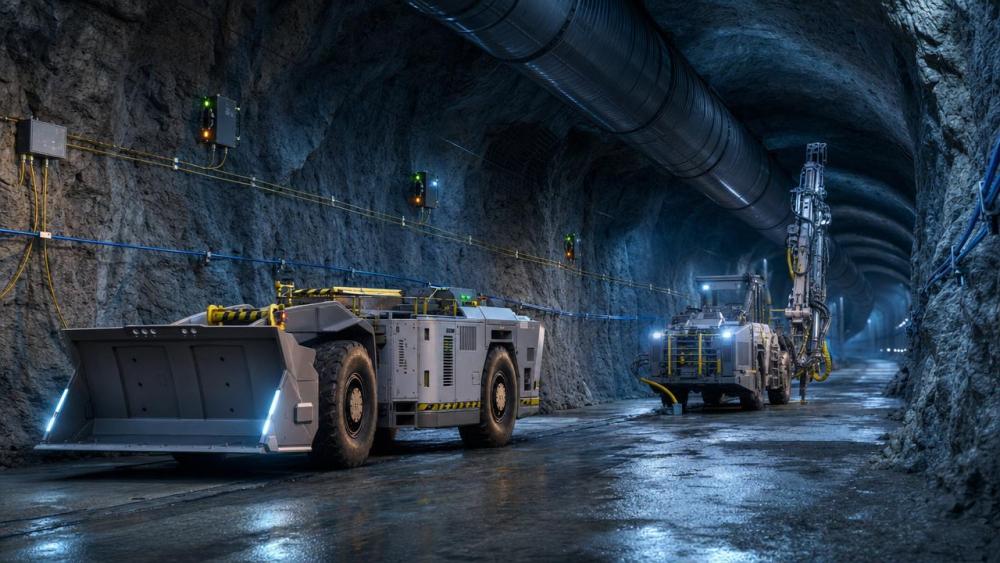
Connected data ecosystems now link LHDs, drilling jumbos, ventilation, ground monitoring, and workforce tracking into a more auditable operating picture.
What Safety and Quality Teams Need From Underground Digitalization
The core search intent behind Underground Digitalization is practical: managers want to know which technologies reduce risk and improve control underground.
They are not mainly looking for abstract digital transformation language, but for credible use cases, data requirements, and implementation priorities.
Safety managers care about hazard detection, emergency response, exposure reduction, and whether digital systems improve decisions during abnormal conditions.
Quality control personnel care about process consistency, inspection evidence, equipment performance records, and traceability across drilling, hauling, and support activities.
The strongest digital programs therefore begin with operational pain points, not dashboards, slogans, or isolated technology pilots without accountable owners.
A useful underground digitalization roadmap should answer three questions: what must be measured, how data moves, and who acts on it.
Why Underground Mines Need a Different Digital Strategy
Underground environments make digitalization harder than surface operations because connectivity, visibility, positioning, and maintenance access are all constrained.
Rock mass, tunnel geometry, humidity, vibration, dust, and electromagnetic interference can weaken signals and damage poorly protected sensing equipment.
For this reason, underground digitalization must be engineered as a resilient safety system, not treated as a simple IT upgrade.
Data quality also matters more underground because supervisors often rely on indirect evidence when people cannot safely inspect a location.
If sensor readings are delayed, inconsistent, or poorly calibrated, digital systems may create false confidence instead of operational control.
The best projects define acceptable data accuracy, latency, uptime, and alarm thresholds before selecting platforms, devices, or visualization tools.
The Data Layer: Turning Underground Events Into Reliable Evidence
Every effective digital mine starts with a disciplined data layer that captures events consistently across machines, workers, infrastructure, and geotechnical conditions.
For safety teams, valuable data includes gas readings, ventilation status, personnel location, vehicle proximity, ground movement, and emergency equipment readiness.
For quality teams, important records include drilling accuracy, bolt installation parameters, machine utilization, maintenance actions, payloads, and shift-level exceptions.
These data points become powerful only when they are time-stamped, location-referenced, and connected to accountable work processes.
A drilling jumbo record, for example, should link planned hole design, actual drilling deviation, operator action, and blast outcome.
An LHD record should connect route, load cycle, battery state, braking behavior, proximity events, and maintenance history.
This structure allows managers to move from subjective reporting toward evidence-based analysis of variation, compliance, and recurring risk patterns.
It also supports audits, incident investigations, contractor management, and continuous improvement without relying only on handwritten logs.
Connectivity: The Backbone of Real-Time Underground Control
Connectivity is often the decisive factor separating a useful digital system from a disconnected collection of sensors and machines.
Modern underground operations use combinations of leaky feeder, Wi-Fi, private LTE, 5G, fiber, and mesh networks depending on depth and layout.
No single network type suits every mine, so planners should match connectivity design to operational risk and required response times.
Low-latency connections are essential for tele-remote LHDs, collision avoidance, autonomous navigation, and rapid emergency communication.
Less time-critical applications, such as maintenance downloads or shift reports, can tolerate delayed synchronization if data integrity remains protected.
Safety managers should request coverage maps, dead-zone analysis, failover plans, and testing evidence before approving critical digital use cases.
Quality managers should verify whether network interruptions create missing records, duplicated data, or untraceable manual workarounds.
Reliable connectivity is not only about signal strength; it is about preserving operational truth when conditions change underground.
Safety Use Case 1: Real-Time Hazard Monitoring
Real-time hazard monitoring is one of the clearest safety cases for Underground Digitalization because it shortens the interval between detection and response.
Gas sensors, airflow meters, heat monitoring, dust measurement, and ground movement instruments can identify deteriorating conditions earlier than routine inspections.
When these systems are integrated, a ventilation fault can trigger alerts, restrict access, and guide evacuation decisions faster.
Ground monitoring data can help geotechnical teams identify unstable areas before crews enter headings, stopes, or rehabilitation zones.
However, alerts must be carefully governed because excessive false alarms encourage alarm fatigue and unsafe normalization of warnings.
Each alarm should have a documented action rule, responsible role, escalation path, and verification method after the response.
This transforms monitoring from passive observation into a controlled safety workflow supported by evidence and accountability.
Safety Use Case 2: Personnel Tracking and Emergency Response
Knowing who is underground, where they are, and whether they are moving is fundamental during emergencies.
Digital personnel tracking systems can support mustering, restricted-area control, lone-worker supervision, and faster rescue coordination.
In routine operations, tracking also helps supervisors understand exposure time near active headings, mobile equipment, or ventilation-limited zones.
For these systems to earn trust, workers must understand that the purpose is safety control, not unfair surveillance.
Clear privacy rules, access controls, and transparent incident-use policies reduce resistance and support adoption.
Safety managers should test tracking accuracy in ramps, crosscuts, workshops, refuge chambers, and areas with known signal problems.
Emergency drills should include digital tracking validation, manual backup procedures, and communication checks under realistic underground conditions.
Safety Use Case 3: Collision Avoidance and Mobile Equipment Control
Mobile equipment interactions remain a major underground risk because visibility is poor and machines operate in confined headings.
Collision avoidance systems combine proximity detection, vehicle-to-vehicle communication, operator alerts, speed control, and sometimes automated intervention.
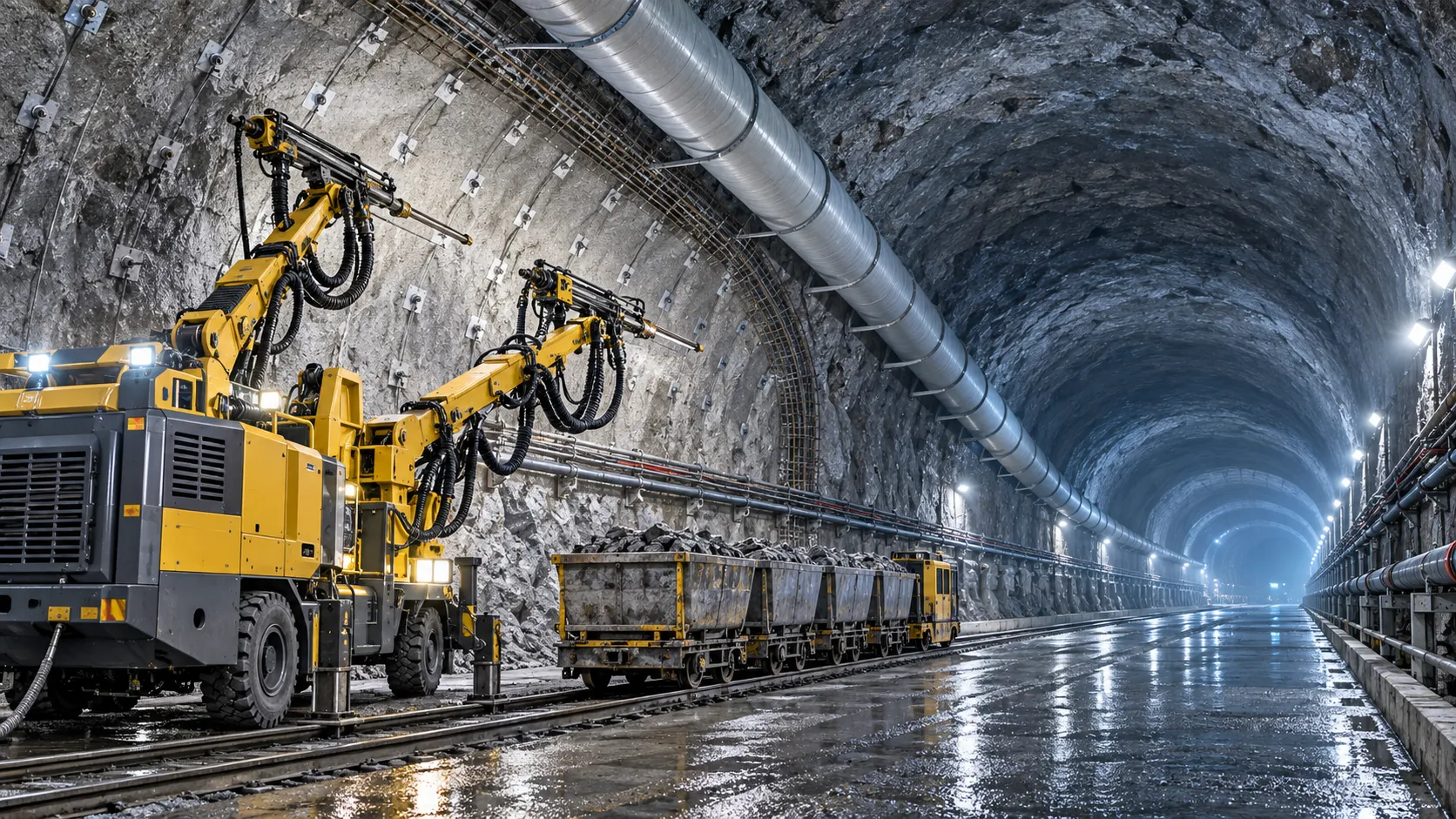
For LHD loaders, haul trucks, drilling jumbos, and service vehicles, these systems can reduce high-severity interaction events.
Yet performance depends on calibration, tag discipline, equipment compatibility, and clear traffic rules inside the mine.
Digital controls should be paired with physical controls, including traffic segregation, berms, lighting, signage, and disciplined parking zones.
Quality teams can use event data to identify repeated near-miss locations, operator training gaps, or design weaknesses in traffic routes.
The goal is not simply fewer alarms, but fewer uncontrolled interactions and better-designed underground movement systems.
Quality Use Case 1: Drilling Accuracy and Ground Support Verification
Drilling accuracy has direct effects on blast quality, dilution control, overbreak, underbreak, and ground support performance.
Digital drilling systems can compare planned patterns with actual hole positions, angles, depths, pressures, and penetration rates.
This information allows quality teams to identify deviations before blasting, rather than discovering problems after excavation.
For bolting and support work, digital records can document bolt location, torque, resin timing, mesh placement, and installation exceptions.
Such records are valuable during inspections, incident reviews, contractor evaluations, and compliance audits.
They also help engineers correlate support installation quality with subsequent ground behavior and maintenance requirements.
Over time, digital verification supports better standards, fewer rework cycles, and more consistent excavation outcomes.
Quality Use Case 2: Equipment Health and Maintenance Control
Underground equipment failures can stop production, expose mechanics to hazards, and create cascading schedule impacts.
Digital maintenance systems use telemetry from engines, batteries, hydraulics, brakes, tires, motors, and control units to detect degradation.
For battery-electric LHDs and trucks, monitoring battery temperature, charging cycles, state of health, and power demand is especially important.
Predictive maintenance is not magic; it depends on clean failure histories, sensor reliability, and disciplined work order management.
Quality managers should evaluate whether maintenance recommendations are explainable and whether technicians confirm findings in the field.
When done well, equipment data reduces unplanned downtime, improves asset utilization, and supports safer maintenance planning.
It also gives procurement teams stronger evidence when comparing machine reliability, component life, and supplier support performance.
Automation and Remote Operation: Reducing Exposure Without Losing Control
Automation and remote operation are among the most visible outcomes of Underground Digitalization, especially for loading and hauling tasks.
Tele-remote LHD operation can remove workers from unsupported ground, hot areas, blast re-entry zones, and poor ventilation conditions.
Autonomous tramming can improve repeatability where routes are stable, mapped, and protected from unpredictable vehicle or pedestrian interactions.
However, automation must not be introduced faster than the mine can manage exceptions, maintenance, cybersecurity, and operator competency.
Remote operators need high-quality video, machine feedback, latency control, and clear procedures for degraded network conditions.
Supervisors also need rules for when automated equipment should slow, stop, reverse, or return to manual control.
The safest automation programs define boundaries first, then expand gradually as evidence confirms stable performance.
How to Evaluate the Business Case Without Ignoring Risk
For many mines, the business case for digitalization is strongest when safety, quality, productivity, and compliance are evaluated together.
A narrow productivity-only calculation may undervalue avoided incidents, fewer rework cycles, improved audits, and better maintenance planning.
Useful metrics include lost-time exposure reduction, near-miss reduction, equipment availability, drilling deviation, support compliance, and emergency response time.
Managers should also consider hidden costs, including network maintenance, device calibration, cybersecurity, training, data governance, and system integration.
A pilot project should have measurable success criteria, baseline data, user feedback, and a plan for scaling beyond one heading.
The best investments solve a recurring operational problem and create reusable digital infrastructure for additional use cases.
This is why connectivity and data governance often deliver broader value than a single dashboard or standalone application.
Implementation Priorities for Safety and Quality Managers
Start by ranking the most serious underground risks and the quality failures that most often create rework, delay, or compliance exposure.
Then identify which data is missing, unreliable, delayed, or trapped inside equipment systems that cannot be easily analyzed.
Build a cross-functional team including operations, safety, quality, maintenance, engineering, IT, and frontline equipment operators.
Before rollout, define ownership for alarms, inspections, corrective actions, data validation, and system maintenance.
Training should focus on decisions and procedures, not only on how to use screens or handheld devices.
Frontline workers should be invited to report unusable alerts, confusing interfaces, dead zones, and practical workflow conflicts.
Digitalization succeeds underground when it improves daily control, not when it creates extra reporting burden without visible benefits.
Common Mistakes That Reduce Digitalization Value
One common mistake is collecting large volumes of data without defining which decisions the data should improve.
Another is assuming that a vendor platform alone can fix weak procedures, inconsistent inspections, or unclear accountability.
Mines also struggle when safety-critical systems depend on networks that have not been tested under real operating conditions.
Poor change management can cause operators to bypass digital tools, especially if alerts feel inaccurate or slow work unnecessarily.
Data silos are another major barrier, because separate maintenance, safety, production, and contractor systems limit root-cause analysis.
Managers should avoid judging success only by installation milestones, because adoption and verified behavior change matter more.
The most mature operations continuously tune their digital systems as mine layouts, equipment fleets, and risk profiles evolve.
Conclusion: Digital Control Is Becoming a Safety Standard
Underground Digitalization is no longer only a future concept for advanced mines; it is becoming a practical control framework.
For safety managers, its value lies in earlier hazard recognition, better exposure management, and stronger emergency coordination.
For quality control teams, it provides traceable evidence, more consistent execution, and clearer links between process variation and outcomes.
The highest returns come from connecting data, connectivity, automation, and governance around real underground decisions.
Mines should begin with high-risk use cases, prove reliability in harsh conditions, and scale systems that improve measurable control.
When implemented carefully, digitalization helps underground teams work with greater confidence, stronger compliance evidence, and fewer preventable surprises.