
DR Congo Cuts EV Mining Truck Duty, Adds Local Service Rule





On June 9, 2026, the Democratic Republic of the Congo introduced Decree No. 2026/018 under its mining law framework, combining a lower import duty for qualifying EV mining trucks with a new market-entry condition tied to local after-sales support. For importers, miners, procurement teams, logistics providers, and service partners, the development is worth close attention because the tariff incentive is now directly linked to a documented local maintenance arrangement and digital filing before customs clearance.
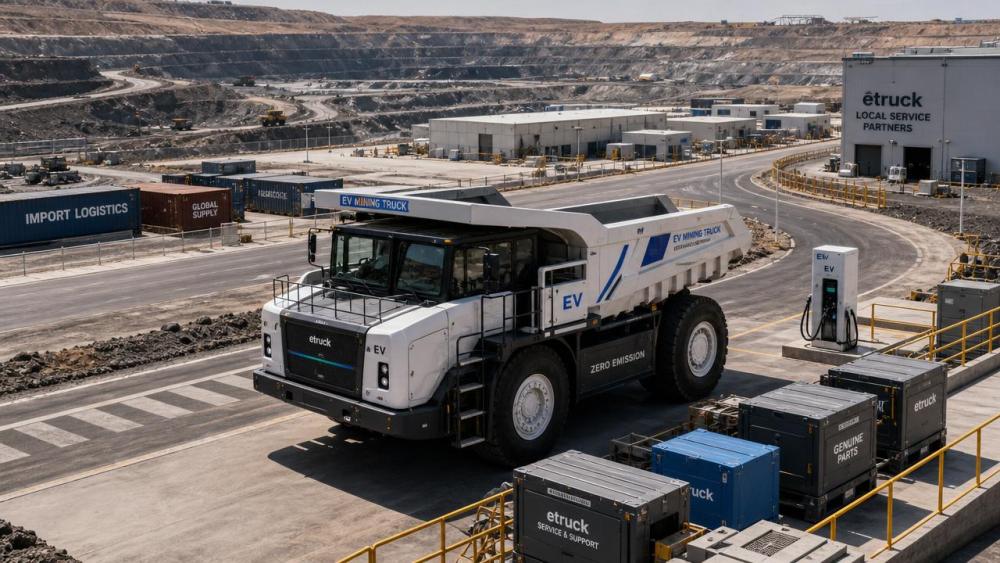
What the new rule changes in practice
According to the information provided, the Democratic Republic of the Congo issued Decree No. 2026/018 on June 9, 2026.
The decree lowers the import tariff for qualifying pure electric mining transport vehicles, or EV Mining Trucks, from 12% to 3.5%.
At the same time, all importers are required to sign a three-year maintenance framework agreement with a local service provider certified by DGM.
The agreement must also be uploaded to the National Mining Digital Platform, or NMIS, for record filing. If that filing is not completed, customs clearance will not be granted.
Why the tariff cut does not stand alone
Import planning now depends on service compliance
From an industry perspective, importers are affected not only by the lower duty rate but also by a new precondition for entry. The key operational impact is that customs clearance is tied to a signed maintenance framework agreement and NMIS filing, which means procurement and shipping plans may now need to be coordinated with local service contracting earlier than before.
Mining buyers may need to review supplier readiness
For mining companies and procurement teams, the rule may influence vendor evaluation and delivery timing. Analysis shows that a supplier offering eligible EV mining trucks may also need to demonstrate that its local maintenance arrangement is in place, especially where project schedules depend on timely import clearance and post-delivery support continuity.
Local service providers move closer to the transaction chain
For after-sales and field service companies, the measure places DGM-certified local providers into a more central compliance role. What deserves closer attention is that maintenance support is no longer only a commercial add-on; under the stated rule, it becomes part of the import pathway itself.
Supply-chain intermediaries may face additional document coordination
Logistics coordinators, customs-facing teams, and trade service providers may also be affected because the filing requirement adds a document-control step linked to NMIS. Observably, the transaction chain may now require tighter coordination between the exporter, importer, local service partner, and customs preparation teams.
What companies should check now
Confirm whether the product qualifies for the reduced duty
Companies should first verify whether the EV mining truck model in question falls within the scope of the stated incentive, because the tariff reduction applies to qualifying products rather than to all equipment by default.
Review local partner eligibility before shipment
Analysis shows that the status of the local maintenance provider matters as much as the equipment itself. Importers should pay close attention to whether the service partner is DGM-certified and whether the three-year framework agreement is complete before cargo reaches the clearance stage.
Prepare document flows around NMIS filing
What deserves closer attention is the filing sequence. Because the maintenance agreement must be uploaded to NMIS and lack of filing blocks customs clearance, companies should review who is responsible for document preparation, submission timing, and record consistency across trade and compliance teams.
Track how the rule appears in tenders and delivery terms
If procurement, tendering, or delivery commitments involve EV mining trucks for the Congolese mining market, companies should monitor whether contract language, bid documentation, or delivery conditions begin to reflect the local maintenance requirement more explicitly. The input does not provide execution detail beyond the rule itself, so this remains an area to watch rather than a confirmed market outcome.
How this should be read at this stage
Analysis shows that this is more than a simple duty adjustment. The combination of tariff relief and mandatory local maintenance filing suggests a policy approach that links import incentives with service localization and administrative traceability.
At the same time, it is more appropriate to understand this as both an implemented rule change and an execution signal that still requires observation. The confirmed facts establish the duty reduction, the three-year local maintenance requirement, the DGM certification condition, and the NMIS filing prerequisite. What remains to be watched is how consistently the rule is applied in operational practice, how market participants adapt documentation processes, and whether procurement documents begin to incorporate the requirement in a more formal way.
What the market can reasonably take from it
For the EV mining truck segment, this development is best understood as a compliance-linked market access change rather than a tariff story alone. The lower duty rate may improve import economics for qualifying products, but the practical benefit is inseparable from the ability to secure an eligible local maintenance arrangement and complete NMIS filing.
In that sense, the current signal is clear: companies serving this market should read the measure as an already relevant rule for trade execution, while continuing to watch for further clarification in implementation practice, compliance interpretation, and market feedback.
Basis of this article and points for follow-up
This article is generated from the user-provided news title, event date, and event summary. The information available for confirmed facts is limited to the stated decree, the tariff change, the DGM-certified local maintenance agreement requirement, the NMIS filing requirement, and the customs clearance consequence for non-filing.
For this type of development, relevant source categories typically include official government notices, regulator releases, customs or trade authority updates, mining-sector administrative publications, industry association notices, standards-related documents, and reporting by authoritative trade media. A specific official source link was not provided in the input, so further verification remains necessary.
Items that still warrant continued observation include any detailed implementation guidance, practical certification interpretation, NMIS filing procedures, changes in tender documents, market feedback from importers and service providers, and how enterprises execute the new requirement in actual delivery workflows.
Related News

How to Evaluate European Drill-and-Blast Tunnelling Contractors for Complex Projects
Drill and blast tunnelling contractors Europe: learn how to assess geology expertise, blast control, equipment reliability, safety, and programme resilience for complex projects.

Which Trenchless Construction Technique Fits Your Utility Crossing Conditions?
Trenchless construction techniques compared for utility crossings: choose HDD, microtunnelling, pipe jacking, or auger boring based on ground, accuracy, access, and risk.

What Is Driving Metro Tunnelling Demand Across Southeast Asia’s Major Cities?
Metro tunnelling Southeast Asia is accelerating as major cities tackle congestion, flooding, and connectivity. Explore the market forces, technical risks, and opportunities shaping demand.

Hard Rock Tunnelling in Australia: Selecting Methods for Variable Ground Conditions
Hard rock tunnelling in Australia: compare TBM, drill-and-blast and hybrid methods to manage variable ground, reduce risk and protect project costs.

Hydropower Tunnel Excavation: Selecting Methods for Variable Rock Conditions
Hydropower tunnel excavation methods for variable rock conditions: compare TBM, drill-and-blast, and hybrid strategies to improve safety, progress, and project control.

How to Select Underground Safety Equipment for Tunnelling by Hazard and Work Zone
Underground Safety Equipment for tunnelling: match protection to hazards, work zones, compliance, and emergency needs with this practical selection guide.

EPB or Slurry Shield? Selecting Soft-Ground Tunnelling Equipment by Soil Conditions
Tunnel Excavation Equipment for soft ground: compare EPB and slurry shields by soil, groundwater, settlement risk, and project logistics to choose confidently.
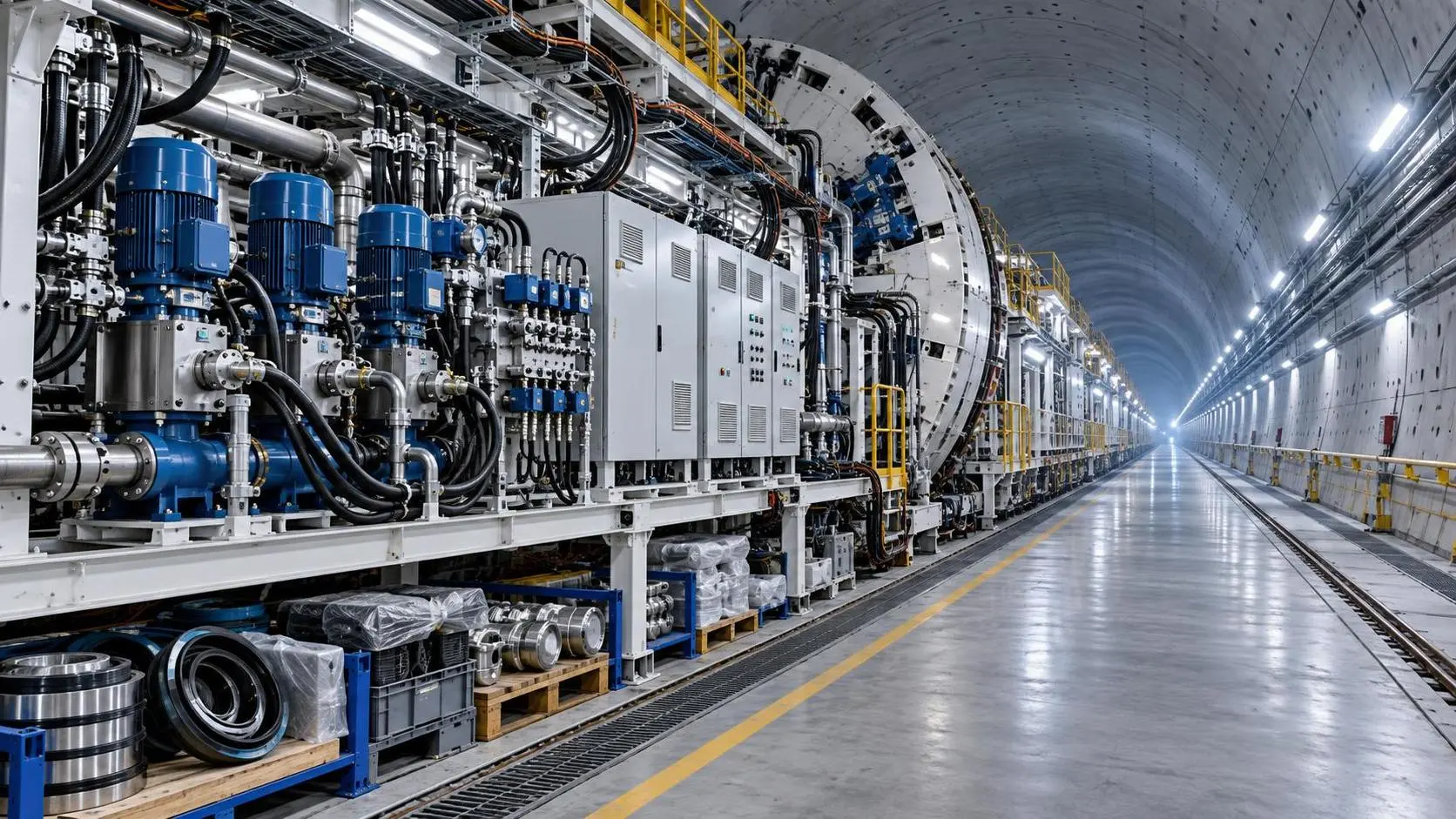
How to Specify TBM Backup System Parts for Reliable Long-Distance Tunnelling
TBM backup system parts: learn how to specify reliable spares for long-distance tunnelling, reduce downtime, ensure compatibility, and speed underground recovery.

How to Size Open Pit Mining Trucks for Haul Distance, Grade, and Payload?
Open Pit Mining Trucks: learn how to match payload, haul distance, grade, road resistance, and loading capacity for safer, lower-cost mine operations.
Related News
- 00
0000-00
How to Evaluate European Drill-and-Blast Tunnelling Contractors for Complex Projects - 00
0000-00
Which Trenchless Construction Technique Fits Your Utility Crossing Conditions? - 00
0000-00
What Is Driving Metro Tunnelling Demand Across Southeast Asia’s Major Cities? - 00
0000-00
Hard Rock Tunnelling in Australia: Selecting Methods for Variable Ground Conditions - 00
0000-00
Hydropower Tunnel Excavation: Selecting Methods for Variable Rock Conditions
Weekly Insights
Stay ahead with our curated technology reports delivered every Monday.