
MSCI to Release Global Market Accessibility Review on June 18





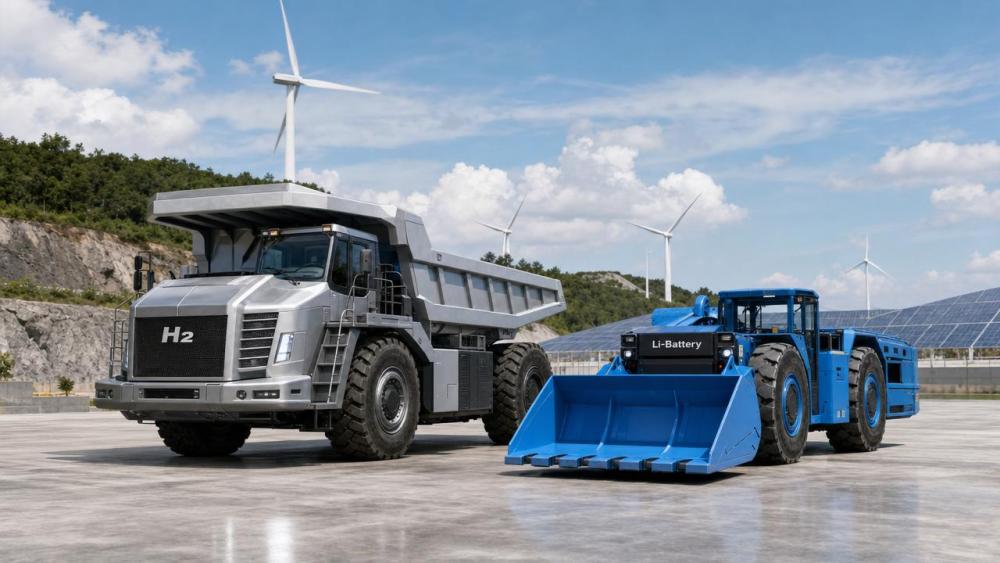
On June 18, 2026, MSCI Inc. will publish its annual Global Market Accessibility Review — a key determinant of ESG rating weightings and green capital allocation for emerging-market-listed companies. The outcome directly affects international financing conditions and procurement credibility for manufacturers of zero-emission mining equipment, particularly those supplying electric and hydrogen-powered haul trucks, battery-powered LHDs (Load-Haul-Dump vehicles), and related infrastructure solutions.
Event Overview
MSCI will announce the 2026 Global Market Accessibility Review results on June 18, 2026. This review assesses the operational, regulatory, and market infrastructure conditions affecting foreign investor access to equity markets in emerging economies. It informs adjustments to country classifications (e.g., from ‘Frontier’ to ‘Emerging’) and influences how ESG data is weighted in MSCI’s ESG Ratings and Index methodologies.
Industries Affected
Direct Trade Enterprises: Export-oriented equipment suppliers — especially those selling EV/hydrogen mining trucks and battery LHDs to resource-rich countries — may see improved eligibility for ESG-linked trade finance instruments. A favorable review outcome could strengthen their standing in international tender processes where lenders require third-party ESG validation.
Raw Material Procurement Enterprises: Mining operators in South Africa, Chile, and other resource-exporting nations often rely on sustainability-linked loans to fund fleet electrification. If the review upgrades market accessibility metrics for China or other manufacturing hubs, lenders may more readily extend such financing — indirectly increasing demand for upstream battery materials and critical minerals sourced by Chinese OEMs’ supply chains.
Manufacturing Enterprises: Domestic producers of zero-emission underground and surface mining equipment face heightened scrutiny on ESG disclosure quality and verification rigor. While the review does not assess individual firms, its implications for index inclusion and benchmark alignment raise expectations for auditable emissions data, supply chain due diligence, and lifecycle reporting — especially for publicly listed manufacturers.
Supply Chain Service Providers: Logistics, certification, and ESG advisory firms supporting mining equipment exporters may experience increased demand for services aligned with MSCI-aligned frameworks — including scope 3 emissions tracking, responsible mineral sourcing audits, and green loan documentation support.
Key Focus Areas and Recommended Actions
Monitor ESG Data Readiness for Index-Linked Clients
Manufacturers serving clients whose capital costs are tied to MSCI ESG Indices should verify that their product-level environmental performance data (e.g., kWh/km efficiency, battery chemistry transparency, end-of-life recycling protocols) meets the granularity expected by international green lenders — not just domestic compliance standards.
Engage with Local Financial Institutions on ESG-Linked Loan Structuring
Exporters targeting South African or Chilean mining customers should proactively collaborate with local development banks and commercial lenders to co-develop financing templates that reference MSCI’s ESG weighting logic — helping buyers meet loan covenants tied to equipment decarbonization milestones.
Align Sustainability Reporting with MSCI’s ESG Rating Methodology
Publicly listed equipment makers should map their current disclosures against MSCI’s ESG Ratings methodology (v4.0), paying particular attention to ‘Product Carbon Footprint’ and ‘Supply Chain Labor Standards’ pillars — areas increasingly weighted in emerging-market assessments following prior review cycles.
Editorial Perspective / Industry Observation
Observably, the 2026 review reflects a broader shift: ESG integration is no longer solely about corporate governance or climate risk disclosure — it is becoming a functional enabler of cross-border equipment trade finance. Analysis shows that MSCI’s growing emphasis on market infrastructure — rather than just firm-level metrics — signals rising institutional expectations for interoperability between national regulatory regimes and global sustainability finance architecture. From an industry perspective, this trend favors vertically integrated OEMs with both manufacturing scale and dedicated ESG data infrastructure — not merely those with strong technical specs.
Conclusion
The June 18, 2026 MSCI Global Market Accessibility Review does not impose new regulations, but it recalibrates financial incentives across the mining equipment value chain. Its impact is best understood not as a compliance checkpoint, but as a signal amplifier — reinforcing existing policy momentum toward zero-emission mining while raising the bar for data transparency and financing alignment. For stakeholders, sustained relevance hinges less on reacting to the outcome and more on embedding ESG readiness into core procurement, reporting, and partnership practices.
Source Attribution
Official announcement: MSCI Global Market Accessibility Review Page (updated annually; 2026 edition scheduled for release June 18, 2026). Additional context drawn from MSCI ESG Ratings Methodology v4.0 (2025), International Council on Mining and Metals (ICMM) Sustainable Finance Framework, and World Bank Mining Sector Assessment Program (MSAP) reports. Note: Final classification outcomes and implementation timelines remain subject to MSCI’s official post-review guidance — to be monitored closely through mid-July 2026.
Related News

How to Evaluate European Drill-and-Blast Tunnelling Contractors for Complex Projects
Drill and blast tunnelling contractors Europe: learn how to assess geology expertise, blast control, equipment reliability, safety, and programme resilience for complex projects.

Which Trenchless Construction Technique Fits Your Utility Crossing Conditions?
Trenchless construction techniques compared for utility crossings: choose HDD, microtunnelling, pipe jacking, or auger boring based on ground, accuracy, access, and risk.

What Is Driving Metro Tunnelling Demand Across Southeast Asia’s Major Cities?
Metro tunnelling Southeast Asia is accelerating as major cities tackle congestion, flooding, and connectivity. Explore the market forces, technical risks, and opportunities shaping demand.

Hard Rock Tunnelling in Australia: Selecting Methods for Variable Ground Conditions
Hard rock tunnelling in Australia: compare TBM, drill-and-blast and hybrid methods to manage variable ground, reduce risk and protect project costs.

Hydropower Tunnel Excavation: Selecting Methods for Variable Rock Conditions
Hydropower tunnel excavation methods for variable rock conditions: compare TBM, drill-and-blast, and hybrid strategies to improve safety, progress, and project control.

How to Select Underground Safety Equipment for Tunnelling by Hazard and Work Zone
Underground Safety Equipment for tunnelling: match protection to hazards, work zones, compliance, and emergency needs with this practical selection guide.

EPB or Slurry Shield? Selecting Soft-Ground Tunnelling Equipment by Soil Conditions
Tunnel Excavation Equipment for soft ground: compare EPB and slurry shields by soil, groundwater, settlement risk, and project logistics to choose confidently.

How to Specify TBM Backup System Parts for Reliable Long-Distance Tunnelling
TBM backup system parts: learn how to specify reliable spares for long-distance tunnelling, reduce downtime, ensure compatibility, and speed underground recovery.
How to Size Open Pit Mining Trucks for Haul Distance, Grade, and Payload?
Open Pit Mining Trucks: learn how to match payload, haul distance, grade, road resistance, and loading capacity for safer, lower-cost mine operations.
Related News
- 00
0000-00
How to Evaluate European Drill-and-Blast Tunnelling Contractors for Complex Projects - 00
0000-00
Which Trenchless Construction Technique Fits Your Utility Crossing Conditions? - 00
0000-00
What Is Driving Metro Tunnelling Demand Across Southeast Asia’s Major Cities? - 00
0000-00
Hard Rock Tunnelling in Australia: Selecting Methods for Variable Ground Conditions - 00
0000-00
Hydropower Tunnel Excavation: Selecting Methods for Variable Rock Conditions
Weekly Insights
Stay ahead with our curated technology reports delivered every Monday.