
Mining truck electrification costs more upfront, then what?





Mining truck electrification costs more upfront, but for finance decision-makers the smarter question is what follows after the capital outlay. In many operations, the purchase premium is only the opening line of the business case.
When evaluated through total cost of ownership, productivity stability, energy exposure, maintenance patterns, ventilation savings, and financing advantages, Mining Truck Electrification can move from a cost increase to a strategic asset decision.
That does not mean every mine should electrify immediately. It means the right financial lens is not “What does the truck cost today?” but “What does this fleet do to cash flow, risk, and asset performance over ten years?”
What finance approvers really need to know after the higher upfront price
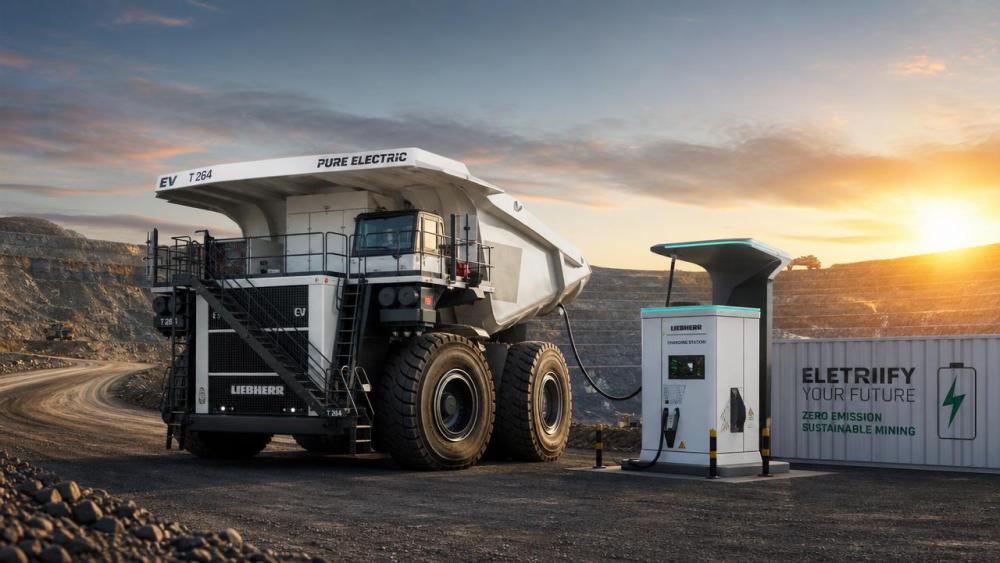
The core search intent behind this topic is practical: if electric mining trucks cost more to buy, what measurable economic benefits appear afterward, and how should those benefits be tested before approval?
For financial approvers, the biggest concerns are usually clear. How long is the payback period? Which savings are dependable? What hidden costs appear later? And under what mine conditions does electrification actually work?
That means the article should not spend too much time on generic sustainability messaging. The more useful focus is capital efficiency, lifecycle economics, operational fit, risk transfer, and decision frameworks that support investment discipline.
In short, the real decision is not between a cheaper diesel truck and a more expensive electric truck. It is between two different cost structures, two different risk profiles, and two different future operating models.
The purchase premium is real, but it is only one part of the cost equation
Electric mining trucks usually require a higher initial investment because the truck itself is more expensive, and the surrounding system often changes as well. Charging infrastructure, substations, grid upgrades, battery handling, and digital fleet controls may all be required.
For some sites, the capital burden also includes workshop modifications, fire safety systems, operator training, and spare battery inventory. If a mine uses trolley assist or dynamic charging, the infrastructure layer becomes even more important.
This is why many financial reviews stall at the first gate. The upfront number is visible, immediate, and easy to compare with a diesel alternative. The downstream savings, however, are dispersed across fuel, service, labor, uptime, and environmental costs.
Approving electrification therefore requires a different model. Instead of looking at truck price in isolation, finance teams need a mine-system view that captures both direct and indirect cost movements over the asset life.
Fuel savings are usually the first driver, but not the only one
The most obvious post-purchase effect is reduced diesel consumption. In open-pit operations with long haul cycles, fuel is often one of the largest controllable operating expenses, and its volatility can disrupt budgeting from quarter to quarter.
Electric trucks replace a significant portion of that exposure with electricity costs, which can be lower and more stable depending on local power tariffs, grid reliability, and contract structure. For finance teams, predictability can be as valuable as absolute savings.
That said, energy economics must be tested carefully. A mine with expensive peak power, weak grid access, or reliance on diesel-generated electricity may not see the same advantage as a site connected to low-cost hydro, solar, or mixed renewable supply.
The strongest business cases usually appear where diesel costs are high, haul cycles are energy intensive, and the mine can secure relatively stable electricity pricing. Under those conditions, the energy line item can improve materially over time.
Maintenance economics can shift in your favor, but only if the site is prepared
Electric drivetrains generally have fewer moving parts than diesel powertrains. That can reduce routine service needs related to engines, transmissions, lubrication, exhaust systems, and certain cooling components. Over time, this may lower planned maintenance costs.
There can also be a reduction in unplanned failures linked to mechanical complexity. If the fleet becomes more diagnostically transparent through software and sensor integration, maintenance planning may improve, which can support better asset availability.
But finance leaders should avoid assuming automatic savings. Battery management systems, thermal control, software updates, high-voltage safety procedures, and technician retraining introduce new requirements. The cost curve changes; it does not simply disappear.
The key due diligence question is whether the mine and its service partners are equipped for that change. If parts access, technician skills, or OEM support are weak, expected maintenance gains may be delayed or diluted.
Uptime and haulage productivity matter more than headline efficiency
Many electrification discussions focus on energy efficiency, but finance approvers should look harder at productive hours. A truck that saves energy but disrupts cycle consistency, payload movement, or dispatch flexibility may weaken the economic case.
Battery charging time, swap logistics, route gradients, ambient temperature, and queue management all influence whether electric trucks maintain production targets. In some mines, battery swapping can preserve utilization better than fixed charging. In others, charging is sufficient.
The financial takeaway is simple: productivity assumptions must be modeled at the fleet level, not the vehicle level. The question is not whether one truck performs well, but whether the total system can move the required tonnage without adding hidden bottlenecks.
Where this is handled well, electrification can support strong uptime. Electric drivetrains can offer responsive torque, predictable control, and compatibility with autonomous dispatch systems, which may further improve cycle performance over time.
For underground operations, ventilation savings can materially change the math
Although this article centers on mining trucks broadly, the financial logic becomes especially compelling in underground settings. Diesel equipment generates heat and emissions that force mines to invest heavily in ventilation infrastructure and power consumption.
In those environments, electrification does more than cut fuel use. It can reduce ventilation demand, lower cooling loads, improve working conditions, and support deeper mine development without proportionally expanding air-handling systems.
For finance teams, that means the value should not be allocated only to the truck fleet. Part of the return may appear in deferred ventilation capital, lower electricity demand for fans, and reduced operational constraints as mines move deeper.
This is an important lesson even for open-pit buyers. The best electrification evaluations are cross-functional. Some benefits sit in mobile equipment budgets, while others appear in infrastructure, energy, compliance, or workforce accounts.
Battery replacement is not a reason to reject the case, but it must be modeled honestly
One of the biggest concerns among financial approvers is battery life. This is reasonable, because battery packs represent a major cost center and their performance depends on cycle depth, charging behavior, temperature, and duty intensity.
The right approach is not to treat battery replacement as a surprise cost or to ignore it in the model. Instead, include degradation assumptions, replacement timing ranges, residual value scenarios, and possible second-life or recycling recovery.
It is also important to compare that future battery cost against avoided diesel engine overhauls, transmission rebuilds, and associated downtime. A fair comparison must include major maintenance events on both technologies, not only one side.
Battery economics are improving, but prudence still matters. Finance teams should request sensitivity analyses that show what happens to net present value if battery life is shorter, power prices rise, or charging utilization is below plan.
ESG pressure is not just a branding issue; it can affect cost of capital and contract access
For some companies, the strongest post-upfront effect is not operational but financial. Mines under pressure from investors, lenders, governments, and offtake partners may find that lower-emission fleets improve access to capital and strengthen project credibility.
In practical terms, electrification can support sustainability-linked loans, green financing frameworks, or more favorable stakeholder positioning in permitting and community engagement. These effects are harder to quantify, but they are not abstract.
Many resource projects now face a higher burden of proof around emissions intensity. A mine that can show a credible decarbonization pathway may protect valuation, reduce future compliance exposure, and improve resilience against tightening regulatory conditions.
For financial approvers, this means the analysis should extend beyond operating costs. If electrification lowers financing friction or protects strategic optionality, those benefits should be recognized, even if they do not sit neatly in a maintenance spreadsheet.
When does Mining Truck Electrification make the strongest financial sense?
Mining Truck Electrification tends to make the best economic case when several conditions align. The mine has high diesel consumption, long asset life, strong annual utilization, suitable energy access, and an operating plan that can absorb infrastructure change.
It also helps when the company has scale. Fleet standardization, central charging design, and stronger OEM partnerships can spread implementation costs over more units. Larger operations often have more room to optimize energy strategy and maintenance planning.
Another favorable condition is strategic time horizon. Operators focused only on the next budget cycle may struggle to justify electrification. Companies planning across seven to fifteen years are usually better positioned to capture the full lifecycle value.
Conversely, marginal cases often include remote sites with weak grids, short mine life, uncertain expansion plans, low diesel intensity, or limited technical support. In those cases, a phased pilot or mixed fleet strategy may be the more disciplined path.
How finance teams should evaluate the decision: move from capex comparison to scenario analysis
A robust approval process should compare more than equipment prices. It should map total cost of ownership under multiple scenarios, including energy prices, utilization rates, maintenance assumptions, battery replacement timing, and infrastructure depreciation.
Decision-makers should ask for at least three cases: base, downside, and optimized. The base case shows realistic operating assumptions. The downside tests weak battery life, lower productivity, or higher electricity prices. The optimized case reflects operational learning and scale benefits.
Net present value, internal rate of return, and payback period all matter, but they should be accompanied by risk metrics. What percentage of value depends on energy savings alone? What happens if charging utilization underperforms? Where are the biggest uncertainties?
It is equally useful to distinguish hard savings from strategic benefits. Hard savings include fuel, routine maintenance, and possibly ventilation. Strategic benefits include carbon positioning, financing flexibility, autonomous readiness, and resilience against future diesel restrictions.
The smartest approvals are usually phased, not all-or-nothing
For many mines, the most financially responsible route is not full fleet conversion in one step. A phased deployment allows real operating data to replace assumptions, which improves confidence in future capital approvals.
A pilot fleet can reveal charging behavior, route-specific energy use, maintenance learning curves, and operator adaptation. It also helps identify whether bottlenecks sit in infrastructure, power contracts, software integration, or mine planning.
From a capital governance perspective, this staged approach reduces execution risk. It turns electrification from a single large bet into a sequence of evidence-based investments, each supported by progressively stronger operating data.
This matters because electrification is not just an equipment purchase. It is a transition in energy architecture, maintenance capability, and fleet strategy. Approvals should reflect that reality.
Conclusion: the upfront premium only matters if you stop the analysis too early
The headline truth is simple. Electric mining trucks usually cost more to buy, but that fact alone does not tell you whether they are more expensive assets. What matters is how they reshape operating cost, risk exposure, productivity, and financing conditions over time.
For financial approvers, the right question is not whether the premium exists. It does. The right question is whether the mine can convert that premium into lower lifecycle cost, stronger resilience, and better strategic positioning.
When energy economics are favorable, utilization is high, infrastructure is planned properly, and the evaluation model is honest about risks, Mining Truck Electrification can be financially rational long before it becomes universally standard.
If the analysis stays focused on purchase price, the decision will likely be distorted. If it expands to total cost, system effects, and future constraints, finance leaders can judge electrification with the clarity the asset class actually requires.
Related News

How to Evaluate European Drill-and-Blast Tunnelling Contractors for Complex Projects
Drill and blast tunnelling contractors Europe: learn how to assess geology expertise, blast control, equipment reliability, safety, and programme resilience for complex projects.

Which Trenchless Construction Technique Fits Your Utility Crossing Conditions?
Trenchless construction techniques compared for utility crossings: choose HDD, microtunnelling, pipe jacking, or auger boring based on ground, accuracy, access, and risk.

What Is Driving Metro Tunnelling Demand Across Southeast Asia’s Major Cities?
Metro tunnelling Southeast Asia is accelerating as major cities tackle congestion, flooding, and connectivity. Explore the market forces, technical risks, and opportunities shaping demand.

Hard Rock Tunnelling in Australia: Selecting Methods for Variable Ground Conditions
Hard rock tunnelling in Australia: compare TBM, drill-and-blast and hybrid methods to manage variable ground, reduce risk and protect project costs.

Hydropower Tunnel Excavation: Selecting Methods for Variable Rock Conditions
Hydropower tunnel excavation methods for variable rock conditions: compare TBM, drill-and-blast, and hybrid strategies to improve safety, progress, and project control.

How to Select Underground Safety Equipment for Tunnelling by Hazard and Work Zone
Underground Safety Equipment for tunnelling: match protection to hazards, work zones, compliance, and emergency needs with this practical selection guide.

EPB or Slurry Shield? Selecting Soft-Ground Tunnelling Equipment by Soil Conditions
Tunnel Excavation Equipment for soft ground: compare EPB and slurry shields by soil, groundwater, settlement risk, and project logistics to choose confidently.

How to Specify TBM Backup System Parts for Reliable Long-Distance Tunnelling
TBM backup system parts: learn how to specify reliable spares for long-distance tunnelling, reduce downtime, ensure compatibility, and speed underground recovery.

How to Size Open Pit Mining Trucks for Haul Distance, Grade, and Payload?
Open Pit Mining Trucks: learn how to match payload, haul distance, grade, road resistance, and loading capacity for safer, lower-cost mine operations.
Related News
- 00
0000-00
How to Evaluate European Drill-and-Blast Tunnelling Contractors for Complex Projects - 00
0000-00
Which Trenchless Construction Technique Fits Your Utility Crossing Conditions? - 00
0000-00
What Is Driving Metro Tunnelling Demand Across Southeast Asia’s Major Cities? - 00
0000-00
Hard Rock Tunnelling in Australia: Selecting Methods for Variable Ground Conditions - 00
0000-00
Hydropower Tunnel Excavation: Selecting Methods for Variable Rock Conditions
Weekly Insights
Stay ahead with our curated technology reports delivered every Monday.