
Zambia Refinery Phase I Starts, Local EV Mining Truck Services Come Into Focus





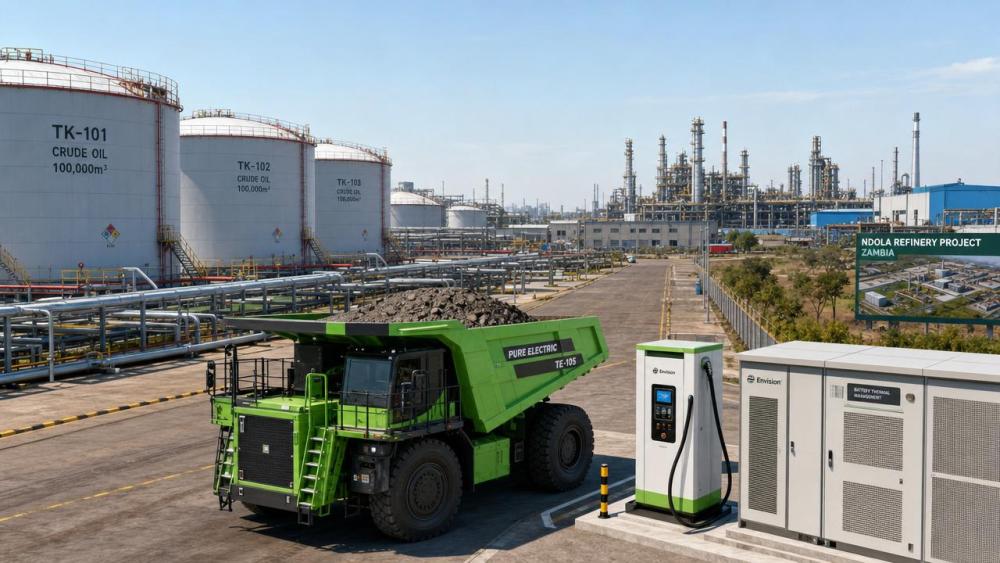
In early June 2026, Phase I of the Zambia Petrochemical Energy Company refinery project broke ground in Ndola, with China National Chemical Engineering Fourth Construction as contractor and a crude processing capacity of 1.1 million tons per year. Beyond the refinery build itself, the related storage, transport, and pipeline works are noteworthy for equipment and service providers because they point to emerging local service demand around zero-emission mining transport, especially battery thermal management, fast-charging integration, and remote diagnostics for EV mining trucks used in affiliated mining areas and logistics hubs.
What Has Been Confirmed So Far
The confirmed event is the start of Phase I of a refinery project in Ndola in early June 2026. The project is undertaken by China National Chemical Engineering Fourth Construction for Zambia Petrochemical Energy Company. According to the provided information, the refinery is designed to process 1.1 million tons of crude oil annually.
The same project also includes large-scale storage, transportation, and pipeline systems. Based on the event summary provided, these supporting facilities are associated with local operational and maintenance demand for zero-emission mining transport equipment, with particular relevance to EV mining trucks serving refinery-linked mining operations and logistics nodes.
Why the Service Side Matters More Than the Vehicle Headline
For equipment service providers, the key shift is operational readiness
From an industry perspective, the most direct impact is not simply on vehicle supply, but on after-sales and uptime support. If EV mining trucks are to operate in refinery-adjacent mining and logistics settings, local capability in battery thermal management, charging coordination, and fault response becomes a practical requirement rather than a secondary add-on.
For charging and systems integrators, deployment complexity may rise
Observably, the mention of fast-charging station integration suggests that the opportunity is tied to system compatibility and site execution, not only hardware delivery. Businesses involved in charging infrastructure, controls, and interface integration should pay attention to how project-side storage, transport, and logistics layouts translate into real operating requirements.
For remote support teams, diagnostics may become a frontline function
The inclusion of remote diagnostics in the event summary indicates that service expectations may extend beyond onsite maintenance. For companies serving heavy-duty electric fleets, this raises attention around response workflows, monitoring capability, and the ability to support equipment in a localized operating environment.
For project operators and procurement teams, support scope may affect sourcing decisions
Analysis shows that procurement considerations may increasingly extend from vehicle specifications to service coverage. Buyers and operators linked to refinery support logistics may need to evaluate not only whether EV mining trucks fit the use case, but also whether thermal management support, charging integration, and remote troubleshooting can be delivered reliably at the local level.
What Companies Should Watch Next
Track how future project language defines service needs
What deserves closer attention is whether subsequent project communications continue to reference zero-emission transport support in operational terms. The difference between a broad electrification signal and a clearly scoped maintenance requirement will matter for suppliers planning staffing, spares, and technical response models.
Focus on the service categories named in the current information
The current information points to three practical areas: battery thermal management maintenance, fast-charging station integration, and remote diagnostics. Companies active in these segments should prioritize how their existing offerings map to heavy-duty, site-based transport use rather than treating the development as a general mobility story.
Prepare for delivery questions beyond product availability
For commercial teams, likely points of client attention may include service qualifications, technical documentation, integration responsibility, and response timing. Even without further disclosed procurement details, these issues are already relevant because the event summary frames local O&M capability as part of the need created by the project.
Separate early signal from confirmed procurement activity
Analysis shows that the current development should not be read as confirmed volume or finalized contracting for EV mining truck services. Companies should stay close to project updates while avoiding assumptions about immediate order conversion or broad-based rollout before additional verified information appears.
How This Development Is Best Understood at This Stage
Observably, this news functions more as an industry signal than as proof of a fully formed market outcome. The confirmed facts establish a refinery project with substantial supporting infrastructure and identify a likely service need tied to zero-emission mining transport. What remains unconfirmed is the timing, scale, and commercial structure of that service demand.
From an industry perspective, the useful takeaway is that localized support capability is moving closer to the center of project-related electrification discussions. In this case, the service layer around EV mining trucks appears at least as important as the equipment itself, which is why maintenance providers, charging integrators, and remote diagnostics teams have reason to keep watching this development.
A Practical Reading of the News
This event is best understood as an early but concrete indicator that refinery-linked infrastructure projects can create downstream demand for localized EV mining truck support functions. It does not yet confirm broader market expansion on its own, but it does highlight where business attention may need to shift: from general interest in zero-emission equipment to the operational systems required to keep that equipment working in mining and logistics environments.
For now, a neutral reading is the most appropriate. The project start is confirmed, the linked service categories are clearly identified in the provided information, and the next industry task is to monitor how those needs translate into actual implementation requirements.
Basis of This Article
This article is generated from the user-provided news title, event date, and event summary. The confirmed information used here is limited to the reported start of Phase I of the refinery project in Ndola in early June 2026, its annual crude processing capacity of 1.1 million tons, the related storage, transport, and pipeline systems, and the referenced local service demand for EV mining trucks in battery thermal management, fast-charging integration, and remote diagnostics.
For this type of industry update, relevant source categories would typically include official project announcements, company statements, industry association releases, authoritative media coverage, and technical or standards-related documents where applicable. No specific official source link was provided in the input, so further verification remains necessary. Follow-up attention should center on later official wording, implementation details, and whether the identified service needs are translated into defined operational or procurement arrangements.
Related News

How to Evaluate European Drill-and-Blast Tunnelling Contractors for Complex Projects
Drill and blast tunnelling contractors Europe: learn how to assess geology expertise, blast control, equipment reliability, safety, and programme resilience for complex projects.

Which Trenchless Construction Technique Fits Your Utility Crossing Conditions?
Trenchless construction techniques compared for utility crossings: choose HDD, microtunnelling, pipe jacking, or auger boring based on ground, accuracy, access, and risk.

What Is Driving Metro Tunnelling Demand Across Southeast Asia’s Major Cities?
Metro tunnelling Southeast Asia is accelerating as major cities tackle congestion, flooding, and connectivity. Explore the market forces, technical risks, and opportunities shaping demand.

Hard Rock Tunnelling in Australia: Selecting Methods for Variable Ground Conditions
Hard rock tunnelling in Australia: compare TBM, drill-and-blast and hybrid methods to manage variable ground, reduce risk and protect project costs.

Hydropower Tunnel Excavation: Selecting Methods for Variable Rock Conditions
Hydropower tunnel excavation methods for variable rock conditions: compare TBM, drill-and-blast, and hybrid strategies to improve safety, progress, and project control.

How to Select Underground Safety Equipment for Tunnelling by Hazard and Work Zone
Underground Safety Equipment for tunnelling: match protection to hazards, work zones, compliance, and emergency needs with this practical selection guide.

EPB or Slurry Shield? Selecting Soft-Ground Tunnelling Equipment by Soil Conditions
Tunnel Excavation Equipment for soft ground: compare EPB and slurry shields by soil, groundwater, settlement risk, and project logistics to choose confidently.
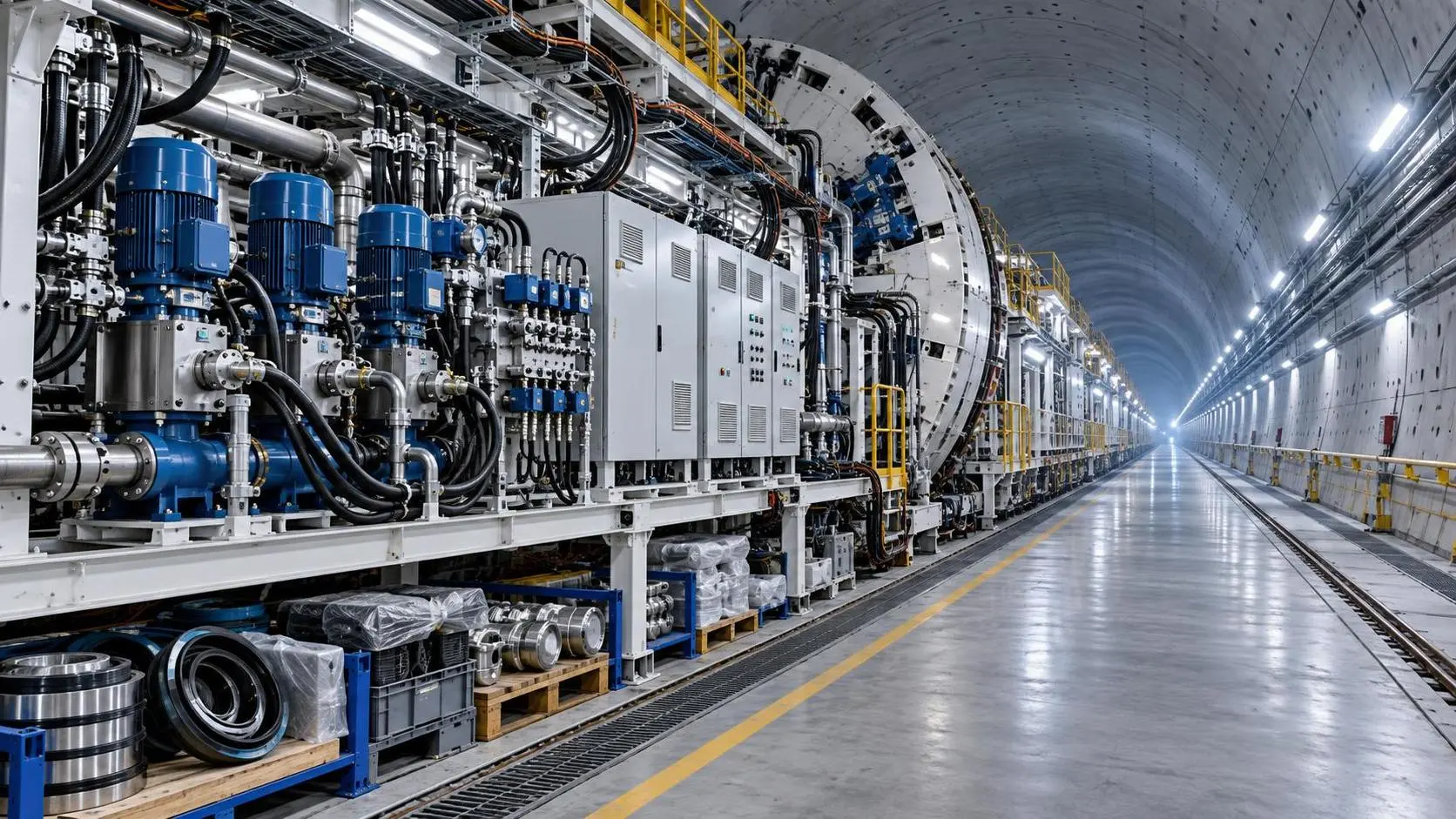
How to Specify TBM Backup System Parts for Reliable Long-Distance Tunnelling
TBM backup system parts: learn how to specify reliable spares for long-distance tunnelling, reduce downtime, ensure compatibility, and speed underground recovery.
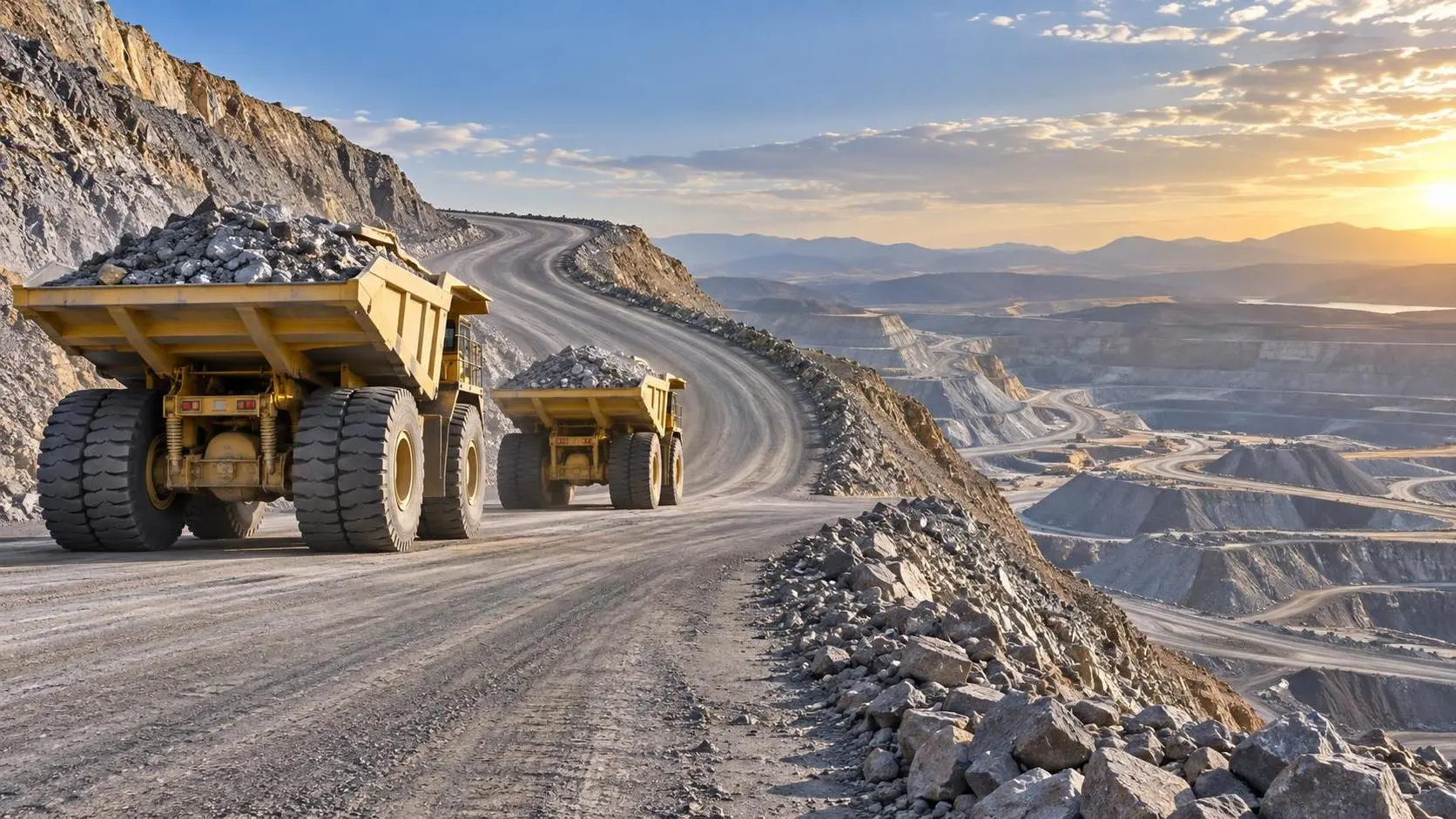
How to Size Open Pit Mining Trucks for Haul Distance, Grade, and Payload?
Open Pit Mining Trucks: learn how to match payload, haul distance, grade, road resistance, and loading capacity for safer, lower-cost mine operations.
Related News
- 00
0000-00
How to Evaluate European Drill-and-Blast Tunnelling Contractors for Complex Projects - 00
0000-00
Which Trenchless Construction Technique Fits Your Utility Crossing Conditions? - 00
0000-00
What Is Driving Metro Tunnelling Demand Across Southeast Asia’s Major Cities? - 00
0000-00
Hard Rock Tunnelling in Australia: Selecting Methods for Variable Ground Conditions - 00
0000-00
Hydropower Tunnel Excavation: Selecting Methods for Variable Rock Conditions
Weekly Insights
Stay ahead with our curated technology reports delivered every Monday.