



Your open-pit mine is ready for autonomous haulage when its operating conditions, infrastructure, safety controls, and support processes can demonstrate reliable performance together.
Vehicle capability alone cannot establish readiness. Technical evaluators need evidence that the complete haulage system remains controlled during routine production, foreseeable failures, and operational changes.
The decisive questions concern haul-road geometry, communications coverage, positioning resilience, mixed-fleet interactions, and functional safety validation. Each requires measurable acceptance criteria before deployment.
This assessment explains what evidence to request, how to structure a representative pilot, and which unresolved conditions should prevent an autonomous haulage investment from advancing.
Start With the Operating Conditions Your System Must Handle
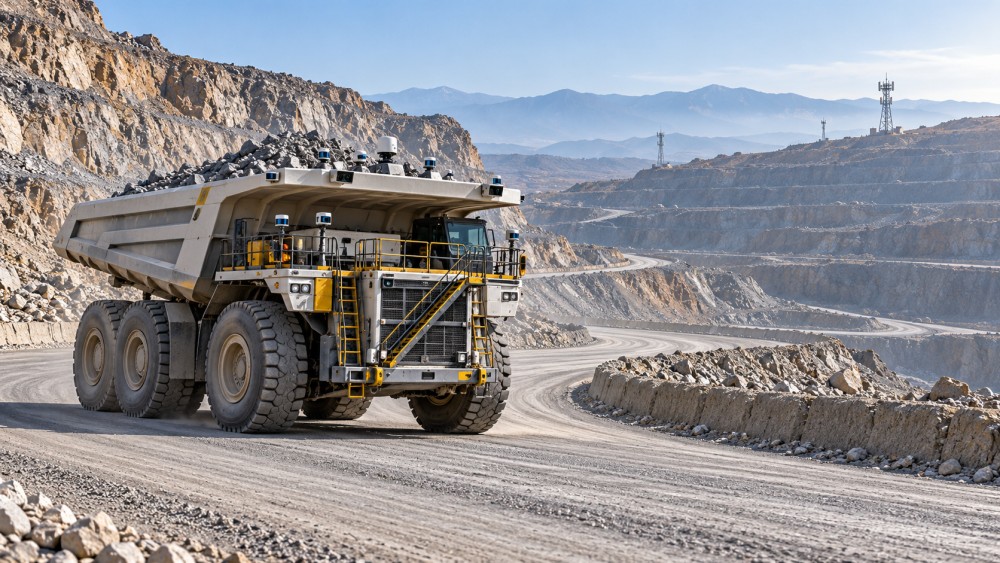
Autonomous mine haul trucks operate within a defined operational design domain: the roads, environmental conditions, traffic arrangements, and operating limits for which deployment is intended.
Document that domain before comparing suppliers. Include gradients, curvature, road widths, surface conditions, visibility, temperature, rainfall, dust exposure, and loading or dumping arrangements.
Define measurable limits wherever possible. “Operates in dust” is insufficient without an agreed visibility condition, detection requirement, speed restriction, and response when conditions deteriorate.
Separate normal operation from degraded operation. A truck may continue at reduced speed after one fault but require a controlled stop after another.
Changing pit layouts deserve explicit treatment. Specify who surveys new roads, approves digital maps, verifies physical boundaries, and authorizes autonomous traffic after changes.
A defensible readiness assessment connects every operating limit to evidence. An untested condition remains a deployment restriction until controlled trials or other suitable validation support acceptance.
Can Your Haul Roads Support Predictable Autonomous Operation?
Road readiness depends on more than nominal width and gradient. Evaluate sight distances, intersections, berms, drainage, rolling resistance, and space for disabled vehicles.
Use loaded-truck braking and steering performance to assess routes. Required stopping distance changes with speed, gradient, traction, payload, and brake condition, including foreseeable degradation.
Review curves and intersections against the truck’s swept path and localization uncertainty. Include adequate clearance for berms, roadside equipment, maintenance activities, and recovery operations.
Loading and dumping areas often determine practical performance. Assess queue organization, approach alignment, loader interactions, edge protection, and the process for changing dump boundaries.
A road that meets geometric requirements can still undermine autonomy through corrugation, standing water, loose material, or inconsistent maintenance. Establish inspection triggers and repair priorities.
Request a route assessment showing operating speeds, exclusion areas, stopping locations, and recovery access. Resolve critical road deficiencies before using pilot productivity as investment evidence.
Will Positioning and Communications Survive Real Pit Conditions?
Assess communications and positioning separately. Reliable network coverage does not guarantee accurate localization, and accurate positioning does not ensure commands or status messages arrive reliably.
Highwalls, benches, and changing excavation geometry can affect satellite visibility and radio propagation. Survey actual haul routes, loading areas, dumps, workshops, and transition zones.
Measure latency, jitter, packet loss, handover behavior, and availability under representative traffic. Average signal strength alone cannot establish whether operational or safety requirements are satisfied.
Ask suppliers how localization combines satellite positioning, inertial sensing, and other available inputs. Require defined responses to correction loss, disagreement between sensors, and excessive uncertainty.
Network loss must trigger a documented, validated response appropriate to the architecture and location. Immediate stopping everywhere can create secondary hazards or obstruct essential access.
Confirm backup power, equipment redundancy, monitoring responsibilities, and restoration procedures. Test failures under controlled conditions instead of accepting network diagrams as proof of resilience.
What Safety Evidence Should Technical Evaluators Require?
Autonomous haulage safety depends on the complete operating system, including vehicles, infrastructure, people, procedures, and interfaces. Component certificates cannot establish site-level safety by themselves.
Require a structured hazard assessment covering collisions, unintended movement, loss of control, perception limitations, road-edge departures, and interactions during maintenance or emergency response activities.
Request traceability from hazards to safety requirements, design controls, verification results, and residual operating restrictions. Acceptance should identify accountable owners and the required supporting evidence.
Standards such as ISO 17757 provide relevant reference points for autonomous mining machinery. Confirm applicable editions, jurisdictional requirements, and the assessment scope with qualified specialists.
Validate detection and response across representative obstacles, approach angles, dust conditions, and vehicle speeds. A successful demonstration with one stationary target proves very little.
Emergency stopping, restart authorization, isolation, and recovery need practical exercises. Include responders and maintenance personnel, with clear controls preventing unexpected movement during intervention activities.
Can Autonomous Trucks Share the Pit With People and Other Equipment?
Mixed traffic introduces uncertainty that a segregated demonstration may conceal. Map every interaction involving light vehicles, graders, water trucks, loaders, contractors, and emergency vehicles.
Define right-of-way rules, entry authorization, speed limits, overtaking restrictions, and intersection behavior. These rules must be understood consistently by the autonomous system and human operators.
Equipping vehicles with compatible tracking devices may support coordination, but it does not remove the need to address untracked equipment, pedestrians, or unauthorized entry.
Begin with controlled access where practical, then expand interactions only after validation. A staged boundary reduces exposure while revealing operational dependencies that require additional controls.
Pay particular attention to road maintenance. Graders and water trucks alter surface conditions while moving differently from haul trucks, creating coordination demands during normal production.
Train personnel for normal encounters and abnormal events. Evaluate competency through practical scenarios, including entering an autonomous zone, requesting assistance, and approaching a stopped truck.
Does the Mine Have the Integration and Support Capability?
An autonomous haulage system must exchange usable information with dispatch, maintenance, production reporting, and other relevant systems. Define interface ownership before contracting or deployment.
Check how assignments, payload data, road closures, equipment status, and map updates move between systems. Conflicting records can generate unsafe assumptions or persistent production delays.
Agree time synchronization, event logging, data access, and retention requirements. Investigators need aligned records to reconstruct faults, interventions, near misses, and unexplained cycle-time changes.
Cybersecurity requirements should address remote access, account privileges, network separation, software updates, and recovery. Establish how security changes receive operational and safety review before release.
Maintenance readiness includes sensor cleaning, calibration, diagnostic access, replacement parts, and software configuration control. Assign responsibility for faults spanning truck hardware, networks, and automation software.
Control-room staffing also requires validation. Determine how many simultaneous exceptions personnel can manage safely, including during shift changes, degraded communications, and multi-vehicle stoppages or recovery.
What Must a Pilot Prove Before You Expand?
Design the pilot around uncertainty reduction. Select routes and operating periods that expose relevant risks while keeping the initial operating domain manageable and clearly controlled.
Include representative payloads, shifts, traffic, road conditions, loading equipment, and dumping arrangements. Favorable daylight conditions alone cannot establish readiness for continuous production across the intended domain.
Set acceptance thresholds before testing. For each metric, define the measurement method, observation period, exclusions, minimum exposure, and authority responsible for approving results and exceptions.
Measure tonnes moved, cycle-time distribution, queue time, operational availability, interventions, recovery duration, and safety-related events. Averages can hide recurring delays or unacceptable tail behavior.
Record why every intervention occurred and whether production could resume without specialist support. Frequent short interruptions can consume control-room capacity and undermine otherwise attractive throughput.
Use staged acceptance: controlled commissioning, limited production, expanded conditions, then sustained operation. A pilot supports only the conditions and exposure it actually tested successfully.
- Compare equivalent work: normalize payload, haul distance, elevation change, congestion, and road condition when evaluating autonomous and staffed operations.
- Test degraded modes: include controlled communications failures, positioning uncertainty, blocked routes, and recovery exercises within an approved test procedure.
- Inspect repeatability: examine results across shifts and operating conditions, including the frequency and duration of exceptions.
- Close findings: assign corrective actions, owners, and retest requirements before expanding the operating domain.
Will the Economics Survive Actual Operating Constraints?
Build the business case from site measurements and pilot evidence. Supplier productivity estimates are useful hypotheses, but route conditions and operating practices determine realized value.
Compare total cost per tonne over a defined period. Include vehicles, conversion costs, communications, control facilities, licensing, integration, maintenance, training, road upgrades, and ongoing support.
Account for commissioning losses and the transition period. Temporary parallel processes, restricted routes, specialist staffing, and fleet imbalance can delay benefits even when deployment succeeds.
Model sensitivity to availability, intervention rates, road maintenance demand, and remaining mine life. Infrastructure spending becomes harder to recover when routes change frequently or operations contract.
Keep electrification assumptions explicit. Autonomous mine haul trucks may use diesel or electric power, and automation alone does not guarantee lower emissions or energy consumption.
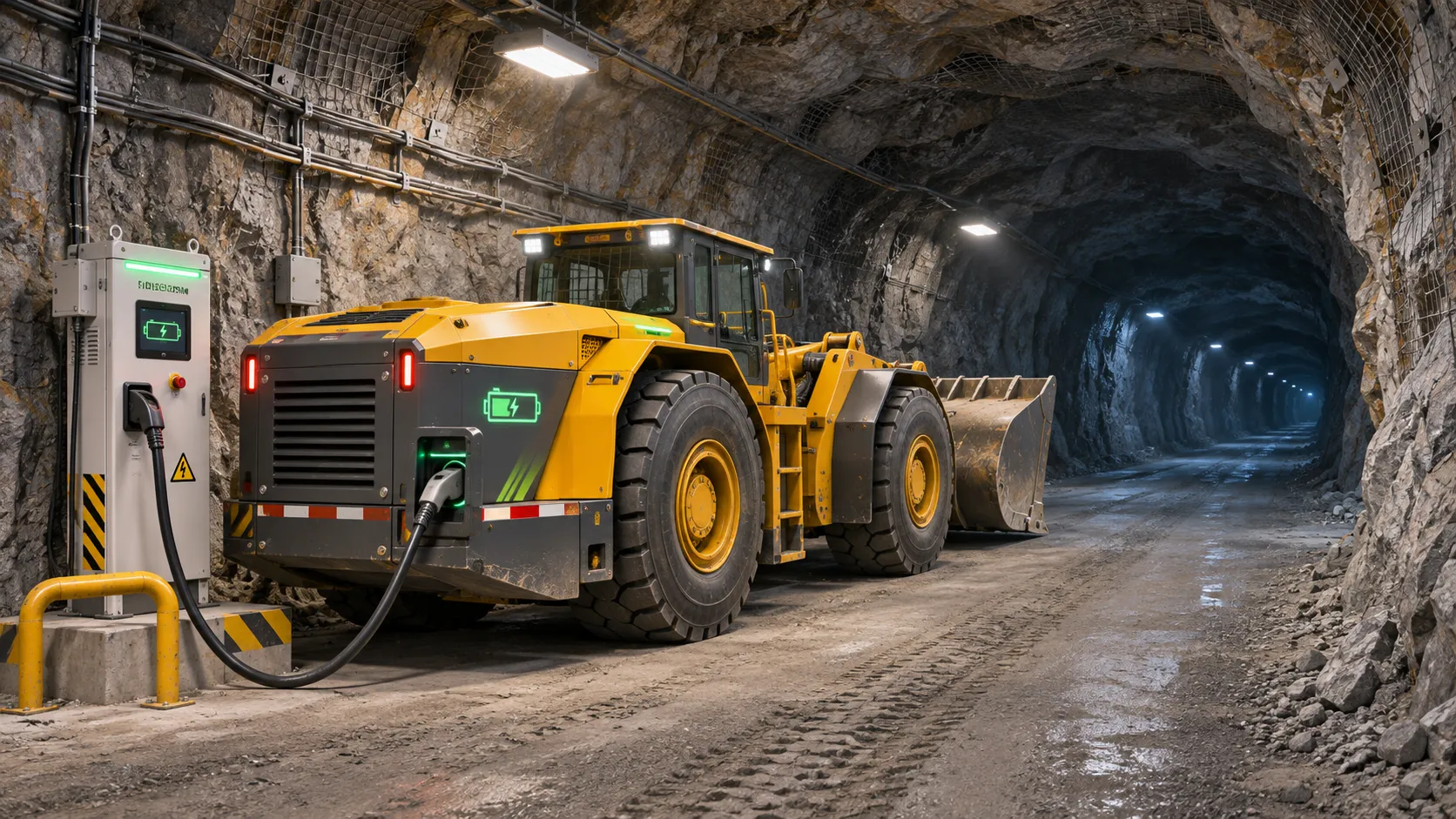
For battery-electric fleets, additionally assess charging queues, power availability, thermal limits, and energy use by route. Evaluate automation and energy-system benefits separately before combining them.
Make the Deployment Decision Against Evidence
A mine is ready when its intended operating conditions are validated, critical hazards are controlled, supporting infrastructure performs reliably, and personnel can manage exceptions safely.
If those conditions are incomplete, identify whether the gap requires infrastructure work, operating restrictions, additional testing, or a narrower initial deployment. Assign owners and closure evidence.
Approve expansion only when representative results support the agreed safety, production, and cost criteria. Preserve formal review whenever routes, software, equipment, or operating conditions change materially.
The strongest investment case for autonomous mine haul trucks connects demonstrated technical performance with repeatable production value, supported by a mine capable of sustaining both.