
Evaluating Rigid Mining Truck Makers: Engineering, Warranty, and Parts Support





Selecting a rigid mining truck manufacturer is not a simple comparison of rated payload, engine power, and purchase price. A truck can look competitive on a specification sheet yet create recurring delays if its braking system is poorly matched to the haul profile, its frame cannot tolerate site loading practices, or critical parts take too long to reach the mine.
For a technical evaluation, the useful question is: which manufacturer can support the required tonnes per hour, safely and predictably, over the fleet’s working life? That shifts the review from a catalogue exercise to an assessment of engineering fit, warranty accountability, and maintainability under actual mine conditions.
Start with the haul route, not the truck’s headline payload
Rigid haul trucks are designed for repeated high-volume movement on established mine roads. Their value depends on how well the machine, loading fleet, road design, and maintenance capability work together. Selecting the largest nominal payload is often a weak starting point. The truck must be correctly matched to the loading tool, material density, haul distance, gradients, rolling resistance, turning radius, and dumping arrangement.
A truck repeatedly loaded above its intended operating range may initially appear productive. In practice, excessive loading can accelerate structural fatigue, shorten tyre life, increase braking demand, and make warranty disputes more difficult. Underloading has a different cost: the mine pays for a larger truck’s capital, fuel or energy use, and maintenance without obtaining its intended production capacity.
Ask each manufacturer to assess the operating profile using the same site inputs. That comparison should include expected payload distribution rather than only an ideal average payload. It should also account for road conditions that change across seasons, shift patterns, and different material types. A proposal built around smooth roads and consistent ore density may not remain valid in a mine with wet ramps, uneven benches, or frequent waste-rock changes.
Engineering review: where fleet reliability is decided
A rigid mining truck is a system, not a collection of independent components. The frame, suspension, wheel ends, drivetrain, cooling package, braking controls, body design, and electronic controls all experience the same load cycles. Evaluation should focus on how the manufacturer has integrated these systems for the mine’s duty cycle.
Frame, body, and load path
The chassis must absorb repeated loading shocks, haul-road vibration, braking forces, and dumping torsion without transferring excessive stress into joints and mounting points. A robust frame is not defined merely by visible steel thickness. Review the design of major cross-members, body mounting, suspension attachment points, and the accessibility of inspection areas where cracking or fastener movement may first appear.
The body also deserves a separate review. Material can stick, bridge, or impact the body differently depending on moisture, fragmentation, and loading practice. A body intended for abrasive hard rock may not be the best choice for sticky clay-bearing overburden. Clarify whether the manufacturer offers body options, liners, heating arrangements, or wear packages appropriate to the actual material. The loading system must also be capable of placing material without routinely striking the body or concentrating mass at one end.
Powertrain and thermal management
Powertrain selection should follow the route. Long uphill hauls require sustained pulling performance and cooling capacity; short, flat cycles place more emphasis on acceleration, loading interaction, and fuel or energy efficiency. A powertrain that works well in a temperate open pit may require different cooling protection, filtration, or service intervals in high dust, high heat, high altitude, or severe cold.
Technical evaluators should ask how the engine, electric drive, transmission, retarding system, and cooling circuits behave when ambient temperature, payload, and grade are all unfavorable at the same time. The answer should be supported by a clear duty-cycle basis, not a broad statement that the truck is suitable for “harsh conditions.”
Electrified haulage adds another layer. Battery-electric or trolley-assisted solutions can reduce on-board combustion exposure and may offer operational advantages on suitable routes, particularly where repeated downhill travel allows energy recovery. They also require an assessment of charging or power infrastructure, thermal control, energy availability, maintenance skills, and contingency arrangements. An electric truck should be evaluated as a mine-system decision, not as a diesel replacement with a different power source.
Braking, retardation, and downhill control
On long descents, braking performance is a safety and availability issue. Service brakes are intended for controlled stopping, while retardation systems manage speed over sustained downhill haulage. The practical question is whether the truck can maintain a safe target speed on the steepest loaded descent without overheating friction components or forcing operators into inconsistent manual braking.
Review the relationship between retarder capacity, cooling system performance, tyre limits, speed-control logic, and emergency braking arrangements. Also examine how the design behaves when road rolling resistance increases after rain or road maintenance falls behind schedule. A manufacturer should be able to explain operating limits and the controls used to keep trucks within them.

Compare manufacturers through evidence, not feature lists
Two suppliers may both offer a truck in the required payload class, but their support model and engineering assumptions can differ substantially. A structured evidence request makes those differences visible.
Feature lists are useful only when connected to a failure mode or operating need. For example, onboard payload measurement has value when it helps the mine control overload patterns and loader practice. Remote diagnostics have value when the dealer or manufacturer can interpret the data quickly and has a defined route for escalating difficult faults. The presence of a technology package alone does not prove that it will improve availability.
Warranty should define responsibility, not just duration
Warranty documents are frequently reviewed too late, after a preferred supplier has already been chosen. That is a mistake. The warranty determines how responsibility is shared when a major component fails, but the useful protection is shaped by coverage boundaries, exclusions, claim process, and response obligations.
Read beyond the headline warranty period. Determine which components have separate terms, whether coverage changes with operating hours, what maintenance records are required, and how the supplier treats failures linked to site conditions. Pay attention to exclusions involving overload, contamination, road conditions, unauthorised modifications, or missed maintenance intervals. These provisions are not inherently unreasonable, but they need to be compatible with the mine’s actual control systems and maintenance practice.
Ask for a practical failure scenario: a truck loses production because of a major drivetrain or control-system issue. Who diagnoses it? Who authorises repair? Which labour, travel, freight, and component costs are covered? What happens if the required part is unavailable locally? A supplier that can explain this process clearly is easier to evaluate than one offering broad language without an operating model behind it.
For a new fleet or a new technology deployment, it may be more valuable to negotiate defined commissioning support, technical escalation access, and early-life failure handling than to focus exclusively on a longer headline term. Early fleet performance often establishes maintenance routines, parts demand, and confidence in the supplier relationship.
Parts support is an availability strategy
A mine does not experience parts support as a warehouse promise. It experiences it as downtime: a parked truck, an incomplete repair, or a planned service extended because a consumable or repairable assembly is unavailable. Therefore, assess parts support at the component level.
Separate high-consumption items, planned replacement items, and truck-stopping critical components. Filters, hoses, wear parts, and routine service kits need dependable replenishment. Major assemblies, electronic control modules, brake-related components, hydraulic parts, and wheel-end items may not be held in large quantities on site, but the supplier must have a credible route to deliver or repair them within an acceptable outage window.
- Request the recommended opening parts package and compare it with the site’s expected maintenance plan.
- Identify components whose failure would immobilise a truck and map the source, lead path, and repair alternative for each.
- Confirm whether diagnostic equipment, software access, and trained technicians are available locally.
- Review the repairable-component process, including core return, inspection, remanufacture, and replacement turnaround.
- Clarify who owns inventory decisions when operating conditions create higher-than-expected consumption.
Distance from a manufacturer’s headquarters is less important than the maturity of the support network around the mine. A regional warehouse, capable dealer workshop, field technicians, and disciplined inventory planning can be more valuable than a globally recognised brand with limited local capability. Conversely, a lower initial purchase price can be quickly outweighed by extended downtime if technical support depends on ad hoc international shipments.
Do not separate truck selection from mine readiness
The best truck design cannot compensate for unsuitable haul roads, inconsistent loading, poor workshop practices, or weak operator controls. A fair manufacturer comparison should state what the mine will provide: road width and drainage standards, grade management, fuel or charging quality, tyre management, maintenance facilities, lifting equipment, operator training, and data connectivity.
This matters especially when evaluating automated or semi-autonomous capabilities. The truck may have sensing, control, and fleet-interface functions, but reliable deployment depends on road discipline, communication coverage, interaction rules with other equipment, and a clear response process when the system requests intervention. Automation should be assessed as an operational change program, not added as a checkbox in procurement.
Resources such as UTMD’s coverage of smart mining transport, electric haulage, and regenerative braking can help evaluation teams frame these wider system questions. The useful outcome is not a technology label; it is a truck-and-mine configuration that can be maintained, monitored, and operated consistently.
Use a staged decision before committing the fleet
A defensible selection process usually starts with a technical gate rather than a commercial ranking. Eliminate proposals that cannot meet the route, loading, braking, support, or workshop requirements. Then compare the remaining manufacturers using the same operating assumptions and a weighted scorecard that reflects the mine’s priorities.
Before a full fleet commitment, define acceptance criteria for commissioning and initial operation. These should cover payload-control performance, brake and retarder behaviour on representative grades, temperature stability, fault reporting, maintenance access, parts readiness, and supplier response. The aim is not to demand perfect operation from day one; it is to make issues visible early, assign ownership, and establish a disciplined path to resolution.
The final decision should favour the manufacturer whose truck, warranty terms, and support organisation all fit the mine’s operating reality. Payload capacity remains important, but dependable haulage is created by the combined quality of engineering, service access, parts logistics, and the mine’s own operating discipline.
Related News
China's TBM Export Controls Prompt Infrastructure Concerns in India
China's TBM export controls could affect infrastructure projects in India. Explore potential supply risks and practical procurement steps.
How TBM Excavation Works in Rock and Soft Ground: A Practical Guide
TBM Excavation in rock and soft ground explained: compare machine types, ground support, spoil removal, and the factors that guide smarter project planning.
Choosing a Zero-Emission Underground Equipment Supplier: What to Check
Choosing a zero emission underground equipment supplier? Compare duty-cycle performance, charging, safety, total costs and support before you commit.
Construction Starts on Germany's Pfaffensteig Rail Tunnel, With Two TBMs Planned
Pfaffensteig rail tunnel construction is underway in Germany. Discover how two planned TBMs will support the 11-kilometre project near Stuttgart.
How Real-Time Underground Mapping Systems Work in Tunneling
Discover how real-time underground mapping systems guide tunneling teams, integrate sensor data, and support confident decisions with verified accuracy.
First Mechanized Tunnel Crossing Beneath the Panama Canal Completed
Panama Canal tunnel crossing: Explore the reported Metro Line 3 milestone and what it could mean for future underwater tunneling projects.
Underground Utility Construction Equipment: Choosing by Ground Conditions
Choose underground utility construction equipment with confidence. Compare trenching, HDD, microtunnelling and TBMs by ground conditions, risk and cost.
China Sets Tunnel Boring Machine Export Controls as India Pushes Local Production
China tunnel boring machine export controls could reshape procurement as India pushes local production. Explore potential supply and project impacts.
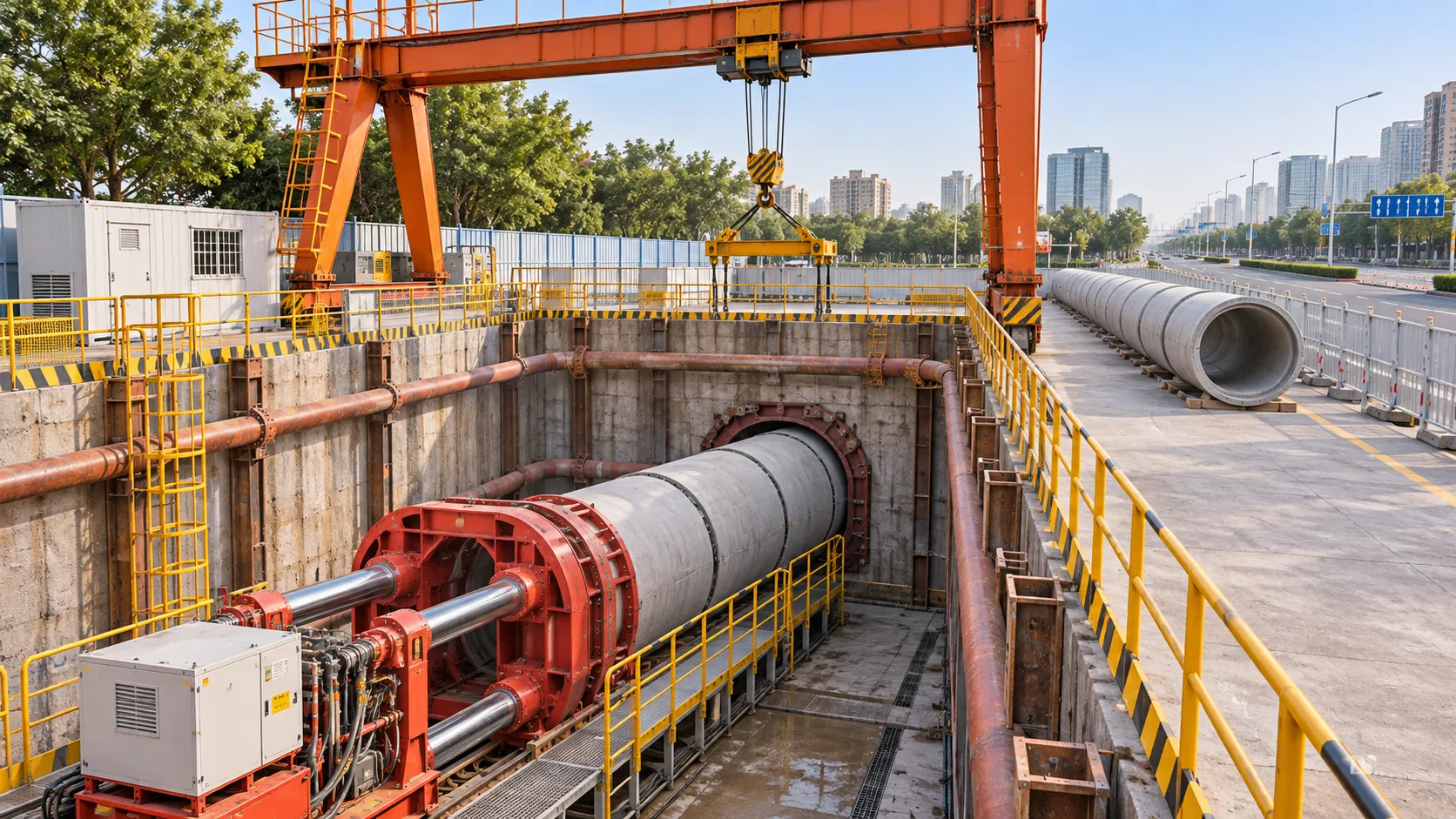
Choosing a Trenchless Pipeline Installation Contractor: Key Qualifications
Choose a trenchless pipeline installation contractor with confidence. Learn how to assess experience, equipment, safety, costs, and project risks before you hire.
Related News
- 00
0000-00
China's TBM Export Controls Prompt Infrastructure Concerns in India - 00
0000-00
How TBM Excavation Works in Rock and Soft Ground: A Practical Guide - 00
0000-00
Choosing a Zero-Emission Underground Equipment Supplier: What to Check - 00
0000-00
Construction Starts on Germany's Pfaffensteig Rail Tunnel, With Two TBMs Planned - 00
0000-00
How Real-Time Underground Mapping Systems Work in Tunneling
Weekly Insights
Stay ahead with our curated technology reports delivered every Monday.