
Mining truck vs normal truck for steep haul roads





Mining Truck vs Normal Truck for Steep Haul Roads

Choosing a mining truck vs normal truck for steep haul roads should begin with risk, not purchase price. Grades amplify braking heat, drivetrain stress, rollover exposure, and cycle-time losses.
For sustained mine haulage, purpose-built mining trucks are usually the defensible choice. Conventional trucks may serve limited support roles, but rarely provide equivalent payload, retarding capacity, or structural durability.
Project managers should evaluate the entire haul system: road geometry, material density, elevation change, production targets, maintenance capability, weather conditions, and the consequences of equipment downtime.
The practical question is not whether a normal truck can climb or descend one steep road. It is whether it can perform repeated loaded cycles safely.
A truck that completes occasional test runs can still become an operational bottleneck. Repeated cycles expose limitations in cooling, braking, tires, suspension, and frame life.
Start With the Haul-Road Duty Cycle
Steep haul-road decisions depend on more than maximum gradient. Managers need the full duty cycle, including ramp length, surface condition, traffic density, payload consistency, and turnaround delays.
A short 10 percent ramp is fundamentally different from a long 10 percent descent with hundreds of meters of elevation loss. Heat accumulation becomes the governing constraint.
Mining operations typically design haul roads around repeated high-load cycles. The equipment must climb loaded, descend controlled, tolerate rough surfaces, and remain productive across long shifts.
Normal trucks are commonly designed for paved-road logistics, municipal delivery, construction support, or regional freight. Their systems generally assume smoother roads and more moderate operating loads.
Before comparing models, map each segment of the route. Record grade, rolling resistance, crossfall, curve radius, berm condition, drainage quality, and expected road maintenance intervals.
Use actual field data rather than an average road grade. Localized steep sections, washboarding, loose material, and sharp switchbacks can determine the truck class required.
Also assess how production changes throughout the project. A road suitable during early stripping may become unsuitable when hauling deeper material from a lower bench.
For project leaders, this route-based assessment creates a clearer investment case. It connects equipment selection directly to planned tonnes, cycle time, availability, and safety controls.
Why Payload and Chassis Design Matter on Steep Roads
A mining dump truck carries far greater payloads than a normal truck while using a chassis engineered specifically for off-highway loading, rough-road impacts, and repeated high-stress cycles.
Its frame, suspension, axle assemblies, wheel hubs, and dump body are designed as an integrated system. This integration reduces structural fatigue under severe mine conditions.
Normal trucks may have respectable gross vehicle weight ratings, yet those ratings do not automatically apply to severe gradients, uneven haul roads, and continuous bulk-material transport.
Overloading a conventional truck to improve apparent productivity creates hidden costs. Brake wear, tire failures, axle damage, suspension fatigue, and insurance exposure can rise quickly.
Mining trucks also use large off-highway tires with load ratings, tread designs, and heat performance matched to haul-road service. Tire selection is central to operating economics.
On steep routes, payload must be considered together with center of gravity. A high body, uneven load distribution, or poor road camber can increase rollover risk.
Material characteristics also matter. Wet ore, blasted rock, clay-rich overburden, and variable-density waste can change payload mass without changing the visible volume in the body.
Reliable onboard payload measurement helps managers prevent both overload and underload. Underloading wastes fuel and capital; overloading damages equipment and increases downhill safety risks.
Braking and Retarding Are the Decisive Safety Difference
For steep downhill haulage, braking capacity is often the strongest reason to choose a mining truck over a normal truck. Service brakes alone cannot safely manage sustained descents.
Purpose-built mining trucks use retarding systems to control speed continuously while reducing dependence on friction brakes. Depending on the model, this may involve electric or hydraulic retarding.
Electric-drive mining trucks can use dynamic retardation, converting downhill kinetic energy into electrical resistance or recovered energy. This reduces brake heating during long loaded descents.
Some modern battery-electric mining trucks can recover energy through regenerative braking on downhill routes. In favorable profiles, this can materially improve energy efficiency and battery utilization.
Normal trucks may use engine braking, exhaust braking, transmission retarders, or auxiliary systems. These can be useful, but their capacity may be insufficient for demanding mine haul profiles.
Brake fade is not merely a maintenance issue. It is a loss-of-control risk that becomes more severe when roads are wet, visibility is poor, or traffic separation is limited.
Managers should require brake-performance evidence at the intended gross operating weight, grade, ambient temperature, rolling resistance, and target downhill speed. Generic specifications are insufficient.
The operating plan should define speed limits, gear-selection rules, retarder-use requirements, runaway-truck ramp locations, and inspections for brake temperatures, leaks, and worn components.
If drivers must repeatedly use service brakes to hold speed downhill, the selected truck-road combination is likely outside its efficient and safe operating envelope.
Power Delivery Determines Loaded Climb Performance
Steep uphill segments require sustained torque, cooling capacity, and traction. A normal truck may reach the top, but lower climbing speed can extend cycles and disrupt production targets.
Mining trucks are designed to move large payloads on grades with drivetrain ratios, torque characteristics, cooling systems, and traction-control strategies suited to heavy off-road service.
Haul-road rolling resistance can be as important as gradient. Loose gravel, mud, ruts, and poorly maintained surfaces increase required rimpull and reduce effective climbing performance.
For this reason, evaluate grade and rolling resistance together. A relatively moderate ramp with poor surface maintenance can demand more tractive effort than a steeper, well-maintained road.
Normal trucks operating near their limits may experience transmission overheating, clutch wear, reduced acceleration, and excessive fuel consumption. These losses accumulate across every production cycle.
Electric-drive and battery-electric mining trucks offer high low-speed torque and can simplify some power-delivery challenges. However, charging, battery swapping, and site-power planning require disciplined engineering.
Do not select electric haulage based solely on zero tailpipe emissions. Validate route energy demand, downhill energy recovery, charging windows, payload effects, thermal performance, and backup availability.
For projects with variable grades, simulation is useful. A haul-cycle model can estimate travel time, energy use, brake heat, tire demand, and production capacity before capital is committed.
Cycle Time Often Outweighs the Initial Purchase Price
A mining truck usually costs more to acquire than a normal truck. Yet purchase price is only one component of cost per tonne moved.
The more useful comparison is total cost per productive tonne. Include fuel or electricity, labor, maintenance, tires, downtime, road upkeep, financing, and production losses.
A lower-cost truck with smaller payload may require more trips, more drivers, more loading interactions, and more road traffic. These effects can increase congestion and incident exposure.
Longer cycle times also affect loading equipment utilization. An excavator or loader waiting for trucks loses productive capacity, even when its own mechanical availability remains high.
Mining trucks can improve fleet productivity through larger payloads and stronger climbing performance. However, oversized equipment can be inefficient if loading tools, roads, or dumping areas constrain output.
Fleet matching is therefore essential. The truck body capacity should align with loader bucket size, loading-pass targets, material density, and the required level of payload consistency.
As a general management discipline, compare alternatives using hourly cost, tonnes per hour, cost per tonne, and expected availability. Avoid relying on nominal payload alone.
Include sensitivity scenarios. Test what happens when road conditions deteriorate, payload density increases, diesel prices rise, rain reduces speed, or a truck is unavailable during peak production.
This approach helps identify whether a mining truck is a strategic productivity asset or an unnecessary capital burden for the actual scope of work.
Where Normal Trucks Can Still Be Appropriate
A normal truck can be appropriate when the route is short, grades are controlled, payloads are modest, roads are engineered to highway-like standards, and hauling is not continuous.
They are often suitable for consumables, personnel support, light aggregate movement, workshop logistics, construction materials, and occasional transport between developed areas of a site.
Articulated dump trucks may occupy a useful middle ground for some projects. They generally offer better off-road mobility than road trucks, though they are not substitutes for ultra-class haul trucks.
Small quarries, temporary civil works, rehabilitation projects, and low-volume stockpile movements may justify articulated or conventional equipment when production requirements remain limited.
The key is to avoid assuming that every off-road-looking truck is suitable for steep mine haulage. Equipment categories have different braking, payload, tire, and durability assumptions.
Managers should also consider local regulations. Road-legal truck requirements can conflict with the dimensions, axle loads, and operating conditions associated with heavy off-highway mining equipment.
If conventional trucks are used, establish strict operating boundaries. These should include maximum payload, maximum grade, weather restrictions, inspection frequency, and driver training requirements.
Using a normal truck for a narrowly defined support task is different from making it the backbone of production haulage. The operational risk profile changes significantly.
Road Design Can Reduce Equipment Cost and Risk
Equipment choice and road design should be treated as one decision. Better roads can reduce fuel consumption, tire wear, braking demand, vibration, and truck-cycle variability.
Maintain appropriate road width, berms, drainage, crossfall, curve geometry, surface compaction, and visibility. These features directly influence safe speed and effective hauling capacity.
Water management deserves special attention. Poor drainage creates soft spots, rutting, reduced traction, and uncontrolled changes in rolling resistance after rain or snow events.
Regular grading can improve smoothness, but excessive loose material can raise rolling resistance. Road-maintenance standards should be linked to measurable truck performance indicators.
Track speed, fuel burn, tire temperatures, retarder use, brake events, and cycle-time variance by road segment. These data reveal where road improvements create the strongest return.
For deepening mines, plan road changes before production reaches the next bench. Waiting until the haul route becomes a constraint usually raises both capital cost and operational disruption.
A well-designed road may allow a selected truck fleet to operate efficiently. It does not remove the need for adequate braking and structural capability on steep, loaded descents.
How to Make the Procurement Decision
Start with a production model that states required annual tonnes, operating hours, target availability, loading fleet, haul distance, material types, and expected route evolution.
Then obtain manufacturer performance data for the actual duty cycle. Ask for payload-specific gradeability, rimpull curves, retarding performance, tire recommendations, and maintenance intervals.
Require suppliers to state assumptions clearly. A performance claim based on dry, smooth roads at reduced payload may not represent the conditions your project will face.
Assess support capability before purchase. Mining trucks require parts planning, trained technicians, lifting equipment, tire-management capability, diagnostic tools, and a practical maintenance facility.
Downtime risk should be quantified. A single large truck can move substantial tonnage, but an undersized fleet may become vulnerable when one unit is unavailable.
Consider phased procurement where uncertainty is high. Early fleet data can validate payload, road condition, and cycle-time assumptions before the project commits to full-scale capacity.
For autonomous or battery-electric mining trucks, include communications coverage, charging infrastructure, power reliability, software support, emergency response procedures, and workforce transition planning.
The final business case should identify the lowest-risk option that meets production requirements, rather than simply choosing the truck with the lowest unit cost.
Conclusion: Match the Truck to the Consequence of Failure
In a mining truck vs normal truck comparison for steep haul roads, purpose-built mining equipment is generally justified when hauling is continuous, heavily loaded, and safety-critical.
Mining trucks provide the braking, retarding, payload capacity, chassis durability, traction, and cycle performance needed for repeated operation on demanding mine profiles.
Normal trucks can remain valuable for support work and controlled, low-volume routes. They become a poor substitute when steep grades and production haulage expose their design limits.
Project managers should base the decision on route data, whole-life cost, production targets, braking performance, road condition, and site maintenance capability. That evidence supports safer capital decisions.
Related News
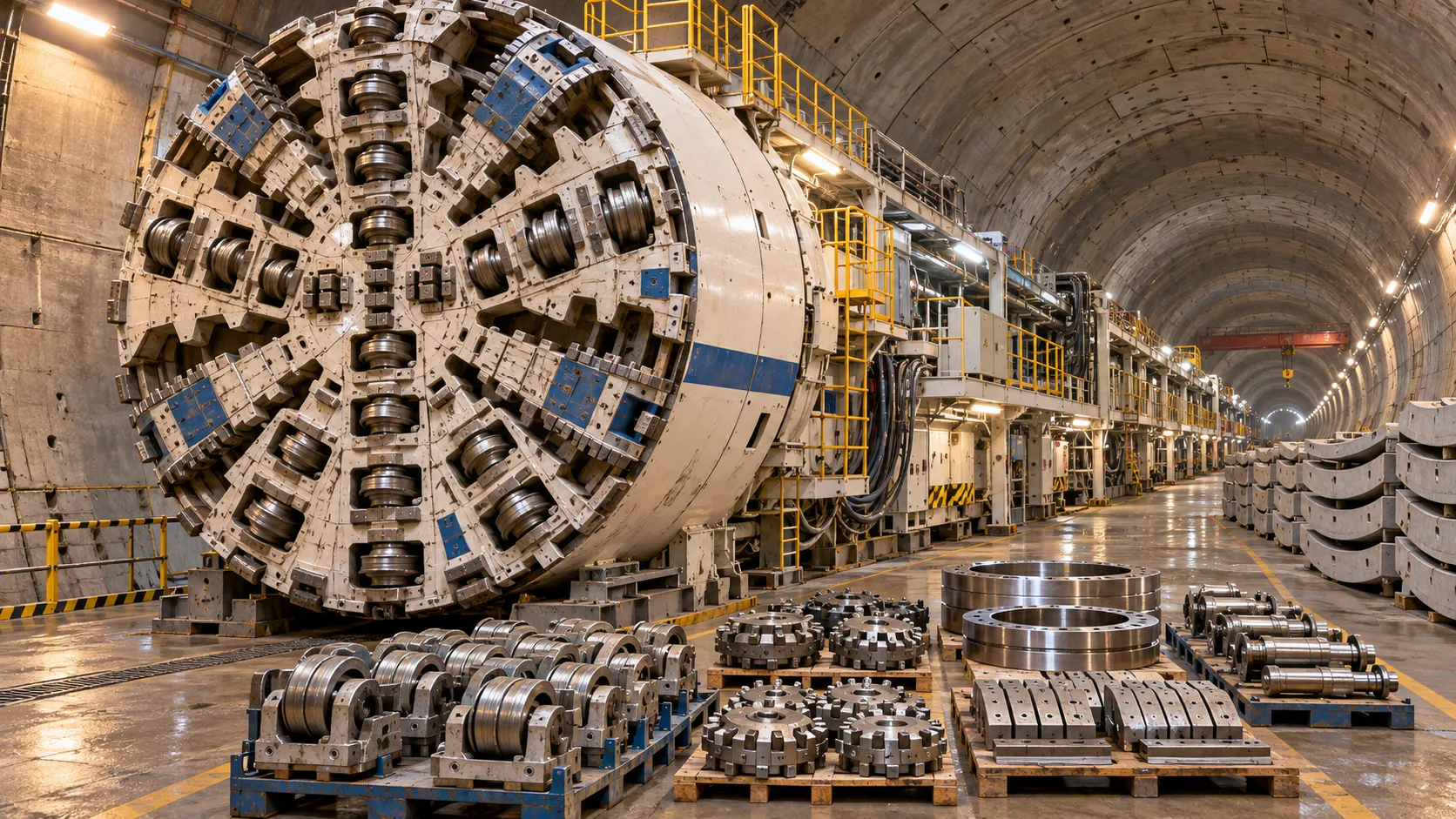
China's TBM Export Controls Prompt Infrastructure Concerns in India
China's TBM export controls could affect infrastructure projects in India. Explore potential supply risks and practical procurement steps.
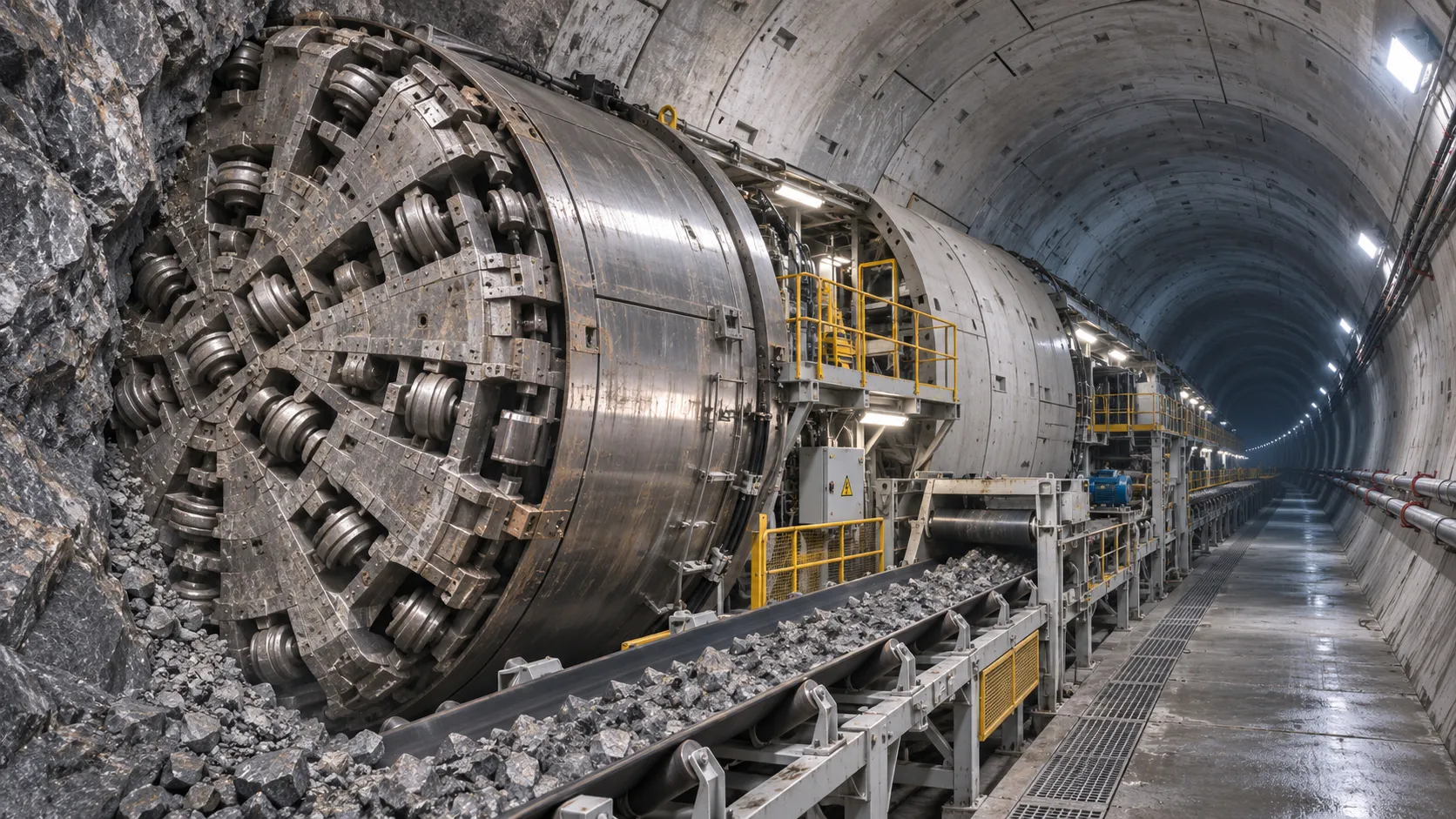
How TBM Excavation Works in Rock and Soft Ground: A Practical Guide
TBM Excavation in rock and soft ground explained: compare machine types, ground support, spoil removal, and the factors that guide smarter project planning.
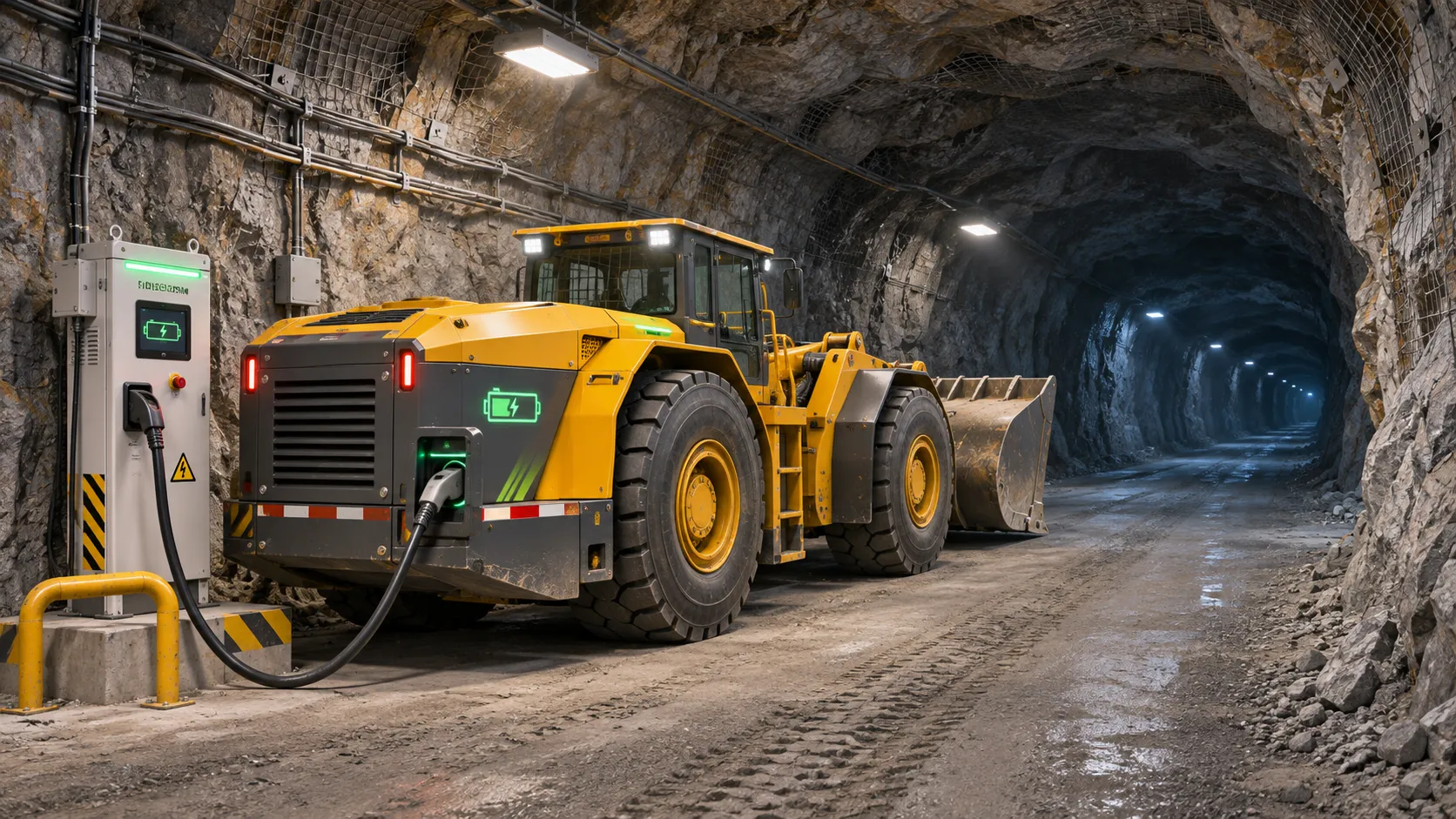
Choosing a Zero-Emission Underground Equipment Supplier: What to Check
Choosing a zero emission underground equipment supplier? Compare duty-cycle performance, charging, safety, total costs and support before you commit.
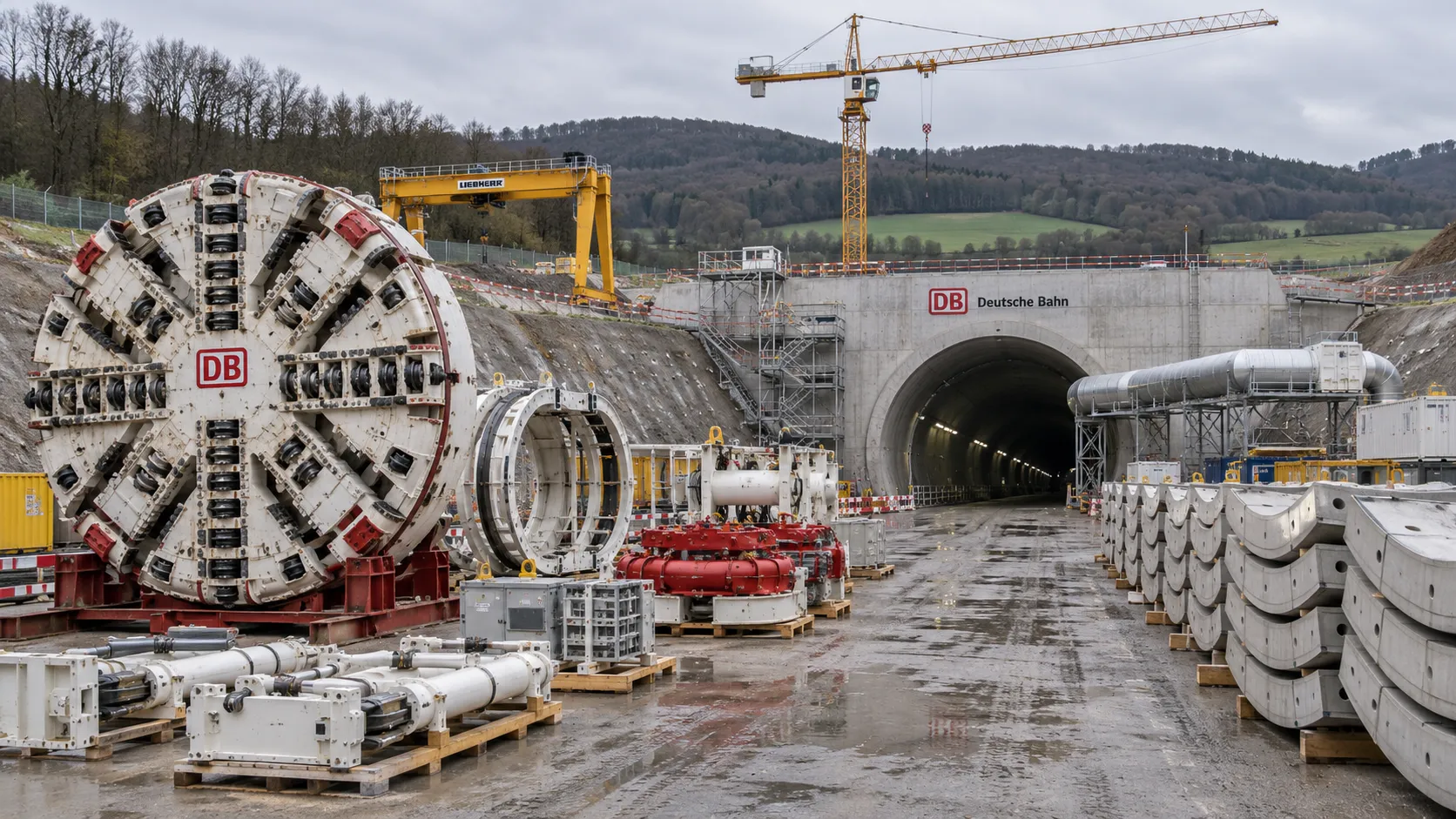
Construction Starts on Germany's Pfaffensteig Rail Tunnel, With Two TBMs Planned
Pfaffensteig rail tunnel construction is underway in Germany. Discover how two planned TBMs will support the 11-kilometre project near Stuttgart.
How Real-Time Underground Mapping Systems Work in Tunneling
Discover how real-time underground mapping systems guide tunneling teams, integrate sensor data, and support confident decisions with verified accuracy.
First Mechanized Tunnel Crossing Beneath the Panama Canal Completed
Panama Canal tunnel crossing: Explore the reported Metro Line 3 milestone and what it could mean for future underwater tunneling projects.
Underground Utility Construction Equipment: Choosing by Ground Conditions
Choose underground utility construction equipment with confidence. Compare trenching, HDD, microtunnelling and TBMs by ground conditions, risk and cost.
China Sets Tunnel Boring Machine Export Controls as India Pushes Local Production
China tunnel boring machine export controls could reshape procurement as India pushes local production. Explore potential supply and project impacts.
Choosing a Trenchless Pipeline Installation Contractor: Key Qualifications
Choose a trenchless pipeline installation contractor with confidence. Learn how to assess experience, equipment, safety, costs, and project risks before you hire.
Related News
- 00
0000-00
China's TBM Export Controls Prompt Infrastructure Concerns in India - 00
0000-00
How TBM Excavation Works in Rock and Soft Ground: A Practical Guide - 00
0000-00
Choosing a Zero-Emission Underground Equipment Supplier: What to Check - 00
0000-00
Construction Starts on Germany's Pfaffensteig Rail Tunnel, With Two TBMs Planned - 00
0000-00
How Real-Time Underground Mapping Systems Work in Tunneling
Weekly Insights
Stay ahead with our curated technology reports delivered every Monday.