
What load-capacity documents to request from a mining truck supplier





Start with a document package, not the headline payload
A stated payload rating is only a starting point for a mining truck purchase. It does not, by itself, show whether the truck can carry the intended material safely on a particular haul road, with a specific body, tyre selection, loading tool, gradient, climate, and operating pattern. For procurement teams, the practical question is whether the supplier can document the full set of limits that sit behind the number.
A capable mining truck load capacity supplier should be able to provide those records before commercial negotiations are substantially complete. If payload evidence arrives only after the purchase order, the buyer has little leverage when a mismatch appears between the proposed truck and the mine plan. The consequences can be significant: reduced tonnes per hour, chronic overloading, premature tyre wear, brake-temperature restrictions, body damage, or an operating fleet that cannot meet its forecast cost per tonne.
The first request should therefore be a controlled technical document package, with revision numbers, model identification, applicable configuration, and clear operating assumptions. Generic brochures can support an initial comparison, but they are not an engineering basis for fleet selection.
The rated payload document must define what is being rated
Ask for the supplier's formal rated payload specification, usually supported by a technical data sheet and an approved general arrangement drawing. The document should state the truck model, body type, body liner arrangement if applicable, tyre size and rating, rim configuration, and the machine weight used to calculate payload.
The core calculation is straightforward: payload is the difference between the allowable gross vehicle weight and the operating empty weight. The important issue is that both terms need definition. Empty weight can change materially with body options, liners, fire suppression systems, autonomous-operation hardware, fuel level, battery configuration, cold-weather equipment, and site-required accessories. A payload figure based on a lightly equipped reference unit may not represent the machine being offered.
Request the following in the rated-capacity record:
- Rated payload and maximum gross vehicle weight.
- Operating empty weight for the exact proposed configuration.
- Definitions of fluid levels, standard equipment, optional equipment, and exclusions used in the weight calculation.
- Front and rear axle loads in the unloaded condition.
- Permitted axle loads at rated payload and at maximum gross vehicle weight.
- Any distinction between nominal, target, and maximum allowable payload.
- The supplier's stated tolerance for production variation in machine weight and body weight.
The distinction between rated payload and maximum permissible payload deserves particular attention. In many operations, a payload target is used to support efficient loading, while a higher limit may represent the structural or regulatory boundary that must not be exceeded. A quotation that presents only one number gives the buyer no way to determine whether it is a productive operating target or an absolute limit.
Ask the supplier to identify the governing basis for each limit. A payload limit may be controlled by frame stress, suspension capability, axle load, tyre capacity, braking performance, electrical system limits, or body durability. The lowest relevant limit, rather than the most attractive catalogue figure, governs the safe operating envelope.

Body volume must be checked against material density and loading practice
Payload is measured by mass, but loaders and shovels fill a truck body by volume. This creates one of the most common procurement errors: selecting a body that appears well matched to the truck's rated payload, only to find that the actual ore, waste, or overburden reaches its weight limit before the body is full, or fills the body before the target mass is reached.
Request a body capacity drawing and a body-volume certificate or calculation sheet. It should identify struck capacity, heaped capacity, the angle of repose assumed for the heaped calculation, and the body configuration being measured. The supplier should also describe whether volume includes canopy extensions, sideboards, liners, spill guards, or tail extensions.
The buyer should then compare the body volume with the mine's expected loose bulk density range, not simply a single planning density. Fragmentation, moisture, fines content, material segregation, and blast performance can all shift the loaded density. A body matched to dry, coarse waste can be unsuitable for wet, dense ore. Conversely, a low-density material may leave the body underfilled by weight even when it is visibly full.
A useful request is a payload-body matching calculation for the expected material categories. It should show the anticipated payload at the body’s practical fill level and explain the assumptions used. This turns a broad “body capacity” statement into an operating decision: whether the loading tool can achieve the target payload without excessive passes, spillage, or repeated attempts to top off the load.
Do not treat a high-volume body as automatically beneficial. Excess body volume can encourage habitual overload where operators judge load by appearance. It can also raise the centre of gravity, affect material retention, add empty weight, and increase structural stress when the truck is loaded unevenly. For mixed-material operations, it may be preferable to specify a body around the limiting material or evaluate dedicated body arrangements rather than ask one body to serve every condition.
Tyre and axle documents often reveal the real constraint
Tyres are frequently the first component to expose an unrealistic payload assumption. A truck can have a frame and body sized for a nominal load while its permissible operating payload is reduced by tyre loading, speed, heat, road surface, or haul distance. This is especially important where long hauls, high ambient temperatures, sharp curves, rough roads, or high rolling resistance are expected.
Require a tyre application and load distribution document for the quoted tyre make, model, size, ply or star rating, and inflation pressure range. It should show individual tyre loads for the truck empty, at rated payload, and at maximum gross vehicle weight. The document should make clear whether calculations use a static load, a dynamic duty factor, or a site-specific tyre performance approach.
Also ask for the supplier's assumptions on maximum speed, haul distance, road grade, rolling resistance, ambient temperature, and expected cycle time. A tyre recommendation that is acceptable on a short, well-maintained route may not remain acceptable on a high-resistance haul with sustained heat build-up. Changing to a different tyre brand later is not always a simple substitution; load capability, heat performance, availability, and rim compatibility can vary.
The same discipline applies to axle and suspension records. Procurement should obtain axle load limits, suspension specifications, and any restrictions associated with lateral loading, uneven loading, or operation on cross-slopes. A truck can be within gross vehicle weight while still imposing an unacceptable load on one side because of material distribution, road camber, or loading geometry.
For buyers comparing suppliers, the critical comparison is not merely “number of tyres” or “rated tonnes.” It is the margin between expected duty and the documented tyre and axle limits under the mine’s actual route conditions. Narrow margins may look efficient in a desktop model but leave little room for changes in material density, road condition, or payload variation.
Capacity is inseparable from braking and downhill control
Every proposed truck should be supported by a braking and retardation performance package. This is particularly important if the truck will travel loaded downhill, operate on long declines, or use regenerative braking in an electric-drive or battery-electric configuration. Gross vehicle weight determines the kinetic and potential energy the truck must manage; a payload number without a corresponding braking duty statement is incomplete.
Request documents covering service braking, secondary or emergency braking, parking brake capability, and retarding performance. The supplier should state the grades, speeds, ambient conditions, rolling-resistance assumptions, and truck weights used in its performance calculations. Where applicable, the package should identify continuous downhill limits, brake temperature monitoring arrangements, retarder capacity, and any payload derating required for a particular descent.
For electric trucks, buyers should separately request the assumptions behind regenerative braking performance. Regeneration can reduce service-brake demand and recover energy, but its usable level may depend on battery state of charge, battery temperature, motor limits, traction conditions, and the energy-management strategy. A truck that begins a descent with a high battery state of charge may not have the same regenerative headroom as one operating within a planned energy window.
These records matter commercially as well as operationally. If capacity must be reduced on a critical downhill route, fleet productivity calculations based on the headline payload become overstated. The cost impact can appear later as extra truck hours, higher fuel or energy consumption per tonne, and a larger required fleet than originally budgeted.
Ask suppliers to make site assumptions visible
Published capacity figures are generally developed under defined conditions. Procurement should ask each bidder to complete a site-assumption schedule rather than rely on verbal alignment during meetings. The schedule should include material density, expected bucket or shovel pass count, haul profile, maximum sustained grade, haul distance, road width, curve radii, rolling resistance, elevation, ambient temperature range, water and dust exposure, and intended operating hours.
The purpose is not to transfer mine-planning responsibility to the supplier. It is to establish whether the offered capacity is valid for the intended duty, and to expose differences between bids early. One supplier may quote its standard payload at a moderate rolling resistance while another includes a more conservative estimate. Without comparable assumptions, a lower price or higher payload claim can be misleading.
The supplier should identify any conditions that trigger derating, optional equipment, altered tyre selection, a different body, or revised maintenance intervals. These qualifications should be included in the technical offer and contract schedules, not left in email correspondence. A supplier that will not state its assumptions in writing is asking the buyer to accept an undefined portion of the performance risk.
Payload measurement needs its own evidence
Even a correctly selected truck will not protect cost per tonne if the operation cannot measure payload reliably. Request documentation for the onboard payload monitoring system: its operating principle, displayed values, data retention, alarm settings, calibration method, calibration frequency, and known limitations. The buyer should understand whether the system estimates payload through suspension pressure, strain measurement, axle load sensing, or another method, and how it performs on uneven ground or during partial loading.
Ask whether the system provides individual load events, average payload by truck, overload counts, and integration options for fleet-management or production systems. These features are relevant because overload control depends on repeatable operating data, not only the presence of an indicator in the cab.
Calibration responsibility should be explicit. The contract should state who conducts initial calibration, what reference method is used, which site conditions are required, and how discrepancies are handled. If payload measurement will be used for production reconciliation or operator performance management, define the accepted accuracy approach and data ownership before delivery.
Turn the documents into a contractual acceptance path
Technical documents are most useful when they lead to measurable acceptance criteria. Before award, procurement, mine engineering, maintenance, and operations should agree on the few capacity-related conditions that the truck must satisfy. These may include operating empty weight, rated payload, gross vehicle weight, body configuration, tyre specification, maximum axle loads, monitoring-system functionality, and route-specific restrictions.
The purchase contract should attach the agreed document versions and require that any proposed substitution affecting weight, body volume, tyres, axles, brakes, batteries, or payload monitoring receives written approval. This matters because changes that seem minor in manufacturing or supply planning can change the available payload margin.
Commissioning should include a practical verification process. The aim is not necessarily to recreate every factory calculation on site, but to confirm that the delivered truck matches the contracted configuration, that the payload system is commissioned, and that operating instructions reflect the agreed site conditions. Where the fleet will work on a demanding haul profile, buyers should ensure the supplier's handover materials clearly identify loading, speed, braking, and tyre-management limits.
The strongest supplier submission is therefore not the one with the largest headline capacity. It is the one that shows how payload, body volume, tyres, axle loads, braking capability, and site duty fit together in a traceable configuration. That evidence gives procurement a defensible basis for comparing bids and gives the operating team a usable set of limits long after the purchase decision has been made.
Related News
China's TBM Export Controls Prompt Infrastructure Concerns in India
China's TBM export controls could affect infrastructure projects in India. Explore potential supply risks and practical procurement steps.
How TBM Excavation Works in Rock and Soft Ground: A Practical Guide
TBM Excavation in rock and soft ground explained: compare machine types, ground support, spoil removal, and the factors that guide smarter project planning.
Choosing a Zero-Emission Underground Equipment Supplier: What to Check
Choosing a zero emission underground equipment supplier? Compare duty-cycle performance, charging, safety, total costs and support before you commit.
Construction Starts on Germany's Pfaffensteig Rail Tunnel, With Two TBMs Planned
Pfaffensteig rail tunnel construction is underway in Germany. Discover how two planned TBMs will support the 11-kilometre project near Stuttgart.
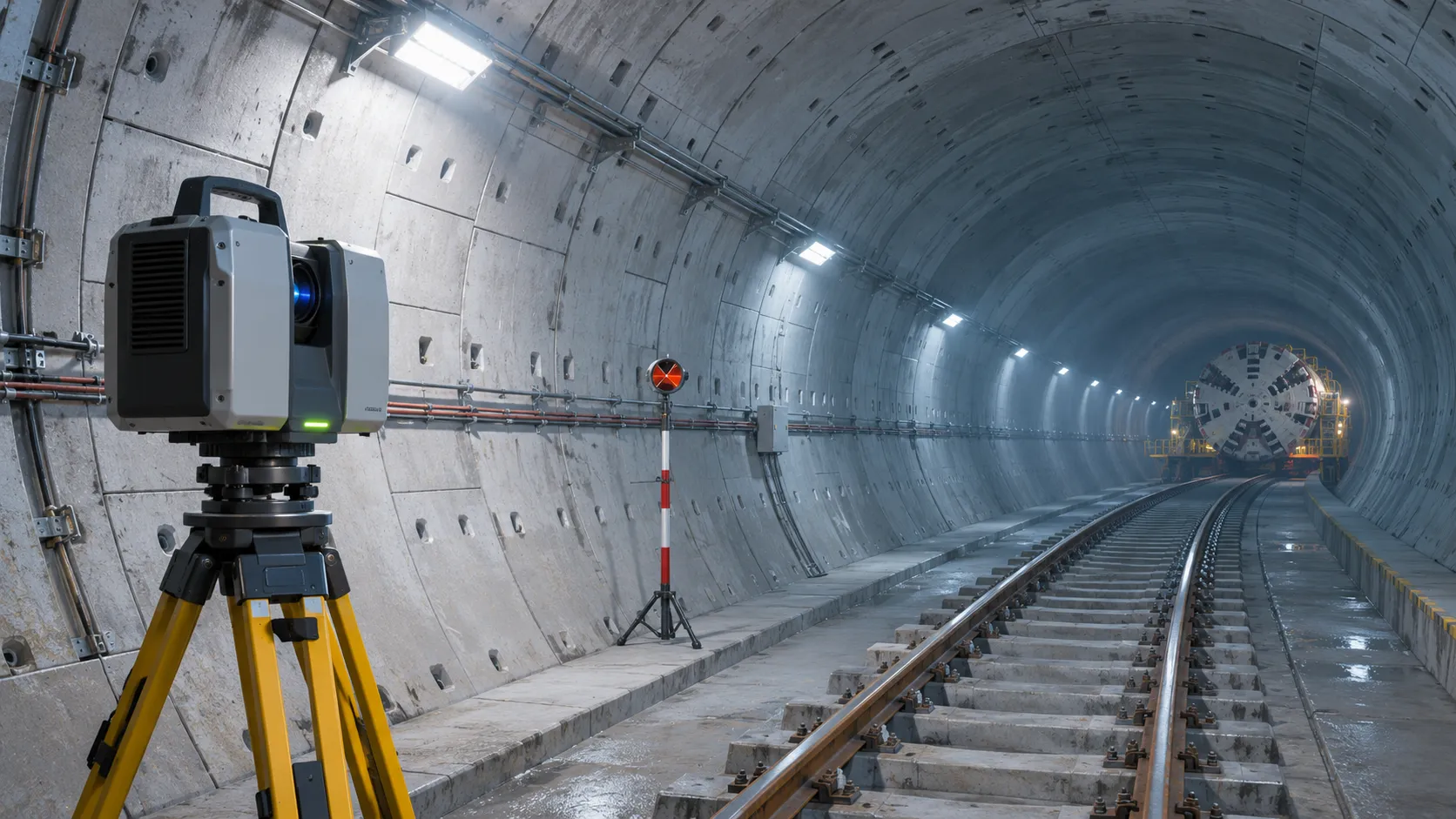
How Real-Time Underground Mapping Systems Work in Tunneling
Discover how real-time underground mapping systems guide tunneling teams, integrate sensor data, and support confident decisions with verified accuracy.
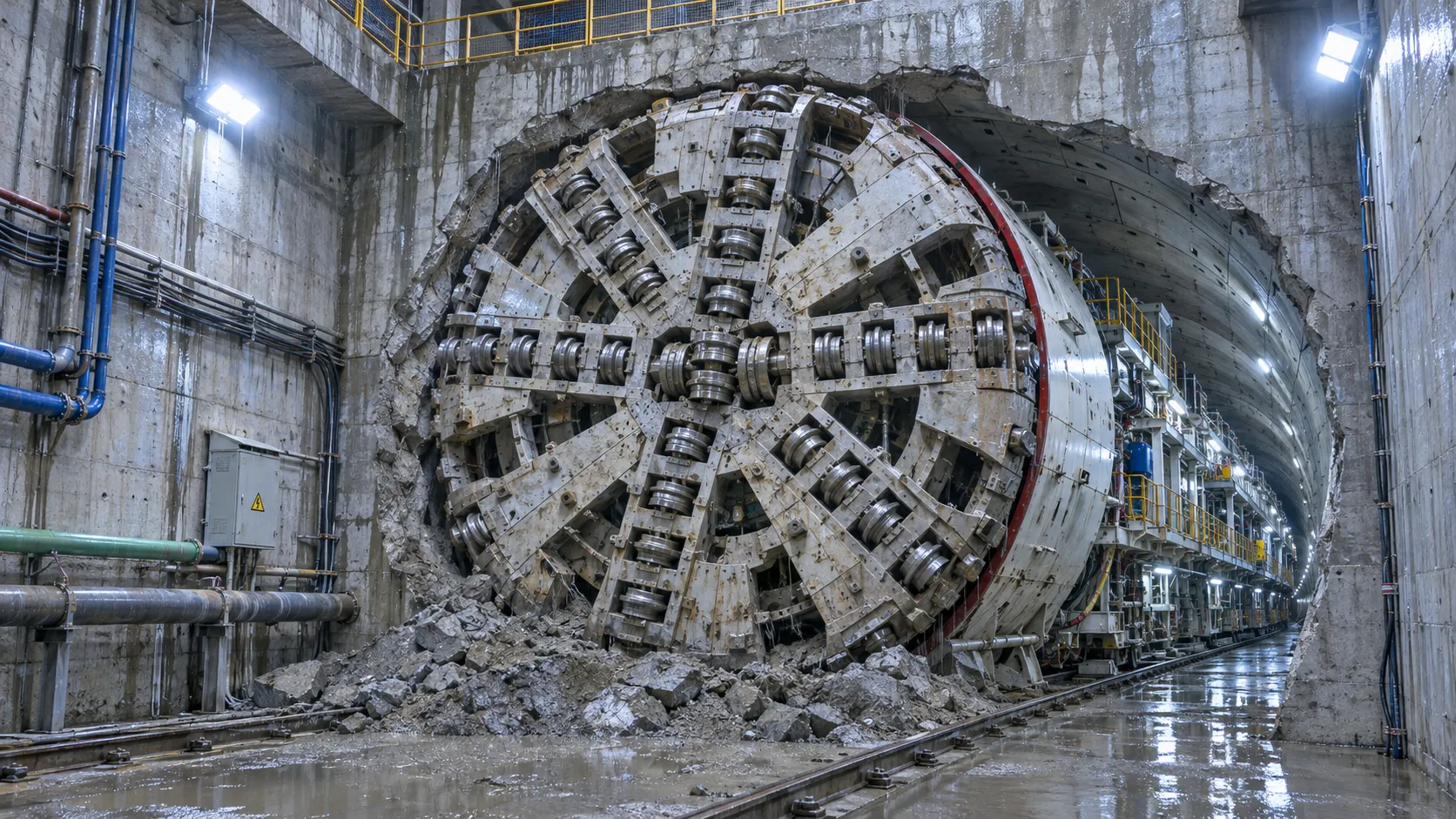
First Mechanized Tunnel Crossing Beneath the Panama Canal Completed
Panama Canal tunnel crossing: Explore the reported Metro Line 3 milestone and what it could mean for future underwater tunneling projects.
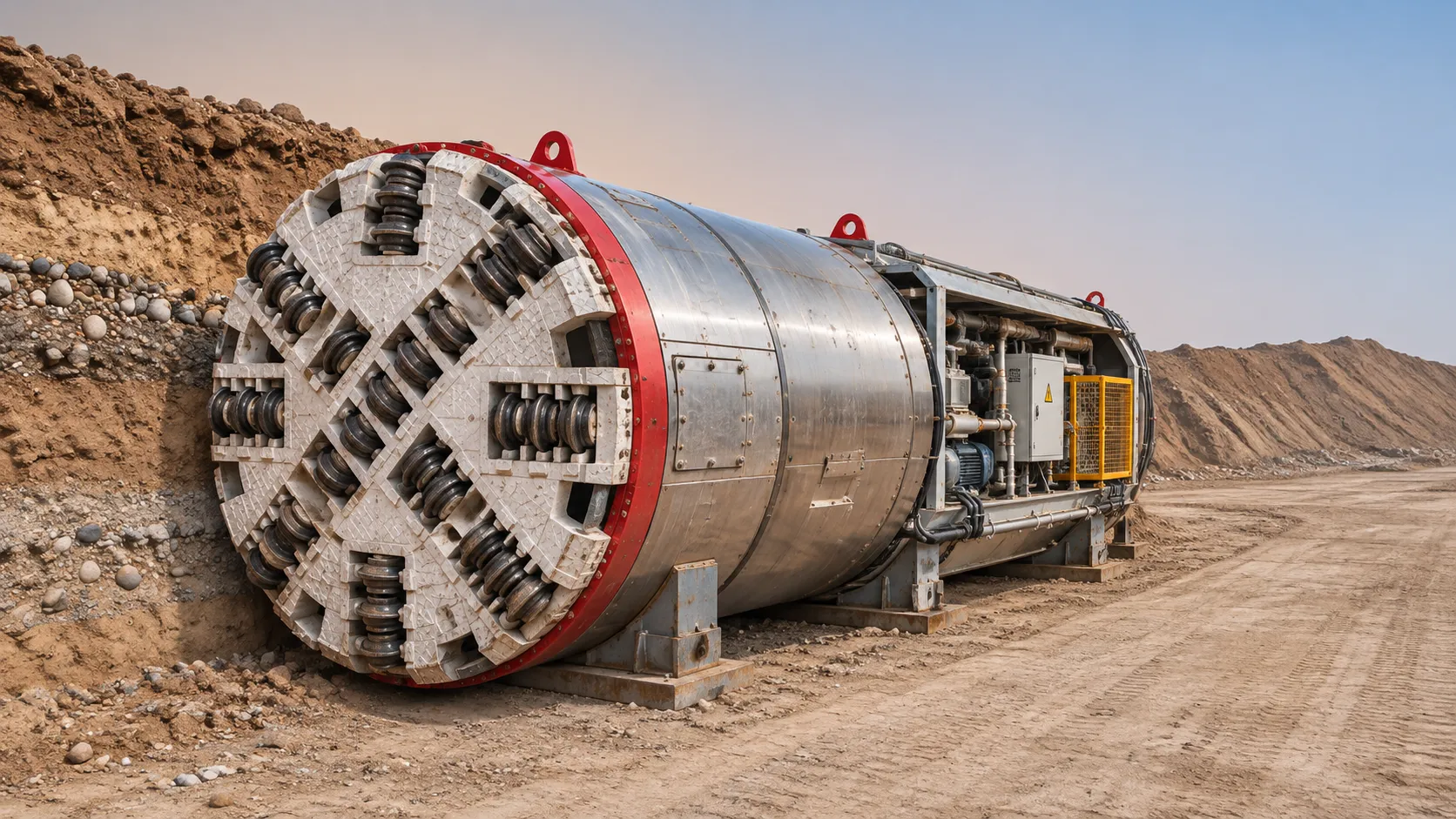
Underground Utility Construction Equipment: Choosing by Ground Conditions
Choose underground utility construction equipment with confidence. Compare trenching, HDD, microtunnelling and TBMs by ground conditions, risk and cost.
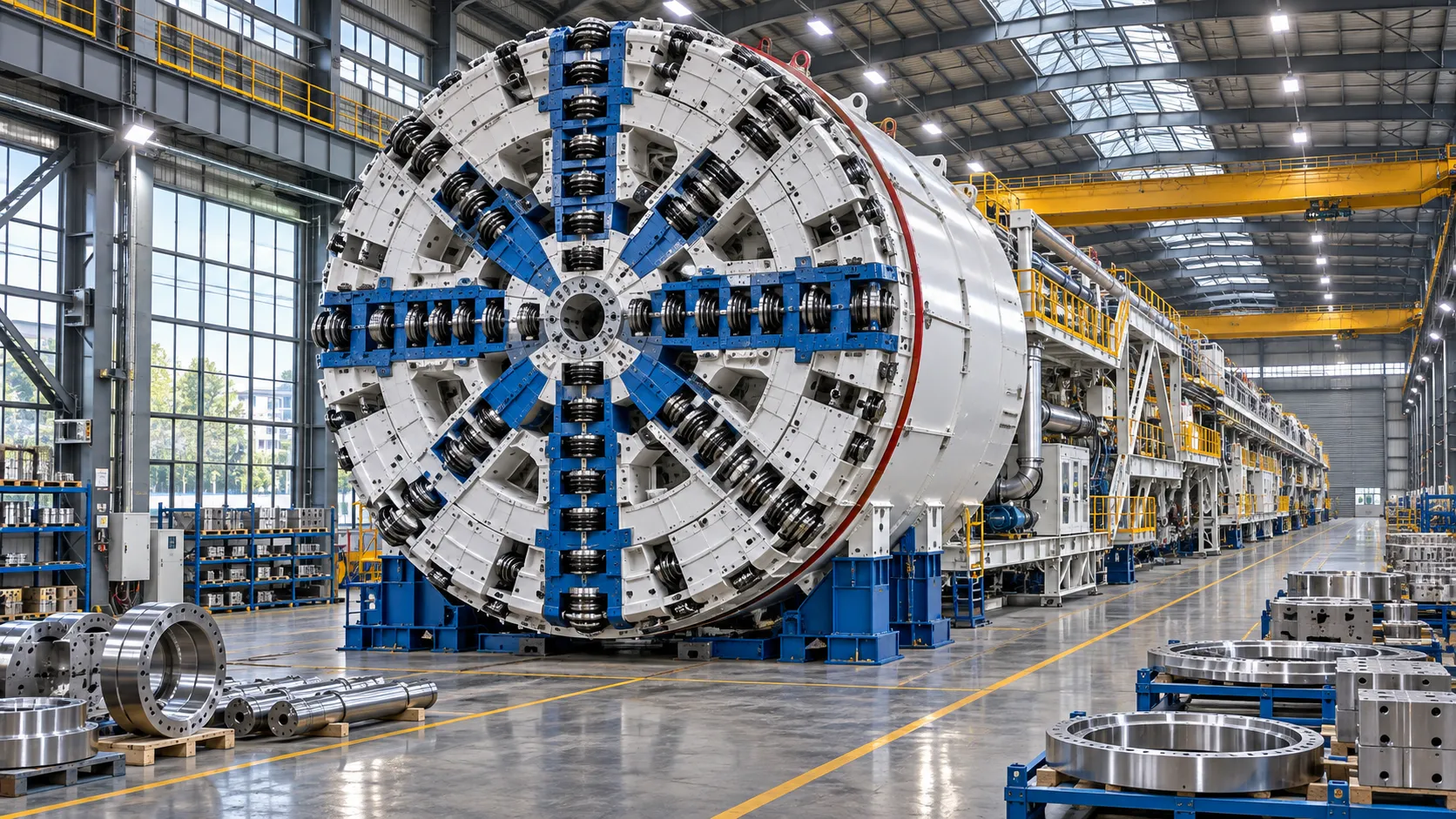
China Sets Tunnel Boring Machine Export Controls as India Pushes Local Production
China tunnel boring machine export controls could reshape procurement as India pushes local production. Explore potential supply and project impacts.
Choosing a Trenchless Pipeline Installation Contractor: Key Qualifications
Choose a trenchless pipeline installation contractor with confidence. Learn how to assess experience, equipment, safety, costs, and project risks before you hire.
Related News
- 00
0000-00
China's TBM Export Controls Prompt Infrastructure Concerns in India - 00
0000-00
How TBM Excavation Works in Rock and Soft Ground: A Practical Guide - 00
0000-00
Choosing a Zero-Emission Underground Equipment Supplier: What to Check - 00
0000-00
Construction Starts on Germany's Pfaffensteig Rail Tunnel, With Two TBMs Planned - 00
0000-00
How Real-Time Underground Mapping Systems Work in Tunneling
Weekly Insights
Stay ahead with our curated technology reports delivered every Monday.