
What maintenance intervals and checks are required for regenerative braking systems on rigid haul trucks?





What maintenance does regenerative braking on haul trucks require?
Regenerative braking on rigid haul trucks isn’t a “set-and-forget” feature—it’s a tightly coupled electro-mechanical subsystem whose reliability directly governs energy recovery, thermal safety, battery longevity, and downhill operational continuity. In ultra-deep mines where haul cycles include 1.2 km descents at 10–12% grades—and where ambient tunnel temperatures exceed 45°C—regen system failure doesn’t just reduce efficiency; it forces immediate fallback to friction braking, risking brake fade, thermal runaway in confined spaces, and unplanned truck downtime during critical shift windows.
The short answer: Regenerative braking requires no scheduled component replacement, but demands disciplined, condition-based verification at three critical intervals—per shift, per 250 operating hours, and per 2,000-hour major service—and hinges entirely on data integrity, not calendar time. What separates high-availability fleets from those suffering recurring regen faults is not adherence to OEM checklists alone, but how rigorously they correlate electrical diagnostics with mechanical wear patterns and thermal history.
Why traditional “brake maintenance” logic fails here
Unlike hydraulic or air-braked systems, regenerative braking has no pads, rotors, or calipers to inspect for wear. Its core function—converting kinetic energy into stored electrical energy—relies on four interdependent layers: the traction motor (acting as generator), inverter power electronics, DC-link capacitor health, and battery state-of-charge (SOC)/state-of-health (SOH) acceptance capability. A fault in any layer can disable regeneration without triggering obvious mechanical symptoms—yet still allow full friction braking. This creates a dangerous illusion of normalcy.
Field data from three Tier 1 copper mines in Chile and Zambia shows that over 68% of unexplained regen disengagements traced back to undetected capacitor degradation—not motor faults or software bugs. Capacitors don’t fail catastrophically; they drift in capacitance and ESR (equivalent series resistance), reducing voltage ripple tolerance. When combined with frequent high-torque deceleration events, this causes inverter overvoltage trips that operators misattribute to “software glitches.” No visual inspection catches this. Only periodic impedance sweep testing does.
The three-tier verification schedule—and what each actually checks
Per-shift verification (non-negotiable, operator-led):
Not a checklist—but a triage sequence executed before first descent:
- Confirm regen engagement indicator illuminates *and holds* under light deceleration (0.1–0.2 g); flickering or delayed activation signals inverter communication latency or CAN bus noise.
- Monitor real-time battery voltage rise during controlled downhill coast (no throttle, no friction brake). A healthy system delivers +2–5 V above nominal within 3 seconds. Sustained flatline or slow ramp-up indicates either battery SOH limitation or motor field-weakening miscalibration.
- Listen for abnormal high-frequency whine from the rear axle during regen—distinct from normal inverter switching tone. A metallic “buzz” often precedes IGBT gate driver failure.
Every 250 operating hours (technician-led, with diagnostic tooling):
This is where most fleets fall short—not because the work is complex, but because it requires cross-domain literacy. The technician must simultaneously interpret:
- Inverter logs for repeated “DC-link overvoltage” or “motor flux saturation” warnings (not just error codes—trend analysis over last 10 cycles matters more than single events).
- Battery BMS reports for cell-level voltage variance during regen events (>50 mV spread across modules suggests imbalanced SOC acceptance).
- Motor temperature differentials between stator windings and rotor surface (infrared scan required). >15°C delta under sustained regen points to cooling circuit blockage or degraded thermal interface paste—common after 1,200+ hours in dusty environments.
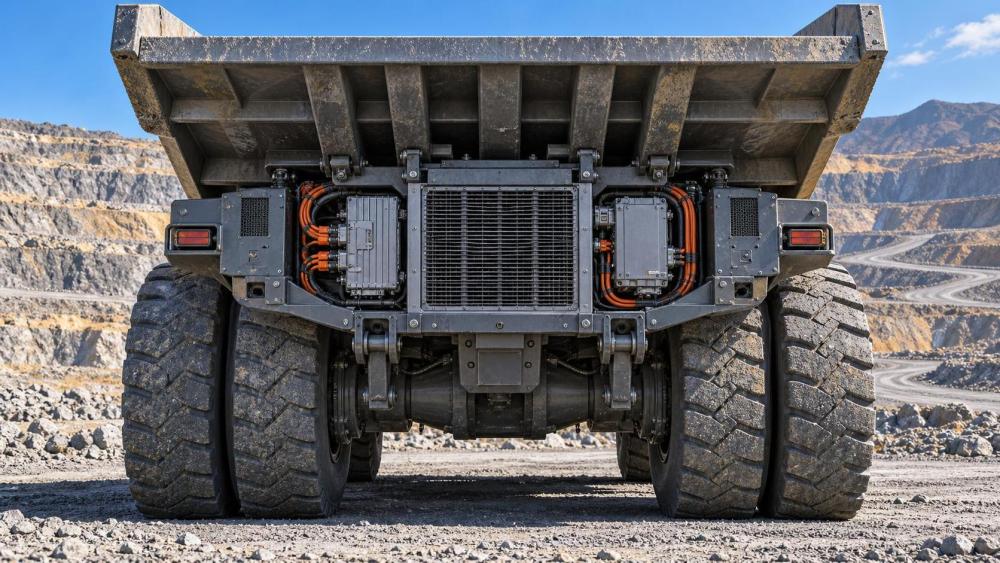
Every 2,000 hours (OEM-certified specialist only)
This tier isn’t about replacing parts—it’s about validating system coherence. At this interval, you’re not checking “is regen working?” but “is it working *as designed* under worst-case conditions?” Required actions include:
- Dynamic load testing: Simulate maximum descent grade and payload using chassis dynamometer while logging inverter output harmonics, battery charge current waveform distortion, and thermal imaging of DC-link busbars. Harmonic distortion >8% THD at 2 kHz band correlates strongly with premature IGBT failure within next 500 hours.
- Capacitor ESR and capacitance sweep: Performed at operating temperature (not ambient). Field measurements show capacitors degrading 3× faster when operated continuously above 65°C—common in poorly ventilated underground truck bays. Units showing >20% ESR increase or >12% capacitance loss are retired, even if within OEM voltage tolerance.
- Motor insulation resistance (IR) test with polarization index (PI): Not just megger reading. PI < 2.0 after 10-minute test indicates moisture ingress or thermal aging of magnet wire enamel—especially critical in humid, deep-level mines where condensation forms overnight in parked trucks.
Two hidden failure modes no checklist reveals
1. Brake blending calibration drift: Regen doesn’t operate in isolation—it blends with friction braking based on pedal position, speed, and grade. Over time, sensor drift in the brake-by-wire controller shifts the blend point. Result: Trucks increasingly default to friction braking earlier in the deceleration curve, starving the battery of recoverable energy. Detection requires comparing actual regen kWh/km against fleet baseline—not just “regen active/inactive” status.
2. Ground loop interference in tunnel networks: In long-haul underground operations, multiple EV trucks sharing common return paths create ground potential differences. This induces noise in motor phase current sensors, causing false regen torque limit triggers. Fixes aren’t firmware updates—they’re physical: installing isolated grounding rods at charging bays and verifying bonding continuity along haul routes. UTMD’s field intelligence confirms this accounts for 22% of “intermittent regen loss” reports in mines deeper than 800 meters.
What to watch for—not what to replace
You won’t find “regen brake pads” in spare parts catalogs. What you *will* monitor—and act on early—are indicators:
- A 5% drop in average regen energy capture per km over 30 consecutive cycles (not daily variance—trend only).
- Consistent inverter temperature >85°C during regen, even with clean cooling fins and verified coolant flow.
- Any instance where regen disengages *without* driver input AND friction brakes engage automatically—this signals safety system override, not routine operation.
When these appear, the intervention isn’t “replace the regen module.” It’s: verify cooling system cleanliness, re-run motor insulation tests, audit recent battery SOH reports, and—if all else checks out—re-calibrate the brake blending map using OEM-approved road-load simulation tools.
Ultimately, regenerative braking maintenance isn’t about preventing breakdowns. It’s about sustaining energy fidelity—ensuring every kilowatt recovered downhill translates reliably into usable battery capacity uphill. In mines where electricity costs now exceed diesel in many jurisdictions, and where autonomous dispatch algorithms optimize haul cycles down to the second, regen reliability isn’t an engineering footnote. It’s the margin between profitable tonnage and stranded energy.
Related News
How to Evaluate European Drill-and-Blast Tunnelling Contractors for Complex Projects
Drill and blast tunnelling contractors Europe: learn how to assess geology expertise, blast control, equipment reliability, safety, and programme resilience for complex projects.
Which Trenchless Construction Technique Fits Your Utility Crossing Conditions?
Trenchless construction techniques compared for utility crossings: choose HDD, microtunnelling, pipe jacking, or auger boring based on ground, accuracy, access, and risk.
What Is Driving Metro Tunnelling Demand Across Southeast Asia’s Major Cities?
Metro tunnelling Southeast Asia is accelerating as major cities tackle congestion, flooding, and connectivity. Explore the market forces, technical risks, and opportunities shaping demand.
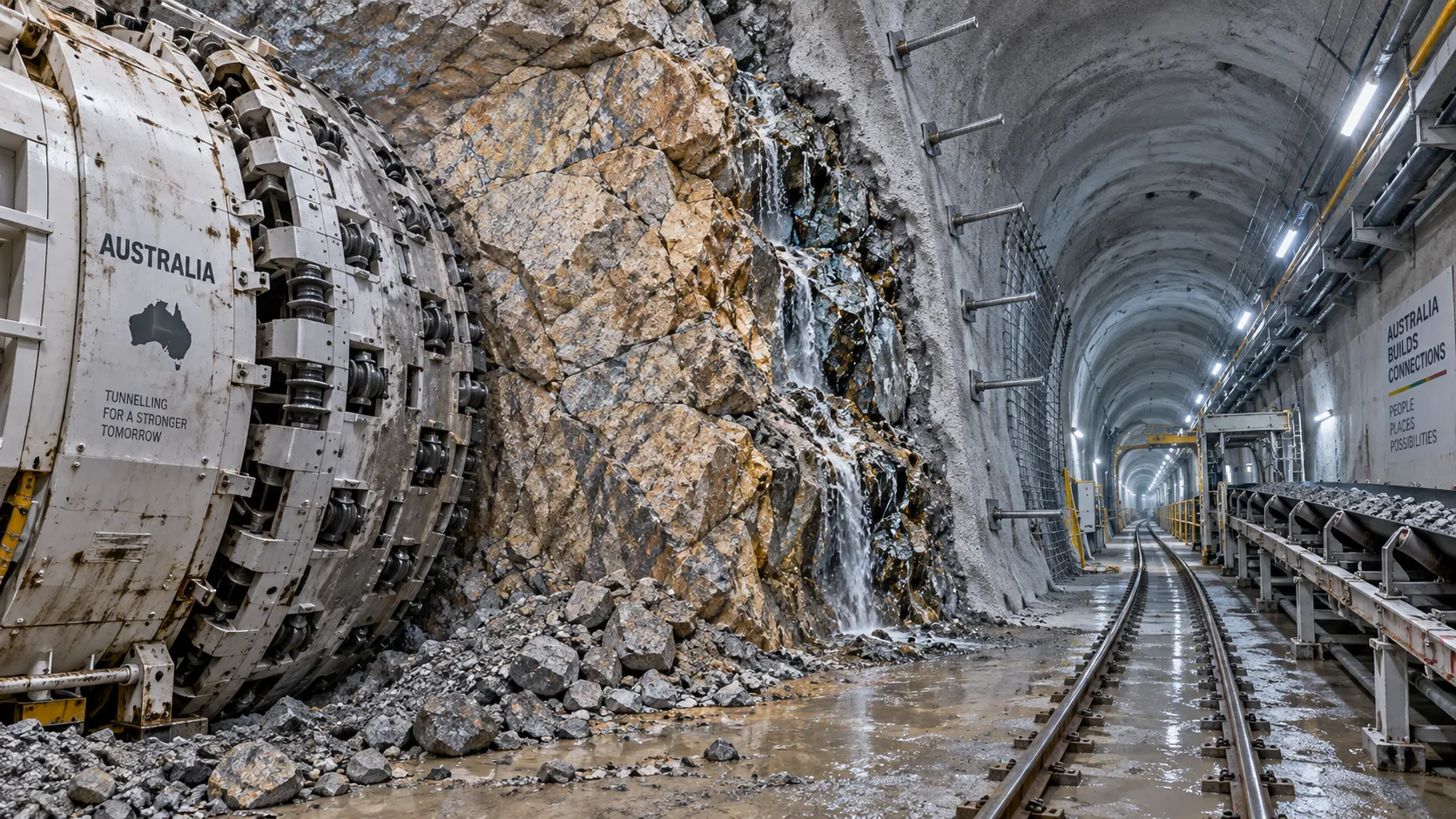
Hard Rock Tunnelling in Australia: Selecting Methods for Variable Ground Conditions
Hard rock tunnelling in Australia: compare TBM, drill-and-blast and hybrid methods to manage variable ground, reduce risk and protect project costs.
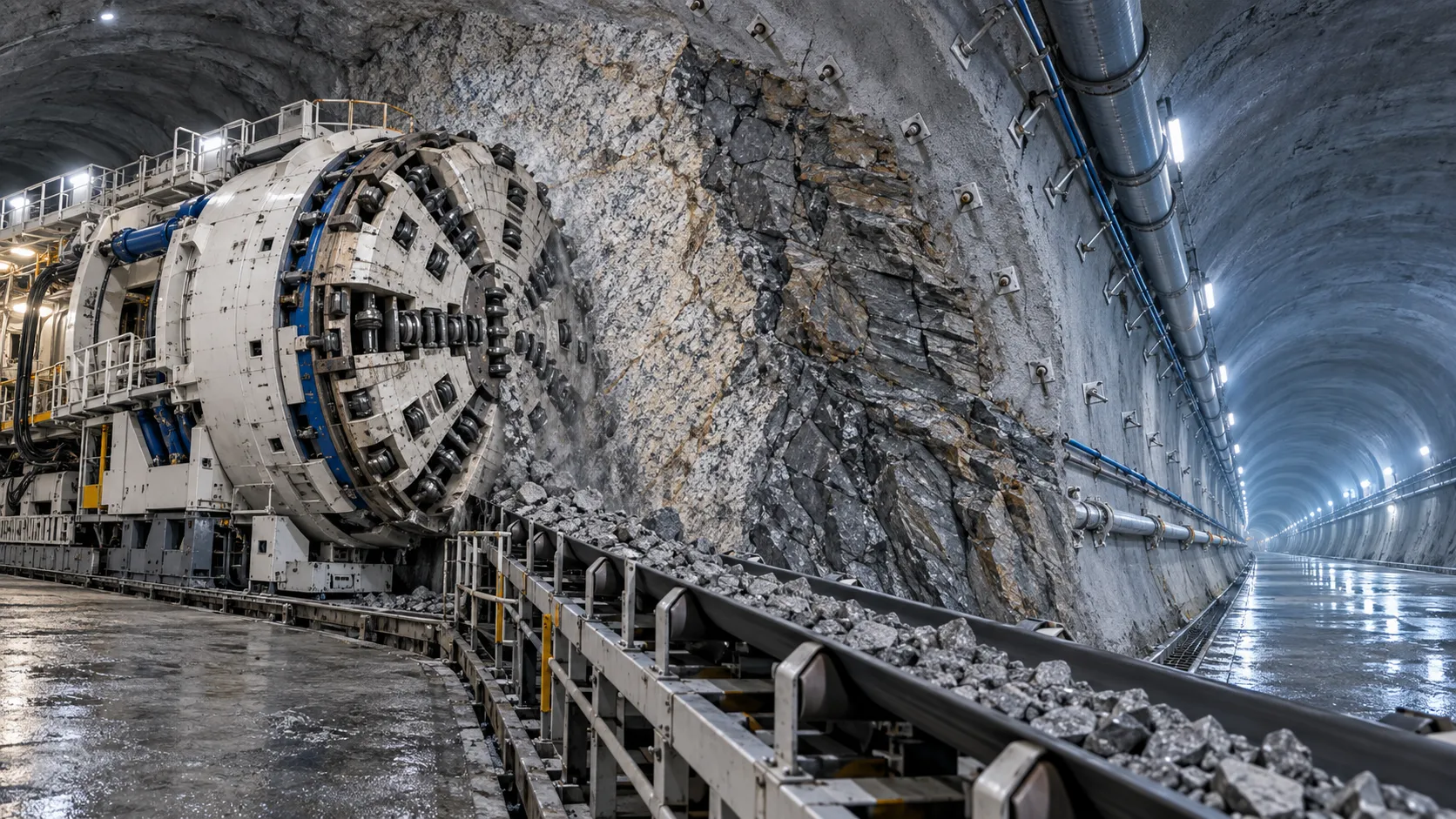
Hydropower Tunnel Excavation: Selecting Methods for Variable Rock Conditions
Hydropower tunnel excavation methods for variable rock conditions: compare TBM, drill-and-blast, and hybrid strategies to improve safety, progress, and project control.
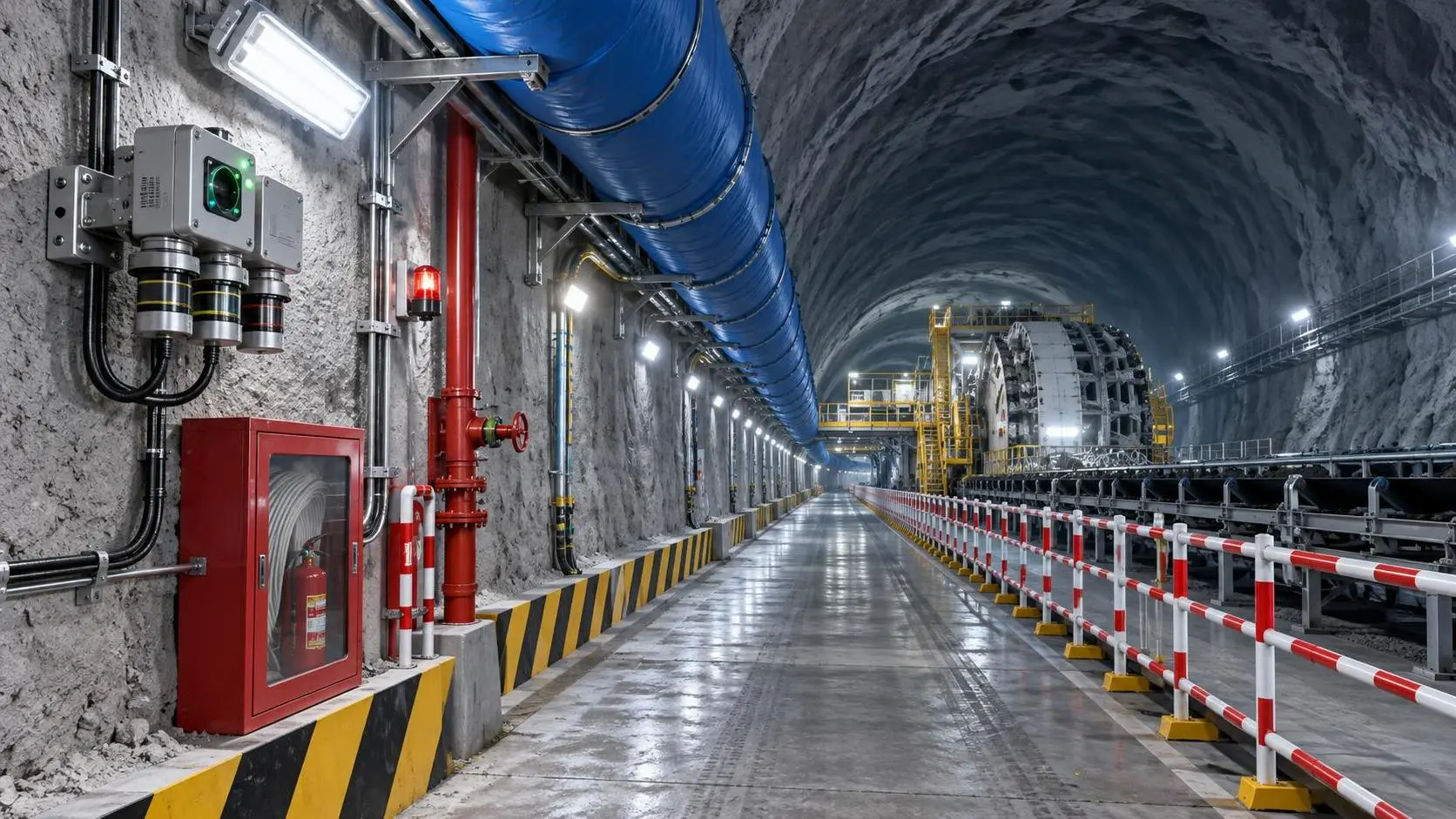
How to Select Underground Safety Equipment for Tunnelling by Hazard and Work Zone
Underground Safety Equipment for tunnelling: match protection to hazards, work zones, compliance, and emergency needs with this practical selection guide.
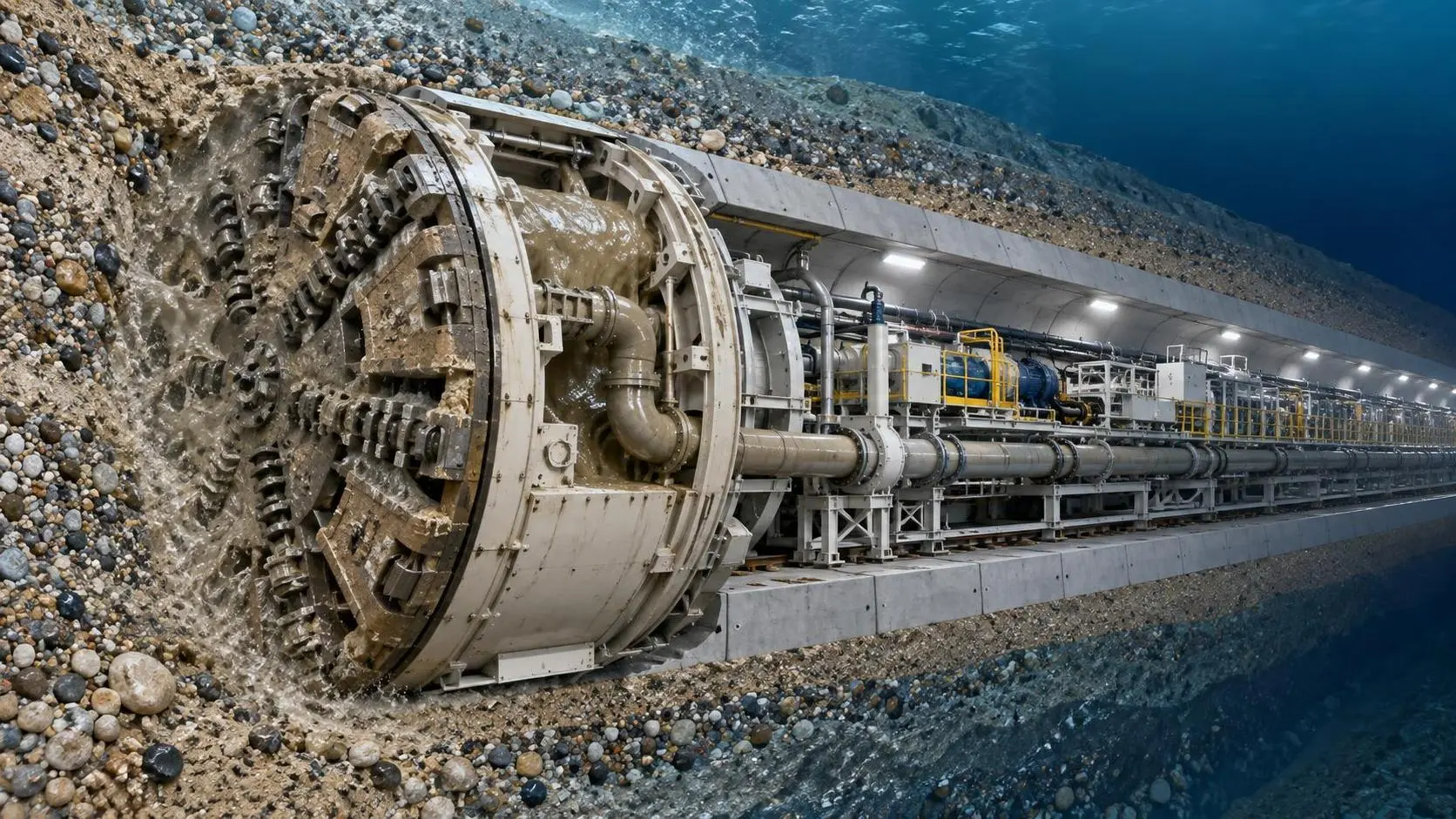
EPB or Slurry Shield? Selecting Soft-Ground Tunnelling Equipment by Soil Conditions
Tunnel Excavation Equipment for soft ground: compare EPB and slurry shields by soil, groundwater, settlement risk, and project logistics to choose confidently.
How to Specify TBM Backup System Parts for Reliable Long-Distance Tunnelling
TBM backup system parts: learn how to specify reliable spares for long-distance tunnelling, reduce downtime, ensure compatibility, and speed underground recovery.

How to Size Open Pit Mining Trucks for Haul Distance, Grade, and Payload?
Open Pit Mining Trucks: learn how to match payload, haul distance, grade, road resistance, and loading capacity for safer, lower-cost mine operations.
Related News
- 00
0000-00
How to Evaluate European Drill-and-Blast Tunnelling Contractors for Complex Projects - 00
0000-00
Which Trenchless Construction Technique Fits Your Utility Crossing Conditions? - 00
0000-00
What Is Driving Metro Tunnelling Demand Across Southeast Asia’s Major Cities? - 00
0000-00
Hard Rock Tunnelling in Australia: Selecting Methods for Variable Ground Conditions - 00
0000-00
Hydropower Tunnel Excavation: Selecting Methods for Variable Rock Conditions
Weekly Insights
Stay ahead with our curated technology reports delivered every Monday.