
Brazil Raises Micro-tunnelling Import Duty, Exempts Green-Certified Units





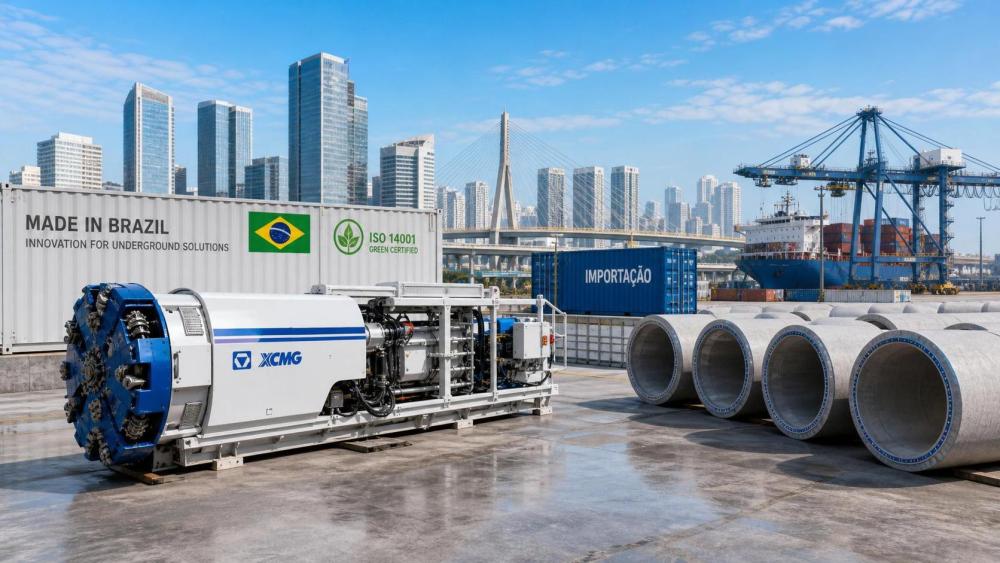
On July 10, 2026, Brazil’s ANP announced a revision to the import tariff rules for underground engineering equipment that directly affects Micro-tunnelling machinery used in major municipal pipeline projects. The change raises the base import duty while carving out a zero-duty path for equipment that holds INMETRO green energy-efficiency certification under ABNT NBR 16975:2026. For importers, project buyers, equipment suppliers, certification-related service providers, and delivery teams serving cities such as Sao Paulo and Rio de Janeiro, this is worth close attention because the new rule changes the cost and compliance logic ahead of procurement and shipment decisions from August 1, 2026.
What the Rule Change Clearly Includes
According to the information provided, ANP revised the import tariff schedule for underground engineering equipment on July 10, 2026. Under the revision, the base tariff for Micro-tunnelling equipment increases from 12% to 16.5%.
The same rule provides a zero-tariff treatment for equipment that has passed INMETRO green energy-efficiency certification under ABNT NBR 16975:2026.
The new rule is scheduled to take effect on August 1, 2026. The scope provided in the input states that it applies to procurement for major municipal pipeline network projects, including those in Sao Paulo and Rio de Janeiro.
Where the Commercial Impact Is Most Likely to Appear
Imported equipment sourcing may split into two cost paths
From an industry perspective, direct trading companies and equipment importers are likely to feel the most immediate effect because the rule creates two different import conditions for the same equipment category: a higher base duty for standard imports and a zero-duty route for products meeting the specified green certification requirement. What deserves closer attention is whether sourcing plans, model selection, and shipment timing are aligned with the August 1 implementation date and the certification status of each unit.
Project procurement teams will need to review tender and specification alignment
Buyers involved in municipal pipeline projects may be affected at the procurement stage because tariff treatment can now materially change total landed cost and bid competitiveness. Observably, procurement teams should pay attention to how technical specifications, bid documents, and supplier qualification requirements refer to INMETRO certification and ABNT NBR 16975:2026, especially where imported Micro-tunnelling equipment is being compared across multiple suppliers.
Certification and documentation work becomes more commercially relevant
For certification-related companies, testing support providers, and compliance coordinators, the rule raises the practical value of certification evidence. The likely impact is not limited to customs treatment alone; it may also affect pre-shipment document review, contract terms, and project acceptance preparation. Companies involved in these steps should focus on whether product files, test records, certification documents, and technical descriptions are complete and consistent with the zero-duty eligibility claim.
Delivery planning and after-sales coordination may face new checks
Supply chain service providers and after-sales support teams may also need to adjust. Analysis shows that where equipment is scheduled for projects after August 1, duty treatment and certification status could influence import clearance preparation, handover timing, and customer communication. Even without additional execution details in the input, the rule is enough to justify a closer review of delivery schedules and compliance handoff procedures.
What Companies Should Watch Before the Rule Takes Effect
Check whether certification status is commercially usable, not only technically claimed
Analysis shows that companies should not treat green certification as a marketing label alone. The key practical issue is whether the equipment can be supported by the required certification status under INMETRO and ABNT NBR 16975:2026 in a form that procurement and import processes can actually use.
Review contract, bid, and import paperwork against the new tariff logic
What deserves closer attention is the consistency between commercial documents and compliance documents. Companies should review product descriptions, quotation assumptions, technical files, and procurement submissions to identify whether they reflect the higher base tariff or the zero-duty treatment for eligible equipment. The input does not provide detailed enforcement procedures, so this should be treated as a compliance checkpoint rather than a confirmed filing outcome.
Reassess shipment timing around the August 1 start date
Observably, the effective date matters for both suppliers and buyers. Equipment already in planning for major municipal pipeline projects may need a fresh review of procurement timing, import planning, and handover commitments. This is especially relevant where project schedules were built on earlier tariff assumptions.
Track how project-side requirements are expressed in practice
The input confirms that the rule applies to procurement for major municipal pipeline projects in key cities, but it does not provide project-level implementation language. For that reason, companies should watch for later wording in tender documents, technical requirements, and compliance instructions rather than assuming that every project will apply the same documentary standard in the same way.
Why This Looks Like Both a Firm Change and an Ongoing Signal
Analysis shows that this development is more than a general policy headline because it has a clear effective date, a defined tariff increase, and a stated exemption condition tied to a named certification and standard. In that sense, it is appropriate to understand it as an implemented rule change rather than a vague policy direction.
At the same time, observably, the market still needs to watch how the exemption is applied in practice. The input does not include detailed enforcement language, document review criteria, or procurement-side interpretation. That means the rule also functions as an execution signal: companies can already see the direction of compliance preference, but they should continue monitoring how certification, bidding, and import treatment are handled in operational detail.
How This Update Is Best Understood Now
At this stage, the ANP revision is best understood as a concrete trade and procurement change for Micro-tunnelling equipment serving major municipal pipeline projects in Brazil. The direct message is clear: standard imported equipment faces a higher base duty, while certified green equipment is positioned differently under the new tariff treatment.
From an industry perspective, the immediate significance lies less in broad market prediction and more in practical execution. Importers, suppliers, buyers, and compliance teams should read this as a rule that can alter sourcing decisions, document preparation, and procurement comparisons from August 1, 2026, while still leaving room for continued observation of certification interpretation, tender wording, and market response.
Source Scope and What Still Needs Verification
This article is generated based on the user-provided news title, event date, and event summary. For developments of this type, relevant source categories usually include official announcements, regulator releases, customs or trade authority information, industry association updates, standard-setting organization documents, and reporting by authoritative trade media.
No specific official source link was provided in the input, so the official publication path and any supporting text still need to be verified on an ongoing basis. Further observation should focus on implementing details, certification application standards, procurement document changes, market feedback, and how companies operationalize the rule in import, bidding, and delivery practice.
Related News

How to Evaluate European Drill-and-Blast Tunnelling Contractors for Complex Projects
Drill and blast tunnelling contractors Europe: learn how to assess geology expertise, blast control, equipment reliability, safety, and programme resilience for complex projects.

Which Trenchless Construction Technique Fits Your Utility Crossing Conditions?
Trenchless construction techniques compared for utility crossings: choose HDD, microtunnelling, pipe jacking, or auger boring based on ground, accuracy, access, and risk.

What Is Driving Metro Tunnelling Demand Across Southeast Asia’s Major Cities?
Metro tunnelling Southeast Asia is accelerating as major cities tackle congestion, flooding, and connectivity. Explore the market forces, technical risks, and opportunities shaping demand.

Hard Rock Tunnelling in Australia: Selecting Methods for Variable Ground Conditions
Hard rock tunnelling in Australia: compare TBM, drill-and-blast and hybrid methods to manage variable ground, reduce risk and protect project costs.

Hydropower Tunnel Excavation: Selecting Methods for Variable Rock Conditions
Hydropower tunnel excavation methods for variable rock conditions: compare TBM, drill-and-blast, and hybrid strategies to improve safety, progress, and project control.

How to Select Underground Safety Equipment for Tunnelling by Hazard and Work Zone
Underground Safety Equipment for tunnelling: match protection to hazards, work zones, compliance, and emergency needs with this practical selection guide.

EPB or Slurry Shield? Selecting Soft-Ground Tunnelling Equipment by Soil Conditions
Tunnel Excavation Equipment for soft ground: compare EPB and slurry shields by soil, groundwater, settlement risk, and project logistics to choose confidently.
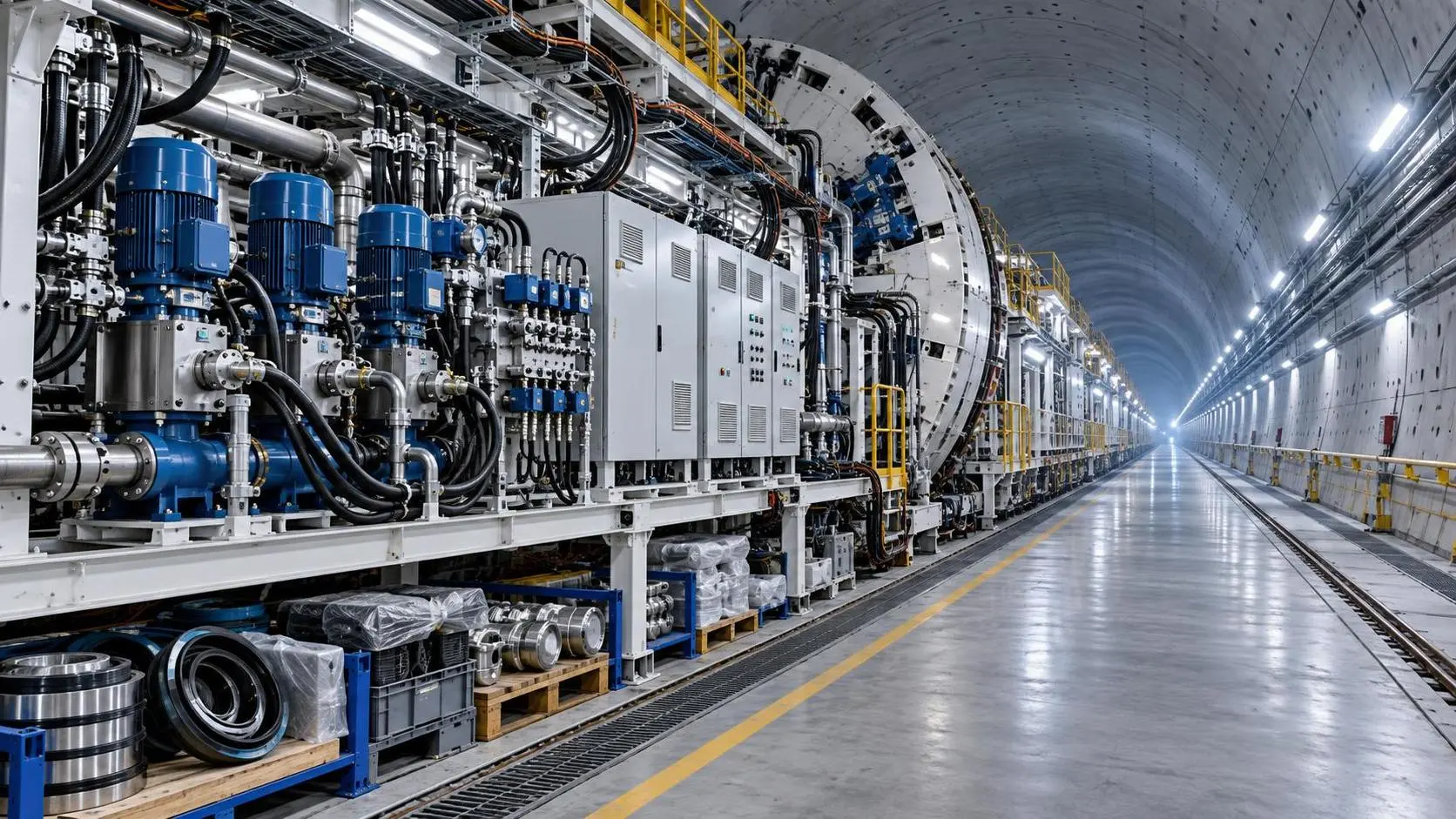
How to Specify TBM Backup System Parts for Reliable Long-Distance Tunnelling
TBM backup system parts: learn how to specify reliable spares for long-distance tunnelling, reduce downtime, ensure compatibility, and speed underground recovery.

How to Size Open Pit Mining Trucks for Haul Distance, Grade, and Payload?
Open Pit Mining Trucks: learn how to match payload, haul distance, grade, road resistance, and loading capacity for safer, lower-cost mine operations.
Related News
- 00
0000-00
How to Evaluate European Drill-and-Blast Tunnelling Contractors for Complex Projects - 00
0000-00
Which Trenchless Construction Technique Fits Your Utility Crossing Conditions? - 00
0000-00
What Is Driving Metro Tunnelling Demand Across Southeast Asia’s Major Cities? - 00
0000-00
Hard Rock Tunnelling in Australia: Selecting Methods for Variable Ground Conditions - 00
0000-00
Hydropower Tunnel Excavation: Selecting Methods for Variable Rock Conditions
Weekly Insights
Stay ahead with our curated technology reports delivered every Monday.