
JETRO Sees Faster Battery LHD Buying in Southeast Asia





The timing of the underlying market shift was not specified in the provided information, but JETRO’s 2026 Q2 report points to a clear procurement signal for the underground equipment trade: Battery LHD demand in Thailand, Vietnam, and Indonesia is rising alongside local mine automation subsidy implementation, while distributor buying behavior is moving toward smaller and more frequent orders. For manufacturers, exporters, channel partners, and after-sales operators, the issue is no longer only demand growth; it is whether supply, documentation, delivery, and service response can match a six-week procurement cycle.
What JETRO’s Report Confirms
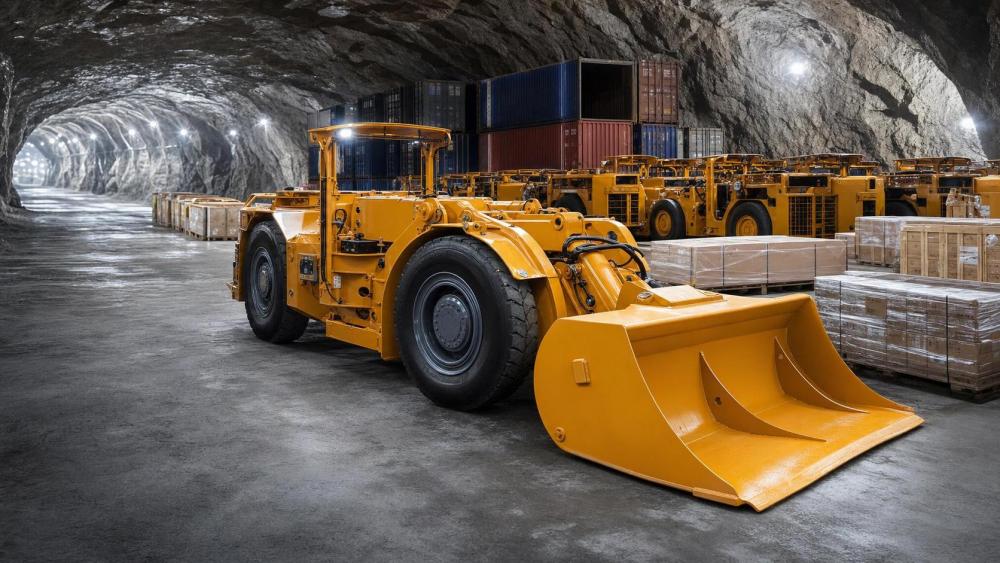
According to the user-provided summary of JETRO’s 2026 second-quarter report on Asian underground equipment procurement trends, imports of Battery LHDs in Thailand, Vietnam, and Indonesia increased by 41% year on year. The reported drivers were lower lithium battery costs and the implementation of local mine automation subsidies. The report also stated that distributors in Southeast Asia are shifting toward a small-batch, high-frequency purchasing model, and that the average order delivery cycle has been shortened to six weeks. It further indicated that this change creates new requirements for flexible production capacity and localized after-sales response from Chinese suppliers.
Where the Pressure Moves Across the Supply Chain
Export-facing manufacturers must adapt to shorter order windows
From an industry perspective, manufacturers supplying Battery LHDs into Southeast Asia may be affected first because a six-week cycle reduces tolerance for long internal scheduling and slower shipment preparation. The practical impact is likely to appear in production planning, order confirmation, technical document readiness, and delivery coordination. What deserves closer attention is whether current export workflows can support smaller but more frequent orders without creating gaps in specification alignment, shipping documents, or handover timing.
Distributors face a different inventory and fulfillment rhythm
Observably, the shift toward small-batch, high-frequency procurement changes the role of regional distributors from periodic bulk buyers to faster turnover coordinators. The impact is likely to be concentrated in order batching, lead-time negotiation, supplier communication, and after-sales escalation. These market participants should pay close attention to how procurement terms, delivery promises, and service commitments are framed, because shorter cycles can expose weak points in replenishment and customer support more quickly than traditional buying patterns.
After-sales and service partners become part of the trade requirement
Analysis shows that localized after-sales response is becoming more relevant as a market-entry condition in practice, even where the provided information does not specify a formal regulatory change. The affected business links may include spare-parts readiness, fault response procedures, technical support records, and quality traceability. For service partners and suppliers alike, the issue is not only product delivery, but whether support capability can keep pace with accelerated purchasing and deployment schedules.
What Companies Should Review Now
Check whether technical and compliance files are ready for faster repeat orders
Analysis shows that shorter procurement cycles can turn incomplete documentation into a direct commercial obstacle. Companies should review whether product specifications, testing materials, operating documents, and bid-related technical files are organized for repeated use and fast submission. The provided information does not specify new certification rules, so this should be understood as a practical compliance check rather than confirmation of a new formal requirement.
Reassess delivery planning against a six-week expectation
What deserves closer attention is the gap between stated lead times and actual execution capacity. Suppliers and exporters should closely track whether existing production and outbound logistics arrangements can support smaller, more frequent dispatches. This is particularly relevant where customer expectations may be shaped by a reported average six-week cycle rather than by earlier procurement habits.
Watch how localization expectations appear in commercial documents
Observably, the report’s reference to localized after-sales response suggests that commercial negotiations may place more weight on service coverage, response speed, and support arrangements. Companies should watch for changes in tender language, distributor requirements, or customer-side technical questionnaires that place more emphasis on local servicing capability, even if the current input does not provide those execution details.
Track market signals linked to subsidy-driven demand
From an industry perspective, the report connects import growth to lower battery costs and local automation subsidies. That means companies should continue monitoring how such support measures are reflected in actual procurement behavior, order timing, and product mix. At this stage, it would be premature to treat the current signal as a fixed long-term demand pattern; it is more appropriate to monitor how consistently the procurement model persists.
How This Signal Should Be Read
Analysis shows that this development is better understood as an execution signal in the market rather than as a standalone policy announcement. The confirmed facts do not establish a new unified regulatory framework for Southeast Asia, nor do they provide detailed certification or customs changes. However, the combination of subsidy implementation, faster purchasing cadence, and higher import volumes suggests that market access conditions are becoming more operationally demanding. For the industry, the real question is how quickly commercial requirements begin to reflect this shift in measurable ways.
Why the Update Matters Now
At this stage, the JETRO report is most usefully read as evidence that procurement rules in practice are tightening around speed, responsiveness, and local support, even where formal rule texts are not provided in the input. The immediate significance lies in execution discipline across production, export coordination, and service readiness. A measured conclusion is that the change should not be overstated as a settled regulatory overhaul, but it should not be dismissed as routine demand fluctuation either.
Basis of This Article and What Still Needs Verification
This article was generated on the basis of the user-provided news title, the note that the event timing was not specified, and the supplied summary of JETRO’s 2026 Q2 report. For events of this type, relevant source categories typically include official announcements, trade or regulatory authority releases, customs or commerce department information, industry association updates, standards organization materials, and reporting by established industry media. A specific official source link was not provided in the input, so that point still requires verification. It remains necessary to monitor any later clarification on implementation details, certification expectations, tender wording, procurement documents, market feedback, and company-side execution results.
Related News

How to Evaluate European Drill-and-Blast Tunnelling Contractors for Complex Projects
Drill and blast tunnelling contractors Europe: learn how to assess geology expertise, blast control, equipment reliability, safety, and programme resilience for complex projects.

Which Trenchless Construction Technique Fits Your Utility Crossing Conditions?
Trenchless construction techniques compared for utility crossings: choose HDD, microtunnelling, pipe jacking, or auger boring based on ground, accuracy, access, and risk.

What Is Driving Metro Tunnelling Demand Across Southeast Asia’s Major Cities?
Metro tunnelling Southeast Asia is accelerating as major cities tackle congestion, flooding, and connectivity. Explore the market forces, technical risks, and opportunities shaping demand.

Hard Rock Tunnelling in Australia: Selecting Methods for Variable Ground Conditions
Hard rock tunnelling in Australia: compare TBM, drill-and-blast and hybrid methods to manage variable ground, reduce risk and protect project costs.

Hydropower Tunnel Excavation: Selecting Methods for Variable Rock Conditions
Hydropower tunnel excavation methods for variable rock conditions: compare TBM, drill-and-blast, and hybrid strategies to improve safety, progress, and project control.

How to Select Underground Safety Equipment for Tunnelling by Hazard and Work Zone
Underground Safety Equipment for tunnelling: match protection to hazards, work zones, compliance, and emergency needs with this practical selection guide.

EPB or Slurry Shield? Selecting Soft-Ground Tunnelling Equipment by Soil Conditions
Tunnel Excavation Equipment for soft ground: compare EPB and slurry shields by soil, groundwater, settlement risk, and project logistics to choose confidently.

How to Specify TBM Backup System Parts for Reliable Long-Distance Tunnelling
TBM backup system parts: learn how to specify reliable spares for long-distance tunnelling, reduce downtime, ensure compatibility, and speed underground recovery.

How to Size Open Pit Mining Trucks for Haul Distance, Grade, and Payload?
Open Pit Mining Trucks: learn how to match payload, haul distance, grade, road resistance, and loading capacity for safer, lower-cost mine operations.
Related News
- 00
0000-00
How to Evaluate European Drill-and-Blast Tunnelling Contractors for Complex Projects - 00
0000-00
Which Trenchless Construction Technique Fits Your Utility Crossing Conditions? - 00
0000-00
What Is Driving Metro Tunnelling Demand Across Southeast Asia’s Major Cities? - 00
0000-00
Hard Rock Tunnelling in Australia: Selecting Methods for Variable Ground Conditions - 00
0000-00
Hydropower Tunnel Excavation: Selecting Methods for Variable Rock Conditions
Weekly Insights
Stay ahead with our curated technology reports delivered every Monday.