
Common Failure Risks in Trenchless Construction for Sewer Lines and How to Avoid Them





Why does trenchless construction for sewer lines fail even when the plan looks solid?
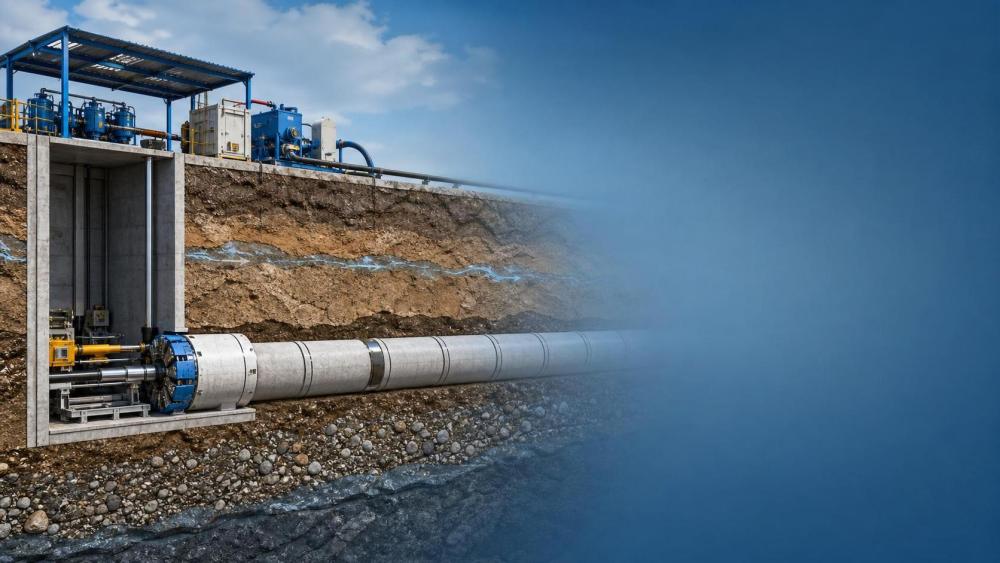
In trenchless construction for sewer lines, visible mistakes are only part of the story.
More often, failure grows from several small gaps that line up underground.
A launch shaft may be accurate, yet soil data is incomplete.
The jacking frame may be aligned, yet lubrication planning is weak.
The crew may follow procedure, yet groundwater behavior changes after excavation starts.
That is why trenchless construction for sewer lines should be managed as a system, not a single operation.
In practice, the highest risks usually involve geology, alignment, machine suitability, pipe loading, slurry control, and live-site decisions.
UTMD often tracks this same pattern across underground sectors.
Whether the machine is a TBM, a pipe jacking system, or another underground asset, reliability comes from matched mechanics and disciplined monitoring.
For sewer projects, that means treating every bore as a controlled risk chain.
Which hidden ground conditions create the biggest failure risk?
Unexpected ground is still one of the main reasons trenchless construction for sewer lines gets into trouble.
The problem is not just “bad soil.”
It is the mismatch between expected ground and actual ground response during boring or jacking.
Mixed-face conditions are especially dangerous.
Part of the face may be stable clay, while another zone contains cobbles, fill, or running sand.
That uneven resistance can deflect the machine and overload the pipe string.
Groundwater creates another layer of uncertainty.
High inflow can wash fines, reduce face stability, and trigger settlement above the bore path.
In urban corridors, uncontrolled loss of ground can quickly become a public safety issue.
A more reliable approach is to verify conditions in stages.
- Use boreholes close to the actual line, not only at convenient access points.
- Check for abandoned utilities, undocumented fills, and old foundations.
- Review groundwater seasonality, not just one-time readings.
- Prepare contingency tooling for harder inclusions or soft transitions.
On complex drives, the best decision is often not faster production.
It is earlier verification and tighter intervention thresholds.
How do alignment errors turn into structural and safety problems?
A small alignment drift in trenchless construction for sewer lines can look harmless at first.
Later, it may cause joint stress, poor flow performance, manhole fit-up issues, or reduced cover clearance.
More serious cases lead to pipe damage, rework, or breakthrough outside the receiving zone.
Alignment loss usually begins before the machine visibly deviates.
Common early signs include variable steering response, rising jacking force, slurry imbalance, and inconsistent spoil character.
When those signals are ignored, correction becomes harder and more expensive.
The table below summarizes how typical warning signs should be read on site.
The stronger method is continuous control, not delayed correction.
Laser guidance, survey hold points, and disciplined logging should work together from setup to breakthrough.
Is equipment mismatch a bigger problem than many teams expect?
Yes, and it often hides behind a project that seems technically feasible on paper.
Trenchless construction for sewer lines depends on matching machine capability to ground, drive length, pipe material, and surface sensitivity.
A machine that performs well in short clay drives may struggle in longer mixed-ground runs.
Likewise, a pipe class that meets design loads may still be vulnerable to installation stress.
This is where underground intelligence matters.
UTMD’s broader coverage of pipe jacking machines and full-face excavation highlights a consistent lesson.
Machine selection is never just a procurement issue.
It is a risk decision that affects line control, wear rate, energy demand, intervention frequency, and confined-space safety.
Before finalizing equipment for trenchless construction for sewer lines, several questions should be answered clearly.
- Can the cutterhead handle both expected soil and unexpected inclusions?
- Is thrust capacity realistic for peak friction, not only average friction?
- Are lubrication and spoil systems sized for the actual drive length?
- Do pipe joints tolerate construction loads and steering corrections?
- Is access available for maintenance without exposing crews to unnecessary hazards?
When one of these answers is vague, the project usually carries more risk than the schedule admits.
What site controls actually prevent failure during trenchless construction for sewer lines?
The most effective controls are practical, measurable, and easy to escalate.
Long checklists alone do not prevent failure.
What works is a short control loop between field data, engineering review, and stop-work authority.
A useful approach is to separate controls into pre-drive, active-drive, and response controls.
Before the drive starts
Confirm shaft geometry, frame setup, survey baseline, pipe inspection, and utility clearance.
Review emergency recovery scenarios before production pressure builds.
While boring or jacking continues
Track jacking force, advance rate, lubrication volume, slurry balance, line and grade, and settlement points.
Trend changes matter more than isolated numbers.
When abnormal conditions appear
Do not wait for a full failure event.
Trigger review when thresholds are crossed, then decide whether to slow, stabilize, adjust tooling, or stop.
This discipline is especially important in sewer corridors beneath traffic, buildings, or live utilities.
In real projects, the safest teams are rarely the most reactive.
They are the ones that define response logic before the first push.
Where do quality and safety reviews usually miss the real warning signs?
Reviews often focus on paperwork completeness and visible compliance.
Those checks matter, but they do not always reveal underground instability.
The more useful question is whether the control system can detect change early enough.
For trenchless construction for sewer lines, several blind spots appear repeatedly.
- Settlement points are installed, but trigger levels are unclear.
- Pipe inspection records exist, but joint loading trends are not reviewed.
- Geotechnical reports are filed, but field crews do not receive condition-specific briefings.
- Machine data is collected, but not compared against expected operating envelopes.
- Recovery plans exist, but logistics for implementation are unrealistic.
A mature review process links inspection results to operating decisions.
That is also where digitalization becomes useful, not just fashionable.
Across UTMD’s coverage of smart underground equipment, the common advantage of better data systems is earlier judgment.
For sewer line work, even a simple dashboard of force, alignment, lubrication, and settlement can reduce delayed decisions.
What is the most practical way to reduce failure risk on the next sewer line project?
Start by assuming that trenchless construction for sewer lines will be challenged by change, not by perfect repetition.
That mindset shifts attention from paperwork alone to field-readiness.
A practical risk-reduction plan usually includes five moves.
- Refine ground investigation near critical crossings and long drives.
- Match machine, pipe, and lubrication strategy to worst credible conditions.
- Set measurable triggers for force, line deviation, spoil change, and settlement.
- Review abnormal trends daily, not only after nonconformance appears.
- Test recovery decisions before the drive begins, including access and safety controls.
The goal is not to eliminate uncertainty underground.
The goal is to keep uncertainty from becoming damage, delay, or injury.
When trenchless construction for sewer lines is planned with that discipline, defects become easier to prevent and safer outcomes become more repeatable.
For the next review cycle, compare current controls against actual drive risks, confirm equipment fit, and tighten decision thresholds before work starts.
That is usually where the most valuable improvement begins.
Related News

How to Evaluate European Drill-and-Blast Tunnelling Contractors for Complex Projects
Drill and blast tunnelling contractors Europe: learn how to assess geology expertise, blast control, equipment reliability, safety, and programme resilience for complex projects.

Which Trenchless Construction Technique Fits Your Utility Crossing Conditions?
Trenchless construction techniques compared for utility crossings: choose HDD, microtunnelling, pipe jacking, or auger boring based on ground, accuracy, access, and risk.

What Is Driving Metro Tunnelling Demand Across Southeast Asia’s Major Cities?
Metro tunnelling Southeast Asia is accelerating as major cities tackle congestion, flooding, and connectivity. Explore the market forces, technical risks, and opportunities shaping demand.

Hard Rock Tunnelling in Australia: Selecting Methods for Variable Ground Conditions
Hard rock tunnelling in Australia: compare TBM, drill-and-blast and hybrid methods to manage variable ground, reduce risk and protect project costs.

Hydropower Tunnel Excavation: Selecting Methods for Variable Rock Conditions
Hydropower tunnel excavation methods for variable rock conditions: compare TBM, drill-and-blast, and hybrid strategies to improve safety, progress, and project control.

How to Select Underground Safety Equipment for Tunnelling by Hazard and Work Zone
Underground Safety Equipment for tunnelling: match protection to hazards, work zones, compliance, and emergency needs with this practical selection guide.

EPB or Slurry Shield? Selecting Soft-Ground Tunnelling Equipment by Soil Conditions
Tunnel Excavation Equipment for soft ground: compare EPB and slurry shields by soil, groundwater, settlement risk, and project logistics to choose confidently.

How to Specify TBM Backup System Parts for Reliable Long-Distance Tunnelling
TBM backup system parts: learn how to specify reliable spares for long-distance tunnelling, reduce downtime, ensure compatibility, and speed underground recovery.
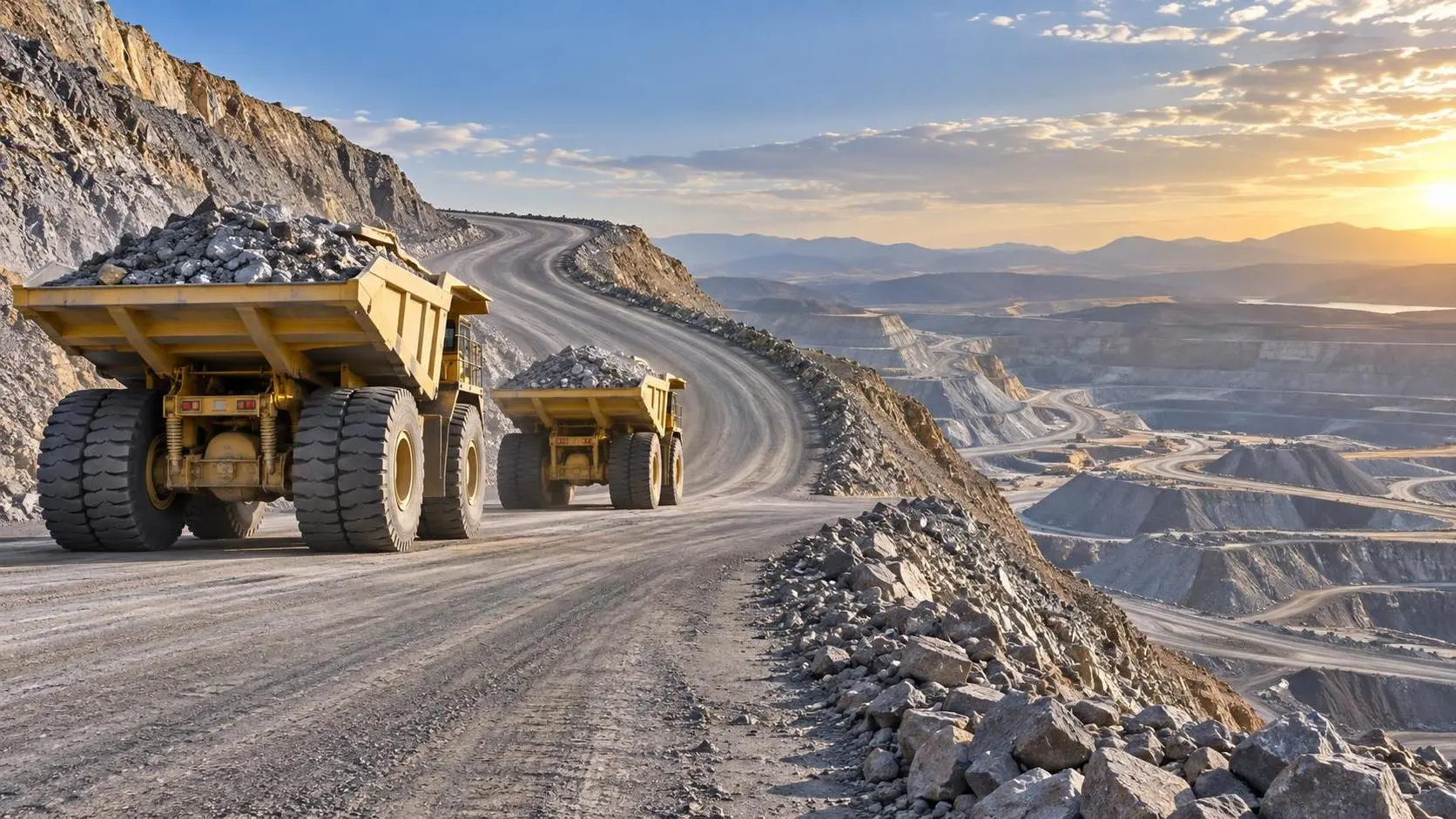
How to Size Open Pit Mining Trucks for Haul Distance, Grade, and Payload?
Open Pit Mining Trucks: learn how to match payload, haul distance, grade, road resistance, and loading capacity for safer, lower-cost mine operations.
Related News
- 00
0000-00
How to Evaluate European Drill-and-Blast Tunnelling Contractors for Complex Projects - 00
0000-00
Which Trenchless Construction Technique Fits Your Utility Crossing Conditions? - 00
0000-00
What Is Driving Metro Tunnelling Demand Across Southeast Asia’s Major Cities? - 00
0000-00
Hard Rock Tunnelling in Australia: Selecting Methods for Variable Ground Conditions - 00
0000-00
Hydropower Tunnel Excavation: Selecting Methods for Variable Rock Conditions
Weekly Insights
Stay ahead with our curated technology reports delivered every Monday.