
WTO Cuts 2026 Trade Growth to 1.9% as Strait Disruption Hits TBM Shipping





On March 19, 2026, the WTO lowered its full-year goods trade growth forecast to 1.9% from 4.6%, turning a macro trade update into a practical compliance and delivery signal for heavy equipment trade. For TBM manufacturers, oversized component suppliers, project contractors, procurement teams, and logistics service providers, the more immediate issue is not only slower trade expectations but the emergence of new delivery assurance requirements tied to rerouted maritime transport.
What the March 19 update confirms
According to the information provided, the WTO released a report on March 19, 2026 and sharply reduced its forecast for 2026 goods trade growth to 1.9%, down from an earlier 4.6% projection. The stated cause was conflict in the Middle East, which led traffic through the Strait of Hormuz to fall by 94%.
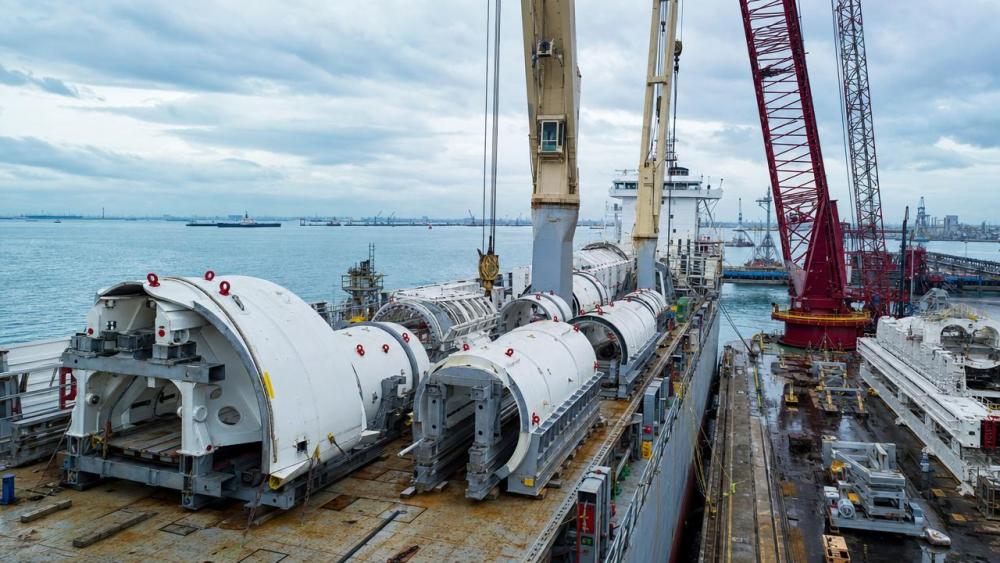
The same information states that major shipping lines including Maersk and MSC fully suspended sailings on the affected route. As a result, complete TBM units and oversized parts have been forced to reroute via the Cape of Good Hope, extending transit time by 10 to 14 days and increasing freight costs by 37%.
It is also confirmed that multiple metro projects in Southeast Asia and Latin America have required Chinese suppliers to provide delivery guarantee letters covering alternative Red Sea routing.
Why the change matters across the delivery chain
For TBM exporters and equipment manufacturers
From an industry perspective, these companies may be affected first because complete TBM units and oversized components are directly exposed to route availability, vessel capacity, and abnormal transit time. The impact is likely to appear in export scheduling, delivery commitments, shipment planning, and contract performance documentation. What deserves closer attention is whether tender files, technical submissions, and delivery schedules now need to reflect alternative route assumptions or additional transport assurance language.
For project owners and procurement teams
Procurement-side pressure is becoming more visible in the requirement for delivery guarantee letters related to alternative routing. Analysis shows that this is not only a logistics issue, but also a procurement control issue affecting bid evaluation, supplier qualification review, and contract risk allocation. Buyers may need to pay closer attention to whether suppliers can support revised lead times, route explanations, and shipment contingency documentation.
For logistics and supply chain service providers
Shipping disruptions and rerouting requirements place logistics providers at the center of execution risk. Their role may now extend beyond transport booking to route feasibility confirmation, oversized cargo handling coordination, and support for delivery assurance documents. Observably, the practical change is that freight execution and document support are becoming more tightly linked in heavy equipment trade.
For downstream installation and after-sales coordination
Where TBM delivery is delayed, downstream site preparation, installation sequencing, and service deployment may also face adjustment. Analysis shows that the key concern is not only the extra 10 to 14 days at sea, but the knock-on effect on handover timing and coordination between equipment arrival and project execution windows. Companies involved in commissioning or support should therefore watch revised delivery commitments closely.
What companies should review now
Check tender and contract language
Companies involved in current or upcoming metro and heavy equipment projects should review whether delivery terms, shipping assumptions, and risk allocation clauses need to be updated in line with alternative route requirements. Where guarantee letters are being requested, the wording, issuer responsibility, and consistency with commercial commitments deserve careful review.
Reassess shipment documents and schedule commitments
Analysis shows that freight cost increases and longer transit time can affect not only logistics budgets but also the credibility of committed delivery dates. Exporters and suppliers should pay attention to shipment schedules, route descriptions, delivery milestone documents, and any client-facing materials that could become inconsistent with actual transport conditions.
Watch changing buyer-side execution requirements
The reported request for alternative route delivery guarantees suggests that buyer-side requirements may be moving faster than formal rule publication. It is more appropriate to understand this as an execution signal rather than a fully standardized industry rule. Companies should therefore closely monitor new tender documents, clarification notices, and purchaser requests for additional evidence tied to delivery security.
Keep compliance and technical files aligned with transport reality
For oversized TBM cargo, transport arrangements can affect documentation linked to packing, shipment planning, and delivery coordination. Observably, businesses should ensure that technical files, commercial documents, and supply chain commitments are aligned, especially where route changes may alter timing, handling assumptions, or project interface plans.
How this should be read at this stage
Analysis shows that this development carries two layers of meaning. First, the WTO forecast cut reflects a broader deterioration in trade conditions. Second, the reported requirement for alternative route delivery guarantees indicates that market participants are already translating transport disruption into procurement and contract control measures.
It is more appropriate to understand this as a concrete execution signal, while also recognizing that the detailed market response still requires observation. The information provided does not establish a new formal regulation or unified trade rule for all projects, but it does show that delivery assurance expectations are tightening in at least some project environments.
What deserves continued attention
From an industry perspective, the key significance of this event lies in the shift from general transport disruption to documentable delivery accountability. For companies connected to TBM exports, oversized equipment shipping, and overseas project supply, the more relevant question is not whether disruption exists, but how quickly buyers convert that disruption into tender conditions, contract language, and proof-of-delivery requirements.
At present, this is best understood as a market-facing rule and execution change driven by trade disruption, rather than a closed and fully settled framework. Continued attention should focus on how delivery assurance requirements are expressed, how widely they are adopted, and how they affect procurement and shipment execution in practice.
Basis of this article
This article is generated from the user-provided news title, event date, and event summary. For developments of this kind, relevant source categories typically include official releases, statements from regulatory or trade-related bodies, customs or trade administration information, industry association updates, standards-related documents, and reporting by established media.
No specific official source link was provided in the input, so the exact official reference still requires follow-up verification. What remains to be watched includes any further official wording, changes in execution practice, tender document revisions, buyer-side compliance expectations, and feedback from companies involved in delivery and project performance.
Related News

How to Evaluate European Drill-and-Blast Tunnelling Contractors for Complex Projects
Drill and blast tunnelling contractors Europe: learn how to assess geology expertise, blast control, equipment reliability, safety, and programme resilience for complex projects.

Which Trenchless Construction Technique Fits Your Utility Crossing Conditions?
Trenchless construction techniques compared for utility crossings: choose HDD, microtunnelling, pipe jacking, or auger boring based on ground, accuracy, access, and risk.

What Is Driving Metro Tunnelling Demand Across Southeast Asia’s Major Cities?
Metro tunnelling Southeast Asia is accelerating as major cities tackle congestion, flooding, and connectivity. Explore the market forces, technical risks, and opportunities shaping demand.

Hard Rock Tunnelling in Australia: Selecting Methods for Variable Ground Conditions
Hard rock tunnelling in Australia: compare TBM, drill-and-blast and hybrid methods to manage variable ground, reduce risk and protect project costs.

Hydropower Tunnel Excavation: Selecting Methods for Variable Rock Conditions
Hydropower tunnel excavation methods for variable rock conditions: compare TBM, drill-and-blast, and hybrid strategies to improve safety, progress, and project control.

How to Select Underground Safety Equipment for Tunnelling by Hazard and Work Zone
Underground Safety Equipment for tunnelling: match protection to hazards, work zones, compliance, and emergency needs with this practical selection guide.

EPB or Slurry Shield? Selecting Soft-Ground Tunnelling Equipment by Soil Conditions
Tunnel Excavation Equipment for soft ground: compare EPB and slurry shields by soil, groundwater, settlement risk, and project logistics to choose confidently.

How to Specify TBM Backup System Parts for Reliable Long-Distance Tunnelling
TBM backup system parts: learn how to specify reliable spares for long-distance tunnelling, reduce downtime, ensure compatibility, and speed underground recovery.

How to Size Open Pit Mining Trucks for Haul Distance, Grade, and Payload?
Open Pit Mining Trucks: learn how to match payload, haul distance, grade, road resistance, and loading capacity for safer, lower-cost mine operations.
Related News
- 00
0000-00
How to Evaluate European Drill-and-Blast Tunnelling Contractors for Complex Projects - 00
0000-00
Which Trenchless Construction Technique Fits Your Utility Crossing Conditions? - 00
0000-00
What Is Driving Metro Tunnelling Demand Across Southeast Asia’s Major Cities? - 00
0000-00
Hard Rock Tunnelling in Australia: Selecting Methods for Variable Ground Conditions - 00
0000-00
Hydropower Tunnel Excavation: Selecting Methods for Variable Rock Conditions
Weekly Insights
Stay ahead with our curated technology reports delivered every Monday.