
Why trenchless technology matters in busy urban projects





In dense city environments, delays, traffic disruption, and utility conflicts can quickly derail schedules and budgets. That is why Trenchless Technology for urban construction has become a critical strategy for project managers seeking faster delivery, lower surface impact, and better stakeholder coordination. From municipal pipelines to complex underground crossings, it offers a practical path to keep urban projects moving with less risk and greater efficiency.
For intelligence platforms like UTMD, this topic matters because urban delivery now depends on better underground decisions. Equipment selection, route planning, geotechnical risk control, and digital monitoring all shape project outcomes.
Why busy city conditions change the value of trenchless decisions
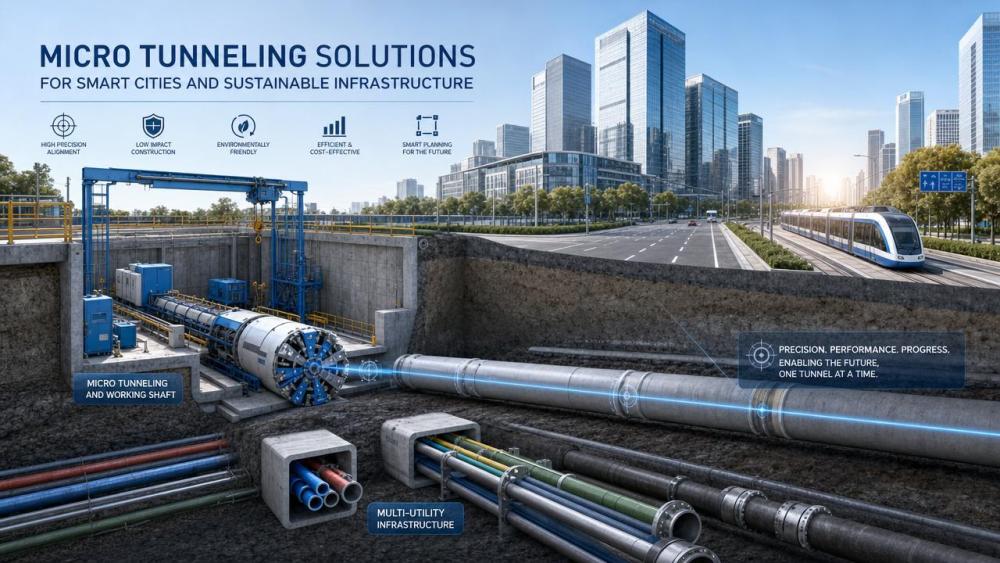
Open-cut methods still work in some places, but crowded urban corridors create different constraints. Roads, rail lines, hospitals, schools, and business districts leave little room for surface excavation.
In these settings, Trenchless Technology for urban construction protects schedule certainty. It reduces lane closures, noise exposure, spoil handling, and utility relocation pressure.
The value is not only technical. It is also social, financial, and operational. Fewer disruptions often mean fewer complaints, fewer permit complications, and better public acceptance.
Urban projects also face hidden underground complexity. Legacy pipes, undocumented cables, changing soils, and groundwater can turn a routine crossing into a high-risk operation.
That is why scenario-based planning matters. The best trenchless solution depends on alignment length, cover depth, ground condition, environmental sensitivity, and allowable settlement.
When municipal pipeline renewal demands low surface disruption
One common scenario is aging water, sewer, or stormwater infrastructure beneath active streets. Here, Trenchless Technology for urban construction often outperforms open trenching.
Pipe jacking and microtunneling help maintain traffic flow while installing or replacing underground lines. Surface activity stays concentrated at launch and reception shafts rather than along the full route.
Key judgment points in this scenario
- High traffic density increases the cost of road occupation.
- Existing businesses require continuous access.
- Utility congestion raises relocation risk.
- Settlement tolerance may be strict near old buildings.
In such corridors, decision quality depends on detailed subsurface intelligence. UTMD’s focus on trenchless engineering equipment and operational data reflects this growing need for smarter underground planning.
When transport corridors cannot be interrupted
Another high-value scenario involves crossings beneath highways, railways, metro lines, or airport service roads. Surface shutdowns are expensive and often impossible.
In these cases, Trenchless Technology for urban construction helps create safe underground passages without cutting through critical transport networks. The method protects mobility and reduces broader economic loss.
Core decision factors for corridor crossings
- Required crossing length and depth.
- Tolerance for ground movement near tracks or pavements.
- Need for continuous monitoring during advance.
- Emergency access planning if obstruction occurs.
For these projects, equipment reliability matters as much as method choice. Guidance systems, cutterhead performance, slurry balance, and jacking force management directly influence success.
When dense utility zones require precision over speed alone
Some urban districts are defined by underground congestion rather than traffic alone. Telecom ducts, power lines, gas pipes, and drainage assets may occupy nearly every available corridor.
Here, Trenchless Technology for urban construction must be evaluated for steering accuracy, utility mapping integration, and shaft positioning. Fast installation means little if alignment control is poor.
This is where preconstruction intelligence becomes decisive. Ground-penetrating surveys, records validation, and digital models reduce surprises and improve route confidence.
What usually matters most
- Accurate location of live utilities.
- Allowable horizontal and vertical deviation.
- Space for shafts, spoil removal, and slurry handling.
- Stakeholder approval timelines for sensitive zones.
How different urban scenarios change trenchless requirements
Not every city project needs the same trenchless approach. The table below shows how priorities shift across common applications.
Practical fit recommendations for trenchless urban delivery
To gain full value from Trenchless Technology for urban construction, planning should match the specific urban scenario rather than follow a generic method preference.
Recommended actions before selecting a method
- Map traffic, access, and sensitive receptors around the alignment.
- Verify utility records with field investigation and updated surveys.
- Assess settlement tolerance for adjacent structures and pavements.
- Compare shaft feasibility against route length and equipment needs.
- Define monitoring thresholds before excavation starts.
Recommended actions during execution
- Track alignment deviation and face conditions continuously.
- Coordinate traffic, public notice, and delivery windows daily.
- Review spoil, slurry, or dewatering logistics in real time.
- Keep contingency plans ready for obstruction or groundwater change.
UTMD’s industry intelligence perspective is useful here. Better decisions increasingly rely on connecting machine capability, field conditions, and project management discipline.
Common urban misjudgments that weaken trenchless outcomes
Even strong projects can struggle when trenchless planning is based on incomplete assumptions. Several errors appear repeatedly across urban works.
- Assuming trenchless always means lower total risk.
- Underestimating shaft construction constraints in tight sites.
- Treating utility data as reliable without field verification.
- Ignoring spoil handling and neighborhood logistics.
- Focusing on installation speed while neglecting monitoring needs.
Another mistake is using the same decision criteria for every site. Trenchless Technology for urban construction works best when linked to exact corridor conditions, not broad assumptions.
The strongest results usually come from early collaboration among design, geotechnical, utility, and construction teams. Shared underground intelligence reduces late changes and claims exposure.
What to do next for smarter urban underground planning
If a project faces congestion, access limits, or critical crossings, start by evaluating where surface disruption creates the highest cost. That is often where trenchless options produce the most measurable value.
Then build a scenario matrix covering traffic sensitivity, utility density, ground risk, and settlement tolerance. This creates a clearer basis for selecting Trenchless Technology for urban construction.
Finally, use trusted underground intelligence to connect route conditions with machine capability. That is the practical path to faster delivery, fewer urban conflicts, and stronger long-term infrastructure performance.
As cities become denser and infrastructure renewal accelerates, trenchless methods will matter even more. The winning approach is not simply adopting the technology, but matching it to the right urban scenario.
Related News

How to Evaluate European Drill-and-Blast Tunnelling Contractors for Complex Projects
Drill and blast tunnelling contractors Europe: learn how to assess geology expertise, blast control, equipment reliability, safety, and programme resilience for complex projects.

Which Trenchless Construction Technique Fits Your Utility Crossing Conditions?
Trenchless construction techniques compared for utility crossings: choose HDD, microtunnelling, pipe jacking, or auger boring based on ground, accuracy, access, and risk.

What Is Driving Metro Tunnelling Demand Across Southeast Asia’s Major Cities?
Metro tunnelling Southeast Asia is accelerating as major cities tackle congestion, flooding, and connectivity. Explore the market forces, technical risks, and opportunities shaping demand.

Hard Rock Tunnelling in Australia: Selecting Methods for Variable Ground Conditions
Hard rock tunnelling in Australia: compare TBM, drill-and-blast and hybrid methods to manage variable ground, reduce risk and protect project costs.

Hydropower Tunnel Excavation: Selecting Methods for Variable Rock Conditions
Hydropower tunnel excavation methods for variable rock conditions: compare TBM, drill-and-blast, and hybrid strategies to improve safety, progress, and project control.

How to Select Underground Safety Equipment for Tunnelling by Hazard and Work Zone
Underground Safety Equipment for tunnelling: match protection to hazards, work zones, compliance, and emergency needs with this practical selection guide.

EPB or Slurry Shield? Selecting Soft-Ground Tunnelling Equipment by Soil Conditions
Tunnel Excavation Equipment for soft ground: compare EPB and slurry shields by soil, groundwater, settlement risk, and project logistics to choose confidently.

How to Specify TBM Backup System Parts for Reliable Long-Distance Tunnelling
TBM backup system parts: learn how to specify reliable spares for long-distance tunnelling, reduce downtime, ensure compatibility, and speed underground recovery.

How to Size Open Pit Mining Trucks for Haul Distance, Grade, and Payload?
Open Pit Mining Trucks: learn how to match payload, haul distance, grade, road resistance, and loading capacity for safer, lower-cost mine operations.
Related News
- 00
0000-00
How to Evaluate European Drill-and-Blast Tunnelling Contractors for Complex Projects - 00
0000-00
Which Trenchless Construction Technique Fits Your Utility Crossing Conditions? - 00
0000-00
What Is Driving Metro Tunnelling Demand Across Southeast Asia’s Major Cities? - 00
0000-00
Hard Rock Tunnelling in Australia: Selecting Methods for Variable Ground Conditions - 00
0000-00
Hydropower Tunnel Excavation: Selecting Methods for Variable Rock Conditions
Weekly Insights
Stay ahead with our curated technology reports delivered every Monday.