
How to Evaluate a Pipe Jacking Company for Urban Utility and Sewer Projects





How should a pipe jacking company be evaluated before bidding or award?
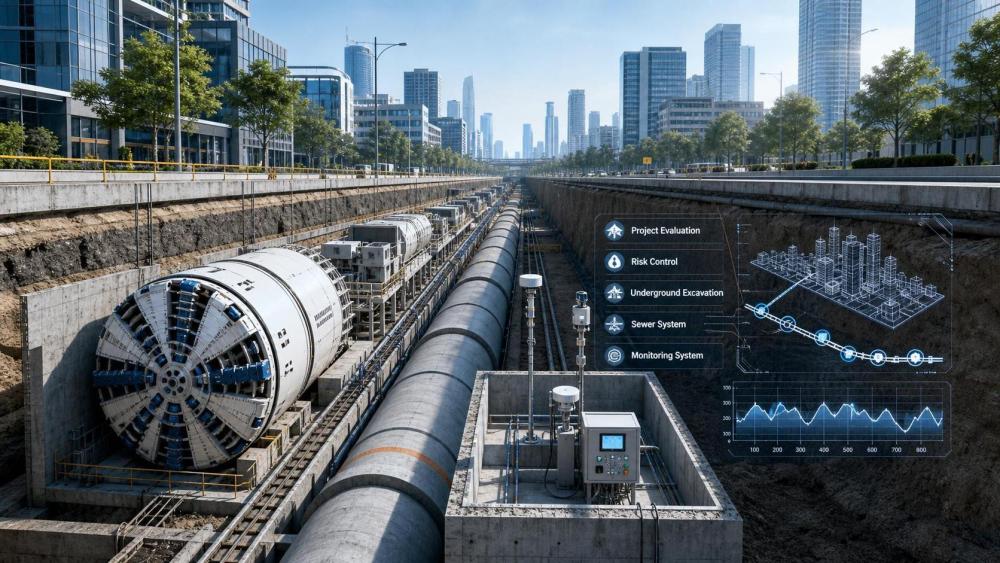
Choosing a pipe jacking company is rarely a simple price comparison.
In urban utility and sewer work, the contractor influences traffic disruption, settlement risk, permitting, and handover quality.
That is why experienced teams look beyond a machine list.
A capable pipe jacking company should show proven tunnelling judgment, not just equipment ownership.
In practical terms, the best evaluation starts with one question.
Can this team deliver safely in dense urban ground conditions without creating downstream problems?
That means checking technical methods, shaft planning, jacking force control, lubrication practice, spoil handling, and monitoring discipline.
It also means reviewing how the company handles difficult alignments, mixed ground, groundwater, and utility congestion.
UTMD often tracks how trenchless projects succeed or fail at the interface between machine capability and field execution.
That wider underground perspective matters because pipe jacking sits inside a broader ecosystem of TBM logic, ground mechanics, and zero-surface-disruption planning.
A strong review process therefore focuses on evidence, risk history, and delivery behavior under real site constraints.
What experience actually matters more than a polished company profile?
Not all experience is equally useful.
A pipe jacking company may have many completed drives, yet still be weak on your ground profile or utility density.
The more useful test is relevance.
Ask whether past projects match your diameter range, drive length, depth, groundwater conditions, and allowable settlement limits.
Mixed face conditions deserve special attention.
A contractor that performs well in uniform soft ground may struggle where weathered rock, cobbles, or abandoned obstructions are common.
The same is true for curved drives, reception constraints, and live-traffic corridors.
Useful evidence usually includes the following points:
- Completed projects with similar geology and groundwater behavior.
- Drive lengths close to your longest planned section.
- Records of settlement monitoring and corrective action.
- Utility crossing experience under strict municipal controls.
- Documented performance on schedule recovery after ground surprises.
It helps to request project case summaries, not only reference lists.
A serious pipe jacking company can explain what went wrong on a difficult drive and how procedures changed afterward.
That answer is often more revealing than a perfect presentation.
Which technical signals show the company can control risk underground?
Technical strength is visible in method detail.
A reliable pipe jacking company should define face support strategy, intermediate jacking station logic, lubrication design, and spoil removal arrangements clearly.
If those answers stay generic, caution is justified.
Urban sewer and utility projects leave little room for trial and error.
The review should also cover digital monitoring.
Better contractors track jacking loads, steering deviation, lubrication pressure, slurry balance, and settlement readings in near real time.
That approach fits the wider industry move toward smarter underground construction, which UTMD highlights across trenchless and full-face excavation systems.
The table below helps organize a realistic review.
When a pipe jacking company can answer these points with data, the selection process becomes much more reliable.
Is the lowest bid ever the right choice for a pipe jacking company?
Sometimes, but not often.
Low pricing may reflect genuine efficiency, yet it may also hide thin contingency, weak subcontract control, or unrealistic production assumptions.
In trenchless urban work, the hidden costs usually appear later.
Common examples include shaft redesign, extra dewatering, alignment correction, delayed utility approvals, and spoil logistics problems.
A better comparison looks at total delivery value.
Review the pricing structure beside exclusions, assumed geology, standby terms, treatment of obstructions, and responsibility for monitoring thresholds.
It is also wise to compare planned advance rates against similar completed drives.
If the numbers look aggressive without clear supporting logic, the risk is not theoretical.
More balanced decisions often come from scoring bids across cost, technical fit, risk ownership, and delivery resilience.
That is especially true where public sensitivity, environmental rules, and schedule certainty matter as much as contract value.
What red flags suggest a pipe jacking company may struggle after mobilization?
Several warning signs appear before work starts.
One is overconfidence without site-specific detail.
Another is a proposal that copies generic method statements while barely addressing local utility mapping, settlement thresholds, or launch shaft constraints.
Watch for missing ownership around interfaces.
If no one clearly controls survey verification, spoil disposal, permit sequencing, or emergency communication, delays tend to multiply underground.
The following checklist is useful during clarification meetings:
- Vague answers on previous mixed-ground or obstruction-heavy drives.
- Little evidence of instrumented monitoring or trend review.
- Heavy dependence on outsourced specialists without integration plans.
- Weak safety language for confined spaces and shaft operations.
- Unclear maintenance strategy for the pipe jacking machine.
- No structured lessons learned from difficult past projects.
Needless to say, none of these points should automatically disqualify a bidder.
Still, each one deserves follow-up evidence before appointing a pipe jacking company to a critical sewer or utility package.
How can the final decision be made with more confidence?
The strongest decisions combine technical review with operational realism.
Start by defining what success means for the project.
For one scheme, it may be settlement control under live roads.
For another, it may be drive certainty through abrasive or variable ground.
Then assess each pipe jacking company against those conditions, not against a generic checklist alone.
It helps to build a short decision matrix covering geology fit, method credibility, utility interface planning, HSE systems, team continuity, and commercial transparency.
Reference calls should also be targeted.
Instead of asking whether the contractor was good overall, ask how they handled deviation, claims, night work, public complaints, and recovery after unexpected ground events.
That usually produces clearer insight.
UTMD’s broader intelligence view supports this approach.
Across underground engineering, reliable performance comes from matching machine design, field data, and disciplined execution.
The same principle applies when selecting a pipe jacking company.
Before moving forward, refine the ground assumptions, confirm interface responsibilities, compare risk allowances, and stress-test the proposed construction sequence.
A careful review at this stage often prevents the most expensive surprises later.
Related News
How to Evaluate European Drill-and-Blast Tunnelling Contractors for Complex Projects
Drill and blast tunnelling contractors Europe: learn how to assess geology expertise, blast control, equipment reliability, safety, and programme resilience for complex projects.
Which Trenchless Construction Technique Fits Your Utility Crossing Conditions?
Trenchless construction techniques compared for utility crossings: choose HDD, microtunnelling, pipe jacking, or auger boring based on ground, accuracy, access, and risk.
What Is Driving Metro Tunnelling Demand Across Southeast Asia’s Major Cities?
Metro tunnelling Southeast Asia is accelerating as major cities tackle congestion, flooding, and connectivity. Explore the market forces, technical risks, and opportunities shaping demand.
Hard Rock Tunnelling in Australia: Selecting Methods for Variable Ground Conditions
Hard rock tunnelling in Australia: compare TBM, drill-and-blast and hybrid methods to manage variable ground, reduce risk and protect project costs.
Hydropower Tunnel Excavation: Selecting Methods for Variable Rock Conditions
Hydropower tunnel excavation methods for variable rock conditions: compare TBM, drill-and-blast, and hybrid strategies to improve safety, progress, and project control.
How to Select Underground Safety Equipment for Tunnelling by Hazard and Work Zone
Underground Safety Equipment for tunnelling: match protection to hazards, work zones, compliance, and emergency needs with this practical selection guide.
EPB or Slurry Shield? Selecting Soft-Ground Tunnelling Equipment by Soil Conditions
Tunnel Excavation Equipment for soft ground: compare EPB and slurry shields by soil, groundwater, settlement risk, and project logistics to choose confidently.
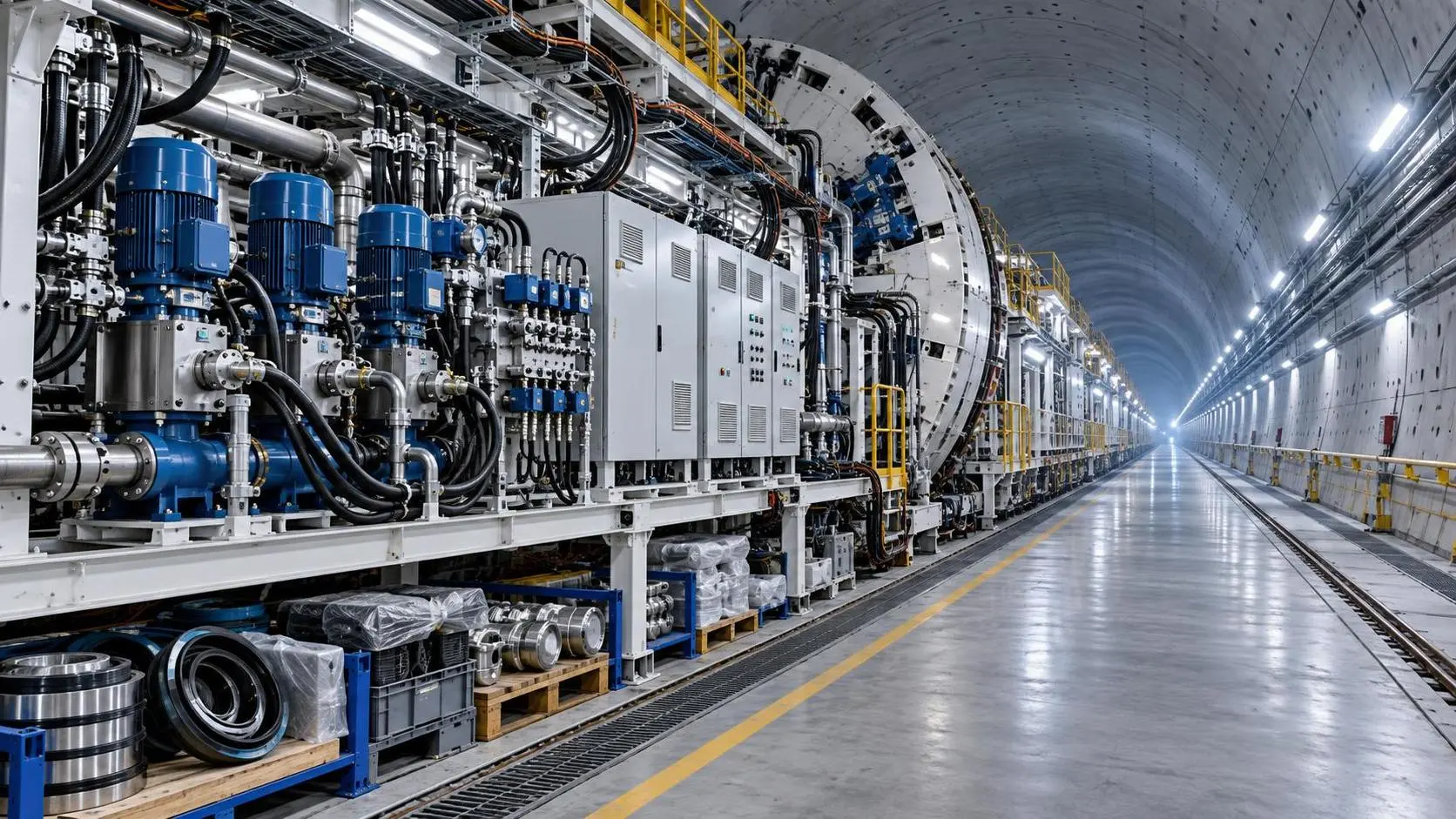
How to Specify TBM Backup System Parts for Reliable Long-Distance Tunnelling
TBM backup system parts: learn how to specify reliable spares for long-distance tunnelling, reduce downtime, ensure compatibility, and speed underground recovery.
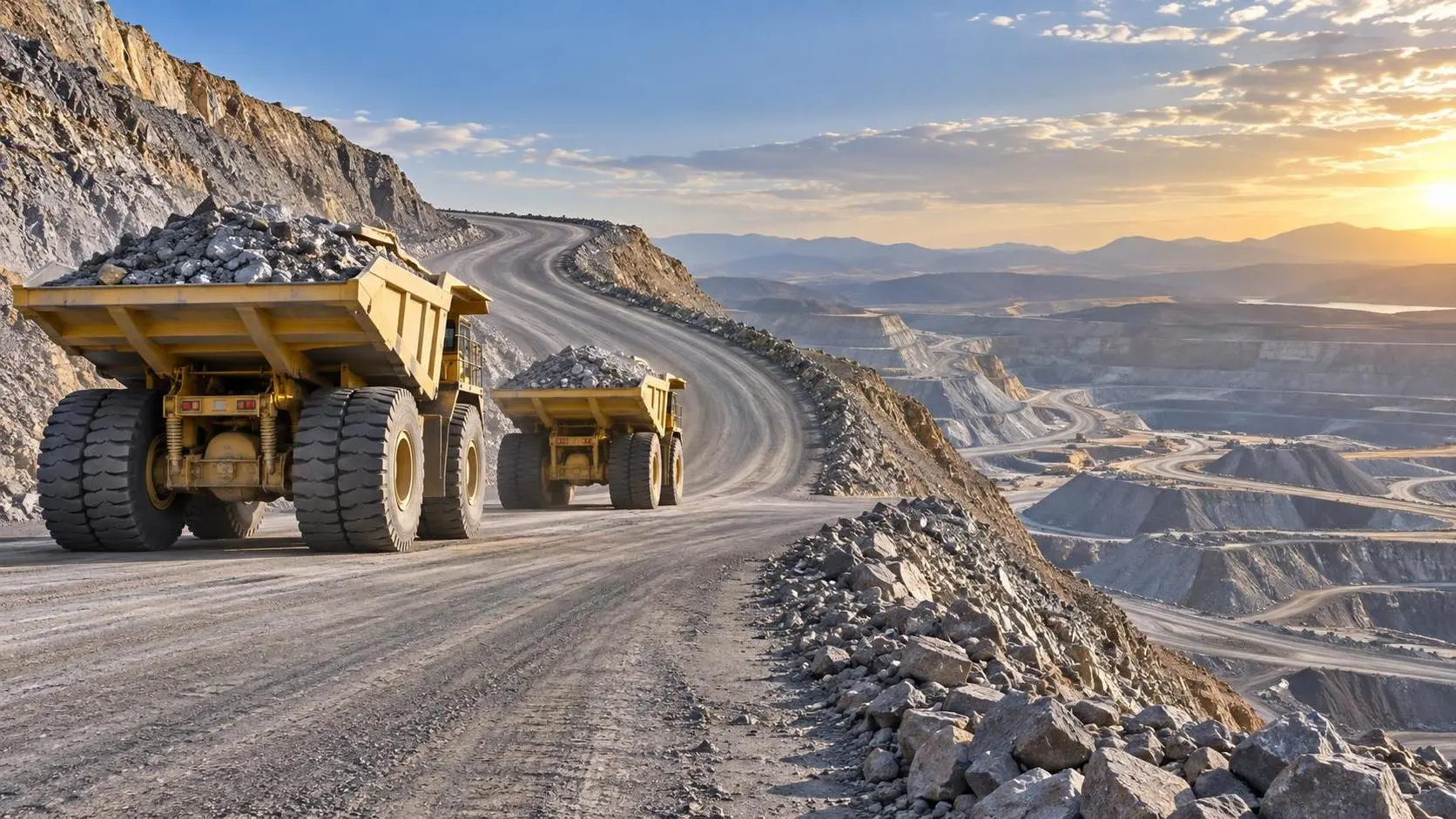
How to Size Open Pit Mining Trucks for Haul Distance, Grade, and Payload?
Open Pit Mining Trucks: learn how to match payload, haul distance, grade, road resistance, and loading capacity for safer, lower-cost mine operations.
Related News
- 00
0000-00
How to Evaluate European Drill-and-Blast Tunnelling Contractors for Complex Projects - 00
0000-00
Which Trenchless Construction Technique Fits Your Utility Crossing Conditions? - 00
0000-00
What Is Driving Metro Tunnelling Demand Across Southeast Asia’s Major Cities? - 00
0000-00
Hard Rock Tunnelling in Australia: Selecting Methods for Variable Ground Conditions - 00
0000-00
Hydropower Tunnel Excavation: Selecting Methods for Variable Rock Conditions
Weekly Insights
Stay ahead with our curated technology reports delivered every Monday.