
What Drives Tunnel Cutterhead Cost Across Ground Conditions and Project Scope?





Tunnel cutterheads cost is rarely explained by a single line item. The quoted price reflects the cutterhead’s diameter, structural design, cutting tools, metallurgy, factory testing, logistics, and the geological risk the supplier is expected to absorb. A low initial quote can be sensible for short, predictable drives. On a long alignment through abrasive, fractured, or mixed ground, it can become expensive quickly through cutter changes, unplanned interventions, lost advance, and schedule pressure.
The practical question is not simply, “Which cutterhead costs less?” It is, “Which cutterhead and support package produce the lowest credible cost per metre for this specific ground profile and project programme?” That distinction changes how a purchase package should be evaluated.
What Really Drives Tunnel Cutterheads Cost?
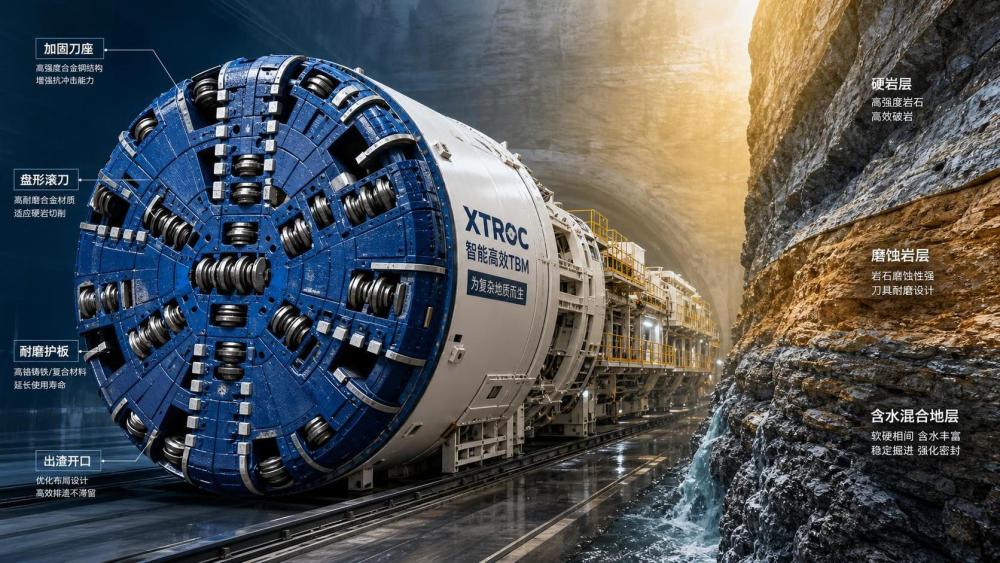
For a full-face TBM, the cutterhead is a heavily engineered rotating structure rather than a standard steel fabrication. It must transmit torque, withstand uneven face loads, hold cutters in their intended geometry, manage muck flow, and remain serviceable in confined underground conditions. Each of those requirements affects tunnel cutterheads cost.
Ground conditions have the greatest influence because they determine the duty cycle. Competent hard rock may demand high cutter loads and strong cutterhead stiffness. Highly abrasive rock can shorten disc cutter and wear-protection life even when the rock strength is moderate. Mixed-face ground may create uneven loading, vibration, blocky muck, and local overbreak risks. Fault zones and water-bearing sections can shift the discussion from normal excavation performance to inspection access, sealing, intervention planning, and contingency parts.
A useful direct answer is this: cutterhead cost rises when geology requires greater structural margin, more durable wear protection, specialised cutter layouts, difficult intervention capability, or a higher level of supplier engineering responsibility. The price of steel matters, but it is seldom the deciding factor on a complex machine.
Geology Changes the Specification Before It Changes the Price
It is tempting to classify ground only by uniaxial compressive strength. That is not enough for buying purposes. Rock can be strong but relatively non-abrasive, or weaker yet extremely abrasive because of mineral content. It can be massive and predictable, or fractured with changing joint orientation. Those differences affect cutter consumption, cutterhead wear, muck handling, and the probability of damaged components.
In hard, competent rock, the design discussion usually centres on disc cutter spacing, cutter load capacity, cutterhead stiffness, drive torque, and the ability to maintain penetration without excessive vibration. A cutterhead intended for sustained high-load operation may require thicker structural members, reinforced cutter mounts, and detailed fatigue analysis. These additions increase the original purchase price, but they may prevent costly crack repairs or premature component replacement underground.
Abrasive ground often changes the bill of materials more visibly. Wear plates, lip protection, bucket edges, scraper tools, cutter housings, and peripheral protection may need upgraded materials or replaceable protection systems. Buyers should ask exactly where wear protection is included and where it is excluded. “Wear-resistant lining” is not a sufficiently precise description. The quotation should identify material grade, thickness, attachment method, anticipated replacement method, and which parts are supplied as initial spares.
Mixed-face conditions deserve extra caution. A cutterhead designed only around average rock strength can perform poorly where hard rock shares the face with softer material, soil, or heavily weathered zones. Uneven loading can increase vibration and cause local wear patterns that are difficult to predict from a single geological value. In this setting, a lower-priced design based on uniform conditions may be a false economy.
Water pressure, inflow risk, sticky fines, and large block handling also matter. They may affect opening ratio, spoke arrangement, bucket design, muck evacuation paths, and access for inspection. The correct choice depends on the TBM type and the ground support approach; there is no universally “better” open or closed cutterhead configuration.
Diameter and Machine Interface Are Major Cost Multipliers
Diameter affects more than steel quantity. A larger cutterhead experiences larger forces and bending moments, needs more cutting tools, requires more extensive machining and assembly, and may need more demanding transport and lifting arrangements. The relationship is not perfectly linear. Once a component exceeds normal manufacturing, heat-treatment, machining, or shipping limits, costs can rise sharply.
The interface with the main bearing, drive system, shield, and screw conveyor or belt discharge system must be treated as part of the commercial scope. A quote that appears attractive may omit interface engineering, mounting hardware, instrumentation provisions, or site-fit support. These omissions often emerge late, when changes are most expensive.
Confirm whether the cutterhead is designed for a new machine, a replacement unit, or a refurbishment programme. A replacement cutterhead may require laser measurement, reverse engineering, compatibility checks, and alignment verification. It is not automatically cheaper than a new-build component just because an existing machine is available.
Cutting Tool Configuration Has Two Separate Cost Effects
The first is visible: more disc cutters, scrapers, cutter bits, or specialised tools mean a higher supplied-equipment value. The second is operational: tool selection influences intervention frequency, tool-change duration, wear consumption, and achievable advance rate.
Comparing cutter counts alone is a common mistake. The meaningful comparison includes cutter diameter, bearing and seal design, ring material, allowable load, spacing, access arrangement, supplier service capability, and expected replacement interval under the project’s actual geological assumptions. A design with fewer large cutters may reduce the number of positions, but each cutter can be more expensive and may require different handling arrangements. A denser layout can improve fragmentation under certain conditions, yet it can also increase the number of consumables to track and replace.
Ask suppliers to separate the base cutterhead price from the initial cutter complement, recommended running spares, and optional contingency stock. This makes it easier to compare commercial offers without confusing capital equipment with expected consumables.
Do not buy a predicted cutter life as if it were a guarantee
Wear life estimates are useful for planning, but they depend on geology, operating parameters, penetration, face conditions, maintenance quality, and unexpected inclusions. A credible supplier should state the assumptions behind its estimate. Treat a very optimistic cutter-life claim without stated assumptions as a planning input that needs validation, not a guaranteed lifecycle cost.
Engineering Depth, Testing, and Documentation Are Not “Soft” Costs
Two cutterheads can look similar in a general arrangement drawing and still differ materially in engineering quality. The commercial difference may include finite element analysis, fatigue assessment, welding procedures, non-destructive testing, dimensional inspection, material traceability, balancing, factory acceptance testing, and formal documentation.
These items become especially important on large-diameter machines, difficult drives, or projects with tight availability requirements. Cutting them from the scope may lower the quote, but it transfers uncertainty to the project. The decision should be deliberate. For a short, low-consequence drive in well-characterised ground, a simpler specification may be justified. For a critical transport tunnel, hydro scheme, or deep mine development, it is usually wiser to define verification requirements clearly rather than relying on broad statements about “high quality.”
Review the warranty language with the same attention given to the price. Does it cover manufacturing defects only? Are wear components excluded? What evidence is required to demonstrate a defect? Does the supplier provide engineering support if cracking, abnormal wear, or vibration develops? A warranty that cannot be practically used underground has limited value.
Project Scope Can Make a Competitive Quote Look Misleading
Delivered cost often includes much more than manufacturing. Depending on the contract, the supplier may be responsible for design adaptation, spare parts, packing for heavy lift, export documentation, marine transport preparation, insurance support, on-site supervision, installation tooling, commissioning assistance, and operator or maintenance training.
Long-lead components require special attention. Large forgings, specialised bearings, cutter assemblies, high-grade wear materials, and final machining slots can determine the manufacturing schedule. A supplier offering a low price with an optimistic delivery date may be assuming material availability that has not been secured. Ask for a milestone schedule linked to approved drawings, material procurement, fabrication, inspection, factory acceptance, and shipment readiness.
For international projects, clarify Incoterms, responsibilities for customs paperwork, lifting plans, preservation requirements, and storage limits. A cutterhead can be damaged or corroded before installation if packaging and storage conditions are vague. The cost of avoiding that risk is small compared with correcting it after arrival.
Use Lifecycle Cost, but Keep the Model Honest
A lifecycle comparison should not become a spreadsheet exercise based on invented precision. Use a range of realistic scenarios instead of one confident number. At minimum, compare initial purchase price, planned cutting-tool consumption, wear-part replacements, expected maintenance labour, intervention exposure, delivery risk, and the operational cost of lower-than-planned advance.
One practical approach is to request a base case, an abrasive-ground case, and a difficult-ground case. This does not predict the future perfectly. It reveals which offer is sensitive to adverse conditions and which supplier has acknowledged those conditions in its technical proposal.
Questions That Expose Weak Quotations Early
Before issuing a purchase order, request a line-by-line inclusions and exclusions schedule. Ask the supplier to identify the geological inputs used for cutterhead selection, the expected operating envelope, the design margins, and the consequences if conditions fall outside that envelope.
It is also sensible to ask how cutter changes will be performed, what tools and lifting devices are required, which parts can be changed from within the machine, and how long typical replacements may take under normal access conditions. These are operational questions, but they have a direct cost effect.
Another overlooked point is interchangeability. If a project expects to source disc cutters or wear items from more than one approved supplier, confirm dimensions, interfaces, and approval requirements before committing. A proprietary arrangement can be justified when it provides documented performance or service benefits. It should not be accepted by accident.
Reliable market intelligence helps frame these questions. UTMD tracks full-face TBM engineering developments and rock-cutting wear considerations across major underground projects. Its reporting can be useful for understanding technology direction and tender activity, but it should complement, rather than replace, project-specific geotechnical data, machine design review, and contractual due diligence.
FAQ
Is the cheapest cutterhead quote usually the best value?
Only when the scope, engineering basis, material specification, spares, and delivery commitments are genuinely comparable. A lower price is meaningful only after exclusions and geological assumptions have been made visible.
Should abrasive rock always justify premium wear protection?
Not automatically. The decision depends on expected exposure, replacement access, planned drive length, and the cost of downtime. Premium protection is most compelling where replacement is difficult or interruption carries major programme consequences.
Can a cutterhead be specified before the final ground investigation is complete?
A preliminary specification can be developed, but the contract should define how later geological findings are handled. Locking every detail too early can create expensive redesign or variation discussions.
What documentation should be mandatory?
At a minimum, require approved drawings, material certificates where specified, welding and inspection records, dimensional inspection results, and factory acceptance documentation. The exact package should match the project’s risk level and contract requirements.
When assessing tunnel cutterheads cost, focus on the boundary between price and risk. The strongest buying decision is built on a ground-informed specification, transparent scope comparison, realistic consumables planning, and a supplier commitment that can be verified before the machine reaches the tunnel face.
Related News

How to Evaluate European Drill-and-Blast Tunnelling Contractors for Complex Projects
Drill and blast tunnelling contractors Europe: learn how to assess geology expertise, blast control, equipment reliability, safety, and programme resilience for complex projects.

Which Trenchless Construction Technique Fits Your Utility Crossing Conditions?
Trenchless construction techniques compared for utility crossings: choose HDD, microtunnelling, pipe jacking, or auger boring based on ground, accuracy, access, and risk.

What Is Driving Metro Tunnelling Demand Across Southeast Asia’s Major Cities?
Metro tunnelling Southeast Asia is accelerating as major cities tackle congestion, flooding, and connectivity. Explore the market forces, technical risks, and opportunities shaping demand.

Hard Rock Tunnelling in Australia: Selecting Methods for Variable Ground Conditions
Hard rock tunnelling in Australia: compare TBM, drill-and-blast and hybrid methods to manage variable ground, reduce risk and protect project costs.

Hydropower Tunnel Excavation: Selecting Methods for Variable Rock Conditions
Hydropower tunnel excavation methods for variable rock conditions: compare TBM, drill-and-blast, and hybrid strategies to improve safety, progress, and project control.

How to Select Underground Safety Equipment for Tunnelling by Hazard and Work Zone
Underground Safety Equipment for tunnelling: match protection to hazards, work zones, compliance, and emergency needs with this practical selection guide.

EPB or Slurry Shield? Selecting Soft-Ground Tunnelling Equipment by Soil Conditions
Tunnel Excavation Equipment for soft ground: compare EPB and slurry shields by soil, groundwater, settlement risk, and project logistics to choose confidently.

How to Specify TBM Backup System Parts for Reliable Long-Distance Tunnelling
TBM backup system parts: learn how to specify reliable spares for long-distance tunnelling, reduce downtime, ensure compatibility, and speed underground recovery.

How to Size Open Pit Mining Trucks for Haul Distance, Grade, and Payload?
Open Pit Mining Trucks: learn how to match payload, haul distance, grade, road resistance, and loading capacity for safer, lower-cost mine operations.
Related News
- 00
0000-00
How to Evaluate European Drill-and-Blast Tunnelling Contractors for Complex Projects - 00
0000-00
Which Trenchless Construction Technique Fits Your Utility Crossing Conditions? - 00
0000-00
What Is Driving Metro Tunnelling Demand Across Southeast Asia’s Major Cities? - 00
0000-00
Hard Rock Tunnelling in Australia: Selecting Methods for Variable Ground Conditions - 00
0000-00
Hydropower Tunnel Excavation: Selecting Methods for Variable Rock Conditions
Weekly Insights
Stay ahead with our curated technology reports delivered every Monday.